10 Signs Your Business Needs an AI SEO Platform

I talk to marketing teams and founders all the time who are quietly wrestling with the same question: is it finally time to bring in an AI SEO platform? And honestly, for most businesses that are actually trying to grow, the answer is probably yes. The tricky part is that the signs pointing you there are usually hiding in plain sight, buried under deadlines and spreadsheets and a content backlog nobody's had time to touch since spring.
So what even is an AI SEO platform? Short version: it bundles automated content generation, technical optimization, and often link-building into one system that just... keeps running. No full in-house team required. And catching the early warning signs of SEO stagnation can genuinely save you months of lost visibility and a pile of wasted money. Below are the ten clearest signals that you've outgrown doing SEO by hand, plus what to actually do once you spot them.
Table of Contents
- Your Content Production Can't Keep Up With Demand
- SEO Performance Is Wildly Inconsistent Across Pages
- You Don't Have a Dedicated SEO Specialist
- Your Competitors Are Publishing Faster Than You
- Keyword Research Feels Like Guesswork
- Your Backlink Profile Is Stagnant or Nonexistent
- You're Spending More on Freelancers Than the Results Justify
- Technical SEO Issues Keep Piling Up
- You Can't Measure What's Actually Working
- Scaling Feels Impossible Without Hiring an Entire Team
- How to Evaluate an AI SEO Platform
- Frequently Asked Questions
1. You Just Can't Publish Fast Enough
This is the big one. The number one reason businesses start googling "AI SEO platform" at 11pm is simple: they can't crank out content fast enough to matter.
Search engines love consistency, and the data backs it up. HubSpot and Semrush have both shown, over and over, that companies publishing four or more times a week pull way more organic traffic than the ones posting whenever they get around to it. But here's the reality: most internal teams max out at one or two articles a month once you count research, writing, editing, and formatting. By the time you hit publish, the moment's kind of passed.
If your team spends more time babysitting the content pipeline than actually improving rankings, the problem isn't your strategy. It's the workflow itself. This is where something like RobinRank does the heavy lifting: it handles research, drafting, on-page optimization, and publishing in one automated flow. Two articles a month can turn into a couple dozen, without the quality falling off a cliff.
The part people underestimate
Every week without new content is a week your competitors are quietly stealing ground on keywords you both want. Google rewards sites that show real topical depth and freshness, and you just can't fake that with a stop-start publishing rhythm. A sluggish content engine doesn't only slow your growth. It actively hands rankings to whoever's moving faster.
2. Your Pages Perform All Over the Map
Go pull up your analytics right now. I'll wait.
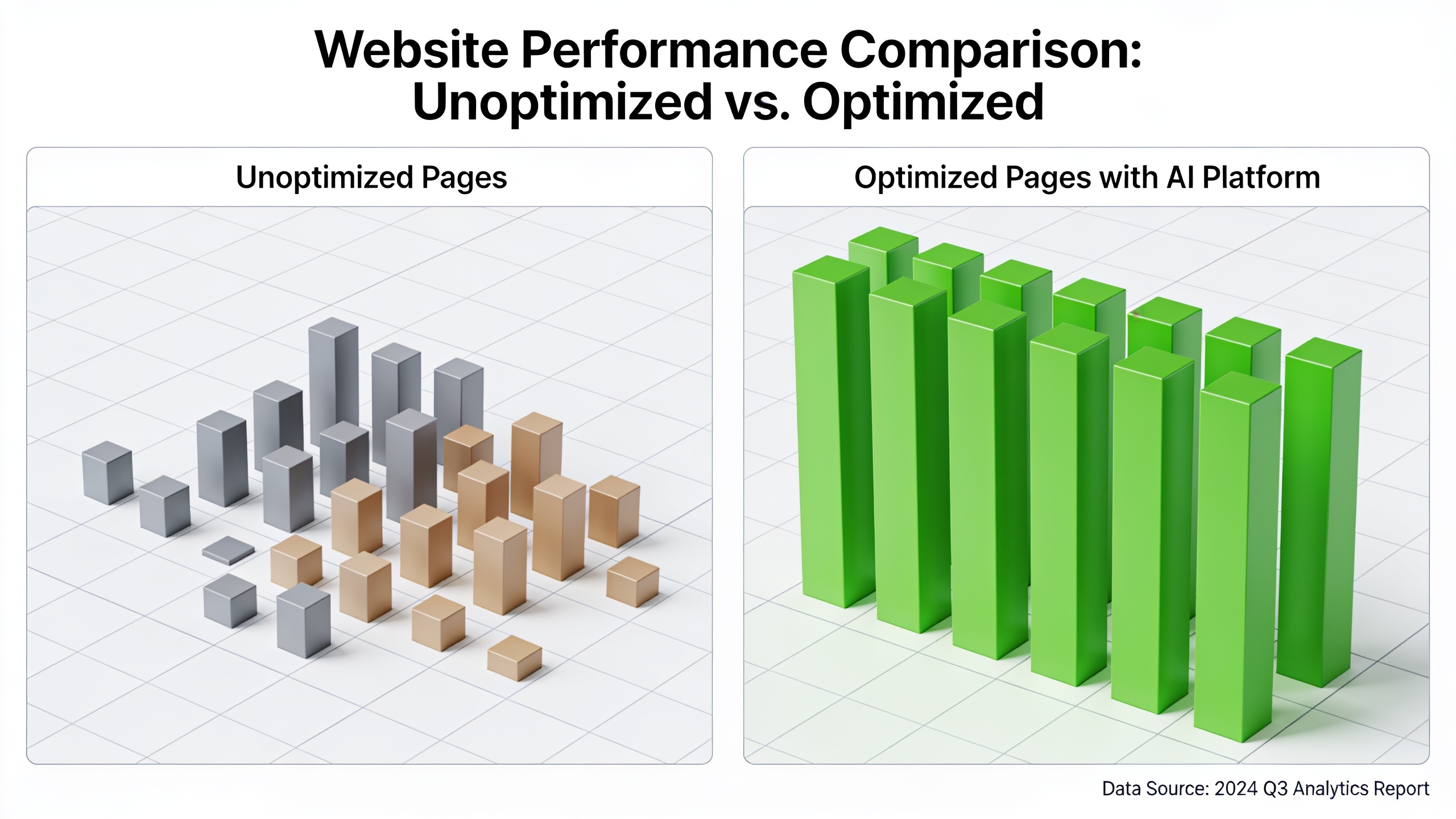
See how a tiny handful of pages drive like 80% of your organic traffic while the rest sit there with basically zero impressions? That lopsided distribution is one of the loudest signals you need a system. It almost always means your content isn't following any repeatable framework. Each article gets optimized based on whoever happened to write it that week, instead of one standardized approach built around search intent, keyword clustering, and solid on-page fundamentals.
An AI platform kills that randomness by applying the exact same logic to every single piece. Heading structure, keyword usage, internal linking, meta descriptions, schema. Everything hits a baseline. So instead of a few lucky winners surrounded by dead weight, you end up with a whole library of pages that actually pull their weight.
3. Nobody on Your Team Actually Does SEO
Here's an uncomfortable stat: a 2023 Backlinko survey found that over 60% of small and mid-sized businesses have no in-house SEO specialist at all. They're leaning on generalist marketers or, more likely, a founder juggling six other jobs.
And look, if there's genuinely no one tracking keyword shifts, algorithm updates, or what competitors are up to, your strategy is basically running on assumptions from two years ago. That's not a knock. It's just what happens when SEO is nobody's actual job.
This is the exact gap the software fills. Instead of hiring a full-time specialist (which Glassdoor pegs at roughly $65,000 to $95,000 a year in the US, before you even count benefits), you can run a platform that watches your rankings around the clock, surfaces content opportunities, and adjusts based on real data. It won't replace strategic thinking entirely. But it drops the expertise barrier way, way down.
4. Your Competitors Are Outpacing You
Quick homework assignment. Go check how often your top three competitors publish. Then check what they're ranking for.
If they're consistently out-shipping you, and grabbing keywords you haven't even thought to target yet, that's a pretty direct signal your process is too slow to compete. Content velocity turns out to be one of the strongest predictors of long-term organic growth. Ahrefs' ranking research shows domains that publish consistently for six-plus months see compounding traffic gains, while the sporadic publishers just... plateau. Early.
Businesses that switch to an AI platform usually report matching or beating competitor publishing frequency within weeks, not months, mostly because the manual bottlenecks (writing, formatting, optimizing each piece by hand) just evaporate.
5. Keyword Research Feels Like Guessing
Be honest. If your keyword strategy is basically "type a topic into the search bar and pick whatever feels right," you're leaving a genuinely painful amount of traffic on the table.
Real keyword research means looking at search volume, difficulty, intent, and the semantic relationships between topics. Doing that at scale, by hand? Nearly impossible. And this one's underrated, because when your keyword calls come from gut feeling instead of data, you tend to chase brutally competitive head terms while completely missing the long-tail stuff that converts better and ranks faster anyway.
AI platforms chew through thousands of keyword variations, cluster them by topic and intent, then hand you a content structure designed to own a whole keyword neighborhood instead of one lonely term. That's the difference between planting a garden and tossing a single seed and hoping.
6. Your Backlinks Have Flatlined (Or Never Existed)
Backlinks are still a top-three ranking factor. Google's own guidelines say so, and independent studies from Moz back it up. But manual link building? Slow, expensive, and a genuine pain to scale. Pitchbox data puts outreach reply rates below 10%, which means you're sending a mountain of emails to get a molehill of links.
If your backlink profile hasn't budged in months, you're missing one of the biggest growth levers there is.
The newer AI platforms have started baking link building right in. RobinRank, for instance, connects participating sites through a natural backlink exchange network, so you can earn relevant, contextual links without grinding through cold outreach. This kind of automated, network-based approach is fast becoming table stakes rather than some fancy premium add-on.
7. You're Paying Freelancers More Than the Results Deserve
Freelance writers and SEO consultants can do genuinely great work. No argument there. The problem is that costs scale in a straight line with volume, and quality control gets messier every time you add another contributor to the mix.
Want content like this running on autopilot for your own site? Try RobinRank free — AI-written, SEO-optimized articles generated and published automatically, no credit card required.
I've seen this pattern a hundred times: freelance spend creeps up to somewhere between $3,000 and $8,000 a month, and yet organic traffic stays flat. Why? Because every writer interprets your SEO guidelines a little differently, and those small inconsistencies add up.
| Approach | Avg. Monthly Cost | Avg. Articles/Month | Consistency Level |
|---|---|---|---|
| In-house SEO specialist + writer | $6,000–$9,000 | 4–8 | Medium-High |
| Freelance writers (3-5 contributors) | $3,000–$8,000 | 8–15 | Low-Medium |
| SEO agency retainer | $2,500–$10,000+ | 4–12 | Medium |
| AI SEO platform (e.g., RobinRank) | $200–$1,000 | 20–60+ | High |
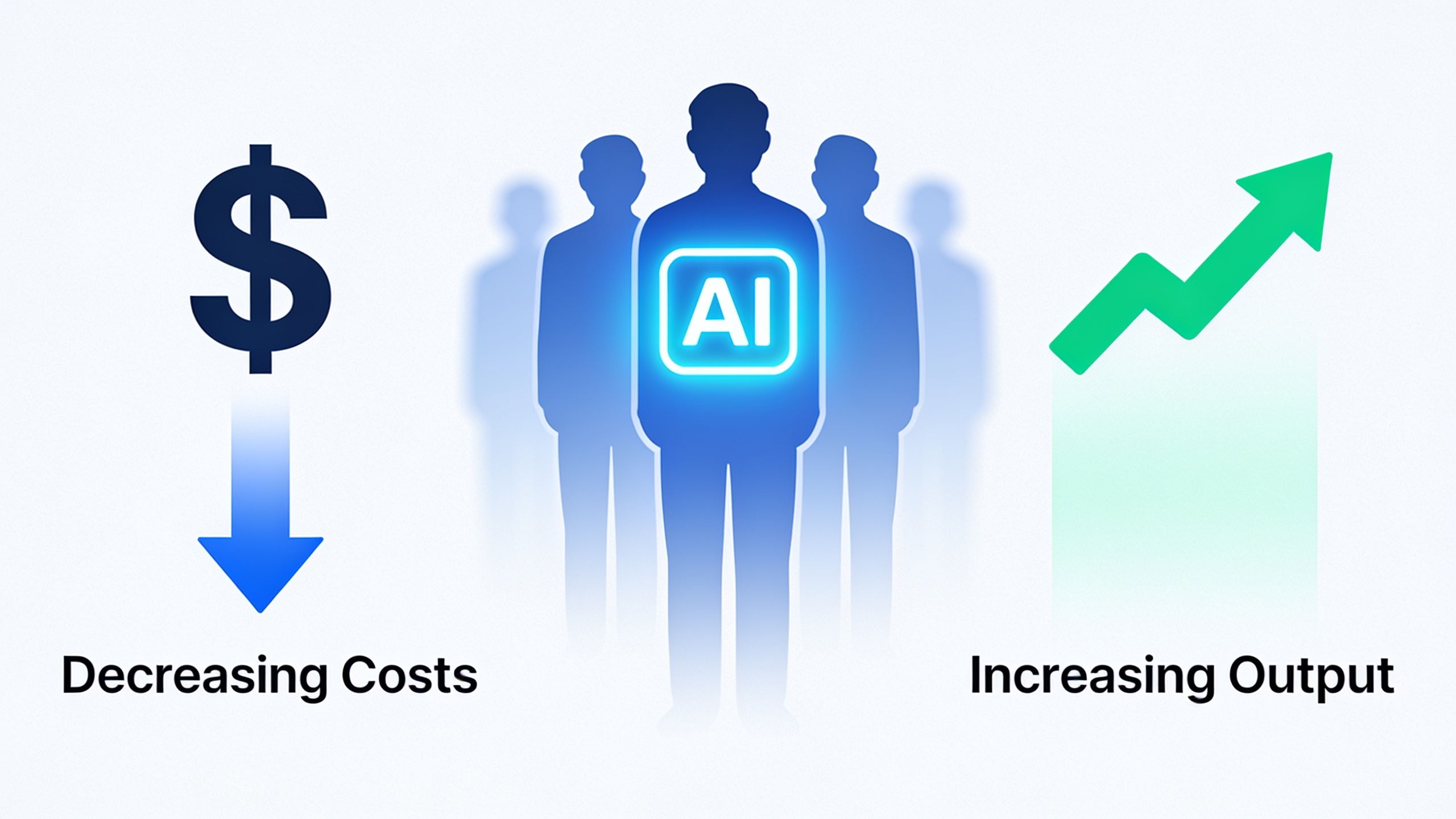
Look at that bottom row and it's pretty obvious why so many businesses eventually make the jump. Cost-per-article drops off a cliff, and consistency actually goes up, because the optimization logic doesn't change depending on who's having a rough Monday.
8. Technical SEO Debt Keeps Stacking Up
Broken internal links. Missing alt text. Duplicate meta descriptions. Sluggish page speed. Orphaned pages nobody links to. This stuff piles up quietly, and then one day you notice rankings sliding across the whole site and can't figure out why. Google's Core Web Vitals update made all of it matter more, since page experience now feeds directly into rankings.
And auditing for this stuff by hand is exactly the kind of task that gets shoved to the bottom of the list the second a content deadline shows up. This is genuinely where an AI platform earns its money. Automated crawling flags issues in real time, and a lot of platforms (RobinRank being one) just apply on-page best practices at the moment content publishes. Proper heading hierarchy, internal linking, schema, clean meta tags. All of it handled upfront, instead of some painful cleanup project you keep pushing to next quarter.
9. You Can't Tell What's Actually Working
Okay, quick gut check. If I asked you right now which specific piece of content drove your last five qualified leads, could you answer without opening four browser tabs and a spreadsheet?
If not, you're in good company. Loads of teams struggle to connect SEO effort to actual business results because the tracking is scattered everywhere. Google Analytics over here for traffic, Search Console over there for rankings, a separate CRM for conversions, and some poor soul trying to duct-tape it all together in Sheets.
That measurement gap is subtle but it matters a lot. AI platforms usually pull everything (impressions, click-through rates, ranking positions, engagement) into one dashboard. Suddenly you can actually see what's landing and pour more energy into it, instead of guessing and hoping.
10. Scaling Would Mean Hiring a Whole Team
This might be the clearest sign of them all. You sat down, did the math on scaling your content and SEO manually, and the number made you a little queasy.
Building an internal team that matches what a good AI platform spits out (writers, editors, an SEO strategist, a technical auditor, a link-building person) could easily run north of $200,000 a year in salaries alone, according to comp benchmarks from Glassdoor and PayScale. And that's before anyone's actually written a word.
For startups, small businesses, even mid-sized agencies juggling multiple clients, that's just not happening. This is the exact gap these platforms were built to close: team-level output at a fraction of the cost, plus a consistency that's honestly hard to pull off even with a full human team, since every piece runs through the same framework.
How to Actually Pick One
Spotting the signs is the easy part. Choosing the right platform is where people get stuck, and it matters, because these tools are very much not created equal.
A few things I'd genuinely pay attention to:
- Quality over raw volume. Some tools just optimize for speed and pump out thin, generic filler. That's exactly the kind of content Google's helpful content system was built to bury. You want a platform pairing automation with actual topical research and readable, natural writing.
- Link building baked in. Content on its own moves slower than content plus authoritative backlinks. Platforms with a built-in exchange network, like RobinRank, handle both sides of the equation instead of forcing you to bolt on a separate tool or agency.
- Transparency and control. The good ones let you review and edit before anything goes live, rather than operating as some sealed black box. That matters for brand voice and for not publishing something factually off.
Beyond those, check that it plays nice with your CMS, analytics, and content calendar, because a tool that creates extra reconciliation work every week isn't really saving you anything. And when you compare pricing, look at cost-per-article and cost-per-ranking-keyword, not just the sticker price on the subscription. Those numbers tell you way more about real ROI.
Frequently Asked Questions
Isn't this just ChatGPT writing my articles?
Nope, not really. General AI writing tools spit out text, but they don't inherently get keyword research, search intent, on-page optimization, or link building. An AI SEO platform is purpose-built for organic growth. It fuses content generation with technical SEO logic, publishing automation, and usually backlink strategy, all pointed at actual ranking improvements rather than just filling a page.
Won't Google punish me for using AI content?
Google's been pretty clear on this: it doesn't penalize AI content specifically. It penalizes low-quality, unhelpful content, no matter who or what made it. Platforms that lean into real research, accuracy, and reader value tend to do just fine, because the emphasis is on quality signals, not who typed it.
How fast will I see results?
Most businesses notice more indexed pages and rising impressions within about 4 to 8 weeks. The meatier ranking and traffic gains usually show up somewhere between months 3 and 6, which honestly lines up with normal SEO timelines regardless of how the content got made. Consistency of publishing matters way more here than any single clever tweak.
Can a solo founder use these, or are they built for agencies?
Both, genuinely. Plenty of platforms, RobinRank included, have pricing tiers and workflows aimed squarely at solo founders and small teams, not just agencies wrangling dozens of clients. And honestly? The core promise (skipping the need for a full content and SEO team) is arguably even more valuable when you're small and the budget's tight.
Do I still need an actual SEO strategy?
Yes, you do. The automation handles execution, the research, writing, optimization, and often the link building. But the strategic calls about who you're talking to, how your brand shows up, and where your content should head still want a human at the wheel. The teams that win treat it as automation plus periodic strategic review, not a fully hands-off autopilot.
---
If more than a couple of these hit a little too close to home, that's not a sign you've failed at marketing. It just means manual SEO has bumped into its ceiling, which happens to basically everyone eventually. The businesses growing fastest right now usually aren't grinding harder than you. They've just handed the bottlenecks over to a system. Platforms like RobinRank exist for exactly this moment: when content demands outrun your resources, and consistent, optimized publishing stops being a nice-to-have and starts being the thing standing between you and the competition.
Ready to stop writing content by hand? Start your free RobinRank trial and get a full month of SEO-optimized articles published on autopilot.