7 HARO Alternatives for Getting Quality Backlinks in 2025

So that's what this piece is about. Seven platforms actually worth your time in 2025, how they differ, and where journalist request backlinks even fit anymore next to stuff like guest posting and direct exchanges.
And look, whether you're a one-person shop pitching sources for a few articles a month or an agency juggling outreach for a dozen clients, I'd argue the mix of tools matters way more than obsessing over which single one is "best." There is no best. There's just what works for your niche and your patience level. Below you'll get the honest rundown on each option, what it's genuinely built for, and a comparison table so you can figure out where to actually spend your hours.
Table of Contents
- What Happened to HARO, and Why Are People Looking for Alternatives?
- How to Evaluate HARO Alternatives Before You Commit
- 7 HARO Alternatives for Getting Quality Backlinks in 2025
- HARO Alternatives Compared: Features at a Glance
- Is RobinRank a Good HARO Alternative for Link Building?
- How Do Journalist Request Backlinks Fit Into a Broader Link-Building Strategy?
- Frequently Asked Questions
What Happened to HARO, and Why Are People Looking for Alternatives?
HARO (Help a Reporter Out) got acquired by Cision and relaunched as Connectively, which changed the pitch volume, the interface, and the whole workflow a ton of SEOs had leaned on for years. That one transition is basically the entire reason people started hunting for alternatives in 2024 and 2025. Not because journalist request backlinks stopped working. The links still work fine. It's the tool that changed shape underneath everyone.
Quick refresher in case you're new to this: a journalist request backlink is a link you earn when a source (you, your client, whoever your expert is) answers a reporter's query, gets quoted in a published piece, and picks up a link back as credit. SEOs have always loved this model because those links come from real editorial content on actual news sites and industry pubs. The kind of placement you genuinely can't fake or buy your way into.
Here's what I think people get wrong, though. The complaint isn't "journalist requests are dead." The complaint is that any single platform becomes a chokepoint. Response rates bounce around, the good high-authority queries get swarmed, and putting your entire backlink pipeline through one tool is just asking for trouble. Which is exactly why a spread-out approach, mixing journalist platforms with direct exchanges and other earned-link tactics, holds up better than betting the farm on one channel.
How to Evaluate HARO Alternatives Before You Commit
Before you sink hours into pitching through any platform, check five things: who's reviewing the sources and requests, how placements get verified, what it costs, whether it fits your niche, and how much manual grunt work it still dumps on you.
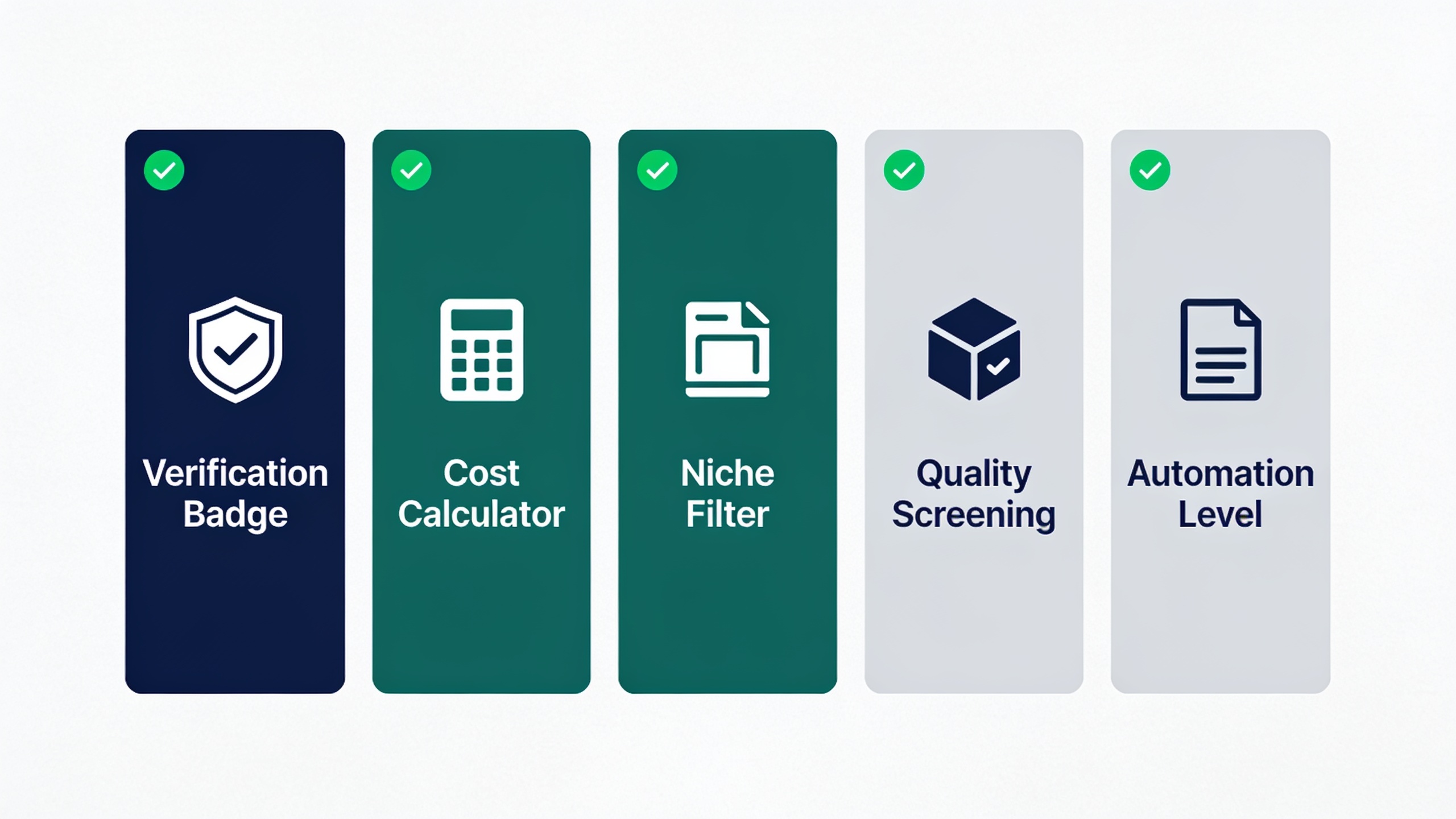
Verification matters way more than volume, and I'll die on this hill. A tool that dumps two dozen queries in your inbox every morning is useless if you've got no way to confirm a placement actually went live and stayed live. Some tools just shrug and leave you tracking everything yourself with spreadsheets and periodic site checks. Fun.
Screening quality shapes everything downstream, too. Platforms that manually vet participants, whether that's the journalists on one end or the site owners on the other, tend to spit out way fewer spammy interactions than some open, unmoderated free-for-all.
On pricing: some tools charge a flat monthly fee no matter how many placements you land, others run on pay-per-response or some reputation-based thing. Public pricing pages change constantly and not every platform even shows real numbers, so honestly, just check each vendor's current pricing yourself instead of trusting secondhand figures (including mine).
Niche fit is the sneaky one. A general-purpose query platform might crush it for consumer lifestyle brands and totally flop if you're stuck in some narrow B2B SaaS corner. Same goes for exchange networks, which are usually sorted by niche and Domain Rating range, and that sorting is what decides how relevant your matches actually are.
And the manual effort varies a lot. Some platforms are basically a raw firehose of requests you have to sift through and pitch cold. Others build structure into the whole thing, like a chat-based request-and-verify flow, so you're spending less time chasing and more time actually closing.
7 HARO Alternatives for Getting Quality Backlinks in 2025
So here's the actual list. Seven tools people are using instead of, or alongside, the old journalist request setup. They don't all work the same way. Some are journalist-query platforms in the same spirit as classic HARO, and others are direct backlink exchange networks that crack the same nut (get a real, editorially-relevant link) through a totally different mechanism.
1. RobinRank
RobinRank is a manually reviewed backlink exchange network where site owners request placements from each other directly, offer reciprocal links, and get the live placement verified before it counts. So instead of pitching a reporter and crossing your fingers your quote survives the edit, you browse a directory called Discover, filter sites by niche and Domain Rating, and start a chat with the actual person who runs the site you want a link from.
Per RobinRank's own site, every Discover listing gets reviewed by hand, usually within one business day. And they explicitly kick out private blog networks (PBNs), link farms, and those thin doorway pages that exist purely to swap links. When your placement goes live, RobinRank crawls the page and confirms the href is actually there. On the Pro plan it keeps checking periodically and pings you if the link ever vanishes later, which, if you've ever had a "guaranteed" placement quietly disappear three weeks in, you'll appreciate. The Domain Rating you see in Discover comes from Ahrefs, and they say they reject "borrowed parent-platform DR," meaning sites can't juice their numbers by piggybacking off some bigger platform's authority.
The flow goes like this. You request a placement with a specific page and anchor text, the site owner accepts or negotiates, you offer a link back if it makes sense, and RobinRank verifies both live placements. Nothing like a journalist query here. No pitch fighting for scraps against thirty other sources, no waiting around to see whether a reporter even reads your email. It's just a direct conversation between two site owners with an accountability layer bolted on.
It's free for seven days after your site gets approved, no credit card at signup. After that the Pro tier runs $19 a month and you can cancel whenever. There's a free tier too, if you want to keep going after the trial without paying. Given how the review-and-verify thing works, RobinRank tends to click with people who want something more predictable and reciprocal than the pitch-and-pray grind of journalist requests. And if you're already poking around editorial-style placements, it slots pretty naturally into a wider outreach plan. If you want to dig into how earned placements stack up against old-school guest posting, there's a solid breakdown of guest posting strategy in 2025 and whether it's still worth the effort.
2. Qwoted
Qwoted runs as a marketplace hooking up journalists and media outlets with expert sources and PR people chasing coverage. You build a profile, respond to open media requests, and it feels a lot like the old HARO model except it's a proper standalone platform rather than an email digest clogging your inbox.
One thing to know: because Qwoted plays in media relations broadly, not just link building, the requests you'll see span print, broadcast, and digital press. Which means not every opportunity ends in a backlink, even when it ends in a nice bit of coverage. If you're eyeing it, check current plan details on their site directly. I can't independently confirm their pricing tiers or response-rate numbers, so I'm not going to pretend otherwise.
3. Featured.com
Featured.com (it grew out of the platform that used to be Terkel) is built around expert-response content. Basically, questions get thrown to a pool of contributors, and the answers get compiled into articles, often with contributor bylines and backlinks baked into the deal.
This is a different animal from a traditional journalist pitch, because the "publication" is frequently the platform's own content or partner content rather than some third-party press outlet. Upside: more predictable placement odds than begging for a reporter's attention. Downside: the links might carry different authority signals than a link from an established news site. Same caveat as everywhere else here, go verify exact pricing and terms on Featured.com before you throw budget at it.
4. JustReachOut
JustReachOut is a PR outreach tool made to help you find relevant journalists and bloggers, then run the whole pitching and follow-up process inside the platform. Instead of sitting around waiting for inbound queries, you're going on offense. You identify writers covering your topic and pitch them directly with the tools built in.
This works nicely if you've already got a strong angle or some juicy data to hand over, since you're not depending on a journalist happening to post a query that matches. The trade-off is obvious, though: it's usually more hands-on per placement than just replying to an existing request. And yeah, confirm the feature set and pricing with them directly.
Want content like this running on autopilot for your own site? Try RobinRank free — AI-written, SEO-optimized articles generated and published automatically, no credit card required.
5. SourceBottle
SourceBottle connects journalists and bloggers looking for expert commentary with sources happy to provide it, in that same request-and-respond structure HARO originally ran. Historically it's had a strong footing with bloggers and smaller publications on top of the traditional press, which can be genuinely handy if your target links lean toward niche industry blogs instead of only the big news names.
Its exact current features, categories, and pricing aren't something I've got verifiable sourcing on, so poke at the live platform and see which request categories are actually active in your industry before you commit outreach time to it.
6. ResponseSource / PR.co
Platforms like ResponseSource and PR.co live in the journalist-request space too, giving you tools to distribute media queries and press requests to registered experts and PR contacts. Think of them as a structured version of firing off informal pitch emails. These lean toward PR pros managing press relationships at scale rather than individual SEOs specifically hunting backlinks.
So if you're purely after links and not broader media visibility, do yourself a favor and confirm whether the requests here typically come with a linkable byline or attribution. PR-focused tools don't always guarantee a link the way a dedicated exchange does, and that's an easy thing to find out the hard way.
7. Help a B2B Writer
Help a B2B Writer is the niche pick, built specifically around B2B topics. It links B2B content writers and journalists with expert sources in software, marketing, finance, and other business categories. If your audience is squarely B2B, that narrow focus can mean way less competition for the requests that actually fit you, versus fighting the crowd on a general consumer platform.
Like the others, I don't have verified numbers on current submission volume, response rates, or pricing, so checking the platform's live state yourself is the safe move before you plan any outreach hours around it.
HARO Alternatives Compared: Features at a Glance
The table below sums up what's publicly confirmed about each platform's core model. Where I couldn't independently verify something, I marked it that way instead of making it up.
| Platform | Core Model | Verification of Live Placement | Niche Focus | Pricing |
|---|---|---|---|---|
| RobinRank | Direct backlink exchange between reviewed site owners | Yes — crawled and confirmed at placement; ongoing monitoring on Pro plan | Filterable by niche and Domain Rating | Free 7-day trial after approval, then $19/month Pro; free tier also available |
| Qwoted | Journalist/expert media request marketplace | Not stated publicly | General media and PR | Not stated publicly |
| Featured.com | Expert-response content with contributor bylines | Not stated publicly | General business and expert commentary | Not stated publicly |
| JustReachOut | Proactive PR outreach and journalist discovery tool | Not stated publicly | General, outreach-driven | Not stated publicly |
| SourceBottle | Journalist/blogger source request platform | Not stated publicly | General, strong blogger presence | Not stated publicly |
| ResponseSource / PR.co | Media query distribution for PR professionals | Not stated publicly | General PR and press relations | Not stated publicly |
| Help a B2B Writer | B2B-focused source request platform | Not stated publicly | B2B software, marketing, finance | Not stated publicly |
Is RobinRank a Good HARO Alternative for Link Building?
RobinRank is worth a look as a HARO alternative mainly because it kills the two biggest headaches with journalist request backlinks: fighting for a reporter's attention, and never knowing if that promised link actually went live. Rather than pitching into a queue behind a bunch of other hopeful sources, you're just talking directly to the site owner who controls the placement.
That said, I want to be straight with you here, because it's a genuinely different mechanism than traditional media pitching. A journalist request backlink comes wrapped inside third-party editorial content. A news article, an industry roundup, an expert-quote piece, where the link is basically a byproduct of you getting quoted. A RobinRank placement is a negotiated exchange between two site owners, verified after the fact by that crawl-and-confirm system. Both can be legit, earned-feeling links. But they send different signals. One's an editorial mention, the other's a deliberate, mutually agreed placement between two publishers. Not better or worse necessarily, just different, and pretending otherwise would be dishonest.
For anyone worn down by unpredictable response rates on journalist platforms, or who just wants a channel where you can actually see which sites are on offer, filter by Domain Rating, and get confirmation the link exists, RobinRank works well as a supplement. Per its own product description, the review for new sites joining Discover usually takes about one business day, and it explicitly rejects private blog networks, link farms, and thin trade-only pages. Screening rules aimed at keeping the pool cleaner than your average open marketplace.
How Do Journalist Request Backlinks Fit Into a Broader Link-Building Strategy?
Journalist request backlinks work best as one channel in a diversified plan, not your only source of new links. Lean on a single platform, whether it's a journalist tool or any other one trick, and you set yourself up for exactly the mess a lot of us just lived through when HARO became Connectively. Platform changes, pipeline stalls, everybody panics.
A tougher setup usually blends a few things. You respond to journalist queries when a strong one genuinely fits your expertise. You run a reviewed backlink exchange for the more predictable, verifiable placements. And you chase guest contributions on relevant industry sites where your byline and know-how actually earn the spot. If you're on the fence about whether guest posts still pull their weight in that mix, the analysis in guest posting strategy in 2025 and whether it's still worth the effort is a good next read. It wrestles with the same core question, return on your time, that applies to any manual outreach channel.
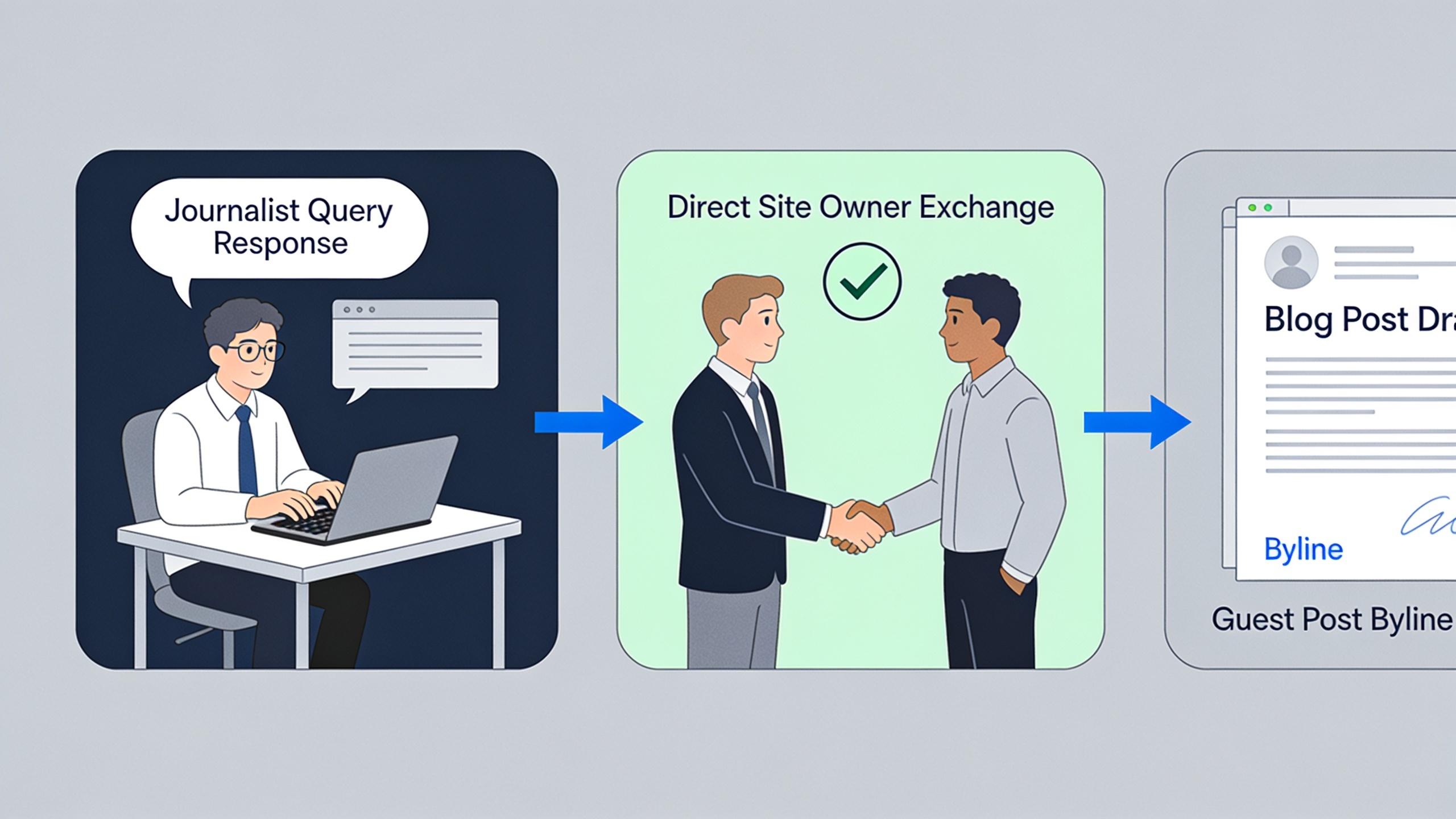
The thread tying all of this together (journalist requests, exchanges, guest posts) is that Google's own guidance on link spam has been pretty consistent: links should exist because they're genuinely useful to readers, not just because somebody traded or bought them. So platforms that bake in verification, manual review, and niche relevance tend to be the safer long-term bet compared to open, unmoderated exchanges. Doesn't matter which specific tool you land on, that principle holds.
Frequently Asked Questions
Is HARO even still a thing in 2025?
Not really, not the way it was. HARO got acquired by Cision and relaunched as Connectively, so the original brand and interface no longer run like they used to. That's the whole reason people have been searching for alternatives. The transition yanked the rug out from under a workflow a lot of folks had built their entire process around, and they went looking for other journalist platforms and backlink channels.
Are backlinks from journalist request platforms still worth anything for SEO?
Yeah, a link earned through a journalist request platform can be valuable, mostly because it usually comes from editorial content on a third-party site, which is genuinely harder to score than a bought or self-placed link. That said, the real SEO value of any individual link still comes down to the linking site's authority, its relevance, and whether the placement went through a normal editorial process instead of being paid for outside of normal advertising disclosure rules.
What's the actual difference between a journalist request platform and a backlink exchange like RobinRank?
A journalist request platform connects you with reporters who might quote you and toss in a link as credit. A backlink exchange like RobinRank connects you straight to other site owners to negotiate and verify a placement between your two sites. The first one hinges on a third party picking you for their editorial content. The second is a direct, mutually agreed exchange that gets checked for live verification. Different beasts entirely.
How much do these HARO alternatives usually cost?
It's all over the place, and honestly not consistently published, so check each vendor's current pricing page yourself. One concrete data point: RobinRank runs a free 7-day trial after your site's approved, with the Pro plan at $19 a month and cancellable anytime. Other platforms in this space might use totally different models, like per-response fees or reputation-based access.
Do I really need more than one of these?
Probably, yeah. Running more than one channel is generally safer than betting on a single platform, since journalist query volume and response rates swing around and any one tool can change its whole model, which is, you know, exactly what happened with HARO and Connectively. Pairing a journalist request platform with a reviewed exchange and some selective guest posting tends to give you a steadier pipeline over time.
---
Picking a HARO alternative was never really about finding some perfect one-to-one replacement. It's about rebuilding your link process so it doesn't live and die by a single tool's roadmap. Journalist request platforms, expert-response networks, direct exchanges, they each solve a slightly different flavor of the same problem: getting a real, relevant site to link back to you. Test two or three of these against your actual niche and your actual response rate, and you'll learn more in a couple weeks than any ranking list (including this one) could ever tell you.
Ready to stop writing content by hand? Start your free RobinRank trial and get a full month of SEO-optimized articles published on autopilot.