How Backlink Exchange Networks Work (And Why They're Not PBNs)
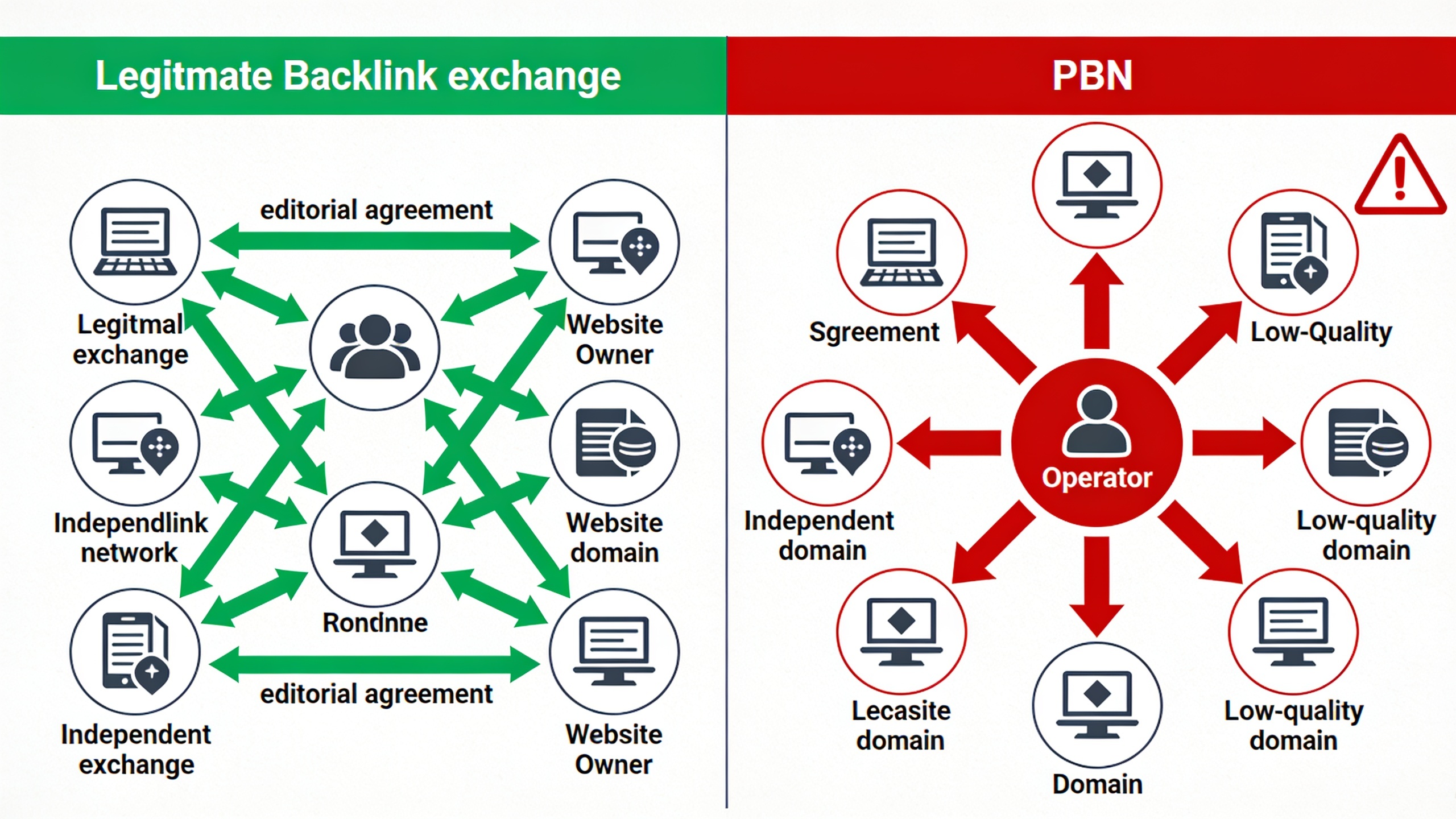
So let's get the definitions straight before anything else. A backlink exchange network is a coordinated setup where independent website owners connect, look over each other's sites, and place relevant, editorially sensible links on real pages, often reciprocally, with some kind of quality control keeping the junk out. A PBN is something else entirely: a cluster of low-quality sites secretly owned or controlled by one person, built for the sole purpose of manufacturing links. This piece walks through how exchange networks actually function, draws a hard line between exchanges and PBNs, and shows how platforms like RobinRank keep things on the right side of Google.
Table of Contents
- What Is a Backlink Exchange Network?
- How Do Backlink Networks Work? The Step-by-Step Mechanics
- Backlink Exchange Networks vs. PBNs: What's the Real Difference?
- Why Does Google Tolerate Exchanges But Punish PBNs?
- How RobinRank Structures a Safe Backlink Exchange Network
- How Much Does a Backlink Exchange Network Cost?
- Best Practices for Using a Backlink Exchange Network Safely
- FAQ
- Final Thoughts
What Is a Backlink Exchange Network?
A backlink exchange network is a platform or community where website owners connect directly to request, offer, and place backlinks on each other's live pages, usually inside relevant niches and above some minimum authority bar. It's not the same as buying links off a marketplace or renting space on a farm of disposable domains. The whole thing runs on two-way relationships between real, independent site owners who each actually have something worth linking to.
The idea is pretty simple, honestly. Instead of cold-emailing fifty strangers and praying one says yes, you browse a pool of vetted sites, find one in your niche and authority range, and start talking. Maybe you ask for a placement on a particular page with a particular anchor, and you offer a link back from your own site when that makes editorial sense.
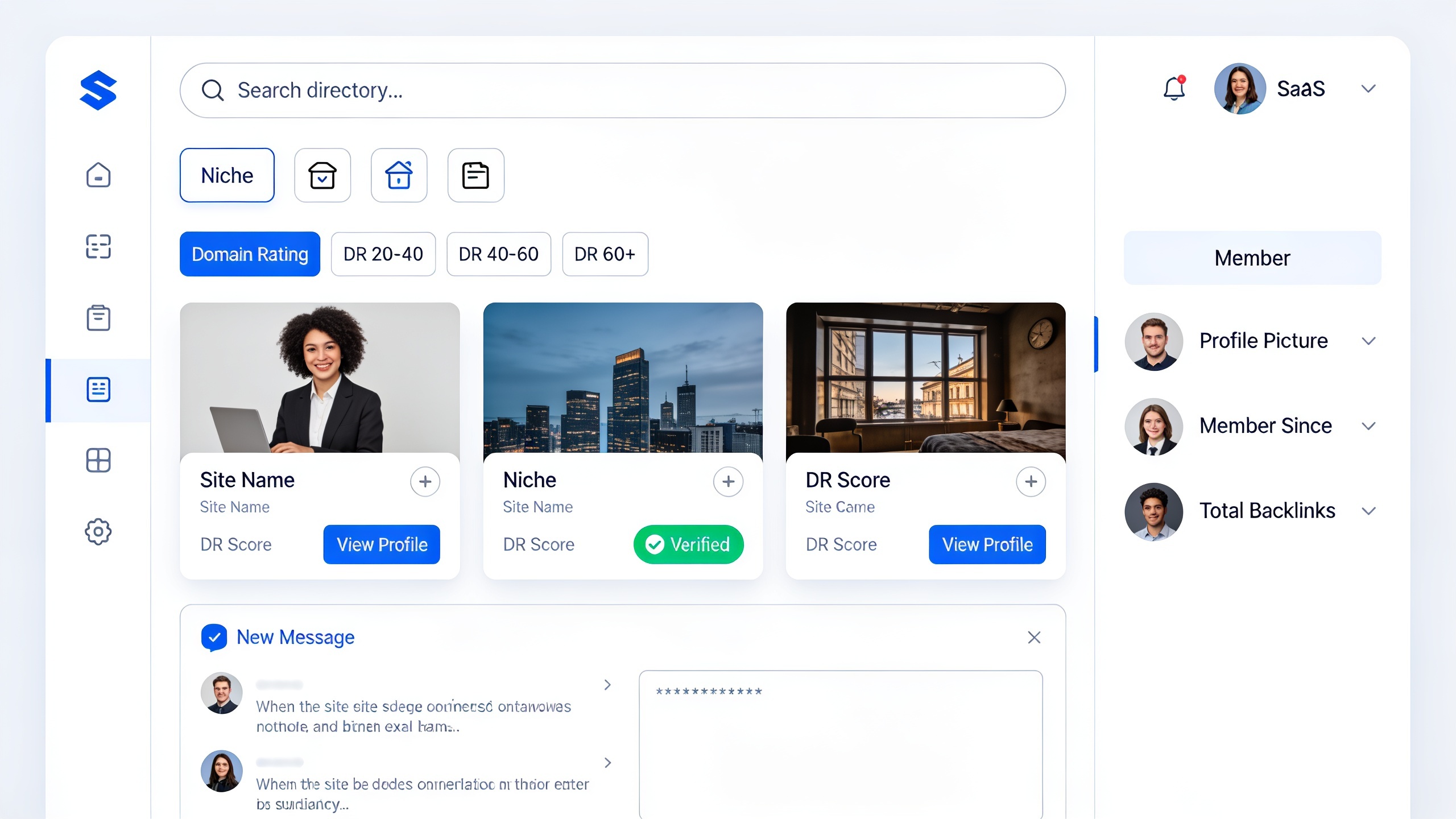
A network that actually works tends to have a few things going for it: a directory of member sites you can filter by niche and by something like Domain Rating (DR) from Ahrefs, a messaging or request system so people can negotiate placements directly, some kind of review (automated, manual, or both) that keeps the spammy sites out, and a verification mechanism that confirms the link went live and stays live.
That last one gets glossed over in most guides, and it drives me a little nuts. A backlink exchange is only as trustworthy as its ability to prove a promised link actually showed up and didn't quietly vanish a month later.
How Do Backlink Networks Work? The Step-by-Step Mechanics
Backlink networks work by connecting site owners through a structured request-and-verification process instead of anonymous outreach or paid placements on throwaway domains. In practice it breaks down into four stages: discovery, request, placement, and verification.
Step 1: Discovery, or Browsing Sites by Niche and Authority
Members poke around a searchable directory of participating sites, usually filtered by niche (health, travel, home, finance, whatever) and some authority metric. So you might see a health site sitting at DR 72, a travel site at DR 18, and a home-goods site at DR 24, and you pick partners whose audience and authority actually line up with your own. This filtering step is exactly what separates a real exchange from mindless link swapping. You're matching with sites that have topical or authority relevance, not grabbing whatever's lying around.
Step 2: Request, or Asking for a Specific Placement
Once you find a relevant site, you send a direct request naming the exact page and anchor text you want. Something like: "Can you place a link to yoursite.com/guides with the anchor 'estate planning tools'? Happy to link back from our resources page." And here's where it splits hard from a PBN. In a PBN, links just get inserted by whoever runs the network. There's no negotiation because there's no second independent party to negotiate with. It's all one person talking to themselves, basically.
Step 3: Placement, an Editorial Agreement Between Two Owners
The receiving owner reads the request and either says yes, no, or counters with a different page or anchor. If they say yes, they drop the link onto a real, existing page (not some thin doorway page cooked up just to hold outbound links), and the requester often reciprocates from their own site. Reciprocity is optional in most networks and depends on whether it actually makes sense in context. Forced reciprocal linking at scale is one of the exact patterns Google's link scheme guidance discourages, which is why healthy networks leave room for one-directional placements too.
Step 4: Verification, or Confirming the Link Actually Went Live
After placement, the network (or the member) checks that the href is live, points to the right URL, and uses the agreed anchor text. Ongoing verification, meaning periodically re-crawling the page, protects you against links getting quietly stripped or altered later. That's a genuinely common failure mode in the informal email-based link swapping people do with zero tracking.
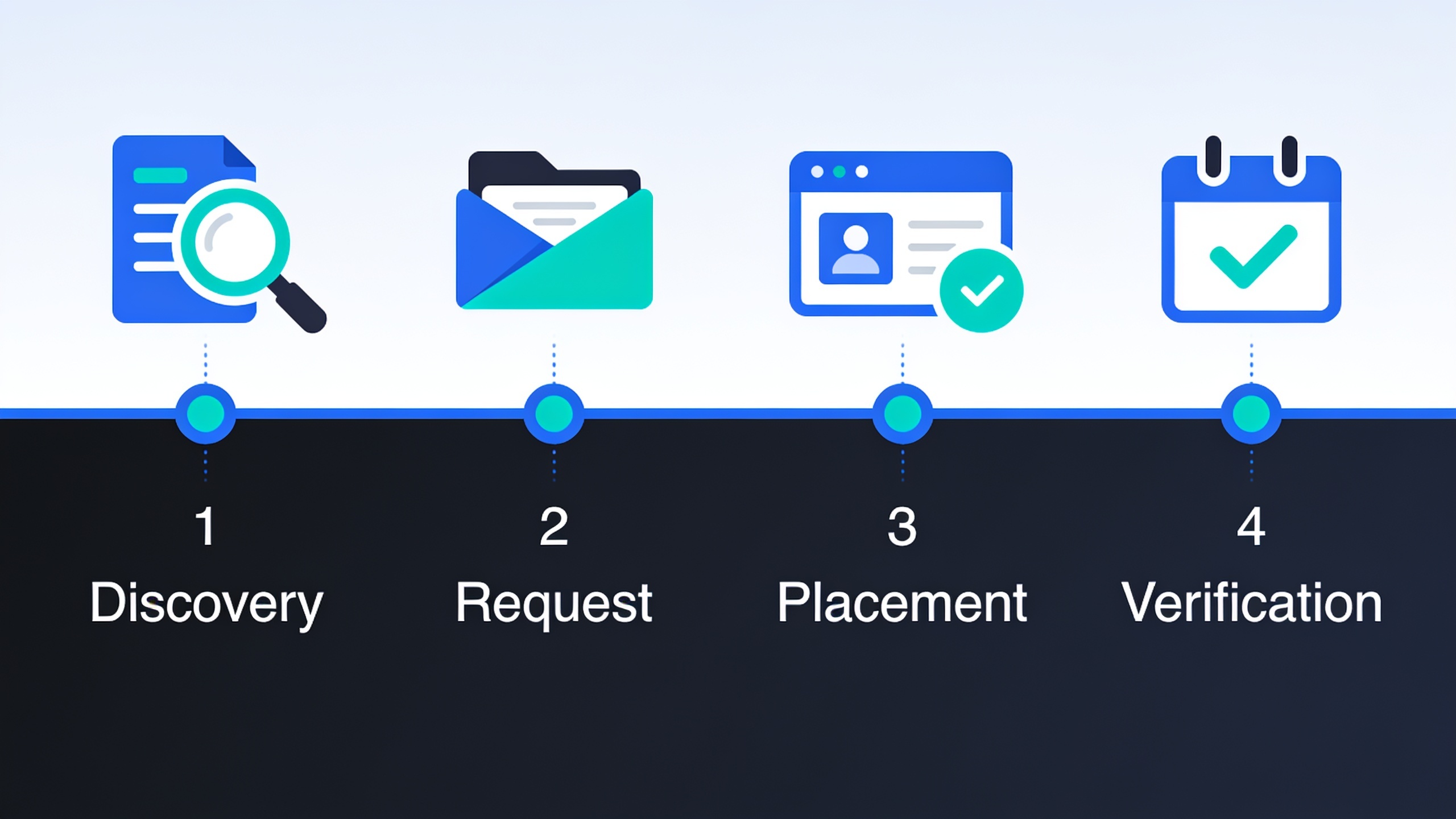
That four-step loop is really all "how do backlink networks work" boils down to. Relevant discovery, a direct request, a human editorial call, and a verification layer keeping both sides honest. Notice what's missing: no secret ownership, no disguised domains, no content built purely to house links. That's precisely where PBNs go off the rails.
Backlink Exchange Networks vs. PBNs: What's the Real Difference?
The real difference comes down to three things: ownership, content purpose, and transparency. In an exchange network, every site is independently owned and run by someone with an actual business or audience. In a PBN, a bunch of sites are secretly controlled by one party solely to manufacture backlinks for other sites that same party also controls.
A PBN usually starts with someone buying up expired or auctioned domains, often chosen for whatever leftover authority they carry, and stuffing them with thin, low-value content whose only job is to host outbound links pointing at a "money site." The person running the PBN and the person receiving the links are the same, just hidden behind different domains, different registrars, sometimes different hosting accounts to muddy the trail. Google's Search Essentials guidance names PBNs outright as a link scheme that can earn you a manual action.
An exchange network flips nearly every one of those traits on its head:
| Characteristic | Backlink Exchange Network | Private Blog Network (PBN) |
|---|---|---|
| Site ownership | Independent owners, verified individually | Often secretly owned by one operator |
| Content purpose | Real pages serving real visitors | Thin pages built mainly to host links |
| Link negotiation | Direct request/acceptance between two owners | Unilateral insertion by the network operator |
| Transparency | Members know who they're linking with | Ownership is deliberately hidden |
| Domain type | Ownable, controlled domains with real content | Often expired/auctioned domains bought for leftover authority |
| Review process | Sites vetted before joining (manual or automated) | No independent review — the operator controls everything |
| Google's stance | Not a link scheme when links are editorially reasonable | Explicitly named as a link scheme in Google's guidance |
| Risk profile | Lower, when relevance and editorial judgment are present | High — subject to manual action if detected |
The pattern's consistent all the way down. Exchanges are relationships between independent parties. PBNs are one party wearing a dozen masks. And that structural difference, not the mere fact that a link changed hands, is what search engines actually care about.
Why Does Google Tolerate Exchanges But Punish PBNs?
Google doesn't penalize the concept of link exchange. Its guidance goes after schemes built purely to manipulate rankings, whether the links were bought, swapped, or spun up through a network. The line it draws is between links that exist because they add value for a real reader and links that exist just to pass authority.
Google's link spam guidance does call out "excessive link exchanges" and "large-scale link building campaigns" as things to avoid. But it also admits not all reciprocal linking is manipulation. The real question is whether the link is relevant, disclosed properly when it's an ad or sponsorship, and placed because it genuinely helps someone reading the page, not because it was traded with nothing else going on. A single reciprocal link between two real businesses in adjacent niches, sitting on a resource page that already talks about related stuff? That's nowhere near the risk profile of hundreds of links jammed across a hidden network of thin, commonly owned domains.
This is also why domain authority metrics carry so much weight inside these networks. A network that pulls Domain Rating from an independent source like Ahrefs, and rejects "borrowed" authority (where a subdomain just inherits its parent platform's overall metrics without earning a thing), is filtering for sites that built real trust signals over time. PBNs lean on exactly that borrowed or purchased authority, because the content underneath could never earn it on its own.
If you're an agency advising clients, this is worth spelling out clearly. Clients keep asking for "more backlinks" without getting that volume without relevance is precisely what invites scrutiny. Agencies fleshing out a bigger service line around link building and content might want to look at how agencies can add a content marketing service offering, because positioning link building as one piece of a larger, editorially sound strategy (rather than a bolt-on link-buying service) tends to hold up far better with both clients and Google over the long haul.
Want content like this running on autopilot for your own site? Try RobinRank free — AI-written, SEO-optimized articles generated and published automatically, no credit card required.
How RobinRank Structures a Safe Backlink Exchange Network
RobinRank is an AI-powered SEO platform that, on top of writing and publishing content, connects websites through a manually reviewed backlink exchange network. Members request placements, offer links back, and verify that placements are actually live, instead of leaning on cold outreach or sketchy marketplaces. And the design choices behind it map almost perfectly onto the exchange-versus-PBN split we just walked through.
Every Site Is Reviewed by a Person
Per RobinRank's own site, every listing that joins the network's "Discover" directory gets checked by hand before it shows up, usually within one business day, specifically to keep out PBNs, link farms, and throwaway domains. What they're looking for:
- Ownable domain: the site has to run on a domain the member actually controls. Free hosts and public platforms don't cut it.
- Real content: pages need to serve an actual purpose for visitors, not act as thin doorway pages built only to trade links.
- No spam signals: adult content, spam niches, and obvious PBN patterns are out.
- Honest metrics: Domain Rating comes from Ahrefs, and RobinRank says it rejects borrowed parent-platform DR, so a site can't inflate its apparent authority by piggybacking on a bigger platform's score.
Conversations Replace Cold Email
Instead of scraping contact lists and blasting mass outreach, RobinRank members browse Discover by niche and DR, then message a site owner directly to pitch a placement. Say, requesting a link to a specific guide page with a specific anchor, and offering a reciprocal link from a relevant resources page in return. Because the other party is a verified, real owner and not a broker or a marketplace listing, the whole thing plays out like a natural editorial link request would.
Verification Is Ongoing, Not One-Time
Once a placement goes live, RobinRank says it crawls the page, confirms the href points to the agreed URL, and keeps checking it weekly. That ongoing part is what turns a handshake into something you can actually build a report or a forecast around. You're not sitting there months later wondering whether a link quietly disappeared.
Optional Automation on Top of the Network
There's also an "Autopilot" feature that pairs AI-written articles and publishing with the community link network. But the network itself works whether or not you use Autopilot at all. The two pieces are separate and composable, which I appreciate. A business could join purely to build verified link relationships and never touch the content-automation side.
How Much Does a Backlink Exchange Network Cost?
Pricing swings a lot depending on the platform, but here's a concrete example: RobinRank gives you 14 days of its Pro plan free with no credit card required, then moves to $19 per month. Per RobinRank's published pricing, the Pro plan lets you start link requests and messages, add unlimited websites to the network, run Autopilot on one site (AI articles plus community links), browse all of Discover with niche and DR filters, get automatic placement verification, and set up a site profile with link guidelines.
One thing worth being honest about: pricing and feature sets across the broader backlink exchange category are "not stated publicly" in any way that allows a clean apples-to-apples comparison, because every network structures its review process, verification cadence, and membership tiers differently. So when you're sizing up any exchange network, RobinRank included, the questions worth asking are less about the sticker price and more about what's actually inside it:
| Question to ask | Why it matters |
|---|---|
| Is every site manually or otherwise reviewed before joining? | Determines whether you're exposed to PBN-style sites hiding in the directory |
| Is Domain Rating (or an equivalent metric) verified independently? | Prevents inflated or borrowed authority scores from misleading you |
| Is placement verified after it goes live? | Confirms the link exists and matches what was agreed |
| Is verification ongoing or a one-time check? | Protects against links being removed or altered later |
| Can you filter by niche and authority range? | Ensures relevance, which is central to avoiding link-scheme risk |
| Is there a free trial or entry tier? | Lets you evaluate quality before committing budget |
Best Practices for Using a Backlink Exchange Network Safely
The safest approach is to treat every placement the way you'd treat a genuine editorial mention: relevant, disclosed where it needs to be, and sitting on a page that would make sense to a human even if link building weren't part of the equation. A few habits go a long way here.
Prioritize topical relevance over raw authority. A DR 70 site in a totally unrelated niche is a weaker signal than a DR 20 site that genuinely overlaps with what you cover. Filter by niche before you filter by DR, the way RobinRank's Discover directory lets you, and the exchange stays grounded in relevance instead of pure metric-chasing.
Vary your anchor text. Requesting the same exact commercial anchor across every single placement is a pattern search engines are literally built to catch. Mix in branded, natural, and descriptive anchors.
Don't treat reciprocity as mandatory. A reciprocal link makes sense when it's editorially reasonable for both sites, not just because one was handed over. Networks that keep reciprocity optional rather than baking it into every request leave room for that judgment call, which is exactly what you want.
Verify, don't assume. Automated or not, go check periodically that the placements you've received or given are still live and pointing where they should. Links get nuked during redesigns, content pruning, and CMS migrations way more often than most marketers expect. Trust me on this one.
And keep your own site worth linking to. Exchange networks only really hum when both sides bring something useful: a real guide, a real resource page, a real audience. Agencies and in-house teams building link-worthy content at scale usually pair it with a broader editorial workflow, which is part of why content strategy and link building keep showing up together whenever agencies plan how to add a content marketing service offering for clients who need both pieces working together, not link building stapled onto a site with nothing worth linking to in the first place.
FAQ
Is a backlink exchange network the same thing as link buying?
No. Link buying usually means paying cash for a placement with no other relationship attached, which Google's link scheme guidance flags directly. An exchange network runs on relationships between independent owners requesting and placing links on real pages, often with a reciprocal link instead of a payment. That said, the safety of either one hinges entirely on relevance and editorial reasonableness, not the mechanism by itself.
Will Google penalize me for participating in a backlink exchange network?
Google's guidance goes after schemes built to manipulate rankings (excessive, irrelevant, large-scale reciprocal linking gets called out specifically), not the general idea of two owners agreeing to link to each other's relevant content. Joining a network that reviews members, enforces relevance, and verifies placements carries meaningfully less risk than mass reciprocal linking with zero quality control. No link building is completely risk-free if you're careless about it, though.
How do I tell if a network I'm considering is actually a disguised PBN?
Look for independent ownership verification, a real editorial review before sites get admitted, and metrics pulled from an independent source rather than self-reported numbers. If a "network" lets you drop links on domains with no visible owner, no real content, and metrics that look inflated next to the site's actual traffic or content depth, that's a red flag straight out of the PBN playbook.
Do I have to give a link every time I want to receive one?
Nope. In a well-run network, reciprocity is a tool you use when it's editorially reasonable, not an obligation stapled to every request. Some placements only make sense as a one-directional link, and honestly that's a healthier long-term pattern than forcing reciprocal links that don't fit the content.
What's the difference between Domain Rating and the metrics a PBN might show me?
Domain Rating (DR) is a third-party metric from Ahrefs that estimates the strength of a site's backlink profile. Legitimate networks pull it independently and specifically watch for "borrowed" DR, where a site inherits an inflated score from a bigger parent platform it's hosted on without earning that authority itself. That's a pattern you see far more often on manipulated or PBN-adjacent sites than on independently owned domains.
Final Thoughts
From a distance, a backlink exchange network and a PBN can look like the same animal. Both involve multiple sites and links moving between them. But the mechanics underneath are close to opposites. One runs on independent ownership, editorial review, relevance, and verification. The other runs on hidden control, thin content, and manufactured authority. Once you understand how backlink networks actually work (discovery, request, placement, verification), it gets a lot easier to judge any platform you're eyeing, RobinRank included, by the questions that actually predict whether it'll hold up: who owns these sites, is anyone checking quality, and can you prove the link is still there next month?
Ready to stop writing content by hand? Start your free RobinRank trial and get a full month of SEO-optimized articles published on autopilot.