Long-Tail Keywords: The Overlooked Path to Faster Organic Growth
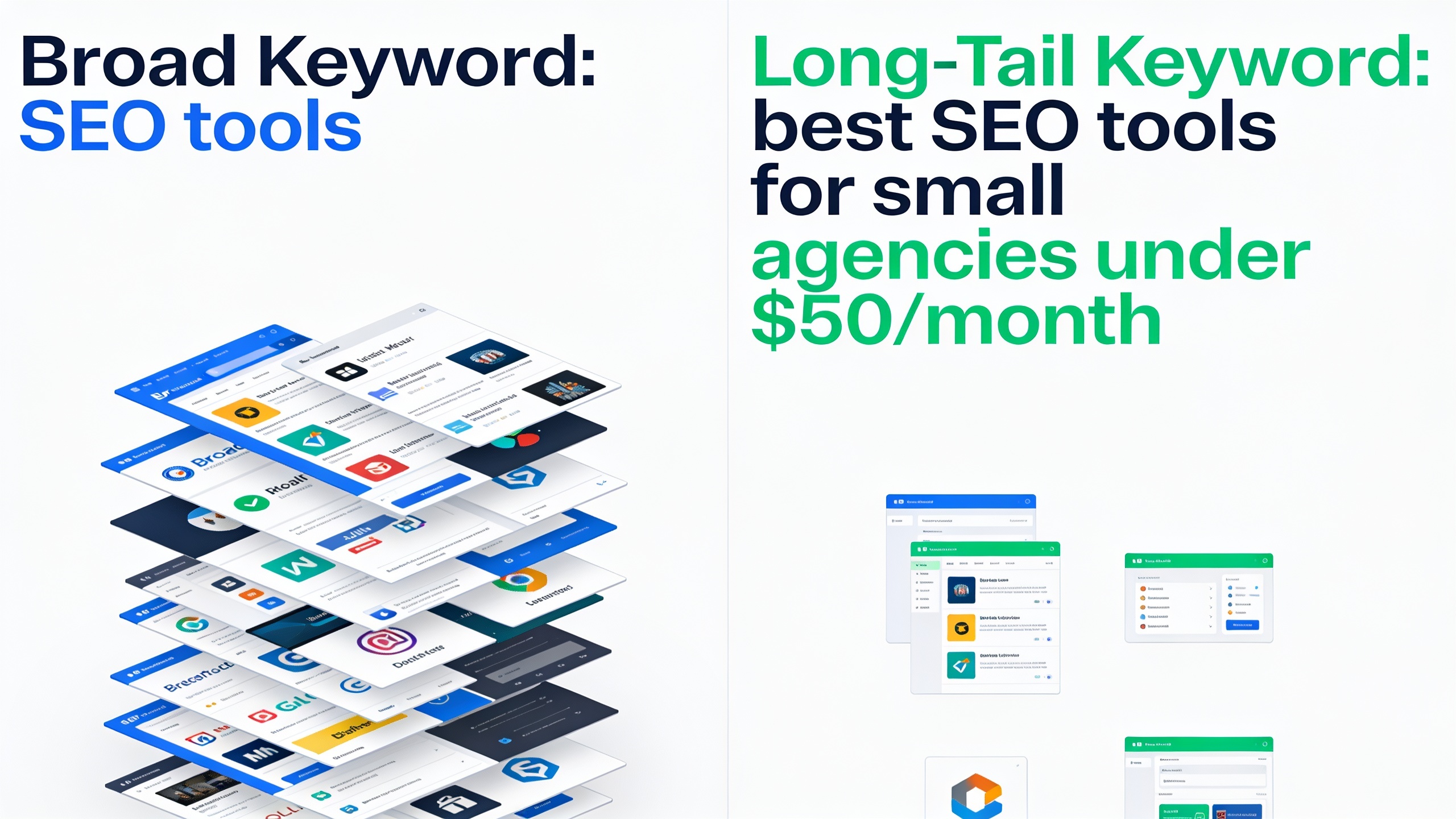
Table of Contents
- What Are Long-Tail Keywords?
- Why Long-Tail Keywords Convert Better and Rank Faster
- Short-Tail vs. Long-Tail Keywords: A Side-by-Side Comparison
- How Do You Find Long-Tail Keywords? A Practical Research Process
- How to Target Long-Tail Keywords in Your Content
- Common Mistakes That Waste Long-Tail Opportunities
- How Long-Tail Keywords Fit Into a Scalable Content Strategy
- FAQ: Long-Tail Keywords
What Are Long-Tail Keywords?
Long-tail keywords are search phrases, usually three or more words, that are far more specific than broad "head" terms. They get searched less often, but the intent behind them is crystal clear. So instead of going after "content marketing" (good luck), the long-tail version might be something like "how to plan a content marketing calendar for a five-person team." Those extra words tell you exactly what the person wants, which makes it way easier to write one focused page that nails it.
The name comes from the shape of a search demand curve. A tiny number of high-volume keywords cluster at the head, and then there's this enormous, sprawling tail of low-volume, hyper-specific queries stretching off into the distance. On its own, one long-tail term might only get searched a few times a month. But add up all of them and you're looking at a massive chunk of everything people type into a search bar. Google has said that around 15% of the searches it processes every day have literally never been searched before. Sit with that for a second. It tells you just how messy and specific real human search behavior is compared to the neat little "top keywords" list your SEO tool hands you first.
Most long-tail keywords fall into a few shapes you'll start recognizing everywhere. There are question queries ("what is a content calendar"), comparison queries ("Ahrefs vs Semrush for small blogs"), location- or role-specific ones ("SEO agency for dental practices in Ohio"), and problem-and-solution queries like "why is my blog traffic dropping after a Google update."
Every one of those signals a searcher who already knows, more or less, what they're after. And that's exactly why long-tail keywords convert on a completely different level than generic head terms.
Why Long-Tail Keywords Convert Better and Rank Faster
Long-tail keywords convert better because they match a searcher's intent more precisely, and they rank faster because fewer entrenched pages are fighting to answer that one narrow question. Both come down to the same thing, really: specificity kills ambiguity, for the search engine and for the human.
The Intent Advantage
Think about who's typing "running shoes." Could be anyone. Someone browsing, someone comparing brands, someone worried about their knees, someone about to buy. No idea. Now picture "best running shoes for flat feet under $100." That person has already made most of their decisions. There's basically zero guesswork in writing a page that serves them, and they're standing right at the edge of taking action, whether that's buying, signing up, or booking a call. This is why long-tail traffic has always been treated as lower volume but higher quality. The audience filtered itself before it ever reached you.
The Competition Advantage
Head terms like "SEO tools" or "email marketing" are owned by the big dogs. Sites with years of backlinks and authority baked in. If you're a newer site or a small team publishing generic content on those terms, you're going head-to-head with pages Google already trusts, and you will lose. Long-tail phrases scatter that competition across thousands of narrow queries instead, and a lot of those queries are being "answered" by thin, outdated pages. Sometimes by nothing at all. That's the gap. That's where a smaller site can genuinely earn a ranking in a short window, occasionally within weeks of hitting publish, instead of the many months a broad term demands.
This is basically the whole story behind a recent case study on how a SaaS startup tripled its organic traffic in six months. The growth didn't come from winning a few giant keywords. It came from steadily publishing content around the specific questions their customers were actually typing into Google.
The Compounding Effect
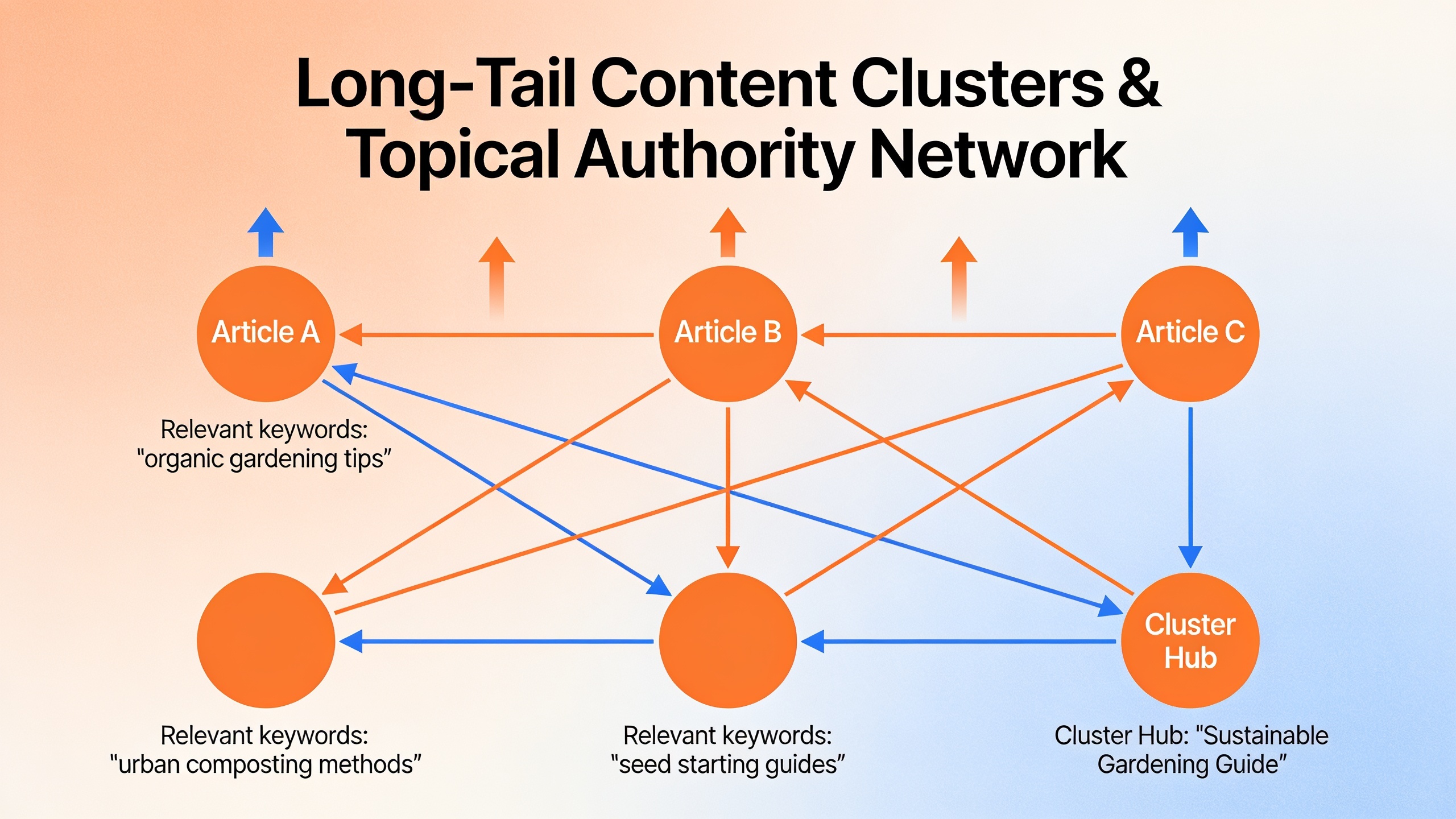
Here's the part people miss. Long-tail pages rarely do much on their own. But a site that publishes fifty focused long-tail articles ends up with a wide net of pages, each ranking for its own little cluster of related queries. And as you internal-link them together, you reinforce topical relevance across the whole site, which can actually help the more competitive head terms perform better down the road. That's why smart people treat long-tail research less like a task you finish and more like an engine you keep feeding. Every new article is another door into your site, not a replacement for the last one.
Short-Tail vs. Long-Tail Keywords: A Side-by-Side Comparison
Short-tail and long-tail keywords aren't rivals. They do different jobs in a growth strategy, but they behave very differently when it comes to volume, competition, and buyer intent. Here's the breakdown most of us bump into in practice.
| Attribute | Short-Tail Keywords | Long-Tail Keywords |
|---|---|---|
| Typical length | 1–2 words | 3+ words |
| Search volume per term | High | Low to moderate |
| Number of available terms | Small, finite set | Extremely large, effectively unlimited |
| Competition level | High — often dominated by established authority sites | Lower — many queries have weak or no dedicated content |
| Search intent clarity | Often ambiguous (informational, navigational, or commercial mixed) | Usually specific and clear |
| Typical conversion behavior | Lower — visitor may still be exploring | Higher — visitor is closer to a decision |
| Time to rank | Slower, often months to over a year | Often faster, sometimes within weeks for low-competition terms |
| Content strategy role | Brand authority, broad topical anchors | Traffic volume, qualified leads, topical depth |
Neither column wins outright, so don't read it that way. Short-tail keywords still matter for brand visibility and for anchoring the pillar pages your long-tail content links back to. But if you don't have years of domain authority stacked up? Long-tail is almost always the more realistic route to visible wins in the near term.
How Do You Find Long-Tail Keywords? A Practical Research Process
Long-tail keyword research is the work of finding specific, lower-volume phrases that match your audience's real questions, instead of just grabbing whatever generic terms your tool ranks highest by volume. And honestly, the best research doesn't start with a keyword tool at all. It starts with the actual words your customers use.
Start With Real Questions, Not a Keyword Tool
Before you open any software, go collect language from the people who ask questions about your product or industry. Sales calls and support tickets are gold, because customers describe their problems in their own words there. So are community forums, subreddits, and those niche Facebook or Slack groups where people vent about exactly the thing you solve. Review sites help too, since people get weirdly specific about what they loved or hated. And don't sleep on Google's own "People Also Ask" boxes and the "Related Searches" at the bottom of the results page.
This raw language is usually more specific, and more accurate, than anything a keyword database coughs up first. Because it's how people actually phrase their problems, not how marketers phrase their products. Those are rarely the same sentence.
Use Autocomplete and Question Modifiers
Google autocomplete is probably the simplest free long-tail tool that exists. Type a seed phrase, then start adding letters or common modifiers ("how," "why," "best," "vs," "for") and watch it surface real queries people are already searching. Run that with a handful of core seeds and you can generate dozens of long-tail variations in under an hour. No paid tool required.
Layer in Keyword Tools for Volume and Difficulty Data
Once you've got a messy raw list, this is where the tools earn their keep. They'll show you estimated search volume and keyword difficulty so you can prioritize. But the goal isn't to find the highest-volume long-tail terms. It's to find the ones where the intent clearly lines up with something you can genuinely help with, and where the pages currently ranking look weak, stale, or thin next to what you'd publish.
Want content like this running on autopilot for your own site? Try RobinRank free — AI-written, SEO-optimized articles generated and published automatically, no credit card required.
Group Keywords Into Topic Clusters
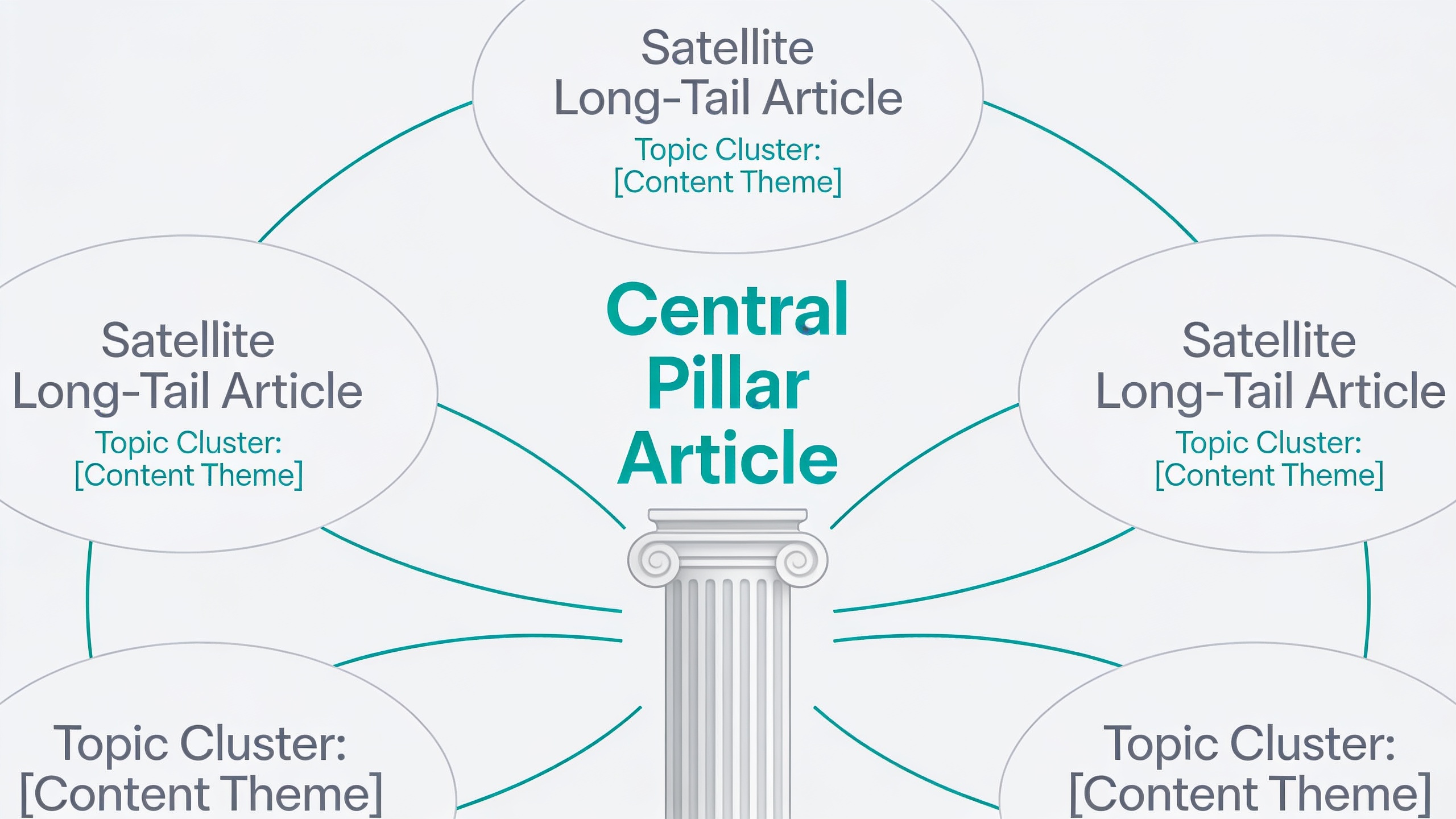
One long-tail keyword rarely justifies its own page in isolation. The real payoff comes from bundling dozens of related phrases into a topic cluster served by one solid article, with internal links from supporting pieces. This clustering is also what makes the whole thing scalable. Instead of hunting single keywords one by one like some kind of SEO whack-a-mole, you're claiming entire content territories your competitors never bothered to fully cover.
How to Target Long-Tail Keywords in Your Content
Targeting a long-tail keyword well means answering the specific question behind it clearly and early, then layering in the depth and context around that answer. Long-tail content ranks by being obviously, unmistakably relevant to a narrow query. Not by stuffing keywords, and definitely not by writing vaguely about a broad topic and hoping the specific phrase gets picked up somewhere along the way. That never works.
Match the Page to the Intent Type
A query like "how to fix duplicate title tags in WordPress" wants a direct, instructional answer near the top. Get to the point. A comparison like "RobinRank vs manual content agency for small business SEO" wants a structured breakdown, not a sales pitch dressed up as a comparison. Misreading intent is one of the fastest ways to tank a long-tail page. Publish a promotional page for an obviously informational query and it doesn't matter how clean your on-page optimization looks. It won't rank.
Use the Exact Phrase Naturally, Early
Your long-tail keyword should show up in the title, the opening paragraph, and at least one subheading, phrased the way a normal human would say it and not in some stiff, robotic construction. Yes, search engines are much better at understanding semantic variations now. But an exact or near-exact match in the first few sentences still confirms relevance fast, both to the algorithm and to the reader deciding whether to keep scrolling.
Build Supporting Structure Around the Core Answer
A long-tail article does best when it front-loads a direct answer and then expands with the stuff a surface-level competitor skips. Exact steps. Named tools. Realistic numbers. The annoying edge cases nobody warns you about. This is also where internal linking pulls its weight, connecting a long-tail article to a related pillar piece and back again, so search engines understand how the narrow topic slots into the broader subject your site covers.
Keep Pages Focused, Not Bloated
One long-tail keyword almost never needs 4,000 words, so please stop padding. Cramming a focused query full of unrelated tangents just to hit some arbitrary word count dilutes your relevance and sends readers bouncing before they find their answer. The right length is however long it takes to fully answer the query and its close variants. Sometimes that's 800 words. Sometimes 2,000. Let the question decide.
Common Mistakes That Waste Long-Tail Opportunities
The single most common mistake with long-tail keywords is treating them as an afterthought instead of a real strategy. People publish a handful of long-tail posts, see modest traffic, shrug, and quit right before the compounding effect kicks in. Which is heartbreaking, because they were so close. A few other mistakes come up again and again with teams new to this.
Chasing volume instead of intent. Picking long-tail keywords just because a tool flashes "low competition," without asking whether the query actually maps to something your business can credibly answer, gets you thin, useless pages that can't hold a ranking even if they briefly pop up.
Publishing without a content system. Long-tail growth runs on consistent output across dozens or hundreds of narrow topics. Teams that publish six articles and stop basically never see the cumulative effect that only shows up after sustained publishing.
Ignoring internal linking. Long-tail pages sitting in isolation, with nothing linking to or from related content, miss all the topical reinforcement that tells search engines your site actually knows what it's talking about.
Duplicating intent across pages. Publishing several articles aimed at near-identical long-tail phrases can split your relevance signals instead of stacking them. Sometimes your own pages end up fighting each other in the results instead of the competition. Which is a special kind of self-sabotage.
Skipping the update cycle. You can win long-tail rankings fast, sure. But you can lose them just as fast if the page goes stale while a competitor ships a fresher, more thorough version of the same answer.
How Long-Tail Keywords Fit Into a Scalable Content Strategy
Long-tail keywords work best as an ongoing publishing habit, not a short campaign, because the traffic comes from breadth and consistency rather than any one article blowing up. For small teams and startups without a dedicated content department, that's usually the real wall they hit. The research, writing, and publishing to cover dozens of long-tail topics well takes actual time, even though no single article is especially hard to produce.
This is the gap RobinRank was built to close. It's an AI-powered SEO platform that analyzes a site's niche, competitors, and Domain Rating to pinpoint content topics and backlink opportunities, then writes SEO-optimized articles (structured headings, internal and external links, auto-generated schema markup and all) and publishes them straight to a connected CMS like WordPress or Ghost on a schedule you set. For long-tail research specifically, that means the topic discovery step, figuring out which lower-competition queries are worth going after, happens inside the same workflow that writes and ships the article. Not as some separate, manual slog you keep putting off.
RobinRank also plugs published articles into a community-powered backlink network. Publish an article with a contextual link to another member's site and, once that outbound link is verified live, you earn Domain Rating-weighted credits. Those credits get spent later when another eligible article links back to yours. For long-tail content this actually matters, because even a well-targeted, low-competition page benefits from some outside validation. A verified backlink can help a new long-tail page establish relevance faster than it ever would on on-page optimization alone.
None of this replaces the judgment of picking the right long-tail terms for your specific audience. That still comes down to understanding real customer language, like I harped on earlier. What changes is the pace at which you can act on that judgment. Instead of researching, writing, and publishing one long-tail article every few weeks, a scheduled AI workflow can hold the steady cadence that long-tail strategies need to actually compound.
FAQ: Long-Tail Keywords
How many words make a keyword "long-tail"?
There's no hard rule, but most people count phrases of three or more words as long-tail, especially when they include a specific qualifier like a location, a comparison, a use case, or a question word. The real defining feature isn't the word count anyway. It's how narrow the intent is compared to a broad head term.
Do long-tail keywords still matter with AI search and chatbots everywhere now?
Arguably they matter more. Specific, well-answered questions are exactly what AI-driven search leans on. Tools like ChatGPT, Perplexity, and Google's AI Overviews tend to pull from pages that clearly and directly answer a specific question, which is precisely how long-tail content is structured. A page built to satisfy "how to fix duplicate title tags in WordPress" is in great shape to get surfaced or cited by an AI assistant answering that same question, because the content already matches the specificity of the ask.
How long does it take to rank for a long-tail keyword?
Depends on your niche, the competition, and how strong your site already is. But plenty of low-competition long-tail keywords start showing movement within a few weeks of publishing, versus the many months a competitive head term usually demands. Sites with little existing authority may still take longer, since domain-level trust factors into rankings right alongside on-page relevance.
Should I target one long-tail keyword per page or several at once?
One primary long-tail keyword per page as the focus. That said, a good page will naturally cover several closely related variations and questions within the same topic, and it should. But forcing multiple genuinely different long-tail intents onto one page usually gives you a page that serves none of them well.
What's the difference between long-tail keywords and "low competition" keywords?
They overlap a lot, but they're not the same thing. A long-tail keyword is defined by its length and specificity. A low-competition keyword is defined by how hard it is to rank for, regardless of length. Some long-tail keywords are still brutally competitive (personal finance, I'm looking at you), while some short, generic-sounding keywords in obscure industries turn out to be shockingly easy. So check both dimensions. Don't assume length alone buys you an easy ranking.
Long-tail keywords won't replace a broader SEO strategy, and I'm not pretending they will. But they're still one of the most reliable ways for smaller sites, newer brands, and lean teams to earn organic visibility without waiting years for domain authority to show up. The businesses that treat long-tail research as an ongoing habit instead of a one-time list? Those are the ones still stacking traffic gains a year later.
Ready to stop writing content by hand? Start your free RobinRank trial and get a full month of SEO-optimized articles published on autopilot.