Schema Markup 101: How Structured Data Improves Rankings
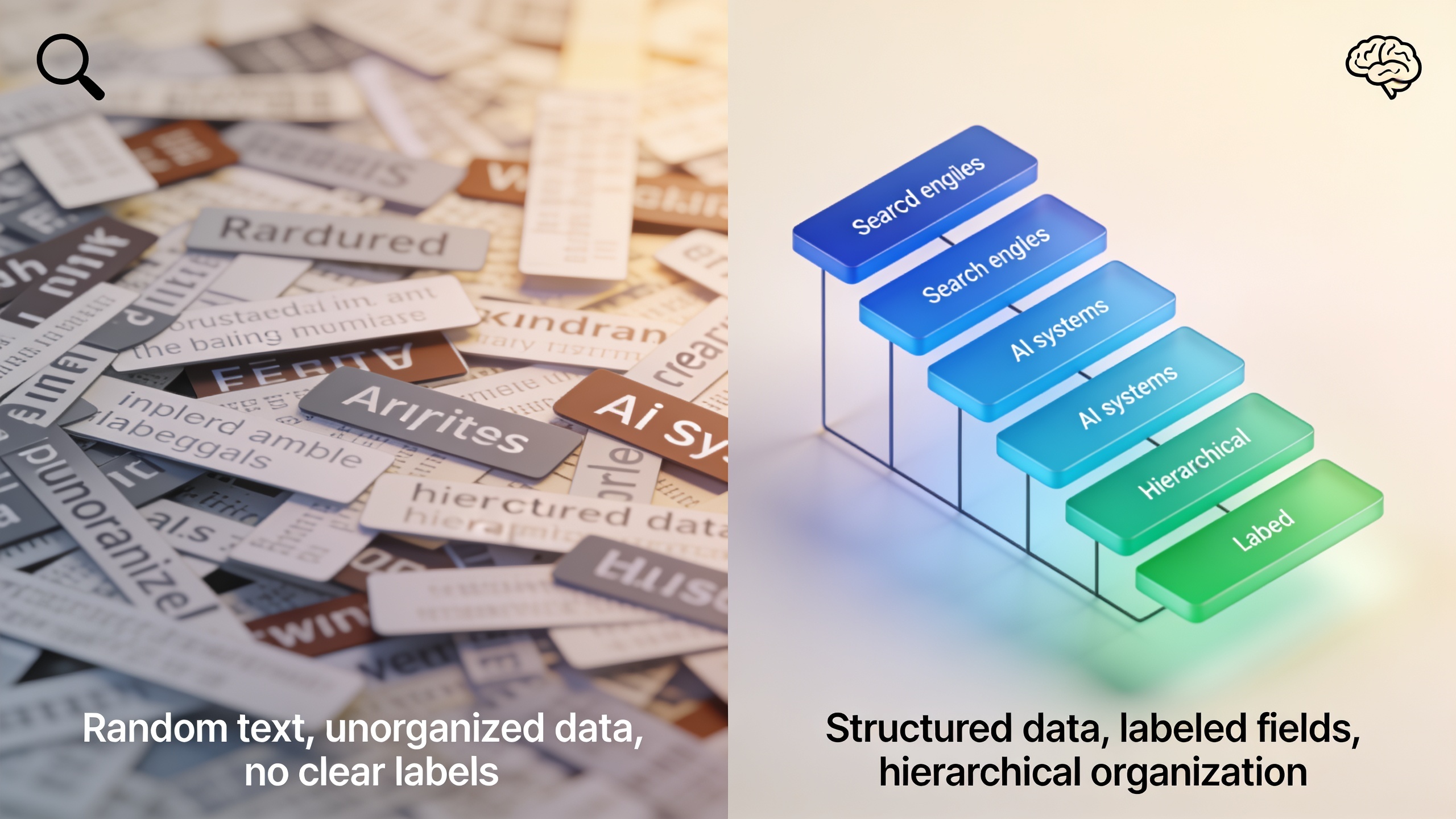
If you're doing SEO, marketing content, or just running a small business and fighting for scraps of search real estate, schema has quietly gone from "nice extra" to "kind of the baseline now." So I want to walk through what structured data really is, which schema types actually matter, how to add it without becoming a developer (or with just a tiny bit of code), and how the whole thing ties into AI Overviews and answer engines.
Table of Contents
- What Is Schema Markup?
- How Does Schema Markup Affect Rankings?
- Common Types of Schema Markup You Should Know
- How Do You Add Schema Markup to a Website?
- Schema Markup and AI-Generated Answers
- Common Schema Markup Mistakes to Avoid
- How to Test and Validate Structured Data
- Frequently Asked Questions
What Is Schema Markup?
Schema markup is code (usually written in JSON-LD) that labels the pieces of a webpage using a vocabulary search engines already understand: a product's price, a recipe's cook time, an article's author, that kind of thing. Think about the difference it makes. Without it, a search engine reads "Chocolate Chip Cookies, 25 minutes, 4.8 stars" as a random string of words. With it, the engine knows "okay, this is a Recipe, this is its cookTime, this is its aggregateRating." Same words. Completely different level of understanding.
The vocabulary comes from Schema.org, a project launched back in 2011 by Google, Microsoft (Bing), Yahoo, and Yandex. The whole point was to agree on one shared standard instead of everybody inventing their own. These days Schema.org documents hundreds of item types, everything from Article and LocalBusiness to Event, JobPosting, and FAQPage, each with its own bundle of properties.
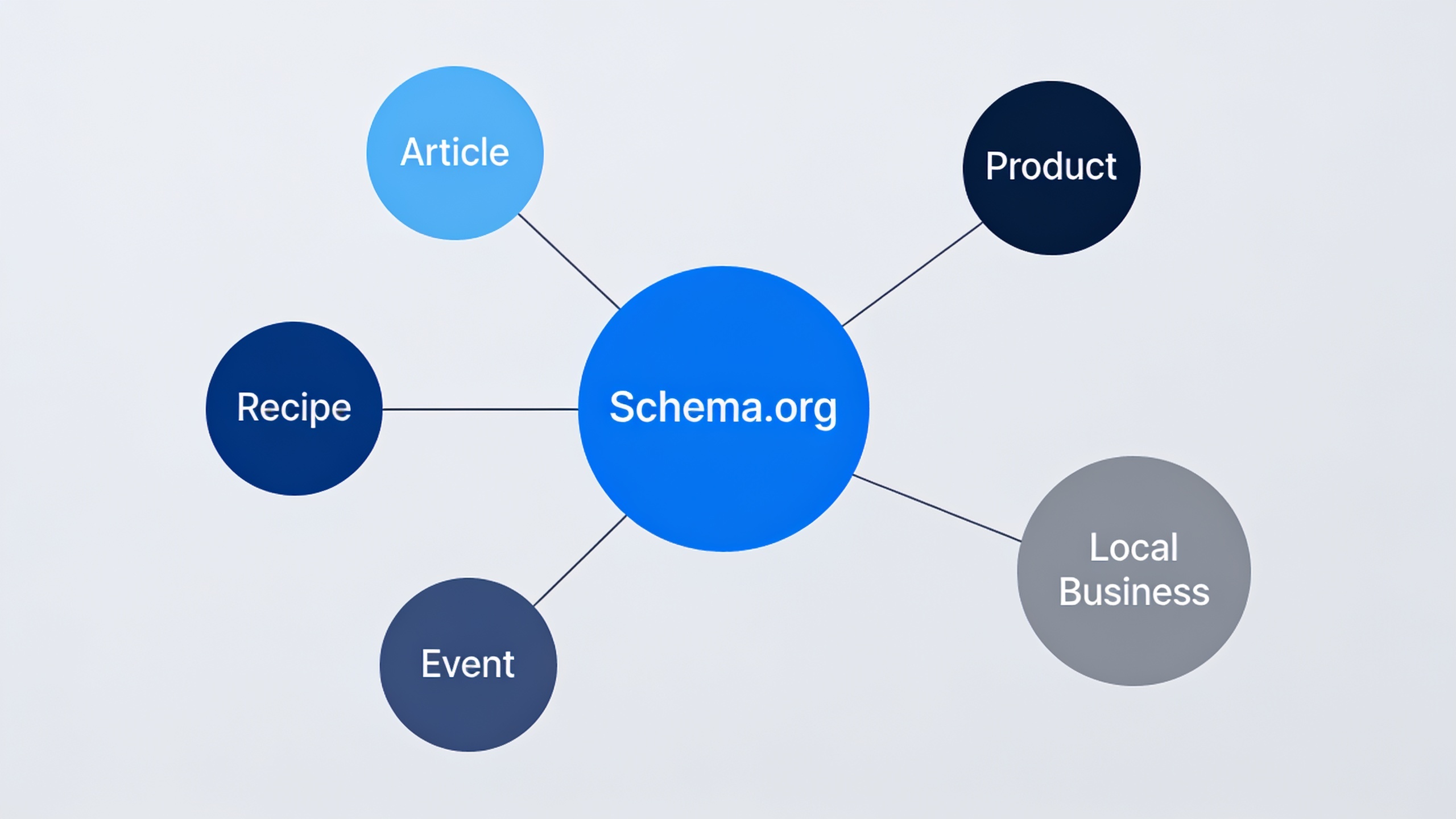
Structured data SEO (basically the practice of applying all this strategically across a site) is a different animal from writing good copy or optimizing keywords. It's more like a translation layer sitting underneath the stuff your visitors actually see, built purely for machines. Crawlers, knowledge graph systems, voice assistants, and now the large language models spitting out AI answers.
You'll bump into three technical formats out there. JSON-LD is the one Google recommends, and it lives in a `