What Is Programmatic SEO? A Guide to Scaling Content Fast

It's blown up as a strategy for one very simple reason: every content team eventually hits the same wall. There aren't enough hours in the day to write everything by hand. And the companies that figured this out early got a serious head start. Zapier, Wise, Nomad List. They were building entire acquisition channels on programmatic pages years before anyone was arguing about "AI content" on Twitter. What's changed is that the tooling has caught up, so now this isn't just a play for well-funded startups with engineering teams to burn.
In this guide I'll walk through how programmatic SEO actually works, when it's worth your time (and when it really isn't), what tends to go sideways, and where automated publishing platforms like RobinRank slot into a modern content workflow.
Table of Contents
- What Is Programmatic SEO?
- How Does Programmatic SEO Work?
- When Does Programmatic SEO Make Sense for Your Business?
- Programmatic SEO vs. Traditional Content Creation
- What Are the Risks of Programmatic SEO?
- How Automated Publishing Tools Fit Into a Programmatic SEO Strategy
- How to Build a Programmatic SEO Strategy Step by Step
- Frequently Asked Questions
What Is Programmatic SEO?
Programmatic SEO is a way of producing search-optimized pages at scale by combining a data set, a page template, and an automated publishing process, instead of writing each page one at a time. The whole point is to grab search demand across tons of similar, high-intent queries that a human team would take months (or honestly, years) to cover if they were writing separate articles for each one.
The textbook example is a real estate site that builds a page for every combination of "[bedroom count] apartments for rent in [city]." The skeleton stays the same across every page. Same headline structure, same comparison table, same FAQ block, same internal links. But the data changes. City name, price range, listing count, all swapping out per page. Multiply that template across a few hundred cities and bedroom counts and suddenly you've got thousands of indexable URLs, each one targeting a long-tail keyword that would never in a million years justify its own hand-written blog post.
How Programmatic SEO Differs from Traditional Content Marketing
Traditional content marketing usually goes like this: a writer picks a topic, researches it, and produces one article optimized for a keyword or two. Programmatic SEO turns that on its head. Instead of starting with a topic, you start with a keyword pattern and a data source, then generate variations of the same page across every value in that data.
And here's what people get wrong. These two approaches aren't rivals. Most of the mature SEO programs I've seen run both at the same time. Long-form editorial for the competitive, high-value stuff that deserves a human brain, and programmatic pages for the long tail of repetitive, structured queries. The actual skill isn't picking a side. It's knowing which queries deserve a hand-crafted deep dive and which ones are perfectly well served by a good template.
How Does Programmatic SEO Work?
Programmatic SEO works by stacking three layers on top of each other: a data layer, a template layer, and a publishing layer. Together they turn a spreadsheet of variables into hundreds of live, indexed pages. Each layer does its own job, and weak work on any single one is usually the difference between a programmatic win and a Google penalty. There's no hiding a bad layer.
The Data Layer
The data layer is the structured information feeding every page. City names, product SKUs, industry categories, integration names, price points, comparison entities, whatever. It might come from an internal database (a marketplace's own listings), a public data set (census or government stuff), or an API pulling live info like weather, currency, or shipping rates. Whatever the source, the quality of this data pretty much decides whether the pages are worth anything. Thin or outdated data gives you thin, useless pages no matter how gorgeous your template is. You can't polish your way out of bad data.
The Template Layer
The template layer is your reusable page design. The headline formula, the body structure, the comparison table, the FAQ block, all of it getting filled with different data for each URL. A good template answers the searcher's question right in the first paragraph, packs in genuinely useful specifics (numbers, comparisons, local details), and varies enough page to page that Google doesn't flag them as near-duplicates.
This is also where most programmatic efforts crash and burn. A template with too little unique value per page, stamped across thousands of URLs, doesn't just create a small problem. It multiplies that small problem thousands of times over. So if your template is weak, you're not launching a content channel. You're launching a liability at scale.
The Publishing Layer
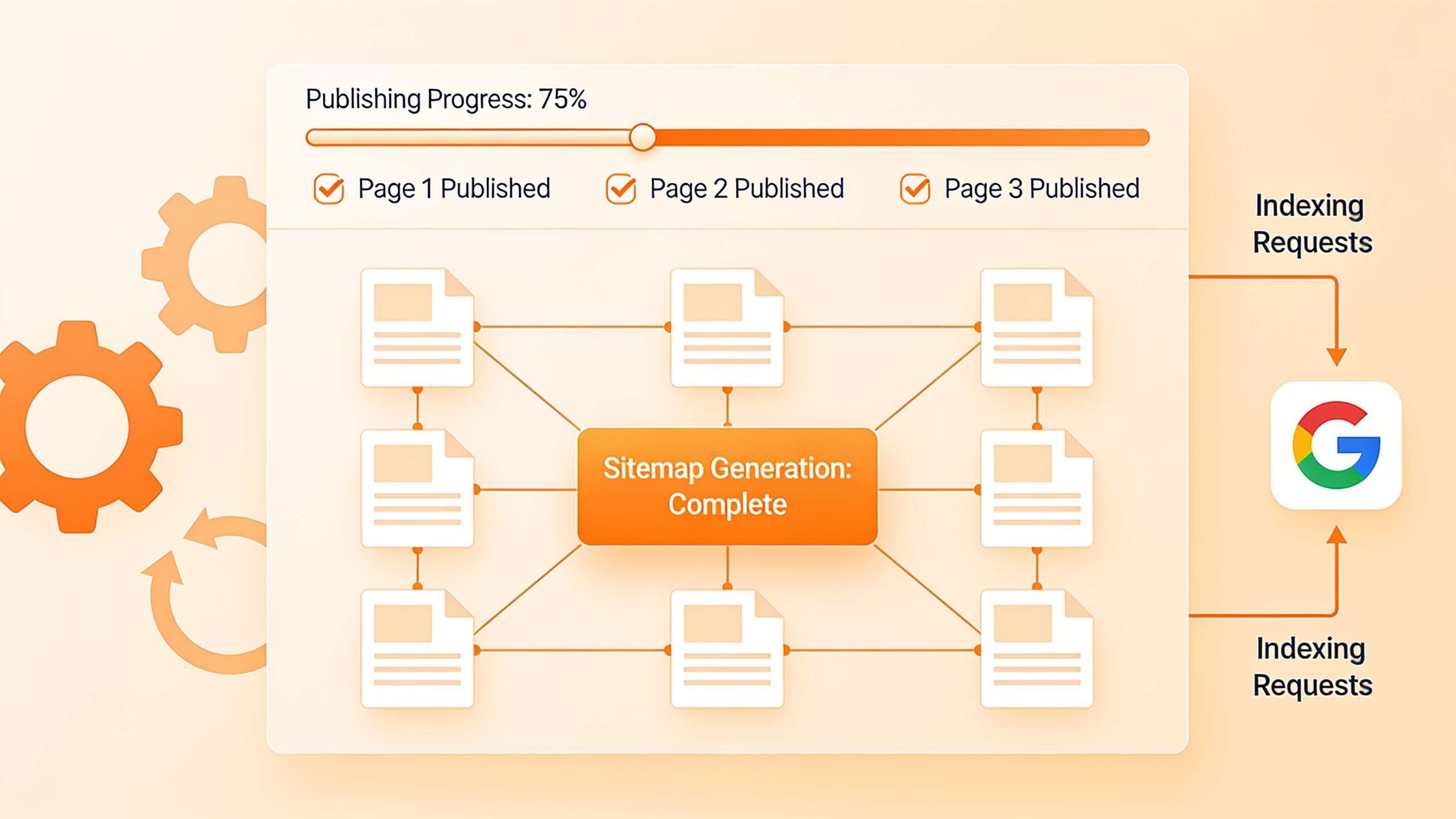
The publishing layer is the boring-but-critical infrastructure that actually gets pages online. CMS integration, internal linking logic, sitemap generation, indexing requests. Try manually publishing even 200 pages through a typical CMS and you'll understand fast why this used to be such a nightmare. It's slow, it's tedious, and it's begging for human error. Which is exactly why automated publishing tools have become the beating heart of modern programmatic SEO. The good ones generate, format, and push pages live without anyone copy-pasting HTML into a CMS one URL at a time. (If you've ever done that manually for a big batch, you have my sympathy.)
When Does Programmatic SEO Make Sense for Your Business?
Programmatic SEO makes the most sense when you've got a big, structured set of near-identical queries with real search demand behind them, plus enough underlying data to make every page meaningfully different. It makes the least sense when your product serves a narrow audience with few repeatable patterns, or when you just don't have the data to make each page worth reading.
Signs You're a Good Fit
You're probably a solid candidate if you've got a multi-location or multi-category setup, like franchises, marketplaces, or local service providers where "[service] in [city]" repeats across dozens or hundreds of markets. Same goes if you're in a product-catalog or comparison-heavy niche (software, finance tools, hardware) where "[Product A] vs [Product B]" and "best [product] for [use case]" queries are everywhere.
The real edge, though, comes from data. If you've got proprietary or aggregated data your competitors don't have, that's the actual thing separating your page from some thin AI-generated knockoff. And you'll want either some existing domain authority or a link-building plan, because getting hundreds of new pages crawled, indexed, and ranked in a reasonable timeframe doesn't happen on hope alone.
When to Avoid It
Programmatic SEO is a bad fit if you've got a single product, a tiny service area, or a topic that just doesn't split into repeatable variations. It's also genuinely risky for sites with little authority. Publishing hundreds of thin pages on a brand-new domain is one of the fastest ways to invite scrutiny instead of growth, and I've watched people learn that the hard way. If your keyword research surfaces a handful of valuable terms rather than a pattern that repeats across dozens or hundreds of variables, do yourself a favor: write a smaller batch of well-researched, hand-edited articles. They'll almost always beat a rushed programmatic push.
Programmatic SEO vs. Traditional Content Creation
Both approaches can live comfortably inside the same strategy, but they solve different problems and eat different resources. Here's how they stack up across the stuff that actually matters when you're deciding where to put your money.
| Factor | Programmatic SEO | Traditional Content Creation |
|---|---|---|
| Best for | Repeatable query patterns (locations, products, comparisons) | Competitive, high-value, or nuanced topics |
| Volume | Dozens to thousands of pages from one template | Typically one article at a time |
| Speed to publish | Days to weeks for an entire batch | Days to weeks per single article |
| Core requirement | Structured data set + solid template | Subject-matter research + editorial judgment |
| Main risk | Thin or duplicate-feeling pages if data is weak | Slower total output, harder to scale |
| Google scrutiny | Higher — associated with "scaled content abuse" if low-value | Lower, if content is genuinely researched |
| Typical owner | SEO/growth teams, automated publishing tools | Writers, editors, content marketers |
What Are the Risks of Programmatic SEO?
The biggest risk is publishing pages that are technically unique but practically worthless. And Google now goes after this pattern directly under its "scaled content abuse" spam policy, which came in as part of its March 2024 core update guidance on Google Search Central. That policy defines scaled content abuse as generating "many pages" whose main purpose is gaming rankings rather than helping people, and it doesn't care whether a machine, a human, or some combination cranked them out. Intent is what they're judging.
Want content like this running on autopilot for your own site? Try RobinRank free — AI-written, SEO-optimized articles generated and published automatically, no credit card required.
Now, that doesn't mean programmatic SEO is banned. It means your pages have to earn their spot. A city-by-city rental comparison page loaded with real, current local data is a completely different animal from one that just drops a city name into an otherwise empty shell. Google's line isn't "did a machine make this." It's "does this give the searcher something they couldn't get faster somewhere else." Keep that question in mind and you'll usually stay on the right side of the line.
A few other things that tend to go wrong:
- Index bloat: publishing way more pages than your crawl budget or authority can handle, which leads to slow or partial indexing. Google just shrugs and ignores half of them.
- Cannibalization: a pile of near-identical pages fighting each other for the same query instead of one strong, focused page winning it.
- Quality drift at scale: a template that reads fine on page one starts feeling robotic and repetitive by page 500 if the underlying data doesn't actually vary enough.
And then there's the one nobody wants to talk about: unreviewed AI output going straight to live. Automation makes it dangerously easy to publish faster than you can proofread, which is exactly why editorial review still matters even in a programmatic setup. The advice in How to Actually Edit AI-Written Content (Without Publishing Garbage) applies just as much to a batch of 300 programmatic pages as it does to one blog post. Factual accuracy, consistent tone, cutting the generic filler. None of that becomes optional just because you generated the content at scale.
How Automated Publishing Tools Fit Into a Programmatic SEO Strategy
Automated publishing tools take over the repetitive, soul-draining parts of programmatic SEO. Drafting the on-page copy, formatting it for search intent, pushing it live. That frees up your team to focus on the strategy and data quality that actually decide whether these pages rank. This is the layer where "scalable content creation" stops being a slide in a pitch deck and becomes something a small team, or even a solo founder, can genuinely pull off without hiring a whole content department.
RobinRank is built exactly around this idea. It's an AI-powered platform that writes, optimizes, and publishes articles automatically, which is the kind of infrastructure that makes cranking out large batches of on-brand, structured content realistic without a manual writing bottleneck strangling you. But it goes past just generating content. RobinRank also links sites together through a verified backlink exchange network, and that's a genuinely useful complement here, because a big batch of new pages needs authority signals to get crawled and ranked. Volume alone won't do it.
Inside that exchange network, every site gets manually reviewed before it shows up, and RobinRank sets a floor of Domain Rating 5 or higher from Ahrefs as a baseline quality filter. No PBNs, no link farms, no throwaway domains. Instead of cold outreach (which, let's be honest, most of us hate doing), site owners browse listings by niche and Domain Rating, request a placement on a specific page with a specific anchor, and offer a reciprocal link back. RobinRank then crawls the live page to confirm the link is actually there, and on the Pro tier it keeps checking periodically to warn you if a placement vanishes. Per RobinRank's own published data, roughly 65% of placement requests get a reply within seven days, and about 30% end up as a link that goes live on a real, crawled page. That's a meaningfully better starting point than firing off a blind outreach email with zero relationship behind it. The service is free for seven days after your site is approved, no card required, and runs $19 a month after that, cancelable whenever.
If you're trying to figure out which platform actually suits your workflow, especially at the volume programmatic SEO demands, it's worth comparing feature sets side by side. RobinRank vs SurferSEO: Which AI SEO Platform Actually Fits Your Team breaks down where each one lands when the goal is content at scale rather than fine-tuning individual pages one at a time.
How to Build a Programmatic SEO Strategy Step by Step
Building a programmatic strategy that actually ranks (instead of tripping a spam filter) comes down to getting your data, templates, and quality control in the right order before you ever publish a big batch. Rush the sequence and you'll pay for it later.
1. Find a repeatable keyword pattern. Use keyword research tools to hunt for query structures that repeat across a variable, like locations, products, integrations, or comparisons, with real search volume across the whole pattern. Not just one or two head terms carrying the entire thing.
2. Audit your data source. Before you build a single template, make sure you actually have (or can get) enough unique, accurate data to make every page genuinely different. My rule of thumb: if 80% of the content on every page would be identical filler, the pattern isn't ready yet. Full stop.
3. Design the template around user intent, not just keyword insertion. A good template answers the implied question in the first sentence, includes at least one concrete data point specific to that page (a price, a stat, a local detail), and links to related pages in the batch so both users and crawlers can find their way around.
4. Generate and review in batches, not all at once. Publish 50 pages, check indexing and early performance, then scale to 500. That's way safer than dumping an entire data set live on day one. It also gives you a shot at catching template-level problems before they get baked into thousands of URLs, which is a far more expensive mistake to unwind.
5. Bake linking into the rollout. Programmatic pages rank faster when they're linked from a hub page and from relevant existing content on the site, and when the domain's got ongoing link-building going on. This is where a verified exchange network can support a programmatic push instead of you just praying the pages rank on-page strength alone.
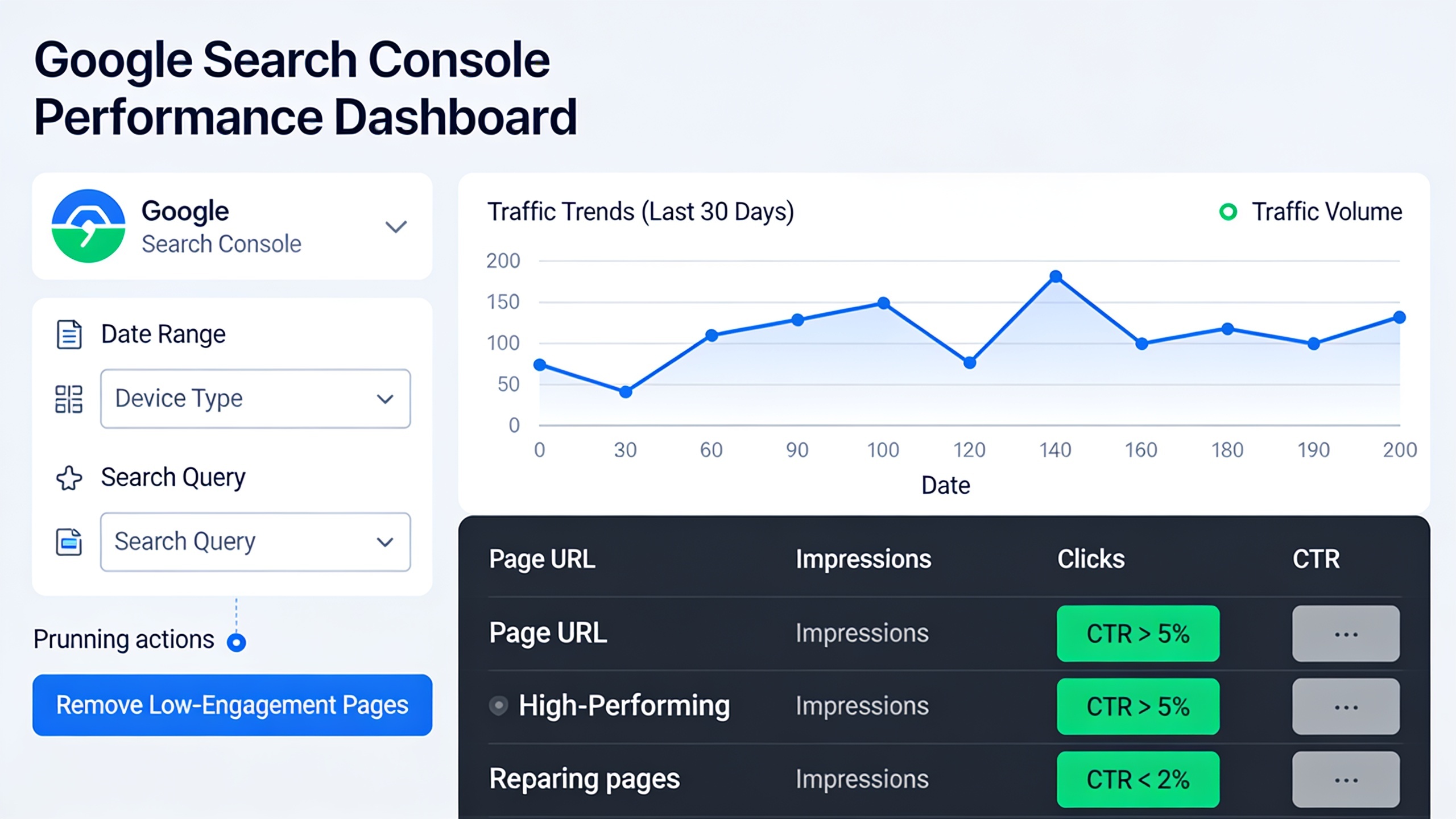
6. Watch indexation and prune the dead weight. Not every page in a batch is going to earn traffic. That's fine, it's normal. Check Google Search Console regularly, find the pages sitting at zero impressions after a fair window, and then improve, merge, or kill them. Keeping the junk trimmed protects your overall site quality signal.
Frequently Asked Questions
Is programmatic SEO just AI-generated content with a fancy name?
No, they're different things. Programmatic SEO is the strategy of building lots of pages from a repeatable template plus a structured data set. AI-generated content is just one way to write the copy that fills those templates. You can run a programmatic strategy with human-written copy, AI copy, or a mix of both. The defining feature is the templated, data-driven structure, not who or what typed the words.
Will Google slap me for doing programmatic SEO?
Not by default. Google doesn't penalize templates or automation on principle. What it targets is "scaled content abuse" under spam policies it clarified in the March 2024 core update guidance, meaning pages churned out in bulk mainly to manipulate rankings rather than help anyone. The deciding factor is always whether each page gives a searcher real, specific value, not whether a program built it.
How many pages should I start with?
There's no magic number, sorry. But a cautious rollout beats a reckless one every time. Publish a smaller batch first (say 50 to 100 pages), watch how indexing and early rankings behave, then scale up. That's far safer than launching thousands of URLs at once on a domain that hasn't earned a solid crawl and authority profile yet.
What's the difference between this and just running a content calendar?
A content calendar usually means one topic per article, each chosen and researched on its own, often targeting competitive or evergreen keywords. Programmatic SEO covers a whole family of related long-tail keywords at once, using one template stamped across a data set. It's generally the better fit for structured, repetitive patterns like locations, products, or comparisons.
Can a small business realistically pull this off?
Yeah, honestly more than ever, especially with automated publishing tools handling the writing and formatting that used to demand a dedicated content team. A small business with a clear data set (service areas, product variations, comparison categories) can use these tools to launch a programmatic batch without the headcount this strategy needed a decade ago. Just don't let "small scale" become an excuse to skimp on data quality or editorial review. Those matter just as much whether you're publishing 50 pages or 5,000.
Programmatic SEO isn't a shortcut around good content. It's a way to apply the same standards of usefulness and specificity across hundreds of pages instead of one. The businesses that win with it treat automation as the engine that clears out the manual bottlenecks, not as a substitute for the data quality, template design, and editorial oversight that made this work for companies like Zapier and Wise in the first place. Nail those fundamentals and programmatic SEO turns into one of the most efficient ways there is to convert long-tail search demand into steady organic traffic. Skip them, and you've just built a very fast way to disappoint Google.
Ready to stop writing content by hand? Start your free RobinRank trial and get a full month of SEO-optimized articles published on autopilot.