7 Best AI SEO Tools for Small Business Owners in 2025

The upside is that AI SEO tools have gotten weirdly good over the last couple of years. Some of them now handle the entire chain, from digging up keywords to writing and publishing full articles, without you ever having to hire a content person. Statista's 2024 digital marketing outlook found that small and mid-sized businesses using AI-assisted marketing tools reported measurable time savings on content production, which honestly tracks with why so many solo founders and tiny startups jumped on board so fast. When you're strapped for hours, "measurable time savings" isn't a buzzword, it's oxygen.
So this is my rundown of seven AI SEO platforms worth a look this year. I'll go through pricing, what each one actually does, and how painful (or not) it is to use if you're nobody's idea of an SEO specialist. Whether you're a one-person shop trying to rank a local service page or an agency juggling a dozen client sites, something here should slot into your budget and workflow.
Table of Contents
- What Are AI SEO Tools and Why Do Small Businesses Need Them?
- How We Evaluated These Tools
- 1. RobinRank
- 2. Surfer SEO
- 3. Semrush
- 4. Ahrefs
- 5. Jasper
- 6. Frase
- 7. NeuronWriter
- Pricing and Feature Comparison Table
- How to Choose the Right AI SEO Tool for Your Business
- FAQ
- Final Thoughts
What Even Are AI SEO Tools (And Do You Need One)?
AI SEO tools are software platforms that use machine learning and natural language processing to automate chunks of the SEO grind: keyword research, content writing, on-page optimization, technical audits, that whole mess. Why they matter for small business owners is simple. They let you skip hiring a full content or SEO team, which can easily run you tens of thousands a year in salaries alone.
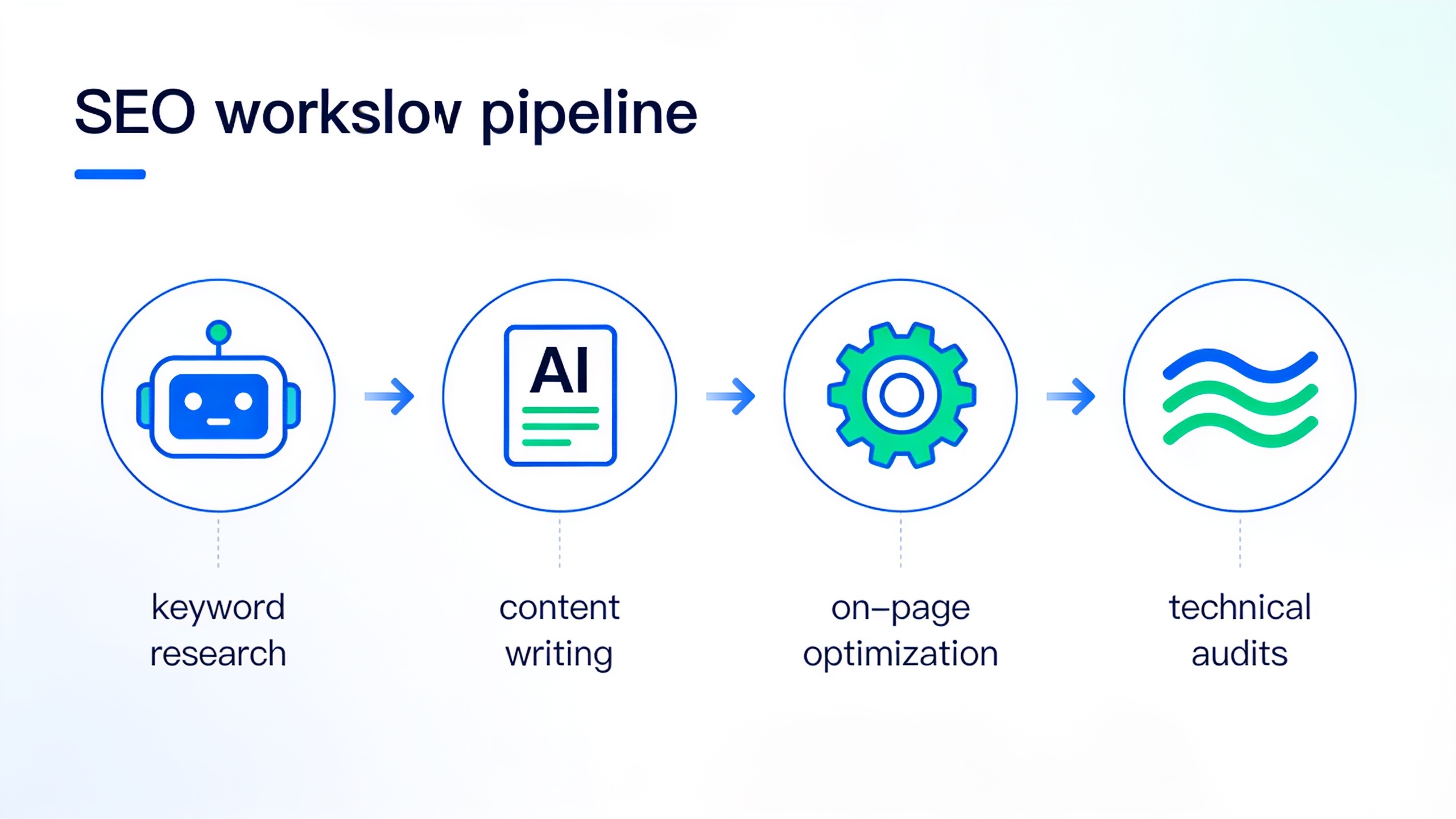
Think about what traditional SEO work actually involves. Researching keywords by hand, drafting long articles, checking what competitors rank for, chasing backlinks, keeping an eye on your site's technical health. That's not a task. That's a full-time job, maybe three. AI platforms squish all of that down: keyword clusters in seconds, optimized drafts in minutes, technical issues flagged automatically. Most small business owners simply can't do all that manually while also, you know, running the actual business.
And there's a bigger shift happening underneath all this. Search itself is changing. As I got into in SEO Trends 2025: What's Actually Changing (And What to Do About It), search engines are shoving more AI-generated summaries and answer boxes in front of the traditional blue links, which means your content needs to be built differently than it was even two years ago. Tools that get this shift have a real edge over generic writing assistants that just spit out paragraphs.
How I Sized These Up
I judged every tool on five things: is the pricing transparent, how wide is the feature set (keyword research, content generation, technical audits, backlinks), can a normal person use it without a degree in SEO, is the AI output any good, and does it actually publish for you or just hand you a draft you still have to babysit.
I leaned toward platforms a solo founder or a small team could realistically run without hiring a specialist. That's the whole audience here. Small business owners, startup founders, lean agencies. Not enterprise SEO departments with a room full of technical staff who love complexity.
1. RobinRank
RobinRank is an AI-powered SEO platform built specifically for businesses that want organic traffic without hiring a content team. It rolls automated article writing, on-page optimization, and a natural backlink exchange network into one product, and it's designed to run the whole content pipeline from topic research all the way to publishing, not just help with one slice of it.
Here's what actually makes it different from most AI SEO tools I've poked at: it doesn't quit after handing you a draft. It writes, optimizes, and publishes articles straight to your connected site, then keeps working to build authority through a backlink exchange network that connects sites in related niches. That last part solves a problem that trips up basically every small business I've talked to. They can crank out content just fine. What they can't do is earn the backlinks that make that content rank in the first place.
Best for: Small business owners and startup founders who want a mostly hands-off content and SEO engine, not yet another tool that still needs a writer or editor to finish the job.
Key features:
- Automated article generation and direct publishing to your CMS
- Built-in on-page SEO (headings, meta tags, internal linking)
- A natural backlink exchange network for off-page authority
- Keyword and topic research tied to actual search intent
Pricing: RobinRank runs tiered plans that scale with content volume, from an entry level aimed at single-site small businesses up to agency plans for teams handling multiple client sites. Exact numbers live on robinrank.ai, and they're generally cheaper than paying a freelance writer for the same monthly output.
Ease of use: Since it automates the full loop, research, writing, optimization, publishing, you barely need SEO knowledge to keep it running day to day. That's a big deal if you don't have time to sit down and learn a complicated dashboard.
2. Surfer SEO
Surfer SEO is a content optimization platform that analyzes the top-ranking pages for a keyword and hands your writer a data-backed outline: word count targets, heading structure, keyword density, the works. It's one of the more established names in this space, and it built that reputation by turning on-page optimization into something measurable instead of a guessing game.
Surfer shines as a sidekick. If you or a freelancer are still writing by hand but want real-time feedback on whether the piece is built to compete, its Content Editor scores your draft against competitors as you type. Genuinely handy for beginners who are still figuring out what "optimized" content even looks like.
Best for: Businesses that already have somebody writing and just want a scoring system to tighten things up.
Pricing: Plans start around $89/month for the Essential tier and climb to $219/month or more for Scale plans with bigger quotas and team seats, per Surfer's published pricing as of 2025.
Limitation: It won't publish anything for you, and there's a real learning curve if terms like "NLP entities" and "content scores" make your eyes glaze over.
3. Semrush
Semrush is the big all-in-one digital marketing suite. AI-assisted keyword research, competitor analysis, site audits, an AI writing assistant, it's got a bit of everything, which makes it one of the most comprehensive SEO platforms out there. It's less a narrow "AI SEO tool" and more a giant toolkit with AI sprinkled throughout.
For small business owners, the real value is the sheer amount of data. You can hunt down competitor keyword gaps, track local rankings, audit technical problems, and dig through backlink profiles all from one dashboard. The catch? All that breadth brings complexity, and plenty of small business users end up touching maybe a fifth of what they're paying for.
Best for: Businesses that want one platform for SEO, PPC research, and competitive intelligence, not just content.
Pricing: The Pro plan starts at $139.95/month, Guru at $249.95/month, and Business at $499.95/month, according to Semrush's official pricing page.
Limitation: The learning curve is no joke. New users often need a few hours of tutorials before they can move around confidently, which can feel like overkill when all you really wanted was some blog posts published.
4. Ahrefs
Ahrefs made its name on its backlink database and keyword research, and it's steadily bolted on AI features like content grading and automated topic suggestions. It's still one of the most trusted tools among actual SEO pros, mostly because the depth and accuracy of its link and keyword data is hard to beat.
Small business owners usually reach for Ahrefs for one thing: competitor snooping. Which keywords is a competitor ranking for, what backlinks are propping up their authority, where are the content gaps you could sneak into. It's not really about generating content. It's about handing you the intel to steer a strategy.
Best for: Owners who want deep competitive and backlink data to guide strategy, even if they're writing or outsourcing the content itself.
Pricing: The Lite plan starts at $129/month, Standard at $249/month, Advanced at $449/month, per Ahrefs' 2025 pricing page.
Limitation: Ahrefs won't write or publish full articles, so you'll have to pair it with a writer or a separate content tool to get from research to a live post.
Want content like this running on autopilot for your own site? Try RobinRank free — AI-written, SEO-optimized articles generated and published automatically, no credit card required.
5. Jasper
Jasper started life as an AI copywriting tool for marketing stuff and has since pushed into longer SEO content, with templates, brand voice controls, and integrations with tools like Surfer. It's a favorite among marketing teams that pump out content across a bunch of channels, ads, emails, blog posts, not just SEO articles.
For small businesses, Jasper's strength is flexibility and keeping your brand voice consistent. You can train it on your company's tone and then reuse that voice everywhere, blog posts, product descriptions, social captions. The SEO-specific muscle is thinner than the dedicated platforms, though the Surfer integration patches that up for folks willing to pay for both.
Best for: Businesses that need AI writing across lots of content types, not just SEO blog posts.
Pricing: The Creator plan starts at $49/month for one seat, Pro plans start around $69/month, and Business pricing is custom for teams, based on Jasper's published rates.
Limitation: On its own, without something like Surfer or Semrush bolted on, Jasper's SEO optimization is pretty basic.
6. Frase
Frase is an AI content research and writing tool built around search intent. It analyzes the top results for a query and builds a content brief laying out exactly which questions your page needs to answer. It's especially good for businesses gunning for informational and question-based searches.
The thing people love about Frase is those AI-generated briefs. It pulls the common questions and subtopics from top-ranking pages so your writer knows precisely what a thorough article has to cover, no more staring at a blank page wondering what you forgot. There's also a built-in AI writer for drafting sections right inside the brief, which speeds up the whole research-to-draft slog quite a bit.
Best for: Content teams that want fast, intent-driven briefs before they write, especially for FAQ-heavy or how-to stuff.
Pricing: The Solo plan starts at $15/month for limited use, Basic at $45/month, Team at $115/month, according to Frase's pricing page.
Limitation: It's light on technical SEO auditing and backlink analysis compared to the Ahrefs and Semrush heavyweights.
7. NeuronWriter
NeuronWriter is a content optimization tool that mixes NLP-based keyword suggestions with SERP analysis, competitor content comparison, and an internal linking suggestion feature that's genuinely useful for small sites trying to build topical authority. It lives in roughly the same neighborhood as Surfer but tends to be the more budget-friendly option.
Its content editor scores your draft in real time against the top-ranking pages and suggests semantically related terms to work in, which helps your content perform for whole topic clusters instead of just one lonely keyword. And the internal linking suggestions are a nice touch for small businesses building a blog from nothing, because internal linking is one of those things everyone knows they should do and almost nobody actually does.
Best for: Budget-conscious small businesses that want Surfer-style content scoring without the bigger bill.
Pricing: The Bronze plan starts around $23/month, Silver at $45/month, Gold at $69/month, per NeuronWriter's official pricing.
Limitation: Like Frase and Surfer, it optimizes content but won't fully automate the writing and publishing the way an end-to-end platform does.
Pricing and Feature Comparison Table
| Tool | Starting Price/Month | Content Writing | Auto-Publishing | Backlink Building | Best For |
|---|---|---|---|---|---|
| RobinRank | Tiered, contact site | Yes, fully automated | Yes | Yes, backlink exchange network | Hands-off content + SEO growth |
| Surfer SEO | $89 | Assisted, needs writer | No | No | Optimizing existing content |
| Semrush | $139.95 | AI assistant only | No | Limited (outreach tools) | All-in-one SEO + marketing suite |
| Ahrefs | $129 | No | No | No (data/analysis only) | Competitive and backlink research |
| Jasper | $49 | Yes, general purpose | No | No | Multi-channel content writing |
| Frase | $15 | Yes, brief-based | No | No | Intent-driven content briefs |
| NeuronWriter | $23 | Assisted, needs writer | No | No | Budget content optimization |
So Which One Should You Actually Pick?
The right tool really comes down to one question: how much of the work do you want to hand off versus manage yourself? If you want something that researches, writes, optimizes, and publishes with barely any input from you, an end-to-end platform like RobinRank makes more sense than duct-taping together a bunch of separate research and writing tools.
Already got a writer on staff, or a freelancer you trust? Then you probably just need better guidance on structure and keyword targeting, and a scoring tool like Surfer or NeuronWriter is the cheaper, smarter call. But if what you really care about is deep competitive intelligence, backlink analysis, and technical audits, Ahrefs or Semrush will treat you well. Just know you'll still need something separate to actually produce the content.
Budget obviously plays into this too. A solo founder just dipping a toe into content marketing might start with a $15-45/month tool like Frase or NeuronWriter, while an agency running several client sites needs the higher-volume Semrush plans or an automated platform like RobinRank that scales publishing without scaling your headcount. It's also worth being honest with yourself about where you're actually stuck. If you're not even sure you need one of these platforms yet, 10 Signs Your Business Needs an AI SEO Platform runs through the specific red flags, stagnant traffic, an empty content calendar, that kind of thing, that usually mean it's time to bring in automation.
One thing small business owners chronically underestimate: backlinks. Content and on-page work matter, sure, but Google's ranking systems still lean hard on off-page authority signals, and let's be real, most small businesses have zero realistic path to building links manually. That's exactly why a built-in backlink exchange network, like the one baked into RobinRank, ends up being a genuine differentiator over tools that only handle the writing half of the puzzle.
FAQ
Do AI SEO tools actually work, or will they tank my rankings?
AI-generated content doesn't get penalized by Google just for being AI-written. Google's own guidance says it cares about content quality and helpfulness, not how the content was made. The danger is publishing low-effort, unoptimized AI slop at scale, which is why tools with built-in optimization and a human-review step tend to outperform raw AI drafts.
How much should I budget for this stuff?
Most small businesses can get rolling with a single tool in the $15-90/month range. Platforms that bundle content generation with publishing and backlink building, like RobinRank, may sit in a different tier depending on how much content you're producing. A sensible starting budget for a lean operation is $50-150/month, and you scale up as your output and traffic goals grow.
Can these tools completely replace hiring a content writer?
For a lot of small businesses, honestly, yes, especially with end-to-end platforms that handle research, drafting, optimization, and publishing with no manual steps. That said, if you're in a highly technical or regulated industry, you'll probably still want a human expert eyeballing drafts for accuracy before anything goes live.
Do I need separate tools for keyword research, writing, and backlinks?
Not anymore. Businesses used to stitch together a different tool for each stage, but newer platforms increasingly fold keyword research, content writing, on-page optimization, and backlink building into one subscription. That cuts both the cost and the headache of managing five different logins.
How long until I see results?
Most SEO efforts, AI-assisted or not, take three to six months to show real ranking movement, because search engines need time to crawl, index, and weigh your new content against everyone else's. Publishing consistently tends to speed things up compared to posting whenever you happen to remember.
At the risk of repeating myself: picking among the best AI SEO tools in 2025 mostly comes down to how much of the process you want off your plate versus in your hands. Solo founders and lean teams usually get the most out of platforms that automate the entire pipeline, while businesses that already have writers or analysts might prefer specialized tools that plug into what they've already got. Either way, the businesses seeing the strongest organic growth this year are the ones treating these tools as a steady publishing engine, not a one-off experiment they try once and forget about.
Ready to stop writing content by hand? Start your free RobinRank trial and get a full month of SEO-optimized articles published on autopilot.