7 Signs Your Content Strategy Needs a Multichannel Refresh
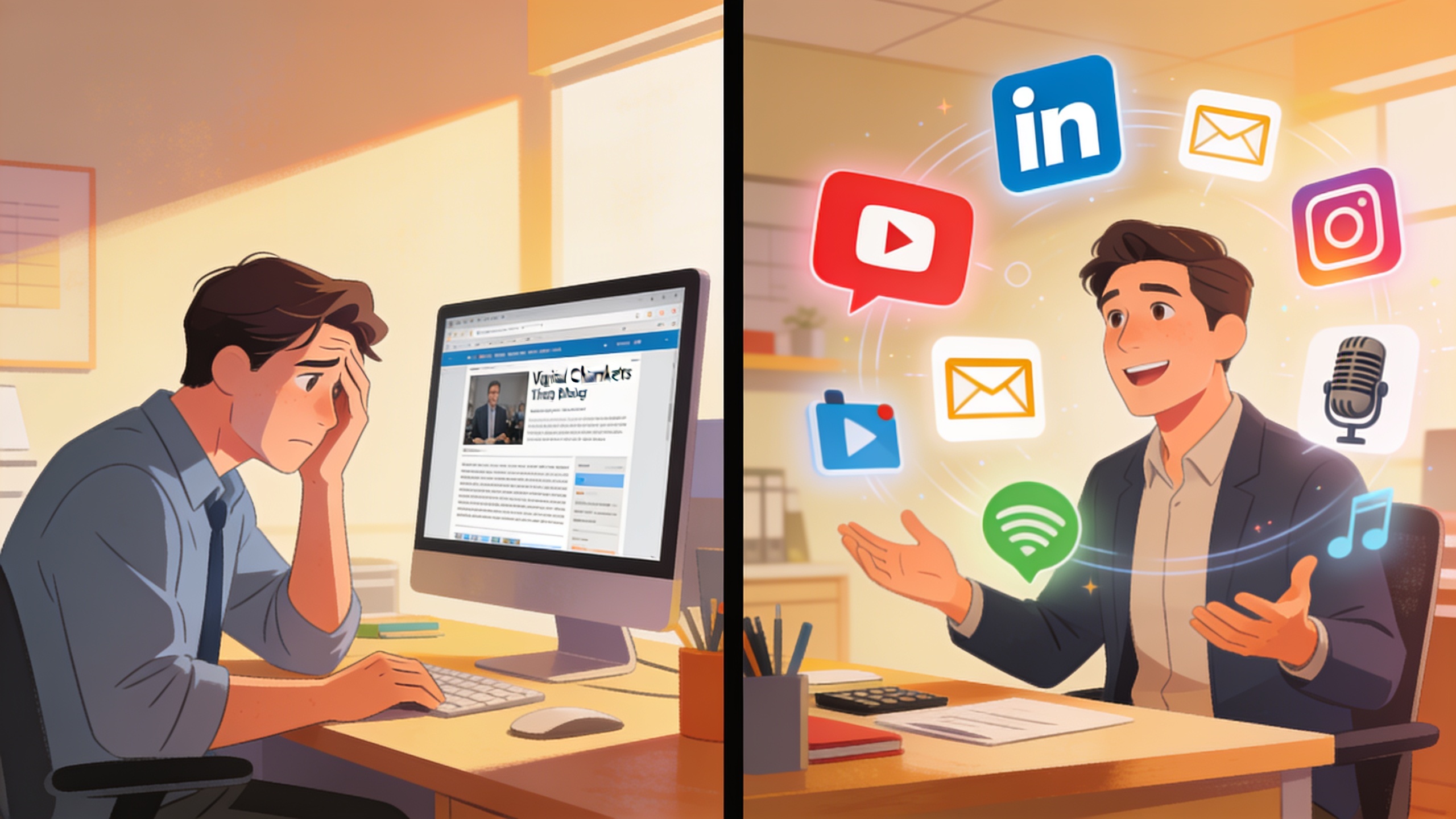
A multichannel content strategy just means you're spreading your ideas across a bunch of formats and platforms (blog, video, social, email, podcasts, guest posts, whatever) instead of betting the whole farm on one thing, usually a company blog. The teams that ride a single channel too long always hit a wall eventually. The good news is the wall gives you plenty of warning if you know what to look for. So here are the seven signs it's time to shake things up, plus what to actually do about each one without torching the workflow you've already got.
Table of Contents
- What Is a Multichannel Content Strategy?
- 7 Signs You Need a Content Strategy Refresh
- Blog-Only vs. Multichannel: A Side-by-Side Comparison
- How to Execute a Multichannel Content Strategy Refresh
- How Much Time and Budget Does Diversifying Take?
- Frequently Asked Questions
What Is a Multichannel Content Strategy?
A multichannel content strategy is when you deliberately spread your content across several formats and platforms instead of dumping almost all your effort into one, which for most teams is the blog. The point isn't to plaster your face on every app that exists. It's to show up where your audience already hangs out, and to stop being at the mercy of one traffic source that could nuke you overnight (looking at you, Google core update).
In real life this usually means mixing three buckets. There's your owned stuff (blog, email newsletter, resource library), your earned stuff (guest posts, backlinks, PR mentions), and your social and third-party stuff (LinkedIn, YouTube, podcasts, communities like Reddit or whatever niche forum your people live in). If you're trying to figure out where to expand first, 10 Content Distribution Channels Beyond Your Company Blog goes deeper on the specific options.
And to be clear, a "refresh" doesn't mean burning it all down and starting over. It means taking an honest look at what's working, spotting where you've painted yourself into a corner, and rebuilding your distribution so one lonely blog post isn't carrying your entire growth on its back.
7 Signs You Need a Content Strategy Refresh
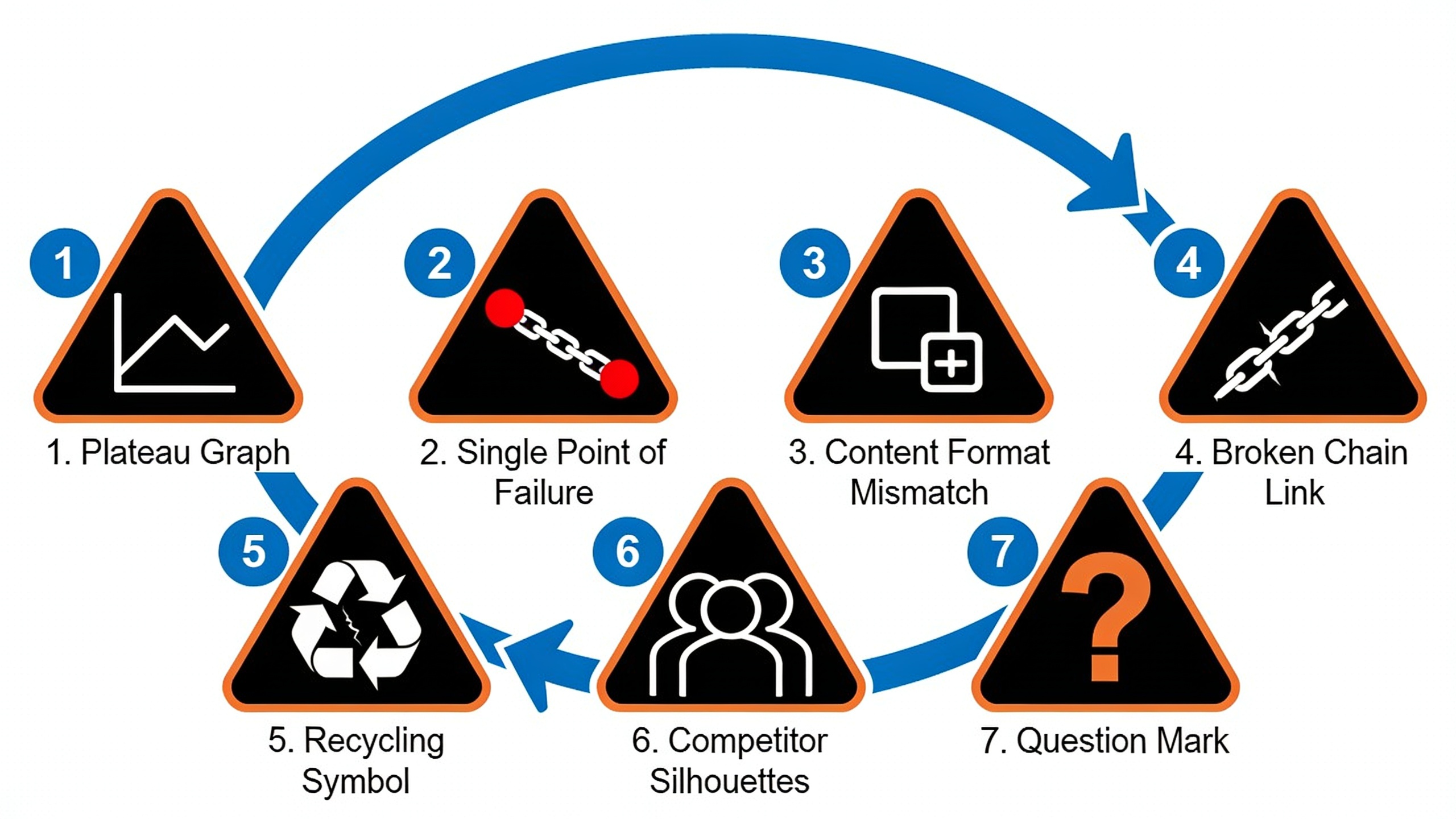
Almost nobody diversifies on purpose. Most teams get dragged into it kicking and screaming after growth flatlines. Here's how to catch it before that happens.
1. Your Blog Traffic Has Plateaued Despite Consistent Publishing
If you've been publishing like clockwork for months and organic sessions have gone flat instead of climbing, your blog has probably hit a structural ceiling, not a quality one. Blogs live and die by search rankings, and once you've grabbed the obvious keywords in your niche, every new post pays out a little less than the last one. That's just diminishing returns doing their thing. When you're at that point, the fastest way to unlock growth isn't another article about a slightly different long-tail variation of the same topic. It's a different channel entirely.
This is also a smart moment to ask whether your content was built to last in the first place. Posts chasing trendy keywords rot fast, while pages built around durable topics keep earning traffic for years. If you suspect your plateau is partly a freshness problem and not purely a channel problem, evergreen content strategy and how to create articles that rank for years is worth a read alongside this.
2. You're Invisible Outside of Google Search
If basically all your traffic comes from one search engine, you've got a single point of failure, and that should keep you up at night. Search behavior has splintered too. People research products and get answers through AI chat tools, YouTube, TikTok, Reddit threads, LinkedIn posts. Not just a results page anymore. If your brand doesn't exist on any of those surfaces, you're invisible to a huge chunk of your audience no matter how nicely your blog ranks.
Going multichannel fixes this by putting your expertise in more than one place. A LinkedIn post summing up your best blog point. A short video walking through the same idea. A mention in a third-party publication that both AI answer engines and search crawlers can actually cite. The more surfaces you're on, the harder you are to miss.
3. Your Content Doesn't Match How People Actually Consume It
Written articles are cheap to make, sure, but let's be honest, that's not how everyone likes to learn. Some folks want short video. Some want to swipe through a carousel. And B2B decision-makers? A lot of them soak up information through webinars, podcasts, or straight-up peer chatter in communities. If your entire library is 2,000-word text walls, you're quietly filtering out everyone who doesn't feel like reading 2,000 words to get one answer.
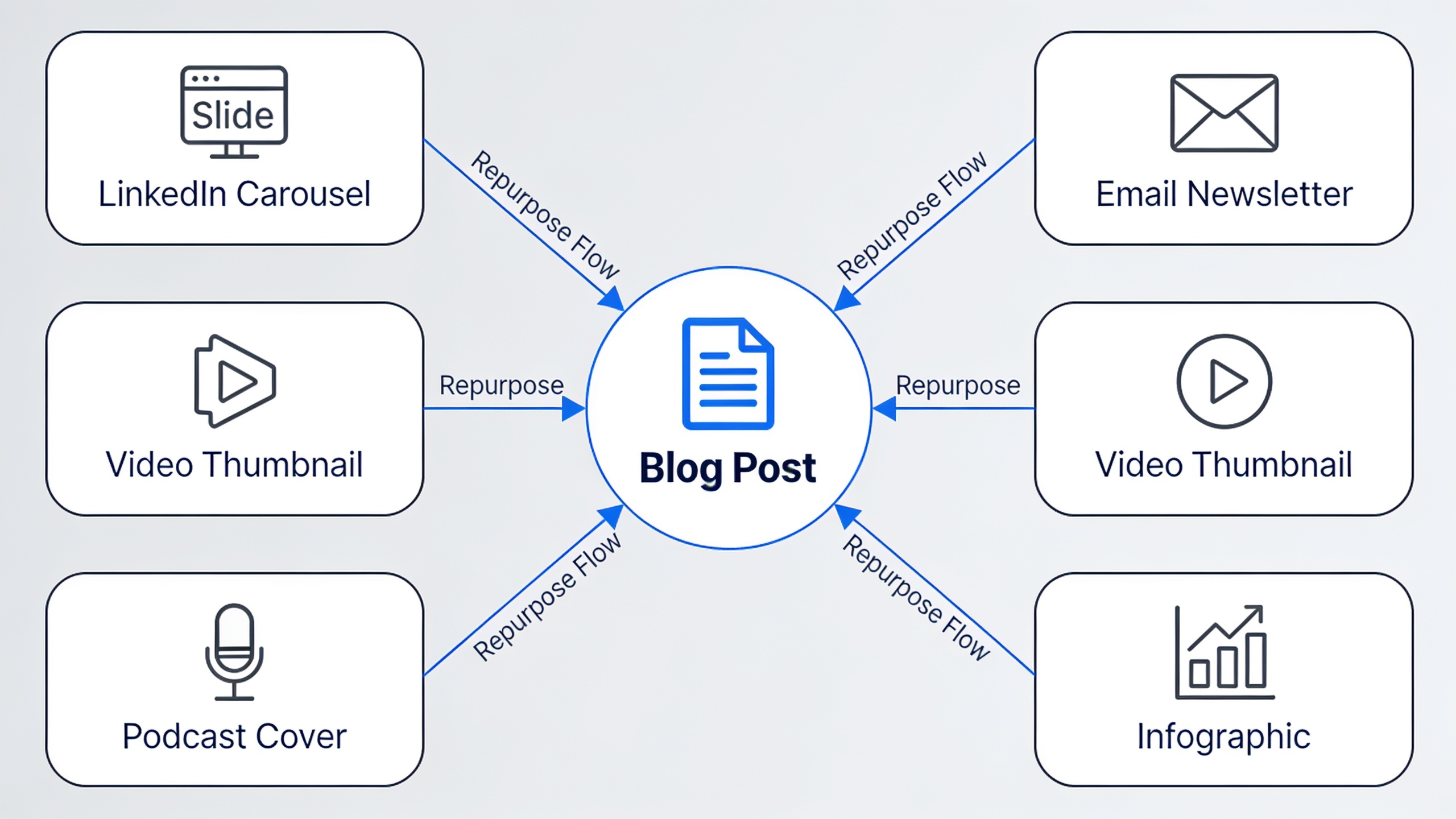
The fix I'd start with: audit your top-performing posts and ask which ones you could repackage into another format with barely any extra research. A short video script. A slide deck for LinkedIn. Talking points for a podcast you want to guest on. The content already proved it works. Repurposing it costs a fraction of building something from zero.
4. Your Backlink Profile Is Stagnant
Backlinks are still one of the clearest trust signals search engines use to size up a page, so when your backlink profile stalls, it usually means your promotion has quietly shrunk down to "publish and pray." If your outreach dried up and you haven't picked up new referring domains in months, that's a distribution problem, not a writing problem. Big difference.
Honestly, manual outreach is where a lot of teams fall apart here. Cold emailing site owners for links is slow, gets ignored constantly, and doesn't scale unless you've got people dedicated to it. Platforms built around verified, reciprocal link exchanges are one way around that. RobinRank, for example, runs a manually reviewed backlink exchange network where members browse other sites by niche and Domain Rating (that's Ahrefs' DR metric), request a placement, offer a link back when it makes sense, and get the live placement verified, with weekly re-checks to make sure the link is still actually there. Every site gets reviewed by hand before it's listed, which is the whole point, keeping link farms, PBNs, and thin doorway junk out instead of just chasing volume.
5. You're Starting From Scratch on Every Single Piece
Write a post, publish it, never think about it again? You're leaving most of its value sitting on the floor. One well-researched article can usually become a LinkedIn carousel, a newsletter segment, a short video script, and a set of podcast talking points, all without a lick of new research. Teams that treat every channel like its own separate project (instead of a repurposing pipeline) burn way more hours than they need to. And they almost always end up cutting corners on the channels that feel "extra," which is exactly why those channels never get off the ground.
A refreshed strategy treats the blog as raw material, not the finished dish. The research and structure you sink into one strong, evergreen article, the kind covered in Evergreen Content Strategy: How to Create Articles That Rank for Years, can feed a handful of other channels for months.
6. Competitors Show Up Everywhere You Don't
Here's one that stings. You keep bumping into competitor content on LinkedIn, YouTube, industry newsletters, guest posts on sites your prospects already trust. Meanwhile you can't remember the last time your brand showed up in any of those spots. That's a visibility gap with real money attached to it. The more times a prospect runs into your brand before they're ready to buy, the more familiar you feel, and familiarity closes deals. When you're absent from those channels, your competitors are quietly collecting all that familiarity instead of you.
Want content like this running on autopilot for your own site? Try RobinRank free — AI-written, SEO-optimized articles generated and published automatically, no credit card required.
7. Your Team Can't Answer "What Channel Is This For?"
This last one is sneaky because it's not about numbers, it's organizational. Ask your content team what channel a piece is written for. If the honest answer is "the blog, I guess, and then wherever we get around to sharing it," you don't have a distribution plan. You have a publishing habit. Those aren't the same thing. A real multichannel strategy assigns a primary and secondary channel to every piece before it's even written, so repurposing and promotion are baked in from the start rather than tacked on when someone remembers.
Blog-Only vs. Multichannel: A Side-by-Side Comparison
Here's the practical difference between going blog-only and going multichannel, across the stuff marketers actually lose sleep over.
| Factor | Blog-Only Strategy | Multichannel Content Strategy |
|---|---|---|
| Traffic dependency | Concentrated in one search engine | Spread across search, social, email, third-party sites |
| Resilience to algorithm changes | Low — a single update can sharply cut traffic | Higher — other channels cushion the impact |
| Content lifespan | Depends entirely on ranking longevity | Extended through repurposing into other formats |
| Backlink growth | Often relies on ad-hoc or manual outreach | Can be systematized through exchange networks and cross-channel mentions |
| Audience reach | Limited to people who search and read long-form text | Reaches video-first, social-first, and community-first audiences too |
| Production efficiency | Each format built separately, if at all | One core asset repurposed into multiple formats |
| Time to see new-channel results | Not applicable | Varies by channel; social and email often move faster than SEO |
How to Execute a Multichannel Content Strategy Refresh
You don't have to rebuild your whole content operation overnight, thank god. What you do have to do is sequence the changes so the highest-leverage channels come first. Start with a brutally honest audit of your last six months: which posts pulled the most traffic, links, or conversions, and which channels you've flat-out never touched.
Then pick two or three new channels. Not all of them. Please, not all of them at once. A low-risk sequence I'd bet on: repurpose your top blog posts into LinkedIn content and a short email series first (fastest to pull off), then experiment with one video or audio format, then invest in structured link-building outreach or an exchange network to widen your earned-media reach. If you haven't mapped out where your audience actually spends its time yet, 10 Content Distribution Channels Beyond Your Company Blog will help you narrow the list to channels worth testing instead of just guessing and hoping.
On the production side, tools that automate parts of the writing and publishing grind can free up the hours a manual multichannel push eats. RobinRank's Autopilot feature, for one, writes, optimizes, and publishes articles automatically on a site. The idea is to shrink the time a small team spends babysitting the blog so that time can go toward video, social, or outreach instead.
And on the link-building side specifically, a refresh usually means swapping scattershot cold outreach for something repeatable. RobinRank's exchange network lets you browse listed sites filtered by niche and Domain Rating, request a placement on a specific page with specific anchor text, and offer a reciprocal link back, with the platform verifying the live href and rechecking it weekly on both ends.
How Much Time and Budget Does Diversifying Take?
I wish I could give you one clean number, but there isn't one. It depends on how many channels you add, whether you repurpose existing content or build new stuff from scratch, and whether you handle production in-house or lean on automation. What is predictable is the order of difficulty. Repurposing existing blog content into email or social is the fastest and cheapest move, because the research and structure already exist. Building a video or podcast presence from nothing takes longer, since you need new production skills or freelance help. Systematic link building through an exchange network lands somewhere in the middle: there's an upfront profile setup and review period, but once you're established in the network, ongoing requests move way faster than cold outreach ever will.
One thing I'd push back on is budgeting "multichannel marketing" as a single line item. Budget per channel and track results separately for the first 60 to 90 days. Email, social, and organic search run on completely different feedback timelines. Email and social usually give you engagement signals within days, while new backlinks and organic rankings can take weeks or months to actually show up in your traffic. Lump them together and you'll panic over a channel that's just being a channel.
Frequently Asked Questions
Do I have to ditch my blog to go multichannel?
Nope. Multichannel doesn't replace the blog, it uses it. The blog becomes your source of ideas and research that gets repurposed everywhere else. It usually stays the most detailed, evergreen version of an idea, while your shorter formats on other channels drive awareness and funnel new visitors back to it.
Which channel should I add first?
Start with the channel closest to content you already have and an audience you already reach. For most teams that's LinkedIn or email, since you can repurpose existing blog posts into either with barely any new work. Save the higher-effort stuff like video or podcasting for after you've proven there's actual demand through a cheaper channel.
How do I know if my backlinks are really part of the problem?
Check whether your referring domains have grown in the last three to six months. If that number's flat, your promotion and outreach have stalled, even if your content quality is perfectly fine. Manual outreach and reciprocal exchange networks (like RobinRank's manually reviewed backlink exchange, where placements get verified and rechecked weekly) are two common ways to kickstart that growth again.
Is a content strategy refresh the same as a rebrand or a content audit?
Not quite. A content audit is the diagnostic bit, reviewing what exists and how it's performing. A refresh is the action you take based on what that audit tells you, which often means adding channels, updating your distribution process, and sometimes refreshing older content, like the evergreen content strategy guide walks through. It's got nothing to do with changing your brand identity or messaging.
Can small teams actually pull off multiple channels?
Yes, as long as you sequence the work and automate part of it. Turning one core piece into three or four formats is dramatically less work than writing original content for every channel separately. And tools that automate blog writing, optimization, and publishing, like RobinRank's Autopilot, can claw back the hours that would otherwise vanish into the blog alone, leaving you room for everything else in the mix.
A single-channel strategy can carry a brand for a good while. But the warning signs above tend to show up in a pretty reliable order: traffic plateaus first, backlinks stall next, and getting outgunned by competitors everywhere becomes painfully obvious last. Honestly, catching even one or two of these early is reason enough to start testing a second or third channel, before growth stalls out completely and you're stuck playing catch-up.
Ready to stop writing content by hand? Start your free RobinRank trial and get a full month of SEO-optimized articles published on autopilot.