9 Link Building Tactics That Still Work in 2025

So this is a rundown of nine tactics that are still moving rankings right now. Not theory. Not "well, in an ideal world." Stuff that fits how search engines actually judge links in 2025, with a look at what each one looks like when you're actually doing it, how to pull it off without burning three weeks, and where it belongs in your overall plan.
Table of Contents
- Why Link Building Still Matters in 2025
- 1. HARO and Journalist Request Platforms
- 2. Digital PR Campaigns Built Around Original Data
- 3. Resource Page Link Building
- 4. Natural Backlink Exchange Networks
- 5. Broken Link Building
- 6. Guest Posting on Relevant, Vetted Sites
- 7. Unlinked Brand Mention Reclamation
- 8. Skyscraper Content and Linkable Assets
- 9. Podcast and Expert Interview Placements
- How to Prioritize These Tactics: A Comparison
- How Much Does Link Building Cost in 2025?
- FAQ: Link Building Tactics 2025
Why Link Building Still Matters in 2025
Backlinks are still one of the strongest ranking signals Google leans on, and that hasn't budged even with AI Overviews and generative results rearranging how people search. What's changed is the bar for what counts as a "good" link. Search engines are way better now at ignoring (or straight-up penalizing) links that look manufactured, swapped in bulk with no context, or bought.
Google's John Mueller and the Search Advocate crew have said, over and over, that link schemes violate the spam policies and can earn you a manual action. That includes excessive reciprocal linking, private blog networks, and paid placements with no nofollow or sponsored tag. And it's not just humans reviewing this stuff anymore. Google's own documentation on the link spam updates (which have been rolling out in phases since 2022) shows they're getting genuinely good at algorithmically devaluing manipulative links at scale, no manual review required.
That's the world these tactics live in. Everything below is white hat, meaning links earned through actual value, relevance, or relationships. Not bought, not swapped like Pokémon cards, not spat out of some automated network with zero editorial standard. If you want the deeper strategic argument for why any of this matters, this guide to building backlinks without buying links digs into the risk-reward tradeoff.
1. HARO and Journalist Request Platforms
HARO-style platforms hook up journalists who need expert sources with people willing to hand over a quote, and in return you often land a backlink from a high-authority news or media site. HARO itself ("Help A Reporter Out") got bought by Cision and rebranded as Connectively back in 2023, but the model is alive and well, and so are a bunch of competitors.
Worth using alongside or instead of Connectively: Qwoted, Featured (used to be Terkel), and SourceBottle. Why does this still work? Simple. A link from Forbes, Business Insider, or some respected trade pub carries real domain authority, and there's basically no way to buy your way onto those sites through normal channels.
If you want it to actually be worth your time, the trick is speed and specificity. Set up filtered alerts for your niche instead of drowning in every request that comes through. Respond within the first two or three hours a request goes live, because journalists on deadline grab the first solid quotes that land in their inbox. Write tight, quotable answers, two to four sentences, with a real stat or opinion or example baked in. Generic filler gets deleted. And include your name, title, company, and a one-line bio so the reporter isn't chasing you for details later.
The catch nobody mentions: not every published quote comes with a link, and sometimes when it does, it's nofollow. Honestly, that's fine. Nofollow links from big domains still drive referral traffic and get your name out there, and Google's said it can still weigh nofollow links as a signal in aggregate even if it doesn't pass full link equity.
2. Digital PR Campaigns Built Around Original Data
Digital PR means making something newsworthy (usually original research, a survey, or some data analysis) and pitching it to journalists in exchange for coverage and links. It's still one of the highest-ROI white hat tactics going, and the reason is dead simple: it gives publications something they actually want. A story, not a favor.
The mechanics aren't complicated, they're just work. You run a survey (even a modest one, 300 to 500 respondents through a panel tool does the job), or you pull an interesting angle out of your internal product data, or you analyze a public dataset in a way nobody's bothered to before. Then you wrap it up press-ready: one clear headline stat, a simple chart, a short methodology note. Done.
One well-placed campaign can pull in dozens of links from a mix of tier-one media, niche blogs, and aggregator sites that grab the story secondhand. Ahrefs' research on content and links has shown again and again that a small slice of published pages accounts for a wildly disproportionate share of total backlinks, and original data pieces are consistently up there among the top performers.
If you're a smaller team and don't have a research budget, you've still got options. Survey your own customer base or email list instead of shelling out for panel data. Dig into anonymized product data you already have sitting around (usage trends, benchmark averages, seasonal patterns). Or just commit to a "state of [your industry]" report once a year, so journalists start expecting it and citing you as a recurring source.
Digital PR is slower to pay off than the transactional stuff. But the links it earns are almost always genuinely editorial, which makes them far tougher to lose when the next algorithm update rolls through.
3. Resource Page Link Building
Resource page link building is finding pages that curate helpful links on a topic (you know the ones, "Useful Resources," "Recommended Tools," "Further Reading") and asking the owner to add your page if it genuinely adds something. This tactic has survived a solid decade of SEO fads because the format itself just refuses to die. Education, nonprofit, government, niche industry sites all still keep these curated lists around.
It starts with search operators. Queries like `intitle:"resources" + "your keyword"` or `"useful links" + "your industry"` surface targets fast. Then you actually evaluate them, because a resource page with 15 dead links and no update since 2019 is a weaker bet than one that's clearly maintained and pulling organic traffic.
Outreach here works best short and specific. Point to the exact page, explain in one sentence why your resource belongs, make it stupidly easy to say yes. No pitch decks. And here's why response rates beat cold guest post pitches: you're not asking for a favor, you're offering to make their page better.
This one pairs nicely with a broader exchange strategy too. If you're already building relationships with site owners for these placements, it's worth seeing how a structured, editorially-reviewed natural backlink exchange network can formalize and scale those relationships without sliding into spammy reciprocal linking.
4. Natural Backlink Exchange Networks
A natural backlink exchange network is a curated group of relevant, editorially-vetted sites that link to each other's content based on real topical fit, not blind one-to-one swaps. And that's a completely different animal from the "you scratch my back, I'll scratch yours" reciprocal schemes Google's been flagging as manipulative for years.
The distinction actually matters here. Google's spam policies specifically call out "excessive link exchanges" and reciprocal linking done purely to game rankings. What separates a compliant white hat exchange from a spam scheme comes down to three things:
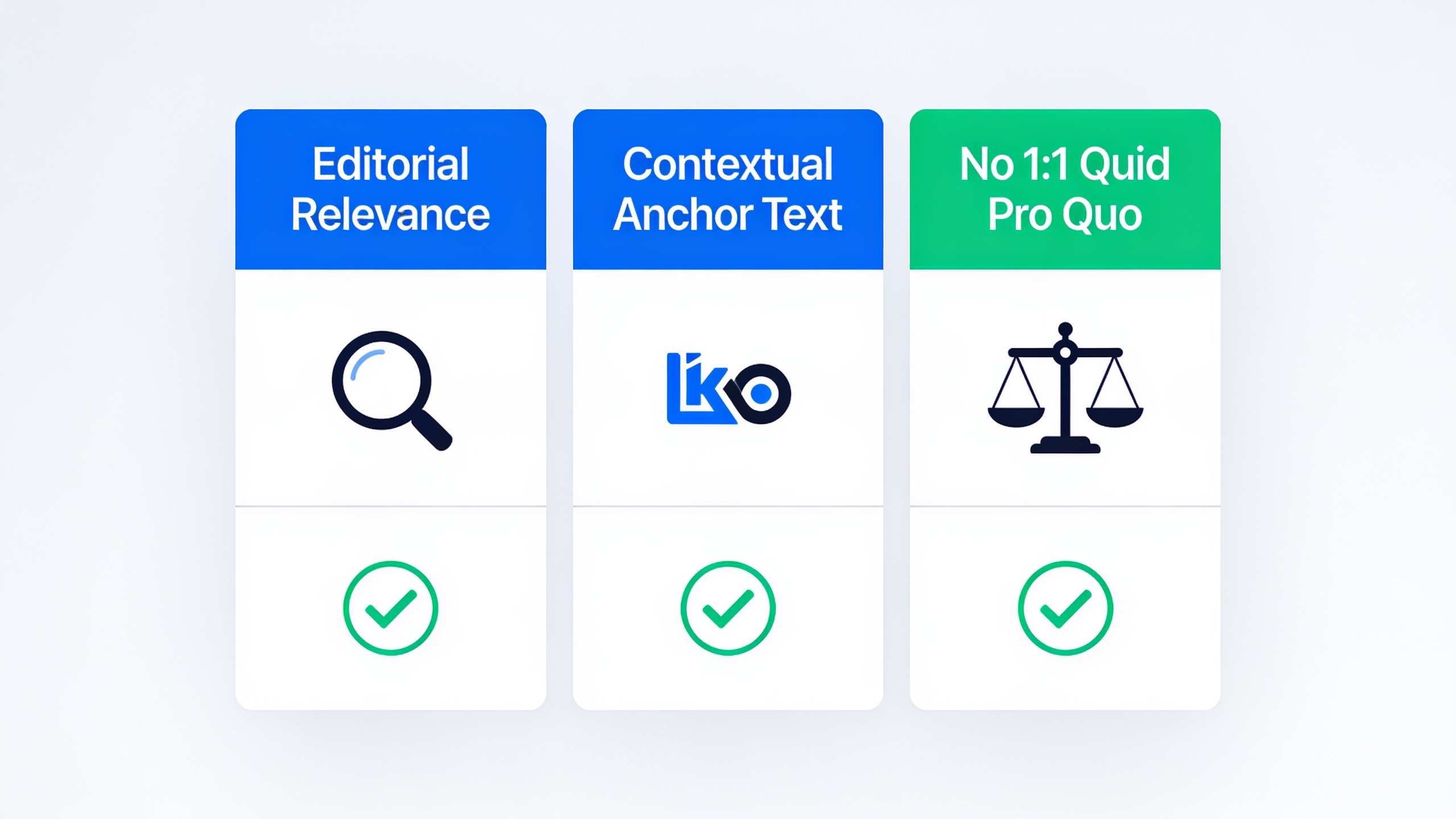
- Editorial relevance — links only land inside genuinely related content, not jammed into some unrelated page.
- Contextual anchor text — the link reads naturally in a sentence instead of being a bare, keyword-stuffed anchor.
- No 1:1 quid pro quo pattern — a healthy network spreads links across lots of participants instead of building obvious reciprocal pairs that a crawler (or a bored reviewer) can spot in five seconds.
That's the whole model RobinRank's own exchange network is built on: connecting sites in a way that mirrors how organic citation actually happens across an industry, rather than forcing artificial reciprocity. The platforms that manage this at scale (reviewing content quality, checking relevance, capping how often any one domain exchanges) tend to produce links that hold up across multiple algorithm updates, because they look like the natural cross-linking that already happens between complementary businesses. For the full breakdown of how these networks get structured and vetted, this guide to natural backlink exchange networks covers it.
5. Broken Link Building
Broken link building is finding dead links on other sites, then reaching out to the owner to suggest your own live, relevant page as the replacement. It works because it solves a genuine problem for them. Broken links hurt their user experience and their own SEO, and you're handing them a fix while quietly earning a link.
Research on web content decay (including the "link rot" stuff documented by digital preservation groups, and Ahrefs' own data) keeps confirming the same thing: a meaningful chunk of pages people linked to years ago eventually go offline or get moved. That constant rot is exactly what keeps this tactic alive. There's always a fresh supply of dead links waiting to be found.
The workflow's pretty mechanical. Use a browser extension like Check My Links, or pull a broken-link report from a backlink tool, and scan resource pages, blog posts, and roundups in your niche. Then actually confirm the link's dead (returns a 404 or a redirect error) because chasing false positives is a great way to waste an afternoon. Next, find or build a page on your site that's a real replacement, not just something vaguely in the same ballpark. Finally, send a short, helpful email pointing out the exact broken link and suggesting yours as one option.
Want content like this running on autopilot for your own site? Try RobinRank free — AI-written, SEO-optimized articles generated and published automatically, no credit card required.
It scales slowly because it's all manual. But conversion rates beat cold guest post pitches, mostly because you're doing them a favor before you ever ask for anything.
6. Guest Posting on Relevant, Vetted Sites
Guest posting is writing an article for another site in your niche in exchange for a byline and, usually, a contextual backlink somewhere in the body or the author bio. It picked up a bad reputation over the last decade thanks to those mass-produced, garbage guest post networks. But Google has never said guest posting itself breaks the rules. What it's called out specifically is guest posts written purely to manipulate rankings with keyword-stuffed anchors. Big difference.
What separates spammy guest posting from the legit kind is selectivity and quality, full stop. A guest post on a site with real traffic, an engaged audience, and actual editorial standards is a genuinely valuable placement, both for referral visibility and the link itself. A guest post on a site that exists solely to sell placements to anyone waving a credit card? That's the version that gets you penalized.
Here's how to tell a good opportunity from a trap:
- The site publishes regularly (weekly or more) with visible engagement, like comments, shares, or an active newsletter.
- It has organic search visibility for its own topics, which you can sanity-check via Google Search Console (if it's your site) or traffic estimates from Ahrefs or Semrush.
- An actual editorial team reviews and edits submissions instead of just slapping them live.
- There's no "write for us, $X per link" pricing page, which is a dead giveaway the placement's being sold, not earned.
Guest posting works best as relationship-building, not a one-and-done transaction. Contributing regularly to two or three well-chosen publications beats a scattershot mess across dozens of low-quality sites every single time.
7. Unlinked Brand Mention Reclamation
Unlinked brand mention reclamation is finding places online where your company, product, or content already got mentioned by name (with no link) and asking the publisher to add one. This is probably the lowest-effort, highest-conversion tactic on the whole list, and the reason is beautiful in its simplicity: the site owner already decided you were worth mentioning. You're just asking them to finish the job.
Set up a free Google Alert, or a paid tool like Mention or Brand24 (or whatever mention-tracking your SEO platform already includes), for your brand name, product name, and your founder or key spokesperson's name. When an unlinked mention pops up, reach out with a quick, friendly note. Thank them for the mention, then ask if they'd add a link on the brand name.
Response rates on this one run higher than just about any other outreach method, and it's obvious why. There's no persuasion needed. You're not asking anyone to write something new or endorse something they've never heard of. You're asking for a tiny edit to something they already hit publish on.
Oh, and it surfaces stuff you'd otherwise never find. Mentions buried in comparison articles, "alternatives to X" roundups, news coverage where your brand got name-dropped in passing. Free wins hiding in plain sight.
8. Skyscraper Content and Linkable Assets
The skyscraper technique is finding content that's already pulling a ton of backlinks, then building something meaningfully better (more current, more thorough, more useful to look at) and reaching out to the sites linking to the original to suggest the upgrade. Brian Dean of Backlinko popularized the term, and while it's been copied to death (often badly), the core logic still holds in 2025: sites already linking to a topic are a warm, pre-qualified outreach list handed to you on a plate.
The mistake almost everyone makes is treating "better" as "longer." A 6,000-word article is not automatically more linkable than a 1,500-word one if it adds nothing new. What actually earns links these days usually boils down to one of three things:
- Freshness — updated stats, examples, and screenshots when the original's gone stale.
- Format upgrades — turning a wall of text into an interactive tool, a calculator, or a clean comparison table.
- Depth on a narrow angle — going way deeper on one sub-topic the original only waved at.
And a linkable asset doesn't have to be a blog post at all. Original templates, free tools, calculators, and industry benchmark reports pull links consistently because they solve an ongoing need instead of just informing you once and moving on.
9. Podcast and Expert Interview Placements
Going on relevant podcasts or getting quoted in expert roundups earns you backlinks through show notes, guest bios, and article citations, plus a bunch of credibility and referral traffic that pure link tactics never give you. Podcasting keeps growing as a format, and most shows publish detailed show notes with a link back to the guest's site as standard practice.
This one's especially good for founders and subject-matter experts, because it doesn't need existing domain authority or a pile of content assets. It needs expertise and a willingness to show up and talk. PodMatch, Podcast Guests, and honestly just direct LinkedIn outreach to hosts in your niche are all solid ways to find spots.
Expert roundups ("we asked 20 marketers about X") work the same way. Reply to journalist and blogger requests (often through those same HARO-style platforms from earlier, or by pitching bloggers who run recurring roundup series) with a specific, quotable answer, and you'll usually get a link back next to your quote.
How to Prioritize These Tactics: A Comparison
Not every tactic fits every team's time or budget. Here's how the nine stack up on effort, typical link quality, and how fast you can expect anything to happen.
| Tactic | Effort Level | Typical Link Authority | Time to First Results |
|---|---|---|---|
| HARO / journalist platforms | Medium | High | 1-4 weeks |
| Digital PR (original data) | High | Very High | 4-12 weeks |
| Resource page outreach | Low-Medium | Medium | 1-3 weeks |
| Natural backlink exchange network | Low-Medium | Medium-High | 2-6 weeks |
| Broken link building | Medium | Medium | 2-4 weeks |
| Guest posting (vetted sites) | High | Medium-High | 3-8 weeks |
| Unlinked mention reclamation | Low | Medium-High | Days to 2 weeks |
| Skyscraper / linkable assets | High | High | 6-16 weeks |
| Podcast / expert interviews | Medium | Medium | 2-6 weeks |
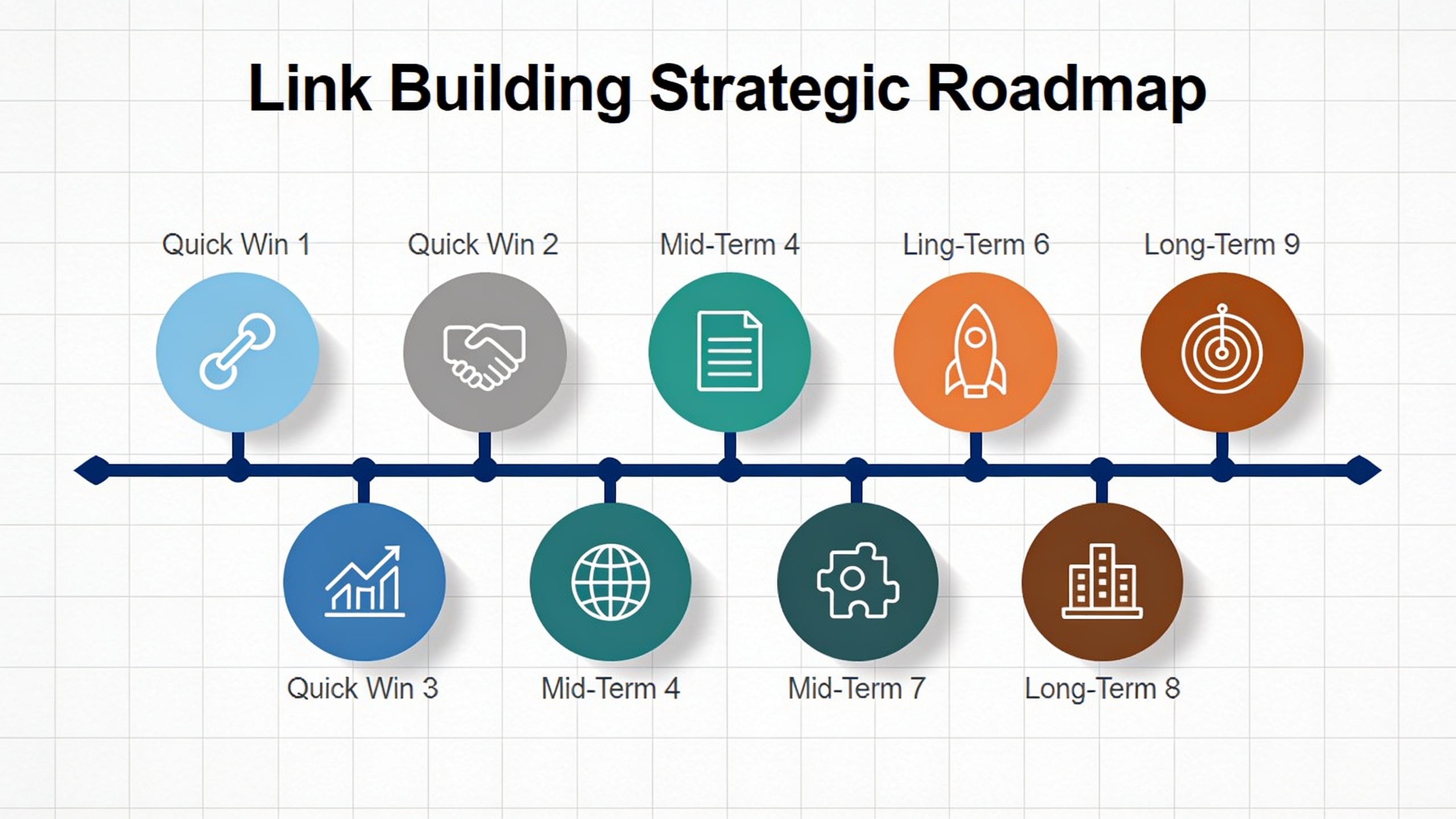
For most small teams, I'd start with unlinked mention reclamation and resource page outreach. Both are low effort, both tend to hand you quick wins, and those wins build the momentum you'll need before you go tackle the heavy stuff like digital PR.
How Much Does Link Building Cost in 2025?
Link building in 2025 runs anywhere from basically free (if you do the outreach yourself) to $500-$5,000+ a month for agency-managed campaigns, with digital PR usually landing higher because of all the research and creative work it eats up. What you actually pay depends heavily on which tactics you're running and whether you're covering tools, freelance help, or a full-service agency.
The DIY stuff (resource page outreach, broken link building, mention reclamation) mostly costs your time plus a backlink or mention-tracking tool, typically $99-$399/month for something like Ahrefs, Semrush, or Mention. Digital PR costs more because it needs research, design, and PR outreach chops. Agencies tend to charge per campaign, somewhere from roughly $2,000 to $10,000+ depending on scope and how fancy the target publications are.
One thing worth saying plainly: "cheap link building," those bulk packages promising 50+ links for one low flat fee, almost always means paid or junk placements that break Google's spam policies. That's a totally different cost equation from anything covered here, and the risk isn't a wasted budget. It's your rankings.
FAQ: Link Building Tactics 2025
Is link building even still worth it for SEO in 2025?
Yep. Backlinks are still one of the core signals search engines use to judge a page's authority and relevance, and Google's kept pouring resources into link-spam detection rather than ditching links as a ranking factor. The thing that's actually changed is the quality bar. Manipulative or lazy tactics are way more likely to get discounted or penalized than they were five years ago.
How many backlinks do I actually need to hit page one?
There's no magic number, sorry. It depends on how competitive your niche is, how authoritative the linking domains are, and how good your content is against the competition. A page with 10 highly relevant, editorial links from strong sites can absolutely outrank one with 200 junk links, so chase relevance and authority, not raw volume.
What's the actual difference between white hat and black hat link building?
White hat earns links through genuine value, like quality content, expert commentary, original research, or real relationships, all in ways that play nice with search engine guidelines. Black hat manipulates rankings directly, usually by buying links, running large-scale reciprocal schemes, or using automated networks with zero editorial oversight. That last group is what risks manual penalties or algorithmic devaluation.
Are backlink exchange networks safe to use?
Depends entirely on how the thing's built. A badly run exchange that forces obvious 1:1 reciprocal links across unrelated sites can absolutely trip Google's spam policies. A well-managed, editorially-vetted network that only places contextually relevant links across genuinely related content behaves a lot more like organic citation and carries far less risk. The structure and the vetting are the whole ballgame.
How long before I actually see results from link building?
Most white hat tactics take somewhere from a few weeks (mention reclamation, resource page outreach) to several months (digital PR, skyscraper content) before you see real ranking movement, since new links need time to get crawled, indexed, and folded into your site's overall authority. Consistency beats any single campaign. Sites that build links steadily over 6-12 months tend to see more durable gains than the ones chasing one big dramatic push.
Link building in 2025 isn't about finding a shortcut. It's about picking a handful of tactics that fit your team's time, expertise, and industry, then running them consistently enough that the links start to compound. Whether that's a steady drip of HARO responses, a quarterly digital PR push, or a well-managed exchange, the sites treating link acquisition as an ongoing editorial habit (not a one-time project you check off a list) are the ones still winning as the algorithms keep shifting under everybody's feet.
Ready to stop writing content by hand? Start your free RobinRank trial and get a full month of SEO-optimized articles published on autopilot.