The Ultimate Guide to Natural Backlink Exchange Networks
Now, I know "link exchange" makes a lot of people flinch. It should. Back in the early 2010s, reciprocal linking and link farms got entire domains nuked off the map, and the phrase never really shook off that stink. But the version SEOs and content marketers actually use today looks nothing like the old racket. This guide is basically me trying to untangle the two for you, so you understand what's worth doing and what'll get you a manual penalty you'll be crying about for months.
Doesn't matter if you're a solo founder chasing your first 50 referring domains or an agency juggling link building for a dozen clients. Same principles apply. I'll walk you through how these networks work, why they still move the needle, and how to spot a legit one versus a spammy dumpster fire dressed up in marketing copy.
Table of Contents
- What Is a Backlink Exchange Network?
- How Does a Backlink Exchange Network Work?
- Why Backlinks Still Matter for SEO in 2025
- Natural Link Building vs. Traditional Link Exchanges
- How to Evaluate a Trustworthy Backlink Exchange Network
- Risks and Red Flags to Avoid
- How Much Does a Backlink Exchange Network Cost?
- Getting Started With Natural Link Building
- FAQ
What Is a Backlink Exchange Network?
A backlink exchange network is a structured system that connects a bunch of websites so they can earn contextual, editorial links from one another, usually by contributing content or getting matched with relevant sites in the same or nearby industries. Forget the old "you scratch my back, I'll scratch yours" swap between two webmasters. A modern network runs more like a membership program or marketplace, with dozens or hundreds of domains, actual quality controls, and topical relevance rules baked in.
And this is the part people miss: it was never really about quantity. It's about relevance and editorial legitimacy. A network that's run properly drops your link inside content someone might actually read (guides, roundups, resource pages, guest posts) instead of burying it in a footer or a link directory that Google's algorithms learned to ignore roughly a decade ago. Because the sites come from all sorts of niches, the link profile that comes out the other end looks organic. Varied anchor text, varied domain authority, varied placement context. Kind of like how links pile up naturally when you're not trying. If you want the nuts-and-bolts version of the matching and vetting process, How Backlink Exchange Networks Actually Work goes deeper on the mechanics than I will here.
Key Terms to Know
Quick vocabulary check before we go further, because a few of these come up constantly:
- Referring domain: A unique website that links to yours. Search engines generally care way more about the diversity of these than your raw link count. Ten links from ten different sites beat fifty from one.
- Anchor text: The clickable words in a hyperlink. Cram the same exact-match keyword into your anchors across a hundred links and you've basically painted a target on your own back.
- Domain rating/authority: A third-party score (Ahrefs, Moz, that crowd) estimating how strong a domain's link profile is. It's a proxy, not gospel, but people lean on it.
- Editorial link: A link a publisher chose to include because the content actually fit, not because someone paid for it or a bot jammed it in.
How Does a Backlink Exchange Network Work?
A backlink exchange network works by matching websites with related content, then placing a link inside an article, resource page, or guest contribution, with some vetting on both ends to make sure the fit and quality hold up. The details differ platform to platform, but almost all of them follow roughly the same four steps.
Step 1: Onboarding and Site Vetting
Before a domain gets in, any network worth its salt looks at organic traffic, spam score, the existing backlink profile, content quality, the usual suspects. Thin content, ad-choked pages, a history of shady SEO tricks? Rejected. This step is honestly the whole ballgame. It's the difference between a curated network and an open link farm wearing a nicer logo.
Step 2: Topical and Authority Matching
Once you're approved, you get matched with sites in relevant categories. So a project management SaaS might land next to marketing blogs, productivity tools, and business consulting sites, and not, say, an ecommerce store hawking dog sweaters. Relevance matters because Google, especially after Penguin and everything that came after it, actually checks whether a link makes contextual sense. Random links between unrelated niches used to work. They don't anymore.
Step 3: Content-Based Placement
Instead of a static swap, most decent networks now bury the link inside a real piece of content. A blog post, a resource list, a contributed article, something with editorial context around it. Platforms like RobinRank automate this by generating optimized articles that fold in a relevant outbound link naturally, then publishing across participating sites. Keeps it scalable without gutting the whole "looks organic" thing that makes it work in the first place.
Step 4: Ongoing Monitoring
Search engines keep re-checking link quality, so good networks keep watching their own domains too. Spam signals, deindexing, ownership changes, all of it. A site's quality tanks? It gets pulled from the pool so it doesn't drag everyone else's link equity down with it. This part gets ignored a lot, but it matters more than people think.
Why Backlinks Still Matter for SEO in 2025
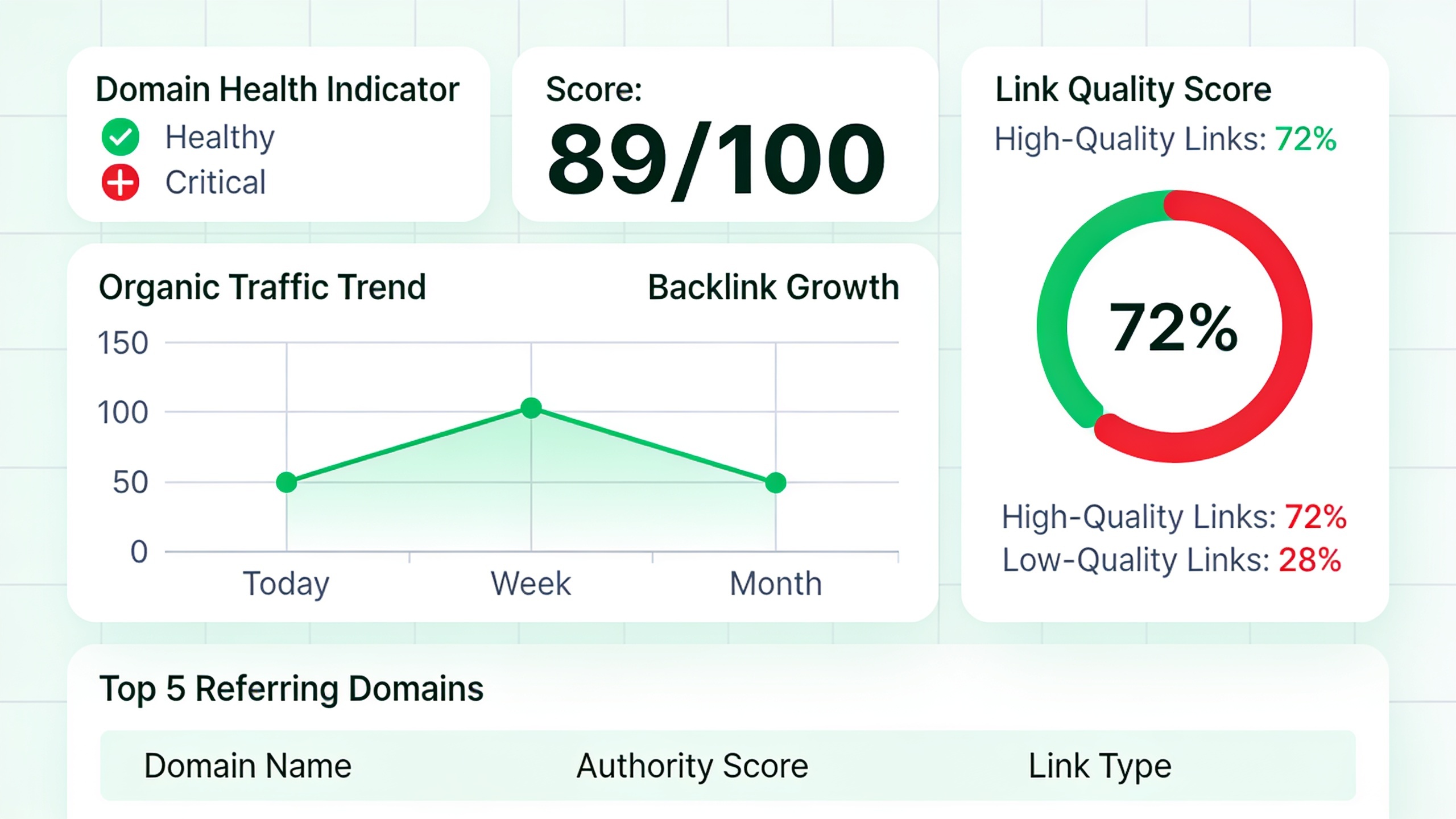
Backlinks are still one of the strongest signals search engines use to judge whether a page is authoritative and trustworthy, even with AI content flooding everything and zero-click results eating into traffic. Google has said, more than once, that links sit among its top three ranking factors. And correlation studies from Backlinko and Ahrefs keep showing the same thing: pages in the top three spots tend to have noticeably more referring domains than the ones further down.
What's shifted isn't whether links matter. It's which ones. Google's Penguin update (launched 2012, later folded into the core algorithm) went after manipulative link schemes, and the newer link spam classifiers keep devaluing links that clearly only exist to game rankings instead of helping anyone. So the bar for a "good" backlink is higher than it used to be. It has to come from a real, relevant site, sit inside actual content, and fit a pattern that looks like natural link building rather than something a machine spat out at 3 a.m.
For startups and small businesses going up against the big incumbents, links are often the whole difference. You can nail your on-page SEO. Right keywords, clean structure, fast load times, the works. And your page will still rot on page two if nothing authoritative is pointing at it. Frustrating, but that's how it goes.
Natural Link Building vs. Traditional Link Exchanges
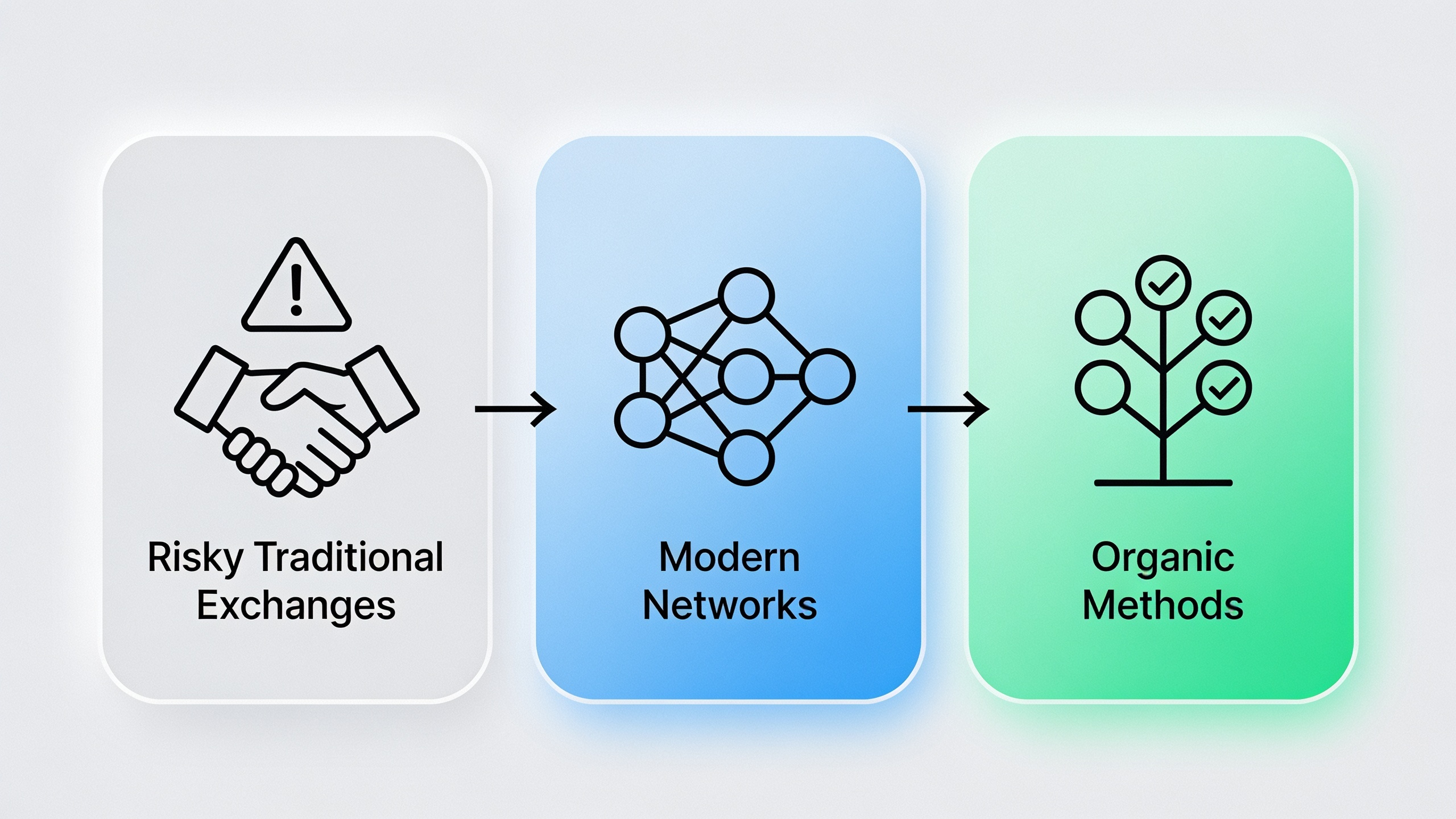
Natural link building means earning links because your content is genuinely worth linking to, while traditional link exchanges are that direct "you link to me, I'll link to you" handshake between two site owners, usually with zero thought given to relevance. That gap matters a lot for risk, because search engines spot reciprocal patterns way more easily than distributed, network-based ones.
Modern networks are basically trying to have it both ways: keep the efficiency of a coordinated system, ditch the obvious one-to-one swap that gets you flagged. So instead of Site A linking to Site B and B linking straight back, the network routes things through a bigger pool. A links to C, C links to F, F links to B. No neat reciprocal footprint for Google to trip over. If you're not even sure you want to touch exchange tactics, How to Build Backlinks Without Buying Links in 2025 is a solid companion piece on doing this the white-hat, content-driven way.
| Factor | Traditional Reciprocal Exchange | Modern Backlink Exchange Network | Fully Organic (Earned) Links |
|---|---|---|---|
| Link pattern | Direct A-to-B, B-to-A reciprocity | Distributed, multi-hop across many sites | No fixed pattern; earned via outreach or content |
| Topical relevance | Often ignored | Actively matched by category/niche | Naturally relevant since links come from interested parties |
| Scalability | Low; manual negotiation per site | High; automated matching and publishing | Low to moderate; time- and resource-intensive |
| Google risk level | High — easily flagged by link-spam detection | Low to moderate, if vetted properly | Very low |
| Typical cost | Free but time-intensive | Subscription or per-placement fee | High (content, PR, outreach costs) |
| Content quality control | Minimal | Usually reviewed/edited before publishing | Varies widely |
Want content like this running on autopilot for your own site? Try RobinRank free — AI-written, SEO-optimized articles generated and published automatically, no credit card required.
How to Evaluate a Trustworthy Backlink Exchange Network
A trustworthy backlink exchange network vets its domains for quality, matches links on real topical relevance, is upfront about how it works, and steers clear of patterns that scream manipulation. Before you join anything, run it through a checklist. Don't just swallow the marketing claims, because everyone's marketing sounds great.
Check the Site Quality Standards
Ask what a domain actually has to clear to get in. Real networks want a minimum level of organic traffic, a clean link history, and original content. Not thin AI-spun garbage with no human anywhere near it. If a network takes any domain that shows up, the link equity it hands you is basically worthless, and joining could actively hurt your trust signals. That's the opposite of what you're paying for.
Assess Topical and Industry Fit
A network that pairs an accounting software company with finance blogs, business pubs, and productivity tools is doing its job. A network stapling a plumbing company to a fashion blog is creating a footprint that looks weird to both readers and search engines. Relevance isn't a nice-to-have here. It's the point.
Look for Content-First Placement
Links inside meaty, useful articles carry more weight and less risk than links stuffed into directories, footers, or sidebar widgets. So ask: does the network drop your link into full articles (ideally 800+ words of stuff people would actually read) or just wedge your URL into some pre-existing list? The answer tells you a lot.
Review Transparency and Reporting
Good networks show you where your links live, what anchor text got used, how many other domains are in rotation. If they're cagey about it, that's your answer. You can't audit what you can't see, and blind trust is how people end up wondering why their rankings tanked six months later.
Confirm Diversity of Anchor Text and Domains
Natural profiles are messy in a good way. Branded anchors, generic phrases like "click here" or "this guide," partial-match keywords, naked URLs, all spread across a bunch of unique domains instead of a tight little cluster of the same linkers. If a network keeps hammering exact-match keyword anchors on every single placement, it's optimizing for manipulation, full stop. And that just cranks up your odds of getting algorithmically devalued.
Verify Indexation and Link Persistence
Some junk networks put your links on pages that get deindexed or deleted within weeks, so whatever value you got evaporates almost instantly. Ask about average link lifespan and whether they actually track link removal over time. A link that vanishes did nothing for you.
Risks and Red Flags to Avoid
The worst-case scenario with the wrong network is a manual action or algorithmic hit that buries your rankings, sometimes for months. Google's Search Central docs flat-out list "excessive link exchanges" and "links intended to manipulate PageRank" as spam policy violations, and their enforcement has gotten sharper with every core update. This is not a "maybe someday" risk. People get burned regularly.
Here's what should make you back away slowly:
- Guaranteed rankings or "instant results." Nobody can promise you specific positions. Search engines weigh hundreds of signals, and links are only some of them. Anyone claiming otherwise is either lying or clueless.
- Bulk, unvetted membership. A network bragging about thousands of sites with no visible quality filter? Assume most of that inventory is trash.
- Identical link patterns across competitors. If you notice a few rivals in your niche all grabbed links from the same tiny cluster of domains around the same time, that's a footprint. And if you can see it, so can Google.
- Paying purely for a link, no content. Straight-up paying to jam a hyperlink into existing content with zero new editorial value sits awfully close to Google's definition of a paid link scheme.
- No removal support. A decent network lets you request removal or a swap if a partner site goes downhill later. No such option? Hard pass.
How Much Does a Backlink Exchange Network Cost?
Pricing runs from free (in pure barter communities) up to several hundred dollars a month for managed platforms that bundle content creation, placement, and reporting. What you pay depends on whether you're buying raw placements, full-service content plus distribution, or a subscription that folds link building into a broader SEO tool.
| Model | Typical Cost Range | What You Get | Best For |
|---|---|---|---|
| Free reciprocal exchange communities | $0 | Manual matching, no content support, higher risk | Very early-stage sites with time to spare |
| Pay-per-placement marketplaces | $50–$500 per link | One-off link insertion, variable quality control | Agencies needing specific niche placements |
| Managed exchange networks | $100–$1,000+/month | Vetted domains, ongoing placements, reporting | Growing businesses building steady authority |
| AI-driven content + link platforms (e.g., RobinRank) | Subscription-based, tiered by volume | Automated article creation, publishing, and network placement | Startups/SMBs wanting content and links without a full team |
Cost tracks quality, mostly. A curated pool of high-authority, niche-specific domains costs more to run (and to join) than some open-access directory anybody can waltz into. When you're comparing providers, ask for average domain rating, traffic numbers on participating sites, and some sample placements. Advertised link counts are the vanity metric, so don't let them do your thinking for you.
Getting Started With Natural Link Building
Getting started with natural link building means pairing steady content creation with careful use of vetted networks, not treating link acquisition as some one-off project you knock out and forget. Links compound. Ahrefs' correlation research has shown, over and over, that top-ranking pages tend to pick up referring domains gradually rather than in one big spike. And that slow accumulation is itself a pattern search engines read as organic growth.
Start by auditing what you've already got. Use Ahrefs, Semrush, or Google Search Console to figure out your baseline: how many referring domains, their average authority, your anchor text spread. Then prioritize the content actually worth linking to. Original research, in-depth guides, tools, templates. Because even the best placement in the world works better when it points at a page that earns attention on its own. Only once that foundation's in place does layering in an exchange network make sense. Use it to speed up distribution, not to paper over weak content. That order matters more than people want it to.
For businesses without a dedicated content or link building team, platforms like RobinRank handle the whole workflow. Generating SEO-optimized articles, publishing them, placing contextual links inside a vetted network of relevant sites, so it all happens quietly in the background instead of eating your week with manual outreach.
FAQ
Is joining a backlink exchange network against Google's guidelines?
Not by itself, no. Google's spam policies go after manipulative schemes. Direct reciprocal swaps, undisclosed paid links, mass irrelevant linking. Not the idea of networked link building on its own. A network built on relevance, editorial content, and real vetting stays inside the lines. One built purely on reciprocal volume does not, and Google can tell the difference.
How many backlinks do I need to rank higher?
There's no magic number, sorry. It depends on your competitors' profiles, your content quality, and how well you match search intent, not some absolute count. A local service business might outrank thin competitors with a dozen solid, relevant referring domains. A competitive national keyword could need hundreds of authoritative links built up over years.
How long does it take to see SEO results from a backlink exchange network?
Most sites see measurable ranking movement in 3 to 6 months of consistent, quality link acquisition, though it swings a lot depending on how competitive your niche is and how established you already are. Search engines need time to crawl, index, and actually factor new links into their trust math. Expect a gradual climb, not an overnight jump.
What's the difference between a backlink exchange network and buying links?
Buying links is usually a straight cash-for-placement deal with no editorial value, which breaks Google's paid links policy if those links pass PageRank without something like `rel="sponsored"` on them. A quality exchange network instead sets up content-based placements where the link lives inside genuinely useful material, often as part of a wider content marketing service rather than a bare purchase. Same neighborhood, different intent.
Can small businesses compete in backlink building against larger companies?
Yeah, and honestly they've often got an edge. Small businesses can chase hyper-relevant, niche placements the big players don't bother with. A local or industry-specific network can hand you highly relevant referring domains that carry more topical weight per link than the handful of generic high-authority links some giant competitor is sitting on. Relevance punches above its weight.
So here's where I land on all this. Backlink exchange networks aren't a shortcut around good SEO. They're an accelerant for it, which is a different thing. The people who get real value out of them treat link building as one piece of a bigger content strategy. Publishing stuff people actually want, vetting every partner site like they mean it, and picking relevance over raw volume every single time. Do it that way and a well-run network can compress months of grinding outreach into a steady, ongoing system for earning the kind of authority that search engines (and readers) actually respect. Do it lazily and, well, you already read the red flags section.
Ready to stop writing content by hand? Start your free RobinRank trial and get a full month of SEO-optimized articles published on autopilot.