AI Content Copyright: Who Actually Owns What You Publish?
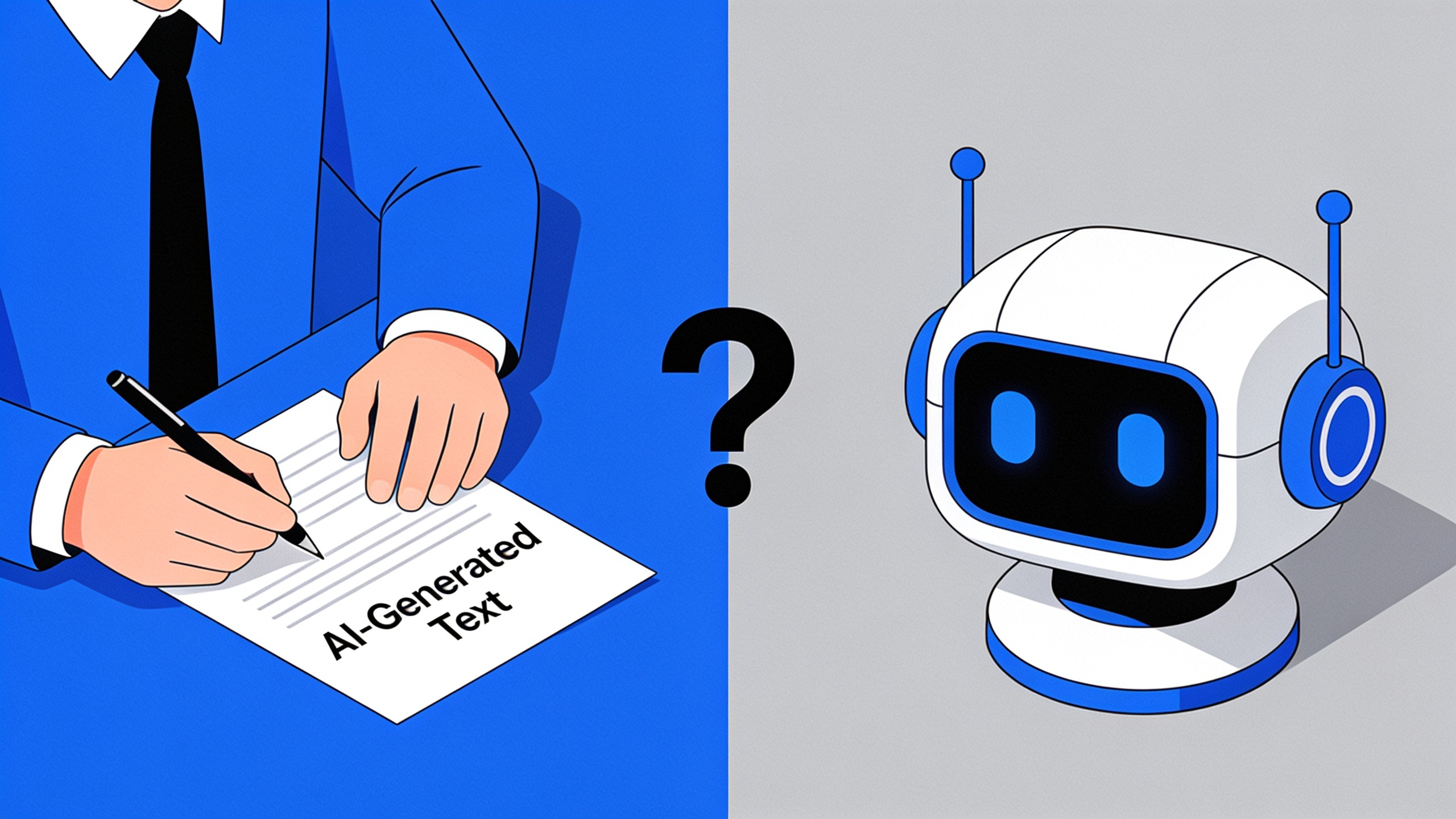
Let me walk you through what the law actually says, how ownership plays out in the real world, where things get genuinely murky, and what you should be doing about it if you publish content for a living.
Table of Contents
- What Is AI Content Copyright, and Why Does It Matter Now?
- Does the US Copyright Office Protect AI-Generated Content?
- Who Owns AI Content: You, the Tool, or No One?
- What Do AI Tool Terms of Service Actually Say About Licensing?
- The Legal Gray Areas Businesses Still Face
- How Much Human Input Is Enough? A Practical Framework
- How to Protect Your Business When Publishing AI Content
- Frequently Asked Questions
What Is AI Content Copyright, and Why Does It Matter Now?
AI content copyright is basically the tangle of legal rules deciding whether content made with AI tools can be protected under copyright law, and if so, who gets to hold that protection. The reason it suddenly matters is simple: AI writing and image tools went from novelty to standard business infrastructure in about two years flat, and the law is limping along behind, trying to catch up.
Here's the fundamental problem. Copyright law was built for humans. The whole thing assumes a person sat down, made creative decisions, and produced something original. Generative AI blows a hole in that assumption, because the "author" of your finished text or image is, at least partly, a statistical model that chewed through billions of examples. Courts and copyright offices worldwide are scrambling to jam this new reality into old legal boxes, and the results are all over the place.
For businesses, though, this isn't some abstract philosophical debate. It's practical. Say a company publishes a few hundred AI-assisted articles, then finds out none of it is copyrightable. Competitors could legally scrape and republish the whole library without infringing a thing. If your SEO team treats published content as an owned asset with real long-term value (and they should), that's not a small problem.
Does the US Copyright Office Protect AI-Generated Content?
No. The US Copyright Office has been clear that content generated entirely by AI, with no meaningful human creative input, isn't eligible for copyright protection. This comes straight from their official guidance, "Copyright Registration Guidance: Works Containing AI-Generated Material," published in March 2023, which restates a principle that's been around forever: copyright protects works of human authorship. Full stop.
And this isn't some rule they invented to deal with the AI wave. The "human authorship" requirement has been applied for decades, most memorably in cases involving non-human "creators." The AI guidance just points that same old logic at machine-generated stuff.
Two real cases show how this actually shakes out.
First, Thaler v. Perlmutter. Computer scientist Stephen Thaler tried to register a copyright for an image called "A Recent Entrance to Paradise," and listed his AI system as the sole author. The Copyright Office said no. A federal court backed them up in 2023, ruling that human authorship is a bedrock requirement of US copyright law. You can't hand the credit to a machine and expect protection.
Then there's Zarya of the Dawn. In February 2023, the Copyright Office looked at a graphic novel by artist Kris Kashtanova that mixed original text and arrangement with AI-generated images from Midjourney. The Office allowed protection for the text and for how the images were selected, arranged, and woven into a narrative. But it flatly denied protection for the individual AI-generated images, because Kashtanova didn't have enough creative control over how those specific images got made.
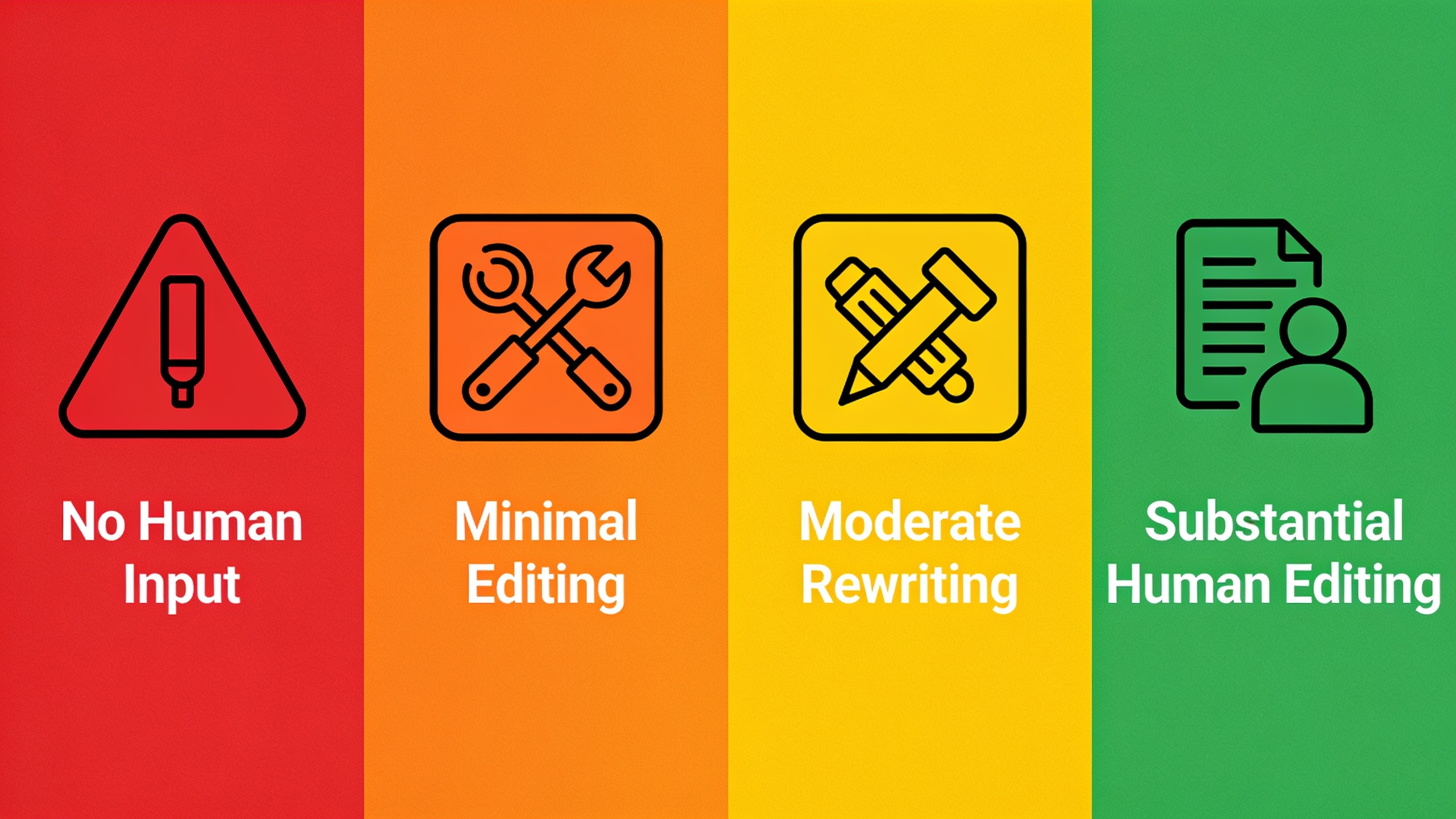
The pattern is pretty consistent across both. The more a human directs, edits, picks, and arranges the output, the stronger the copyright claim. Just typing a prompt and publishing whatever falls out, with no real editing? That's the shakiest ground you can stand on.
Worth flagging, too: not every country plays by these rules. The UK's Copyright, Designs and Patents Act has a specific provision (Section 9(3)) for "computer-generated works" that hands authorship to "the person by whom the arrangements necessary for the creation of the work are undertaken." That's a genuinely different philosophy from the US human-authorship stance. If you're publishing across multiple markets, that inconsistency is its own headache worth raising with a lawyer.
Who Owns AI Content: You, the Tool, or No One?
In most cases, ownership defaults to the person or business that directed the AI and made meaningful edits to what it produced. But if no human contributed enough original creative input, the content might not be "owned" by anyone in a copyright sense. That last bit is subtle, and it trips up a lot of marketing teams who assume ownership just automatically lands on them.
Realistically, there are three ways this can go when you publish AI-assisted content.
You own it outright. This is when a human uses AI as a drafting or research tool but then substantially rewrites, restructures, or layers in original analysis, opinion, examples, and voice. The finished piece reflects genuine human authorship built on top of an AI starting point. That's the strong position.
You own parts of it. Like the Zarya situation, you might hold copyright over the selection, arrangement, and the actual human-written chunks, while the raw AI-generated bits floating inside stay unprotected. This happens constantly in long-form content where a person adds intros, transitions, expert commentary, or a distinctive structural framework around AI-drafted sections.
Or nobody owns it. If content comes from AI with basically no human creative contribution (one prompt, zero edits, no added structure or judgment) it probably falls outside copyright entirely under current guidance. Which means a competitor could republish it without infringing anything, because there's nothing there to infringe.
This is exactly why "generate and publish" should never be your whole workflow if you care about defensible ownership. And honestly, there's a bonus argument here: treating AI as a first-draft engine rather than a finished-product machine helps your rankings too, since thin, unedited AI output tends to flop in search anyway. Legal protection and SEO performance happen to point in the same direction.
What Do AI Tool Terms of Service Actually Say About Licensing?
Separate from copyright law entirely, your rights to use AI-generated content are also shaped by the licensing terms of whatever tool you used, and those terms vary wildly by provider and shift over time. A lot of businesses miss this. Even when copyright law is fuzzy, your contract with the vendor is not. It's right there in writing.
Most major AI content and image tools grant users broad rights to use the outputs commercially, while the provider usually keeps rights to use your inputs and outputs for things like model training, unless you're on an enterprise plan with different data-handling terms. Since these terms differ between vendors, change with product updates, and often bury exceptions for training data or usage limits, treat the vendor's current terms of service as your source of truth. Don't run on assumptions. If your strategy leans heavily on one AI tool, re-read those terms every so often, because providers keep updating them as the legal ground shifts under everyone.
This licensing layer is also why a platform's publishing approach actually matters. Tools that pair AI drafting with a clear review-edit-approve workflow, where a human signs off before anything goes live, give you far more control over what ends up published under your name. Which strengthens both your legal footing and the quality of the final thing.
The Legal Gray Areas Businesses Still Face
The biggest gray area, by a mile, is that there's no clear, universal test for how much human input is "enough" to count as authorship. The Copyright Office guidance says human contribution has to be more than trivial and involve real creative choices. But it won't give you a bright-line percentage, a word count, or a tidy checklist. You're left reading tea leaves.
Want content like this running on autopilot for your own site? Try RobinRank free — AI-written, SEO-optimized articles generated and published automatically, no credit card required.
A few other unresolved messes are worth knowing about.
There's the training data problem. Several ongoing lawsuits claim AI companies trained their models on copyrighted material without permission. Depending on how those land, the basic legality of some AI outputs could get dragged back into scrutiny. That's a risk you don't control, but you should keep an eye on it.
Then international inconsistency, which I already mentioned. The UK treats computer-generated works differently than the US, and plenty of other countries are drafting their own frameworks. The same piece of content could get treated one way here and another way somewhere else, depending on where a dispute gets litigated.
Disclosure expectations are creeping in, too. Some publishers, platforms, and regulators are starting to expect a heads-up when content is AI-assisted or AI-generated. There's no single US federal law forcing this on all businesses yet, but the way policy conversations are trending, I'd bet disclosure norms tighten up over the next few years.
And here's one people forget entirely: similarity risk. Because these models learned from existing works, there's a real (if small) chance an AI spits out something that closely resembles copyrighted material, even by accident. That's an infringement problem completely separate from the ownership question. You can get sued for publishing something too similar to someone else's work, no matter who "owns" your version.
These risks matter more for some content than others. A quick internal FAQ page is low-stakes. A flagship guide you're hoping earns backlinks and ranks for competitive keywords for the next three years? That's a different conversation. If you're building something durable, the kind of thing covered in B2B Content Marketing vs. B2C Content Marketing: What Actually Works for Each, you should weigh legal risk right alongside audience and format when deciding how much human oversight a piece really needs.
How Much Human Input Is Enough? A Practical Framework
There's no official checklist from the Copyright Office, but based on their guidance and the outcomes of cases like Zarya of the Dawn, here's a working rule that holds up: the stronger and more specific your creative choices are, in structure, argument, editing, and original examples, the stronger your claim to the finished piece.
The table below sums up how different levels of human involvement tend to get treated under current US Copyright Office guidance.
| Content Creation Scenario | Human Contribution | Likely US Copyright Status |
|---|---|---|
| Single AI prompt, published as-is | Minimal (prompt only) | Not protected — no human authorship |
| AI draft, lightly edited for typos/tone | Low | Uncertain; likely insufficient for full protection |
| AI draft, substantially rewritten with original analysis and examples | Moderate to high | Protected for human-authored portions |
| Human-written outline and structure, AI fills in sections, human edits heavily | High | Protected — human creative control is evident |
| AI-generated images arranged into a human-authored narrative (e.g., Zarya of the Dawn) | High for arrangement, none for raw images | Protected arrangement and text; unprotected individual AI images |
| Fully human-written content, AI used only for research or brainstorming | Full | Fully protected, no different from traditional authorship |
None of this is a legal guarantee. The Copyright Office and the courts still evaluate registrations case by case. But it reflects the pattern the guidance and rulings have laid down. As a general operating principle, treat AI as a collaborator that hands you raw material, and treat your editing as the step that actually creates something you can defensibly call yours.
How to Protect Your Business When Publishing AI Content
The most reliable protection is making sure a human genuinely shapes, edits, and takes responsibility for the final version, and then documenting that you did. Here's what that looks like day to day.
Build editing into the workflow, not around it. If AI writes the first draft, someone on your team should be adding original data, examples, opinions, or industry-specific context before it ships. This isn't only a copyright safeguard. It's also the exact thing that separates content that ranks and earns trust from the generic AI slop that reads like everybody else's.
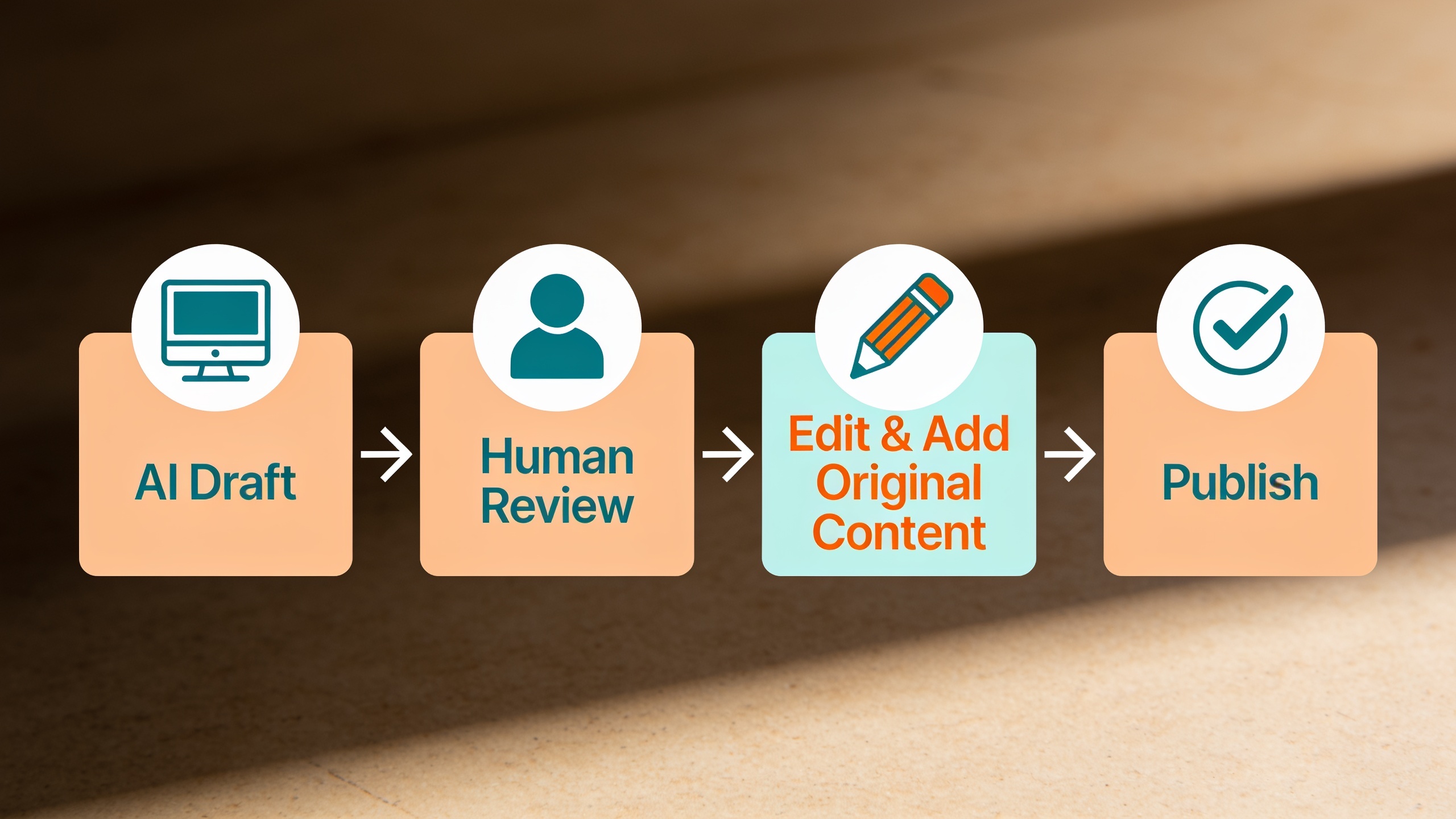
Keep records of your editorial process. If you ever need to prove human authorship, for a copyright registration, a dispute, or just internal quality control, having version history, editor notes, or a documented review trail beats trying to reconstruct the whole thing from memory after the fact. Trust me, later-you will be grateful.
Read the terms of service for every AI tool you publish with. Doesn't matter if it's a general-purpose chatbot or a dedicated content platform. Know what rights you're granted, what the provider keeps, and whether the paid or enterprise tiers change the deal.
Match your legal caution to what the content is actually worth. A platform like RobinRank, which pairs AI article generation with a publishing workflow, is built to get content live efficiently. But the same logic runs across any AI tool: something meant to be a long-term organic asset deserves more human review than a quick, throwaway update.
Think about ownership as part of your broader search strategy, not some isolated legal box to tick. As more searches get answered right inside AI Overviews and chat assistants, with no click to your site, the content you do get credit for needs to be original and defensible enough to actually stand out. That whole shift gets unpacked in Zero-Click Searches Are Rising: How to Adapt Your Content in 2025, and it lands on the same lesson as the copyright stuff: content that reflects real human expertise and judgment performs better and holds up legally at the same time. Two birds.
One more thing. Diversify how you build authority. Ownership questions aside, your content still has to earn visibility, and backlinks are still a serious trust signal for search engines. Platforms built around manually reviewed, reciprocal backlink exchanges, rather than paid link marketplaces or link farms, give you a way to build that authority without the spam risk that comes with the sketchier link-building tricks.
Frequently Asked Questions
Can I copyright something written entirely by ChatGPT or another AI tool?
Not under current US Copyright Office guidance, no. If there's no meaningful human creative contribution, no real editing, restructuring, or added original material, it isn't eligible for protection, no matter which tool produced it.
If I use AI to help write an article, do I lose the copyright?
Nope. Using AI as a drafting or research aid doesn't disqualify you, as long as you add genuine human authorship on top: original analysis, editing, structure, real creative choices. The Copyright Office has confirmed that human-authored elements combined with AI assistance can still be protected.
My business pays for an AI tool. Who owns what it produces, me or the AI company?
Depends on two things at once: copyright law and the tool's terms of service. Copyright law decides whether the output is protectable at all. The vendor's terms decide what usage rights you get. Most commercial AI tools hand users broad commercial rights to outputs, but go check the specific terms for your tool, because these policies vary and change.
Is it even legal to publish AI-generated content on my business site?
Generally, yes. There's no US law banning it. The real question isn't whether you can publish, it's whether you can claim exclusive copyright over it, and whether the output might resemble existing copyrighted work closely enough to invite an infringement problem.
Do I have to disclose that content was made with AI?
Right now there's no single federal US law requiring AI disclosure for all published business content, though some platforms, publishers, and jurisdictions are drifting toward it. Check the requirements of wherever you're publishing, and keep in mind these norms are still very much in flux.
---
Bottom line, this is still a developing area of law, and the safest stance for any business is to treat AI as a powerful drafting tool, not an author in its own right. Add real human judgment, original insight, and actual editorial oversight to whatever the AI hands you, and you'll be in a far stronger spot. Legally, and in terms of the quality of what you're actually putting your name on.
Ready to stop writing content by hand? Start your free RobinRank trial and get a full month of SEO-optimized articles published on autopilot.