Anchor Text Strategy: How to Diversify Without Getting Penalized
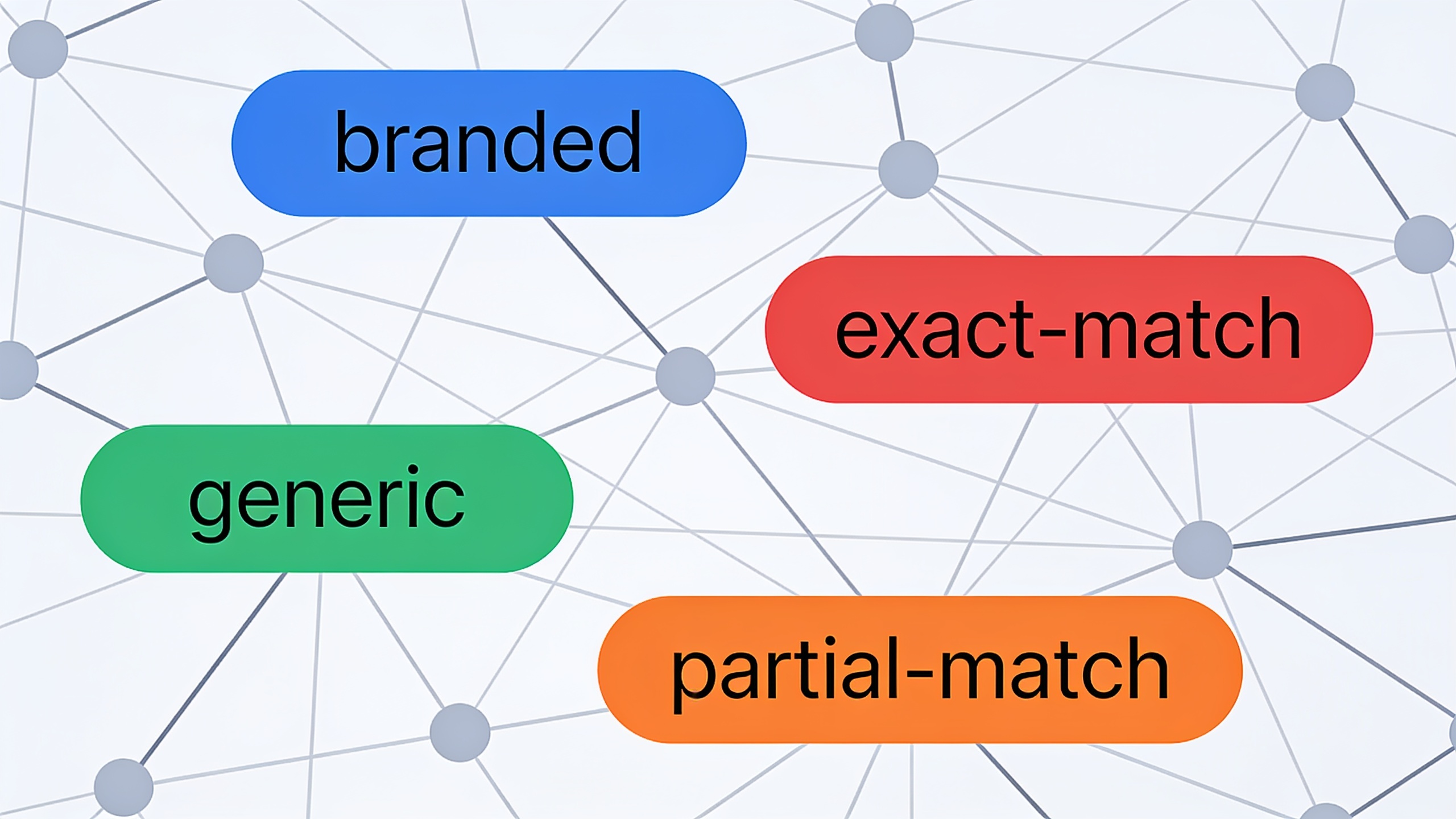
So in this guide I'll walk through the anchor types worth tracking, the ratios most of us treat as safe (with a big asterisk on that), and the habits that separate a link profile that looks earned from one that looks bought. Doesn't matter if you're building links by hand, through outreach, or through some backlink exchange network. Same principles.
Table of Contents
- What Is an Anchor Text Strategy?
- The Main Types of Anchor Text You Need to Know
- What Anchor Text Ratio Is Considered Safe?
- How Anchor Text Diversification Prevents Algorithmic Penalties
- Anchor Text Optimization Best Practices for a Natural Link Profile
- Common Anchor Text Mistakes That Trigger Red Flags
- How to Audit and Fix an Unnatural Anchor Text Profile
- Frequently Asked Questions
What Is an Anchor Text Strategy?
An anchor text strategy is your plan for how the visible, clickable words in your links get distributed across different variations: brand names, exact-match keywords, partial phrases, and generic stuff like "click here" or "learn more." The point isn't to hunt down the one perfect anchor and stamp it everywhere. It's to build a spread that looks the way real websites link to each other when nobody's thinking about SEO at all.
Here's why it matters. Search engines read anchor text as a relevancy clue. It tells them what the linked page is about. But anchor text is also one of the very few link elements a site owner controls completely, which makes it one of the easiest signals to abuse. If every single backlink pointing at your "best CRM software" page uses the exact phrase "best CRM software," that doesn't read like word-of-mouth. It reads like a coordinated campaign. A deliberate anchor strategy exists to dodge that appearance while still handing search engines enough context to understand your pages.
And this applies to your internal links too, not just backlinks. When you connect related posts on your own site, say linking from a piece about backlink building over to something like Local SEO for Small Businesses: A Beginner's Roadmap, the anchor text still signals to both people and crawlers what's waiting on the other end. Internal anchors are way lower-risk than backlink anchors, sure. But they still do better with a little variety instead of the same exact phrase copy-pasted onto every internal link.
The Main Types of Anchor Text You Need to Know
There are seven anchor categories most people recognize, and a healthy profile uses a mix of most of them rather than leaning hard on one or two. Knowing what each type signals, and how dangerous it gets when you overdo it, is basically the foundation of the whole thing.
| Anchor Type | Example | What It Signals | Risk Level If Overused |
|---|---|---|---|
| Branded | "RobinRank" | Trust, recognition, natural mention | Low |
| Naked URL | "robinrank.ai" | Citation-style, common in natural linking | Low |
| Generic | "click here," "learn more," "this article" | Low relevance signal, very common organically | Low |
| Exact-match | "anchor text strategy" | Strong keyword relevance | High |
| Partial-match | "strategy for anchor text diversification" | Moderate relevance, softer than exact-match | Medium |
| Branded + keyword | "RobinRank's anchor text strategy guide" | Combines trust and relevance | Low–Medium |
| Image / alt-text | (image link with alt attribute as anchor) | Contextual, often overlooked in audits | Low–Medium |
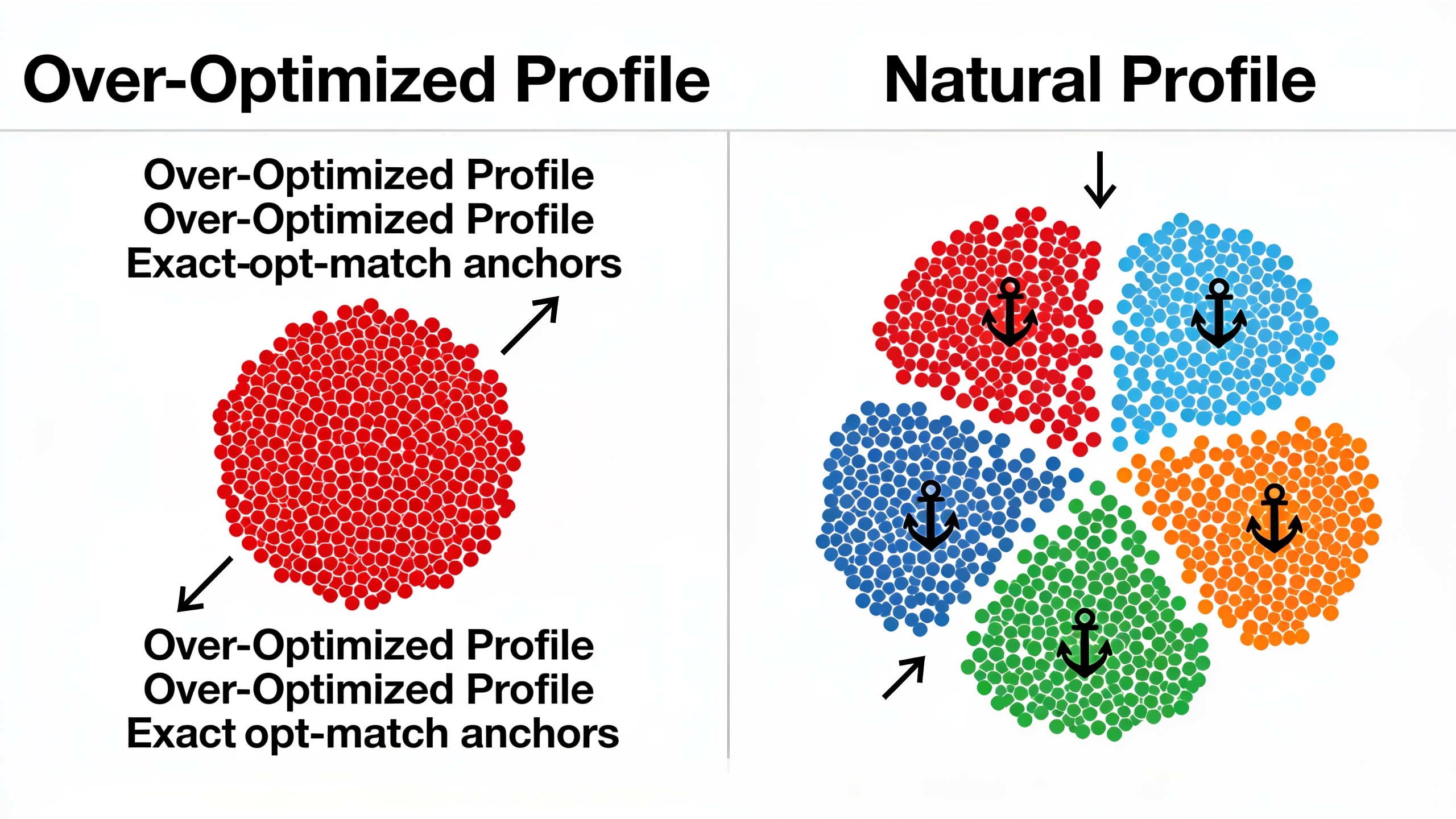
Branded and naked-URL anchors usually make up the biggest chunk of any natural profile, and for an obvious reason: that's just how normal people link. They mention the company name or paste a URL. They don't sit there crafting a keyword-rich phrase. Generic anchors are common for the same lazy-in-a-good-way reason, because writers default to "read more" or "check this out" without a single thought about SEO. Exact-match anchors, though? Those are rare in genuinely organic linking, because almost nobody naturally writes a hyperlink as a perfectly optimized keyword string. Which is exactly why a pile of them is one of the clearest fingerprints of manipulation.
What Anchor Text Ratio Is Considered Safe?
There's no official ratio published by Google, so anyone telling you otherwise is guessing. But the rough consensus among people who do this for a living is that branded, naked-URL, and generic anchors together should be the clear majority of your backlink profile, often thrown around informally as somewhere in the 60-80% range, while exact-match keyword anchors stay in the single digits to low double digits. Treat that as a direction, not a law.
Honestly, the "safe" ratio depends a ton on your niche, your competition, and how established your brand already is. A brand-new startup nobody's heard of will naturally pick up more generic and naked-URL mentions from directories, press, and social shares long before it earns keyword-rich editorial links. Meanwhile a well-known SaaS company might see way more branded anchors, simply because people already know the name and link to it that way on instinct.
But the thing that actually matters more than nailing a percentage is avoiding sudden spikes. If your exact-match share leaps from 5% to 25% in one month because you ran a campaign, that velocity change is going to draw far more scrutiny than the raw number ever would. That's a big part of why I treat anchor optimization as an ongoing thing you track over time, not a cleanup you do once and forget.
Here's a rough way to think about targets depending on how mature your site is:
| Site Stage | Branded + Naked URL | Generic | Partial-Match | Exact-Match |
|---|---|---|---|---|
| New site (0–6 months of link building) | 50-60% | 20-30% | 10-15% | 1-5% |
| Growing site (established content, active outreach) | 40-50% | 20-25% | 15-20% | 5-10% |
| Mature brand (strong domain authority, high name recognition) | 55-70% | 15-20% | 10-15% | 3-8% |
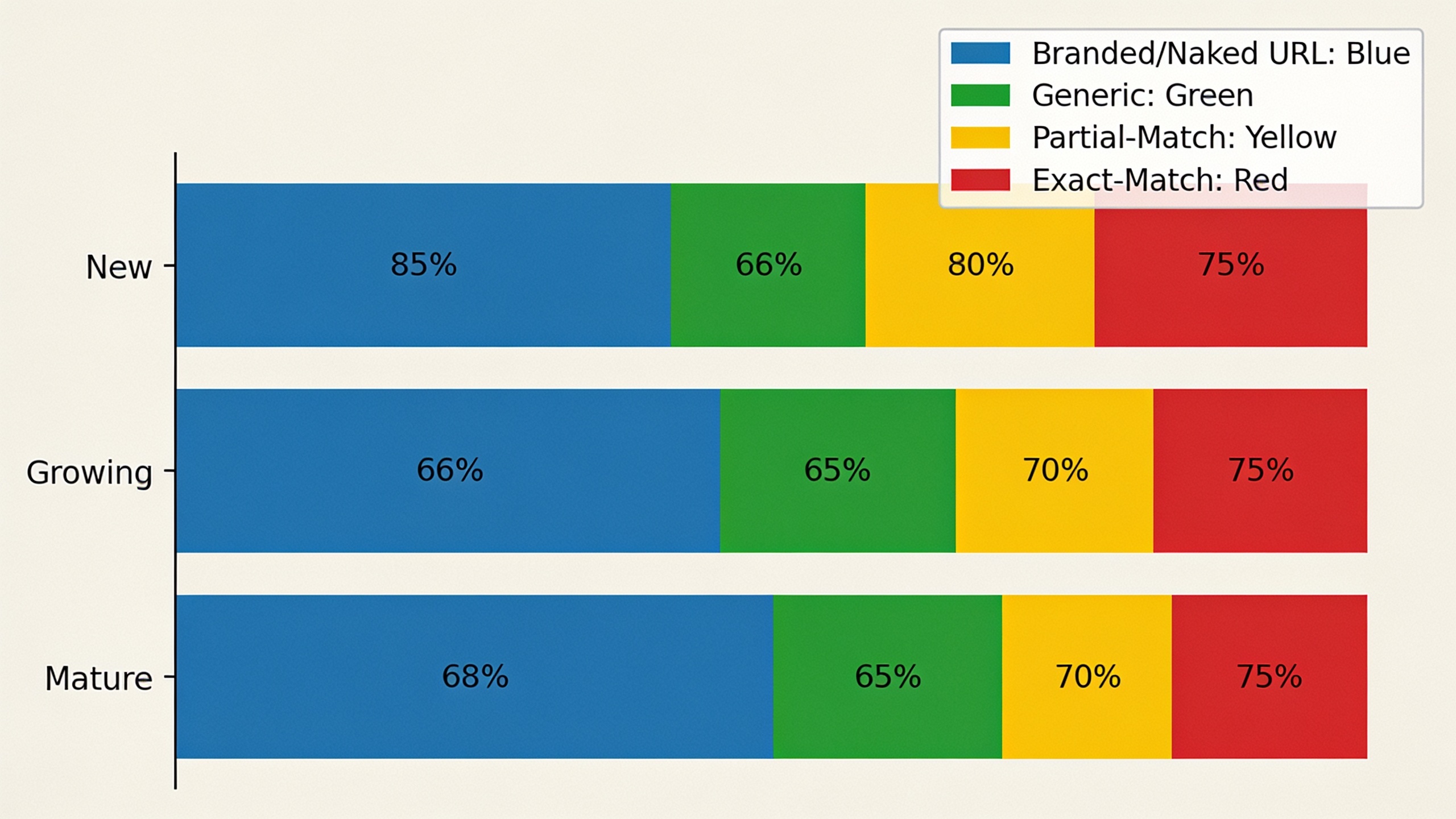
Again, these are practitioner benchmarks, not some documented Google threshold, and the real safe range shifts by industry and how cutthroat your space is. Use them as a gut-check when you review your profile. Don't treat them as a formula to engineer.
How Anchor Text Diversification Prevents Algorithmic Penalties
Diversifying your anchor text protects you from algorithmic penalties by making your link profile statistically impossible to tell apart from one built through real editorial mentions. The go-to historical example is Google's Penguin update, which first rolled out in April 2012 and went straight after sites with manipulative link profiles, including the ones stuffed with unnaturally high concentrations of exact-match anchors. Penguin got folded into Google's core algorithm in 2016, which means that detection logic isn't a periodic sweep anymore. It runs all the time.
What Penguin was really solving for was pattern detection. Real websites basically never link to a single page using the same exact keyword phrase dozens or hundreds of times. So when that pattern shows up, it's a loud signal that the links were bought, traded, or engineered to rank for that keyword. Diversifying your anchors breaks up the pattern and puts back the messy statistical noise you'd expect from people linking on their own.
Which is also why context matters just as much as the phrase itself. A link tucked naturally inside a relevant paragraph, surrounded by related content, reads completely differently to a search engine than the identical anchor dumped into an unrelated directory or some footer link farm. The surrounding content, the linking site's actual topic, whether the link sits in the body of an article versus a sidebar, all of that reinforces whether the anchor looks legit. It's the whole idea behind community-powered backlink networks like RobinRank's, where outbound links get placed contextually inside genuine articles instead of mass-inserted, and links get re-verified periodically so anything removed or unpublished stops counting toward the network.
Want content like this running on autopilot for your own site? Try RobinRank free — AI-written, SEO-optimized articles generated and published automatically, no credit card required.
Anchor Text Optimization Best Practices for a Natural Link Profile
Good anchor optimization basically means writing links the way a real author would, then checking the overall pattern now and then to make sure no single type has ballooned out of proportion. The trick is making smart choices at the moment you create the link, so you're not stuck doing frantic cleanup later.
Match Anchor Text to Natural Language, Not Just Keywords
Instead of jamming an exact-match phrase into every link, write the anchor the way you'd describe the page out loud to a friend. This matters even more now that so much search is going conversational and voice-based, a shift I dug into over in Voice Search Optimization: Writing Content People Can Actually Ask For, because natural-language anchors tend to echo the phrasing people actually type and speak, not the clipped keyword fragments that scream manipulation.
Prioritize Contextual Placement Over Anchor Wording
The sentence wrapped around your link carries more SEO and trust value than the anchor phrase by itself. Put links inside body paragraphs where the topic genuinely fits, not in author bios, sidebars, or footers where they just look like ads.
Vary Anchors Across Multiple Links to the Same Page
If ten different sites link to the same landing page, those ten links should use ten reasonably different phrases, a mix of branded, partial-match, and generic. Not the same exact-match keyword echoing across every single referring domain like a broken record.
Track Ratios by Landing Page, Not Just Site-Wide
Your site-wide ratios can look totally healthy in aggregate while one specific high-value page is quietly drowning in exact-match anchors. So segment your audit by URL, not just by domain. This is the mistake that catches people who think they're in the clear.
Let Brand Mentions Lead
Push branded anchors as the default in your outreach and guest content. A profile dominated by brand mentions is the single strongest sign of an earned reputation rather than a purchased one. If I had to pick one habit to obsess over, it'd be this one.
Common Anchor Text Mistakes That Trigger Red Flags
The most common anchor mistakes are over-optimizing exact-match keywords, weird consistency across referring domains, and sudden volume spikes that don't line up with how the site is actually growing. All three are detectable at scale, which is exactly why they're risky even when any single link looks perfectly innocent on its own.
Over-optimized exact-match anchors are the classic blunder. Dozens of backlinks all reading "best project management software" pointing at one page. Even if each link came from a legit-looking site, it's the aggregate pattern across the whole profile that lights up the board.
Consistency across unrelated domains is the sneakier cousin of that. If a fitness blog, a finance blog, and a tech blog all somehow link to your page with nearly identical phrasing, that's a bigger red flag than the same anchor showing up twice on two topically related sites. Because it hints at centralized control over placement instead of independent editorial calls. Blogs about kettlebells and mortgage rates don't coincidentally use the same anchor.
And velocity spikes just pile on the risk. A profile that gains 5 backlinks a month for a year and then suddenly picks up 80 keyword-rich backlinks in a single week is statistically weird no matter how the anchors are distributed. Growth should look proportional to real business activity, new content, press, a product launch. Not a campaign detonating overnight.
Oh, and one more: ignoring internal anchor text. Tons of sites do this by default. Internal linking is lower-risk than backlinks, absolutely, but hammering the exact same exact-match phrase on every internal link to a cornerstone page still builds a needlessly concentrated pattern. And that one's stupidly easy to fix, so there's no excuse.
How to Audit and Fix an Unnatural Anchor Text Profile
Auditing your anchor profile means exporting your full backlink list, sorting every anchor by type, working out the percentage breakdown, and comparing it against the benchmark ranges for wherever your site sits maturity-wise. Most backlink tools will export anchor text alongside referring domain and link type, and that export is your raw material.
Start by pulling every backlink and internal link aimed at your highest-priority pages, the ones you're actually fighting to rank. Sort each anchor into the seven types from earlier and figure out what share falls into each bucket. If exact-match anchors are running past roughly 10-15% of the total for a given page, or you spot several referring domains using near-identical phrasing, that page's carrying more risk than it should.
Here's the part people get wrong, though. Fixing an over-optimized profile is mostly not about ripping out existing links. Asking sites to change historical anchor text is usually a pain, and doing it at scale can look suspicious all on its own. Instead, fix forward. Change how you request anchors in future outreach, diversify the phrasing in any guest content or partnership links you directly control, and lean harder on branded and natural-language anchors in everything new you acquire. Over a few months, all those new natural links dilute the old exact-match concentration and gradually drag your ratio back toward something healthy.
Internal links are more straightforward since you own the source pages outright. Go through your highest-traffic and highest-priority pages, find every internal link pointing at them, and rewrite the anchors so they vary while still describing the destination honestly. For most mid-sized sites this is a low-risk cleanup you can knock out in an afternoon.
FAQ
Is there an official Google-published anchor text ratio I should follow?
Nope. Google has never published an exact "safe" percentage for anchor text distribution. Every ratio you'll see in this article and everywhere else in SEO land is a practitioner benchmark, cobbled together from watching sites get penalized and recover over the years. It's not official guidance.
Does anchor text optimization apply to internal links too?
Yeah, though the stakes are lower since you control your internal linking completely. Varying your internal anchor phrasing instead of repeating the same exact-match phrase on every link to a cornerstone page still supports a more natural footprint, and it gives readers clearer context about where they're headed.
How often should I audit my anchor text profile?
Most people review their anchor distribution quarterly, or right after any active link-building push, since that's when unnatural spikes are most likely to pop up. If you're running continuous outreach or you're part of a backlink exchange network, monthly spot checks on your top pages are worth the small effort.
Can a natural link profile still include some exact-match anchors?
Definitely. Exact-match anchors aren't cursed. They happen naturally whenever someone genuinely describes your page accurately. The problem is concentration and pattern, not the mere existence of keyword-rich anchors. A handful of them scattered through an otherwise diverse profile is completely normal and expected.
How does contextual link placement affect anchor text risk?
Links tucked naturally inside relevant body content carry way more legitimacy than the same anchor stuck in a footer, sidebar, or random directory, because that placement mirrors how real editorial links actually happen. It's part of why community-driven, contextual backlink models place links inside real articles matched by topic rather than scattering them indiscriminately across unrelated pages.
Anchor text is never going to stop being one of the more heavily scrutinized parts of SEO, and that's precisely because it's one of the few link attributes you get to fully control. So treat diversification as a habit, not a one-time fix. Write anchors the way a real reader or editor would, keep half an eye on the overall pattern across your best pages, and let branded and natural-language mentions do most of the heavy lifting while keyword-rich anchors stay the exception. Not the rule.
Ready to stop writing content by hand? Start your free RobinRank trial and get a full month of SEO-optimized articles published on autopilot.