Answer Engine Optimization: Ranking in ChatGPT & Perplexity
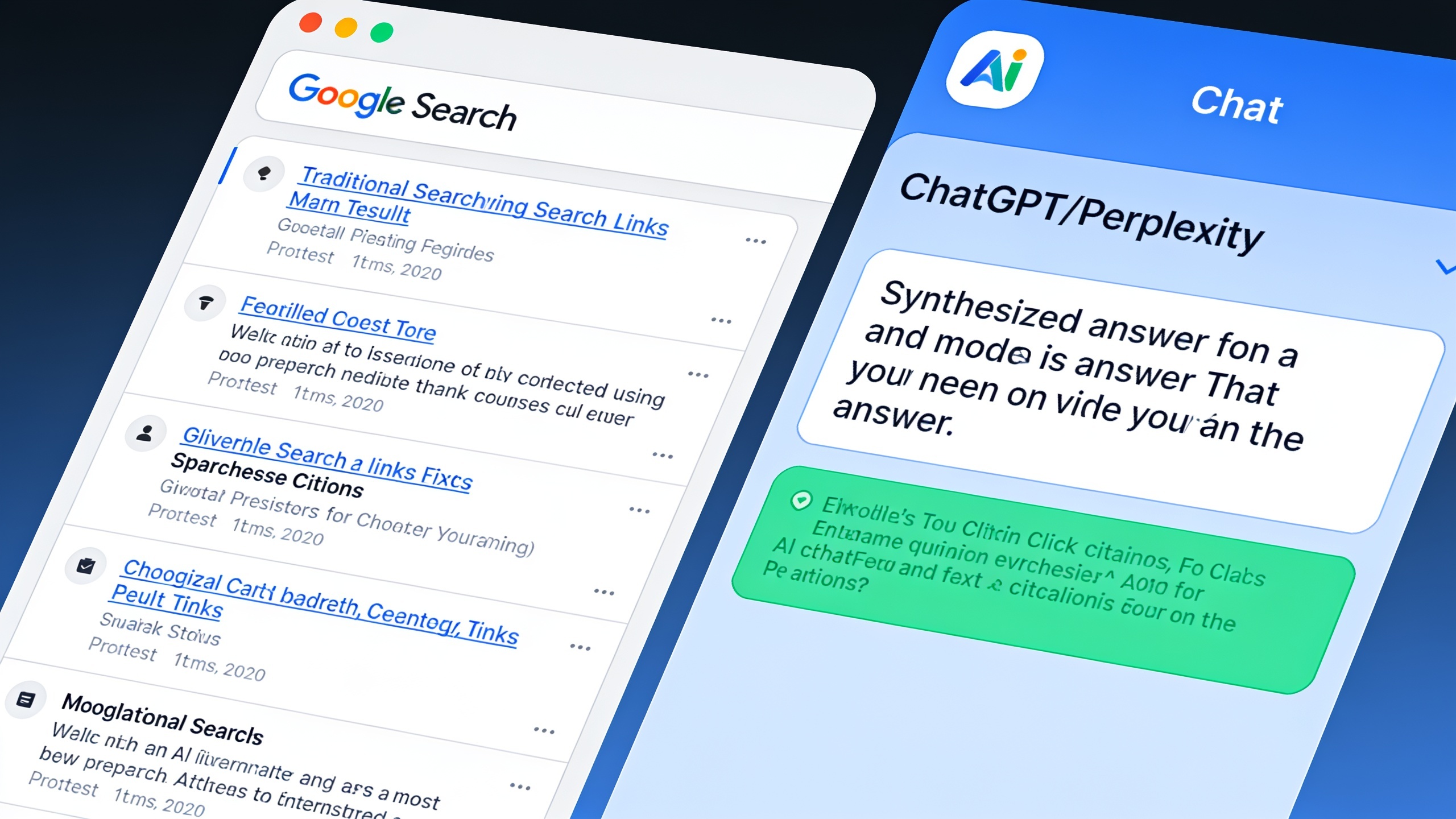
Why does this matter so much? Because "top result" doesn't mean what it used to. If an AI assistant answers somebody's question without ever showing a single link, and your page isn't the one it borrowed from, you get nothing. Zero traffic. Doesn't matter that you rank third for that keyword. So this article walks through how these LLM-powered assistants actually find and cite information, which formatting and authority signals push your odds up, and a practical framework you can start using this week.
Table of Contents
- What Is Answer Engine Optimization?
- How Do AI Chat Assistants Source and Cite Content?
- What Formatting Signals Help Content Get Cited?
- Which Authority Signals Influence AI Citations?
- Answer Engine Optimization vs. Traditional SEO
- A Step-by-Step Framework to Rank in AI Chatbots
- Common Mistakes That Keep Content Out of AI Answers
- FAQ: Answer Engine Optimization
What Is Answer Engine Optimization?
Answer engine optimization is the process of shaping your content so AI-powered assistants (ChatGPT, Perplexity, Google's AI Overviews, Microsoft Copilot) pick it as a source when they generate a direct answer. Traditional SEO fights for a ranking spot on a results page. AEO fights for something different: getting extracted, summarized, and quoted inside a conversational reply.
The phrase "answer engine" is pretty literal. These tools exist to hand you a final answer instead of a pile of options to sort through yourself. Perplexity leans into this hard, building its whole interface around a synthesized response with those little numbered citations. ChatGPT's search mode and Google's AI Overviews do basically the same dance: the model reads whatever web pages it pulled, boils them down, and attaches specific claims to specific pages.
Now, I want to be clear about something because people get this wrong. AEO isn't a replacement for SEO. It's an extension of it. The two overlap a ton, because AI systems still lean on crawled, indexed content and, a lot of the time, the same ranking signals search engines have used for years. What AEO adds on top is a layer of demands around clarity, structure, and provable authority. Basically, stuff that makes it dead simple for a model to lift your point and quote it without mangling it.
How Do AI Chat Assistants Source and Cite Content?
AI chat assistants find content through a retrieval step that pulls relevant web pages, then a generation step that summarizes and cites them. The exact mechanics shift a bit from product to product, but the two-part pattern holds across ChatGPT, Perplexity, and AI Overviews. Get your head around this pipeline and everything else in AEO starts to make sense.
Retrieval: Finding Candidate Pages
Before an assistant writes anything, it usually fires off a search query (sometimes several) against a web index. Perplexity crawls the web in real time and basically shows its homework, dropping numbered source citations right into the response. ChatGPT's browsing and search features lean on live retrieval so answers aren't stuck in whatever the model learned during training. And Google's AI Overviews pull from Google's core index and ranking systems, which is exactly why pages that already do well in organic search keep showing up as citation candidates.
So here's the uncomfortable truth for anyone hoping to skip the basics: visibility in AI answers sits downstream of plain old crawlability and indexability. If a page isn't indexed, loads like molasses, blocks crawlers, or is stranded with barely any internal links pointing at it, it never even reaches the retrieval stage. No amount of clever phrasing saves it.
Generation: Selecting and Attributing Claims
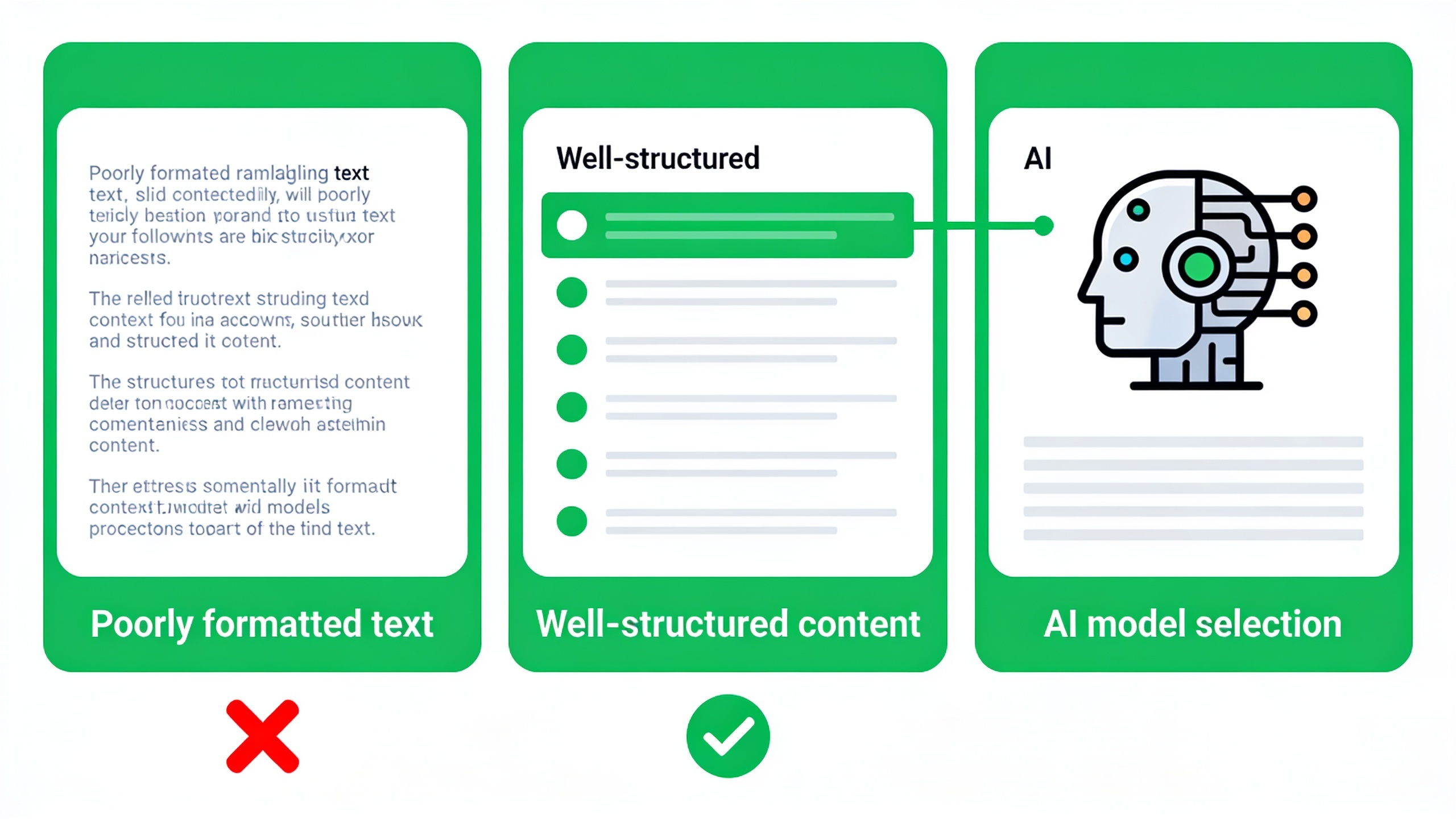
Once it's got its candidate pages, the model reads through them and decides which passages actually answer the question. This is where formatting earns its keep. A model working under token and time limits will grab content it can extract with the least amount of guesswork. A clean definition. A direct answer. A stat that's clearly labeled. Rambling prose that never quite gets to the point? Way harder to quote, way easier to skip.
Citation style varies by platform, and it's worth knowing the differences. Perplexity almost always shows inline numbered citations tied to specific sentences. ChatGPT's search mode shows source links but tends to be pickier about how many it surfaces per answer. AI Overviews link out to a handful of sources beneath the summary. Different flavors, same underlying job for you: make it easy for the system to grab one self-contained, accurate statement and attach your page to it.
What Formatting Signals Help Content Get Cited?
Content with clear headings, direct answers near the top of each section, and explicit definitions is far easier for AI systems to extract and cite than content written as long, unstructured blocks of prose. People call this "answer-first" writing, and honestly it's one of the highest-leverage moves in the whole AEO playbook.
A few formatting choices reliably move the needle. Lead each section with the actual answer in the first sentence or two, so a model doesn't have to reverse-engineer your point from context. Define your terms the first time you use them ("Answer engine optimization is...") instead of assuming everyone read the paragraph above. Write your headings as real questions people type, like "How much does X cost?" or "What is Y?", because that mirrors how folks phrase things to a chatbot and helps retrieval systems match your section to their intent.
Beyond that, make every section survive on its own. If someone quotes it in isolation, it should still make sense without the reader having seen anything before it. Use tables and lists for comparative data, since structured info is easier to parse and reproduce than the same numbers buried in a paragraph. And name your entities, numbers, and dates. A claim in the "According to [Source], [Year]" format is dramatically easier for a model to cite than some vague assertion floating around with no attribution.
One thing people forget: title tags and meta descriptions still matter here, even though nobody sees them inside a chat window. Search engines use them to understand and rank the page that eventually gets retrieved. If yours are a mess, the advice in Meta Description Tips That Actually Get Clicks (Plus Title Tag Formulas That Work) applies directly to AEO. A page that never earns a click or a crawl in the first place never gets a shot at being cited.
Which Authority Signals Influence AI Citations?
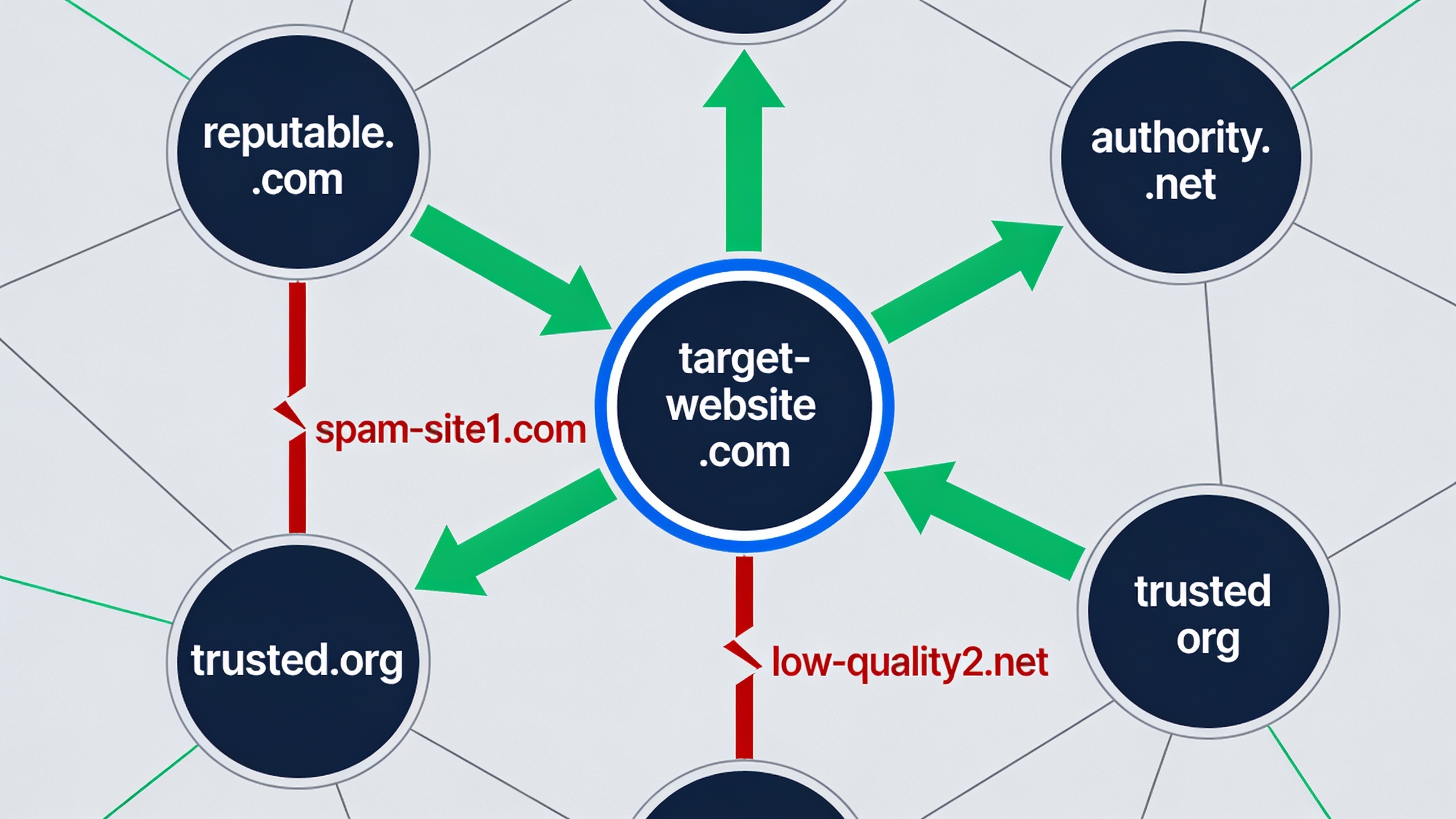
AI answer engines lean toward content that shows independent signs of being trustworthy, meaning the page or domain gets validated by things outside the content itself. Backlinks from reputable sites. Consistent mentions across the web. Clear evidence of real expertise. This overlaps a lot with what Google calls E-E-A-T (experience, expertise, authoritativeness, trustworthiness), and it seems to carry straight over into how generative systems decide who to trust.
Why Backlinks Still Matter for AI Visibility
Backlinks, meaning links from other sites pointing at yours, are still one of the clearest external signals that a page is credible enough to cite. Think about it from the machine's side: a page with zero outside validation looks basically identical to unverified junk, whether you're a ranking algorithm or an LLM's retrieval layer. A page that gets referenced across a bunch of independent domains, though? That says real site owners consider it a legit resource.
This is exactly why link building didn't die in the AI era. If anything it got more important, because it's one of the few external, hard-to-fake signals left. Building that kind of authority is what RobinRank's backlink exchange network is built for. Instead of cold-emailing strangers and praying, you browse manually reviewed sites by niche and Domain Rating (DR), request a placement, offer a reciprocal link when it makes sense, and RobinRank crawls the page to confirm the link actually went live. Every site in the network needs a minimum Domain Rating of 5 or higher on Ahrefs and passes a manual review. No private blog networks, no link farms, no throwaway domains. And it keeps checking over time to make sure the placement stays up. It's free to start, with a 7-day free trial once your site's approved and no card required, then $19 a month, cancel whenever.
Want content like this running on autopilot for your own site? Try RobinRank free — AI-written, SEO-optimized articles generated and published automatically, no credit card required.
Brand Mentions and Topical Consistency
Beyond straight-up links, AI systems seem to weigh how consistently a brand or author shows up across the web tied to a specific topic. Publishing regularly on a subject, getting referenced by other sites in your niche, keeping your info accurate and current, all of it adds up to a wider authority footprint a model can pull from when it's deciding who to trust on a given question. It's less about one killer link and more about looking like you genuinely live in the topic.
Answer Engine Optimization vs. Traditional SEO
Answer engine optimization and traditional SEO share the same technical bones (crawlability, indexability, backlinks), but they split on what "winning" actually looks like and how you structure content to get there. Traditional SEO chases ranking position. AEO chases being the source a model quotes or summarizes inside a direct answer.
| Dimension | Traditional SEO | Answer Engine Optimization (AEO) |
|---|---|---|
| Primary goal | Rank high on the search results page | Be cited or quoted inside an AI-generated answer |
| Success metric | Position (e.g., top 3), click-through rate | Citation frequency, brand mention accuracy |
| Content structure | Keyword-optimized, can be exploratory | Answer-first, self-contained sections, explicit definitions |
| Key authority signal | Backlinks, domain authority | Backlinks, brand consistency, verifiable data with attribution |
| User outcome | User clicks through to your site | User may get the answer without ever visiting your site |
| Platforms targeted | Google, Bing organic results | ChatGPT, Perplexity, Google AI Overviews, Copilot |
The takeaway? Don't treat AEO as some separate content strategy sitting off to the side. It's better understood as a stricter formatting and authority layer bolted on top of the SEO fundamentals you're probably already doing. If you're a founder or small business owner who's been handling SEO with no dedicated team, the same basic habits in The Founder's Guide to Ranking on Google Without a Marketing Team, consistent publishing, clean site structure, real backlinks, are the exact habits that set you up to get cited by AI chatbots too.
A Step-by-Step Framework to Rank in AI Chatbots
Ranking in AI chatbots comes down to making your content easy to retrieve, easy to extract, and easy to trust. In that order. Skip any one of these and you cap how far the others can carry you.
Step 1: Confirm the page is crawlable and indexed. Before anything fancy, check that your target page is actually indexed by Google (just search `site:yourdomain.com/page-url`) and that no crawler directives are quietly blocking access. Perplexity and ChatGPT's search rely on crawling and indexing a lot like a normal search engine, so a page Google can't see is usually a page they can't see either.
Step 2: Restructure around real questions. Rewrite your headings as the actual questions people type into a search bar or a chatbot ("How much does X cost?" "What's the difference between X and Y?"). Open each section with a direct, complete answer in the first sentence or two, then bring the supporting detail and nuance after. That's exactly how a model scans a page hunting for something to extract.
Step 3: Get specific with names, numbers, dates. Kill the vague phrasing. Instead of "many businesses see improved results," name the mechanism, the source, or the timeframe if you've got one. Specific, attributable claims are more trustworthy to human readers and more citable to a model, mostly because they lower the odds the model garbles what you actually said.
Step 4: Build external validation through backlinks. Earn links from real, relevant sites rather than hoping great writing alone conjures authority out of thin air. A manually reviewed exchange network like RobinRank's lets you request placements from site owners directly, offer a reciprocal link, and get the resulting href verified through a crawl. The whole thing is built to dodge the spam signals (PBNs, link farms, borrowed metrics) that both Google and AI systems have been trained to ignore.
Step 5: Monitor what AI engines are actually citing. Every so often, ask ChatGPT, Perplexity, and Google straight-up about topics your content covers, and see whether your domain turns up in the citations. It's a manual spot-check, sure, but right now it's honestly the most direct way to tell whether any of this is translating into real visibility inside AI answers.
Common Mistakes That Keep Content Out of AI Answers
Most content doesn't get cited because it's structurally hard to extract or has no external trust signal, not because the underlying info is wrong. That distinction matters. You can be completely correct and still get skipped.
The classic offender is burying the answer. Three paragraphs of throat-clearing before you say anything useful, and now the model has to guess your point or just move on to the next candidate. Right behind it is undefined jargon: using a term over and over without ever defining it plainly, which makes the section useless out of context, and out of context is precisely where an AI is going to try to quote you.
Then there's the trust problem. Publishing genuinely helpful stuff with zero backlinks or independent mentions leaves a model with no way to tell your page apart from unverified noise on the same topic. Stale or vague data is another one. A statistic with no named source and no date is a lot harder for a model to cite confidently than a claim pinned to a specific study or organization. And finally, thin list-only content. Structure is great, but a page that's nothing but bullet points with no explanation often lacks the depth a model needs to build a nuanced answer. Lists help. Lists alone don't.
FAQ: Answer Engine Optimization
So is AEO actually different from generative engine optimization (GEO)?
Mostly people use the two terms interchangeably right now, both meaning "optimize content for AI-generated answers instead of traditional rankings." Some folks reserve GEO for generative AI tools specifically and use AEO more broadly for any answer-first search experience, but honestly there's no settled distinction yet. Don't lose sleep over which word you use.
Do I need separate content for AI chatbots versus regular Google search?
Nope. In most cases the same well-structured, clearly attributed, backlink-supported content does well in both, since AI answer engines mostly pull from the same crawled and indexed web. The tweaks in this article (answer-first sections, explicit definitions, specific data) improve your traditional rankings and your AI citation odds at the same time. One effort, two payoffs.
Can I actually track whether ChatGPT or Perplexity is citing me?
Not with a proper dashboard, at least not yet. There's nothing like Search Console for AI citations right now. The most reliable method is the low-tech one: manually query the assistants with relevant questions, check whether your domain shows up in the sources, and repeat it periodically as your content and backlinks evolve.
Do backlinks still matter if chatbots are answering questions directly?
Yes, and I'd argue more than ever. Backlinks are still one of the clearest external trust signals available to both search engines and AI retrieval systems, and a page with no independent validation is tough for any system to trust enough to cite. Building even a small number of relevant, verified backlinks through direct outreach or an exchange network is still a very practical way to strengthen that signal.
How long before I start showing up in AI answers?
No fixed timeline, unfortunately. It depends on how fast a page gets crawled, indexed, and picked up by the underlying search systems these assistants rely on for retrieval. Pages that are already well-indexed and backed by some existing authority tend to reach citation potential faster than a brand-new page on an unestablished domain. Patience helps.
---
Look, AEO isn't some shiny trend to bolt onto your content calendar and forget. It's just the recognition that the endpoint of search is shifting from a list of links to a single synthesized answer, and the content most likely to get quoted in that answer is the content that's easiest to find, easiest to extract, and easiest to trust. Getting there means nailing the unglamorous fundamentals: clean structure, honest specificity, and real authority signals like backlinks from sites that actually exist and actually vouch for you. None of it is glamorous. All of it works.
Ready to stop writing content by hand? Start your free RobinRank trial and get a full month of SEO-optimized articles published on autopilot.