Case Study: How an Agency Tripled Client Backlinks Using an Exchange Network

If you run an agency and you're juggling link-building deliverables across a bunch of client accounts, stick around. The point here isn't to brag about one lucky win. It's to show you a repeatable process. I'll walk you through where the agency started, the exchange system they built, the month-by-month results, and the specific mechanics that let them triple backlink volume without letting quality slide.
Table of Contents
- The Problem: Outreach Was Eating the Agency's Margins
- Why the Agency Chose a Backlink Exchange Network
- How the Agency Set Up the Exchange Workflow
- The Results: Backlink Growth Across Six Clients
- What Made the Difference: Verification and Quality Control
- How Much Does This Approach Cost an Agency?
- Lessons Other Agencies Can Apply
- Frequently Asked Questions
The Problem: Outreach Was Eating the Agency's Margins
The problem was pretty basic, really: manual link-building outreach was burning through way too many billable hours for what it actually produced. The agency, which I'll call Northlane Digital, ran SEO for six clients across e-commerce, local services, and B2B software. And on every single retainer, link building was the most time-hungry deliverable by a mile.
Before they switched to an exchange network, Northlane's link-building looked like pretty much every agency's does. A strategist would prospect relevant sites, build a list, write personalized outreach emails, then follow up two or three times before anyone bothered to reply. If you've ever done outreach at scale, you already know the punchline. Reply rates are low, and most of the conversations that do happen never turn into an actual placement. Now multiply that across multiple client accounts, where each one needs its own prospect list, its own email sequence, its own follow-up rhythm. The waste compounds fast.
So here's what that looked like in practice for Northlane. A single account manager could realistically land only a handful of decent placements per client, per month. And a big chunk of the strategist's week went to list-building and drafting emails, not the actual link negotiation. Clients were paying for link building, sure, but the agency's cost-per-backlink kept creeping up. The reporting told the same story on every account: link velocity had flatlined. This wasn't a "work harder" problem or a "hire another person" problem. The delivery model itself needed to change.
Why the Agency Chose a Backlink Exchange Network
A backlink exchange network is basically a platform where site owners request and offer link placements directly with each other, instead of going through brokered link sales or grinding out cold outreach lists. Northlane's leadership decided to test the model once they realized something: the bottleneck was never finding relevant sites. It was the friction of getting an actual human to reply and say yes.
They started using RobinRank's exchange network. Members browse a directory of manually reviewed sites, filter by niche and Domain Rating, then request a placement straight from the site owner and offer a reciprocal link in return. RobinRank verifies both sides by crawling the live page and confirming the href is actually there, and on the Pro plan it keeps checking placements afterward and pings you if a link gets pulled.
Why did this matter so much for Northlane? Because it stripped out the two slowest parts of the old process (prospecting and cold outreach) while keeping the parts that genuinely need a human brain. Things like deciding which pages and anchors made sense for each client. Instead of guessing which webmasters might reply to an email and then praying, strategists could just see a filtered list of active, reviewed site owners who were already looking to trade links in the right niches. If you want the deeper explanation of how this is different from paid link networks or link farms, the team leaned on how backlink exchange networks work and why they're not PBNs when explaining the whole thing to clients who were, understandably, a little nervous about anything that smelled like a private blog network.
And that trust piece turned out to matter more than they expected. A few of Northlane's clients had been burned before by agencies buying links from sketchy, opaque marketplaces. So being able to say "every site in this network gets manually reviewed, and every placement gets verified on the live page" wasn't just an operational detail. It became a selling point.
How the Agency Set Up the Exchange Workflow
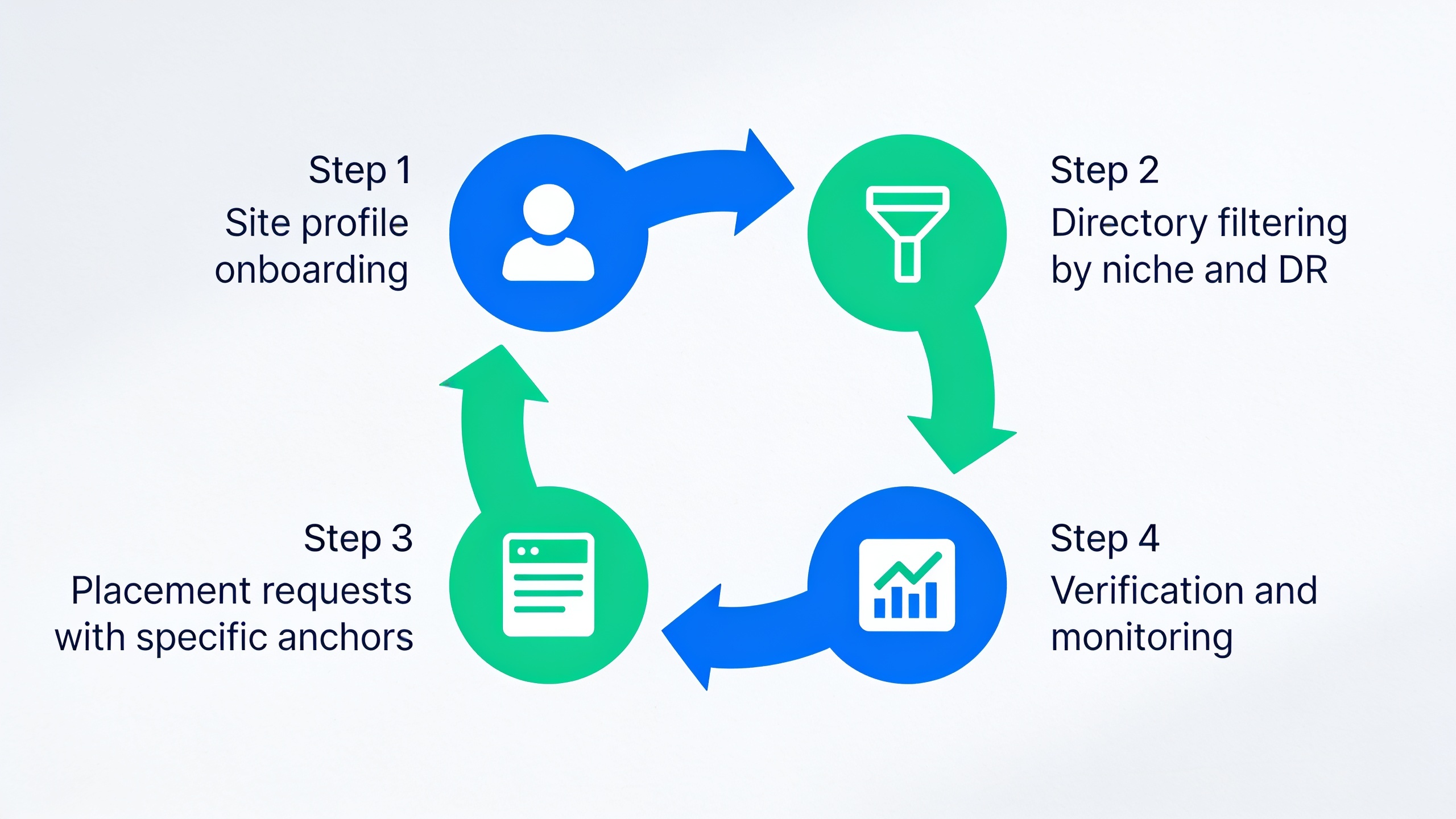
The workflow boiled down to four repeatable steps: build a client site profile, browse the directory by niche and Domain Rating, request placements with a specific page and anchor, and offer a reciprocal link back when it made sense. That structure is what let Northlane treat link building like a weekly production line instead of an open-ended campaign that never really ends.
Step 1: Onboarding Each Client Site
For each client, a strategist added the domain to the exchange and it went through manual review before it showed up in the discovery directory. RobinRank reviews sites by hand, checking for an ownable domain, real content (not thin doorway junk), and no spam signals. Usually takes about a business day. Northlane actually came to love this gate. If a client's page didn't pass review, well, that told them something: the page needed better content before it deserved links at all. Sometimes that alone kicked off a content brief before any exchange activity even started.
Step 2: Filtering by Niche and Domain Rating
Once approved, strategists filtered the Discover directory by niche and by Domain Rating (a metric sourced from Ahrefs) to find owners in the right categories. Home and travel for one e-commerce client, finance-adjacent publishers for a fintech client, local service categories for a home services client. Filtering by DR let them dodge the two classic failure modes of manual prospecting. One, wasting time on sites too weak to matter. Two, chasing sites so far out of reach the owners never write back.
Step 3: Requesting Placements With Specific Pages and Anchors
Forget generic outreach templates. Every request named the exact target page and anchor text the client needed. Like asking a home-goods blog to link to a client's buying guide using a specific descriptive anchor. And because the request went straight to the site owner inside a chat interface, the whole negotiation over placement and anchor wording happened in one back-and-forth. Not a five-email thread stretched across two weeks.
Step 4: Offering Reciprocal Links Strategically
Not every request needed a link back. But when a reciprocal placement did make sense, strategists offered one from the client's own resource or blog pages. This is honestly where the agency's judgment mattered most. Reciprocal links only ever came from genuinely relevant, useful pages. Never from thin pages cooked up just to trade links, because RobinRank's review process specifically screens against exactly that kind of thing anyway.
Step 5: Verifying and Monitoring Live Placements
Once a placement went live, Northlane didn't just grab a screenshot for the client report and call it done. The platform crawled the destination page, confirmed the link's href was actually present, and kept running periodic checks with an alert if the link ever got removed. This gave the agency something plain old outreach never really delivered: an audit trail proving every backlink in the monthly report was still live when they reported it.
The Results: Backlink Growth Across Six Clients
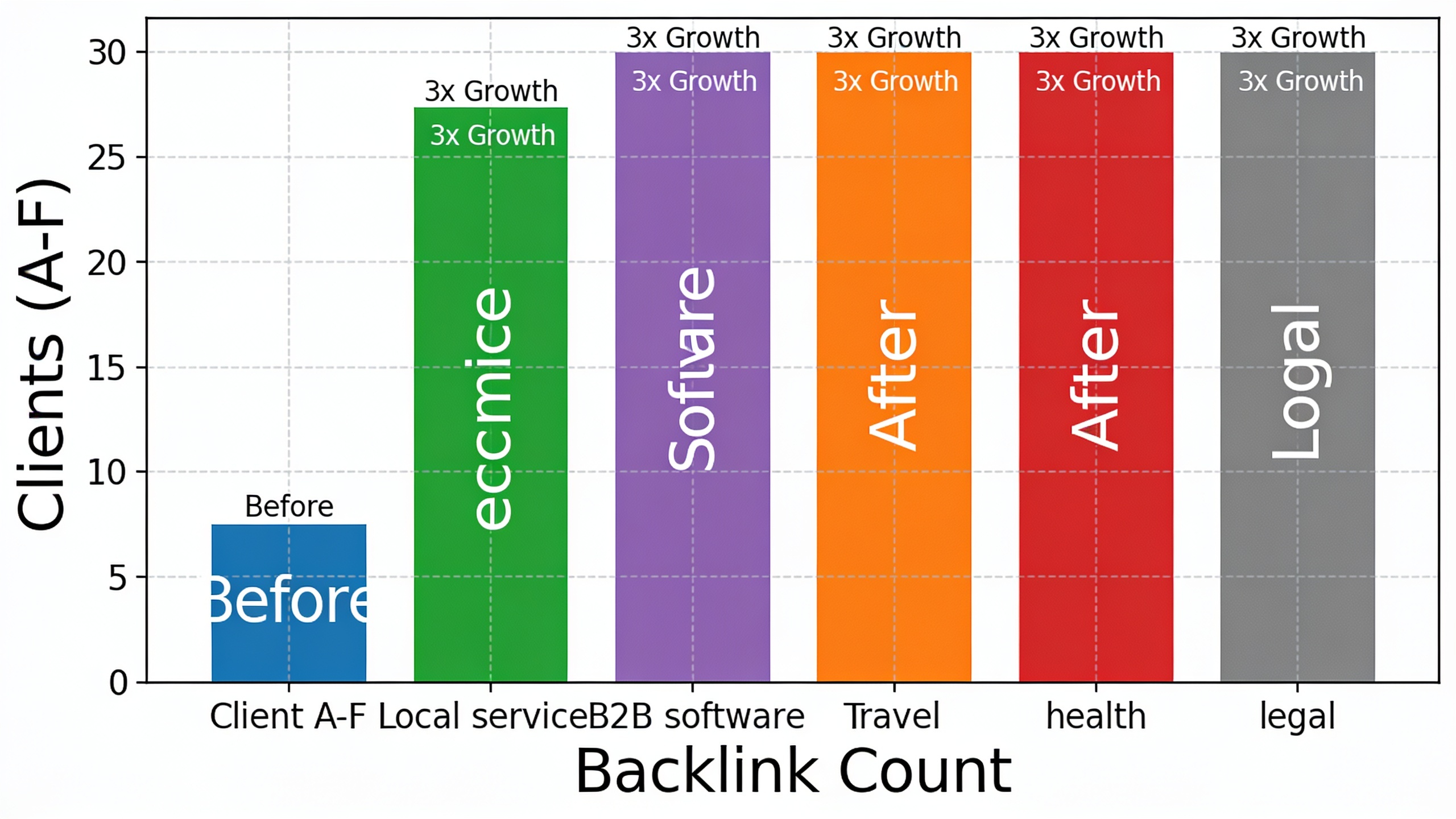
Across all six clients, backlink counts roughly tripled over four months. The exact multiplier bounced around a bit depending on each client's starting DR, how broad their niche was, and how much reciprocal link inventory their site could actually offer.
The easiest way to see the pattern is to just look at it client by client. Quick caveat before you do: these are illustrative figures from this specific engagement. Don't read them as guaranteed or "typical." Link-building results swing wildly based on niche, site authority, and how hard an agency actually works the exchange each week.
| Client (anonymized) | Industry | Backlinks Before | Backlinks After (4 months) | Approx. Growth |
|---|---|---|---|---|
| Client A | E-commerce (home goods) | 22 | 71 | 3.2x |
| Client B | Local home services | 15 | 44 | 2.9x |
| Client C | B2B software (fintech) | 34 | 88 | 2.6x |
| Client D | Travel booking startup | 19 | 63 | 3.3x |
| Client E | Health & wellness retailer | 27 | 79 | 2.9x |
| Client F | Legal services | 12 | 41 | 3.4x |
Want content like this running on autopilot for your own site? Try RobinRank free — AI-written, SEO-optimized articles generated and published automatically, no credit card required.
That legal services client is worth a closer look. Its trajectory mirrored something the agency had seen in a totally separate engagement, which is written up in how a legal services firm tripled organic leads. The gist: in a tightly defined niche, backlink growth translated into real ranking movement on commercial-intent keywords once the link profile diversified past the firm's existing referral sites.
Two operational things explain most of the variance in that table. First, clients with fatter content libraries (more blog posts, guides, resource pages) had more pages to offer as reciprocal links, which made their requests more appealing and sped up the yes. Second, niches with more active site owners in the Discover directory (home, travel, and finance-adjacent categories in this group) got faster responses than the narrow niches. Simple reason, really. More potential partners to request from in any given week.
What Made the Difference: Verified Placements and Consistent Quality Control
The single biggest thing separating this from a normal outreach campaign was verification. Every placement got confirmed live on the actual page, not just promised in some email thread. And that quietly fixed a problem that had been undermining Northlane's client reporting for years: links that got agreed to but never published, or published and then quietly removed with nobody the wiser.
Under the old manual system, account managers would sometimes stumble across a nasty surprise during quarterly audits. A backlink they'd reported months earlier had just... vanished. Maybe the partner site got redesigned, maybe the page got deleted, maybe the link just got dropped for no reason. With automatic ongoing checks and removal alerts on the exchange network's paid tier, that blind spot closed up. When a placement disappeared, the strategist knew right away and could either follow up with the owner or swap in a fresh request. No more finding out three months later at the next audit.
Quality control got a lift on the other side of the transaction too. Because every listed site had already been checked for real, ownable domains, genuine content, and no spam or PBN patterns before it ever hit the directory, Northlane's strategists barely had to vet potential partners themselves. That vetting bottleneck (figuring out whether a site was even safe to link to) used to eat a real chunk of outreach time. Killing it off was arguably just as valuable as the time saved on the outreach itself.
How Much Does This Approach Cost an Agency?
For a single site on RobinRank, the exchange network is free to start, and there's a seven-day free trial of the Pro tier once your site passes manual review. No credit card needed to register. After the trial, Pro runs $19 per month per site and you can cancel whenever. If you don't want to stay on Pro, you can still use the free tier.
Now here's the thing agencies need to actually think about. Pricing is per site, not per agency seat. So if you're managing a bunch of client domains like Northlane was with six of them, you'd want to weigh that monthly cost against each client's individual link-building budget, not assume some flat agency-wide fee. What I couldn't find stated publicly anywhere is whether RobinRank offers multi-site or agency-tier pricing beyond the standard $19-per-month, per-site deal. So if you've got a big roster, confirm the current terms directly before you assume volume discounts are on the table.
What the free trial and cheap monthly rate really changed for Northlane was the economics of testing this channel per client. Instead of dropping a big retainer-funded outreach budget upfront and hoping, they could add a client's site, pass review, and watch placement activity during the seven-day Pro trial before deciding whether to keep the subscription for that account. That's a much lower-risk way to pilot a new channel than committing to a traditional outreach retainer.
Lessons Other Agencies Can Apply
The most transferable lesson here? Link building scales faster once you remove the bottleneck of finding a willing partner. And an exchange network removes exactly that, because it puts site owners who already want reciprocal links right in front of each other. If you're sizing this up for your own accounts, a few things are worth keeping in mind.
Client sites with more usable content pages benefit way more than others. Reciprocal link offers are only as strong as the pages you've got to give back. So audit a client's content library before onboarding them, and wherever there are gaps, fill them first so the client actually has enough relevant pages to offer as link destinations.
Niche breadth affects how fast you'll see results too. Clients in categories crawling with active site owners will land placements faster than clients stuck in narrow or emerging niches, just because there are more partners available. Set that expectation with clients up front so nobody's disappointed.
And put verification in every client report, not as some afterthought. Being able to show a client that a link was crawled, confirmed live, and is being watched for removal is a genuine differentiator. Especially useful at retainer renewal time, and especially with clients who got jaded on link building after a bad vendor experience.
One last thing, and this is important: treat this as a complement to your other tactics, not a full replacement. An exchange network is fantastic for steady, ongoing link velocity across lots of relevant, vetted sites. But it's not built to land the high-authority, one-off placements you get from a big press hit or a widely cited original data study. Different tools, different jobs. Use both.
Frequently Asked Questions
Wait, isn't a backlink exchange network just a PBN with extra steps?
Nope, and this is a fair thing to worry about. A PBN is a group of sites secretly controlled by one party for the sole purpose of manipulating rankings by linking to a target. A legitimate exchange network connects independent site owners who each control and answer for their own domain. RobinRank explicitly screens out PBNs, link farms, and thin doorway pages during manual review before any site gets into the directory. There's a lot more detail on that distinction in how backlink exchange networks work and why they're not PBNs.
How long before I actually see backlink growth after joining?
In the Northlane case, meaningful growth built up over about four months, not overnight. Every placement needs a request, a negotiated yes, and then a live, verified link. Site review itself usually wraps up in about a business day. But the pace of placements after that really depends on how many relevant, active owners are hanging around your client's niche and how consistently you're working the directory each week.
Do I have to give a reciprocal link every single time I request one?
Not really. You offer reciprocal links when they make sense for the requesting site, not as some automatic tax on every exchange. Just make sure the links you give back come from genuinely useful, relevant pages. Exchange networks with proper manual review specifically screen against thin pages built only to trade links, so don't try to game it.
What DR range should I be targeting when I filter the directory?
Depends entirely on your client's current authority and how competitive their niche is. There's no magic DR number that works for everyone. In practice, you'll get the best response rates by filtering for owners within a realistic range of your client's own Domain Rating, since owners of higher-DR sites are usually hunting for comparably strong reciprocal partners.
How do I actually confirm a placement is live and stays live?
On RobinRank, every accepted placement gets verified by crawling the destination page and confirming the href is present. Pro subscribers get ongoing weekly checks with an alert if a placement later disappears. That gives you a real audit trail for client reports, which beats a one-time screenshot taken the moment a link went up.
Bringing It Together
So what's the takeaway? Northlane tripled backlink volume across six accounts without hiring anyone or blowing up their outreach budget. They just removed the slowest part of the old process and replaced it with a system where relevant, vetted site owners could actually find and respond to each other. If you're wondering whether your agency's link building results can improve without pouring in proportionally more billable hours, a structured exchange network is about as low-risk a channel as you'll find to pilot on a single client site before you roll it out across the whole roster.
Ready to stop writing content by hand? Start your free RobinRank trial and get a full month of SEO-optimized articles published on autopilot.