Content Localization Tools Compared: Which Fits Your Strategy?
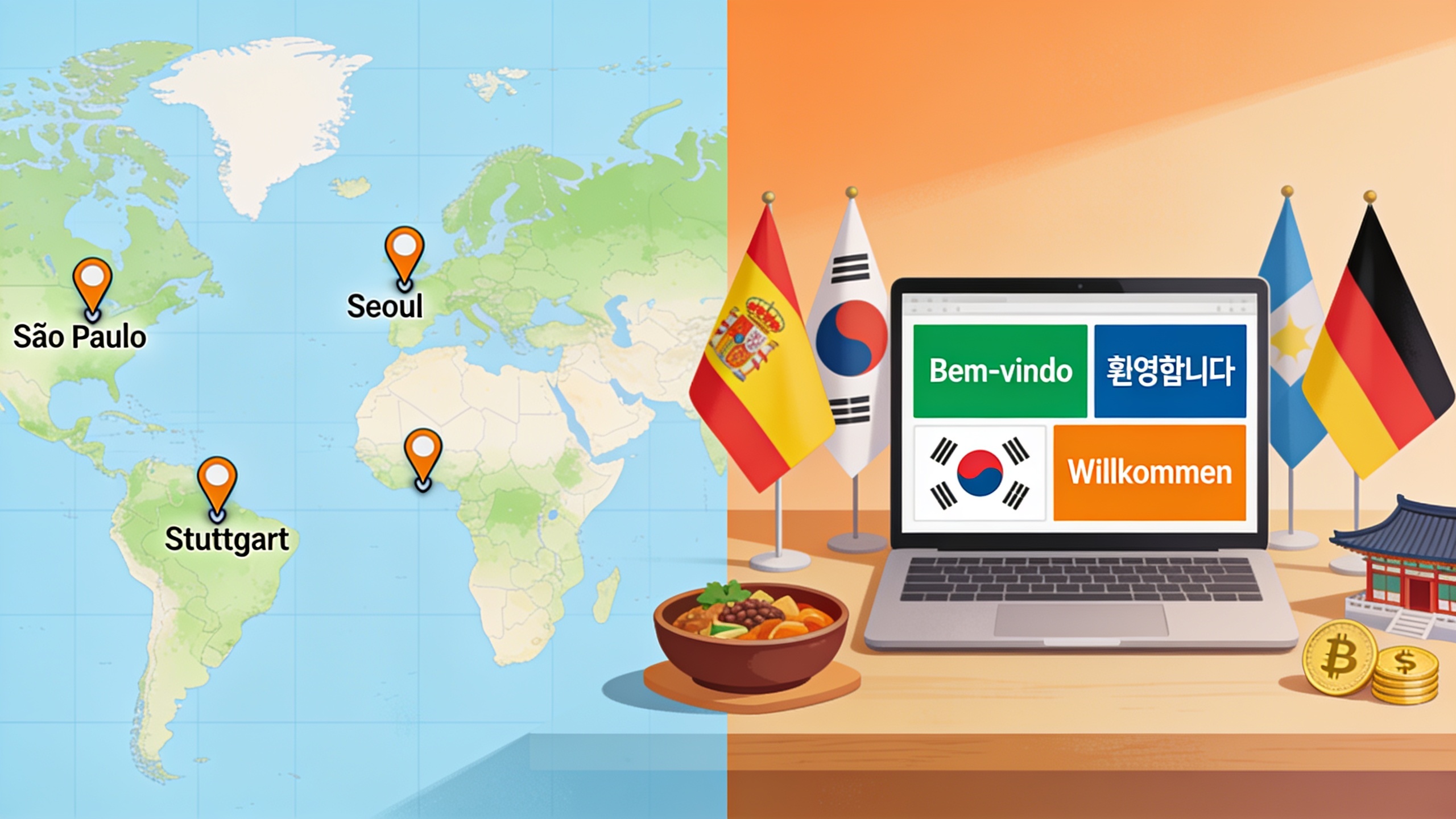
Straight translation asks "what does this say?" Localization asks something harder: would this joke, this stat, this price format, this seasonal reference actually land with someone in São Paulo, Seoul, or Stuttgart? Turns out that question matters a lot. According to CSA Research's "Can't Read, Won't Buy" study (2020), 76% of online shoppers prefer to see product information in their native language, and 40% say they'll flat-out never buy from a website presented in another language. Numbers like that are why smart companies stopped treating word-for-word translation as good enough.
Table of Contents
- What Is Content Localization (and How Is It Different From Translation)?
- What Types of Content Localization Tools Are Available?
- How Do You Choose the Right Content Localization Tools for Your Strategy?
- What Does a Modern Localize Content Strategy Actually Look Like?
- How Much Do Content Localization Tools Cost?
- Common Localization Mistakes That Hurt Regional Engagement
- Where Content Localization Fits Into Your Broader Distribution and SEO Strategy
- FAQ: Content Localization Tools
What Is Content Localization (and How Is It Different From Translation)?
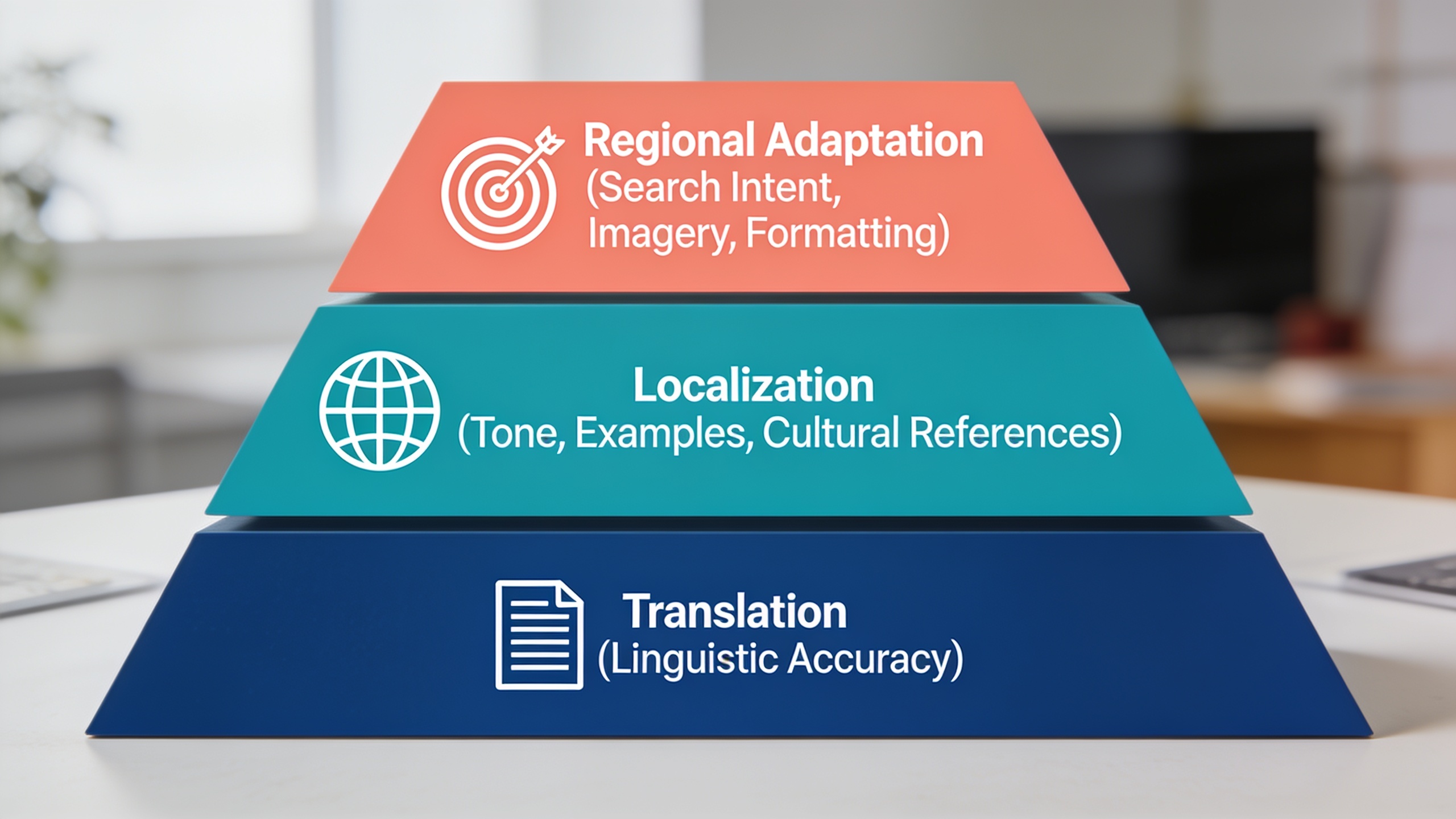
Content localization is the process of adapting an entire piece of content so it feels like it was written natively for a specific region. That means the tone, the examples, the cultural references, the imagery, currency, units, humor, even the structure of the argument. Translation is narrower. It converts text from one language to another and tries to keep the meaning intact, but it doesn't stop to ask whether a reference or comparison even makes sense to the new reader.
Here's a mental model I find useful. Cultural anthropologist Geert Hofstede came up with a framework describing how societies differ on traits like individualism versus collectivism, or how comfortable they are with risk. So imagine a blog post celebrating some "self-made entrepreneur who bootstrapped it all alone." That lands great with a US crowd. But in a more collectivist market, where team-oriented success stories tend to do better, it just kind of… thuds. No dictionary fixes that. It's a localization problem, not a translation one.
In practice you need both working together. Accurate translation as the foundation, then a localization layer on top that adjusts tone, examples, currency and date formats, legal disclaimers, imagery, and the shape of the argument itself.
What Types of Content Localization Tools Are Available?
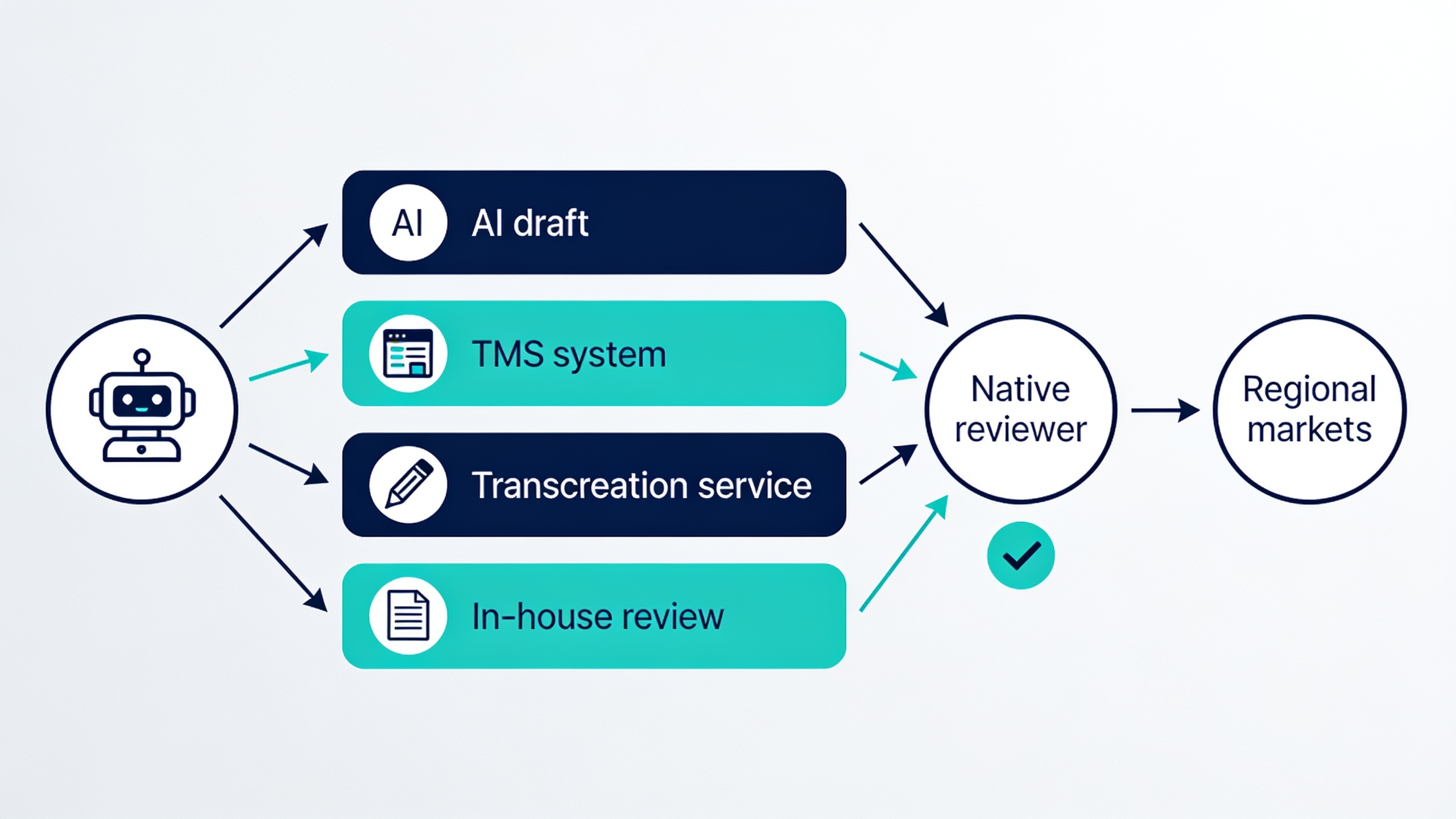
Content localization tools mostly fall into four buckets: translation management systems (TMS), AI-powered adaptation platforms, transcreation and creative-adaptation services, and in-house hybrid workflows. Each one trades speed, cost, and cultural nuance differently, and honestly, most mature programs end up mixing two or three of them rather than betting on one.
Translation Management Systems (TMS)
A translation management system is software that centralizes your translation memory, terminology glossaries, and the workflow routing between translators, editors, and reviewers. These platforms live and breathe linguistic accuracy and consistency across huge volumes of content. Think product docs, UI strings, support articles that have to stay identical across two dozen languages. They're genuinely great at version control and reuse, so you're not paying someone to retranslate the same sentence for the hundredth time. The catch? The cultural-adaptation part still has to come from human reviewers working inside the system. The software itself is built for linguistic workflow, not for judging tone or swapping out a reference that won't travel.
AI-Powered Localization & Adaptation Platforms
AI-powered localization platforms use large language models to push past plain machine translation. They'll try to rewrite tone, smooth over idioms, or suggest culturally appropriate substitutes for examples and references. This category has exploded lately, and it makes sense, because generative AI is genuinely good at spitting out five stylistic variants of the same paragraph in seconds. But it's only as good as the prompting and the human review sitting on top of it. Unreviewed AI output will still whiff on cultural nuance in ways that look fine to the model and glaringly wrong to a native reader. Which is why any serious localize content strategy still routes AI drafts past a native-market reviewer before anything goes live.
Transcreation and Creative Adaptation Services
Transcreation is the specialist option, and it's usually a service rather than software, run by agencies or freelance copywriters. A native-market writer essentially rebuilds the piece from scratch, treating your source material as a brief instead of a text to translate. This is the highest-fidelity option there is, and it's what you want for taglines, ad campaigns, and brand voice work where a literal (or even AI-adapted) version would just kill the emotional punch. It's also the slowest and most labor-heavy thing you can do per piece, so nobody sane uses it for every blog post. You save it for the assets people actually see.
In-House Hybrid Workflows
Plenty of small businesses and startups skip dedicated software entirely and just build a manual workflow. A native-speaking teammate or contractor reviews the AI or machine-translated draft against a lightweight style guide, then hits publish. Cheapest possible tooling cost. But it lives or dies on whether you actually have someone with real market fluency, and it starts falling apart the moment content volume outgrows what one or two people can reasonably eyeball.
How Do You Choose the Right Content Localization Tools for Your Strategy?
The right tools come down to three things: how many markets you're entering, how much content you need localized each month, and how brand-sensitive that content actually is. A support knowledge base and a hero landing page do not need the same treatment, which is exactly why most teams end up blending categories instead of picking a winner.
A small business entering one new market with modest volume can usually get by with an in-house hybrid workflow plus a good native reviewer. An agency juggling five clients across a dozen regional markets? They'll almost certainly need a TMS just to keep terminology and brand voice from drifting at scale. And a scrappy startup founder trying to move fast on a tight budget might lean on AI adaptation for first drafts, then spend their limited transcreation money only on the handful of assets where tone genuinely decides whether people convert. The homepage, the pricing page, the flagship campaign. That's it.
| Tool Category | Best Fit For | Cultural/Tone Adaptation Depth | Typical Speed | Relative Cost Model |
|---|---|---|---|---|
| Translation Management System (TMS) | Large content libraries, docs, UI strings, ongoing multi-language maintenance | Moderate — depends on human reviewers inside the workflow | Steady, ongoing | Per-seat or per-word licensing, scales with volume |
| AI-Powered Adaptation Platform | Fast-moving teams needing first drafts across many pieces | Moderate to good, but requires human review to catch nuance | Fast (hours) | Subscription-based, often tiered by word/output volume |
| Transcreation / Creative Agency | High-visibility brand assets: taglines, ad campaigns, hero pages | High — native copywriters rewrite for the market | Slow (days to weeks) | Project-based or per-asset, typically the highest per-piece cost |
| In-House Hybrid Workflow | Startups and SMBs entering one or two markets with modest volume | Depends entirely on reviewer's market fluency | Variable, bottlenecked by reviewer capacity | Lowest tooling cost, but highest hidden labor cost |
Want content like this running on autopilot for your own site? Try RobinRank free — AI-written, SEO-optimized articles generated and published automatically, no credit card required.
One caveat: pricing, seat limits, and feature sets swing wildly by vendor and change constantly, so treat those cost tiers as directional at best. Always confirm current plans with the vendor before you build a budget around them.
What Does a Modern Localize Content Strategy Actually Look Like?
A modern localize content strategy treats tone, cultural references, and regional search intent as three separate things to adapt, not one blurry "translation" step. Teams that only translate the words and leave everything else untouched tend to get weaker engagement even when the grammar is flawless. Which is kind of maddening, honestly, because it feels like it should work.
Tone and Voice Adaptation
Tone adaptation means adjusting formality, humor, and directness to fit regional norms. That bouncy, exclamation-point-heavy voice that crushes on US social? It can read as unprofessional in markets that expect more formal business communication. Flip it around and an overly stiff tone comes off cold and distant in markets that expect warmth and personal address. There's no universal rule here. What works is a lightweight, region-specific style guide, spelling out formality level, preferred pronouns, sentence length, that both your reviewers and your AI tools can check drafts against.
Cultural References and Examples
Examples, stats, and case studies need local substitutes, not direct translation. A US case study leaning on "Black Friday shopping spikes" means basically nothing in a market that doesn't observe Black Friday, and a price quoted in dollars forces the reader to do mental math that slows everything down. Swap in a stat, a holiday, or a brand comparison the reader already recognizes, and their attention stays on your argument instead of snagging on the translation.
Regional SEO and Search Intent
Localizing keywords means researching how people in that region actually phrase their queries, not just running your keyword list through a translator. Search volume, phrasing, and even the intent behind a query can shift by market. A term that's purely informational in one country might carry heavy commercial intent in another. And this is where distribution starts mattering as much as the writing. Once your content is properly localized, it still has to reach the right regional audience, which is why a lot of teams pair localization with a wider look at content distribution channels beyond the company blog. Syndication, regional communities, partner sites, they often beat organic search during those early trust-building months in a new market.
How Much Do Content Localization Tools Cost?
Content localization pricing usually follows one of three models: per-word or per-string rates typical of translation management systems, subscription tiers based on output volume for AI platforms, or per-project fees for transcreation and agency work. Costs run anywhere from a few hundred dollars for a single small project to serious recurring monthly spend for enterprise, multi-market programs. Because these structures shift constantly and vary by vendor, the honest move is to just ask for a current quote or demo rather than trust published list prices, which conveniently leave out add-ons like priority turnaround, dedicated reviewers, or extra language pairs.
When you're budgeting, it helps to split the cost into three buckets: the software or platform license, the human review layer (native speakers checking tone and cultural fit), and the one-time setup cost of building style guides and glossaries for each market. The teams that blow their budgets? Almost always the ones who lowballed that second bucket. Human review is expensive, and skipping it is how you end up with content that's grammatically perfect and culturally off.
Common Localization Mistakes That Hurt Regional Engagement
The single most common mistake is treating machine or AI translation as a finished product instead of a first draft that still needs a native review pass. Even genuinely good AI translation churns out text that's grammatically correct but stylistically foreign. Idioms translated too literally, formality that misses the mark, examples referencing things that don't exist in the target culture.
The second one bites people all the time: they localize the copy and forget the furniture around it. Date formats (DD/MM/YYYY versus MM/DD/YYYY), currency symbols and formatting, phone number formats, address fields, metric versus imperial units. This stuff is easy to miss because it sits outside the main body text. But it's usually the very first thing a local reader clocks as "not written for me."
And the third mistake is slapping one global style guide onto every market. A style guide written for a US audience bakes in US assumptions about formality, humor, and directness that just don't survive the trip, even after a clean translation. Build lightweight per-market versions instead. It's more work up front and it saves you a ton of embarrassment later.
Where Content Localization Fits Into Your Broader Distribution and SEO Strategy
Localization only pays off if the localized content actually gets found by the people it was built for, which means these decisions belong alongside your distribution and search planning, not tacked on afterward. A flawlessly localized blog post that never reaches a regional audience returns exactly zero on all that extra time and money.
This matters more and more for AI-driven discovery too. As more research and shopping journeys start with AI answer engines instead of the classic ten blue links, how your content is phrased and structured decides whether it gets surfaced and cited at all. So if you're building a localize content strategy across multiple regions, it's worth reading up on how answer engine optimization for platforms like Perplexity and Bing Chat actually works. The same principles, clear, well-structured, locally relevant answers, apply whether your reader is in Chicago or Chiang Mai.
For teams trying to scale regional content without hiring a full editorial staff for every single market, AI content platforms like RobinRank can shoulder the volume side. RobinRank writes, optimizes, and publishes articles automatically, and it also runs a manually reviewed backlink exchange network where site owners request and offer placements filtered by niche and Domain Rating. That combo, automated publishing plus a legit way to build backlinks with real site owners instead of cold outreach, frees up budget that would've gone toward pure content production. Which leaves more room for the human cultural review that localization genuinely, non-negotiably requires.
FAQ: Content Localization Tools
Is content localization the same as translation?
Nope. Translation converts text from one language to another while keeping the meaning, whereas localization goes further and adapts tone, cultural references, examples, currency, date formats, and imagery so the content feels native to the market instead of just understandable.
Do I really need a dedicated localization tool if I only sell in one extra market?
Not necessarily. Loads of small businesses entering a single new market do just fine with an in-house hybrid workflow, AI or machine translation drafts reviewed by a native-speaking teammate or contractor against a simple style guide, before spending on a dedicated platform.
Can AI fully replace human reviewers in content localization?
Not yet, and probably not soon. AI adaptation platforms are great for fast first drafts and suggesting cultural substitutions, but they still need a native-market human pass to catch the nuance a model misses, especially on brand-sensitive stuff like taglines and ad campaigns.
How is localized SEO content different from just translating for SEO?
Localized SEO content is built around how people in a specific region actually phrase their searches and what they're really after when they type them. Simply translating an existing keyword list misses regional phrasing quirks and can leave you targeting the wrong intent entirely.
What's the biggest hidden cost in a localization program?
The human review layer, hands down. Software fees are easy to plan for. The ongoing cost of native-speaker review to check tone, cultural references, and all those little formatting details is where most programs quietly blow past budget.
---
Getting localization right isn't about crowning one "best" tool. It's about matching the right blend of translation management, AI-assisted drafting, and human cultural review to how many markets you serve and how brand-sensitive each piece is. Start with the content that carries the most weight, homepages, pricing pages, flagship campaigns, and pour your human review there. Let the AI tools handle the volume on lower-stakes stuff like support articles and internal docs. That balance, honestly, is the whole difference between a website that's merely been translated and one that genuinely feels like it was built for the people reading it.
Ready to stop writing content by hand? Start your free RobinRank trial and get a full month of SEO-optimized articles published on autopilot.