Content Repurposing Case Study: How an Online Retailer Cut Content Costs by Repurposing
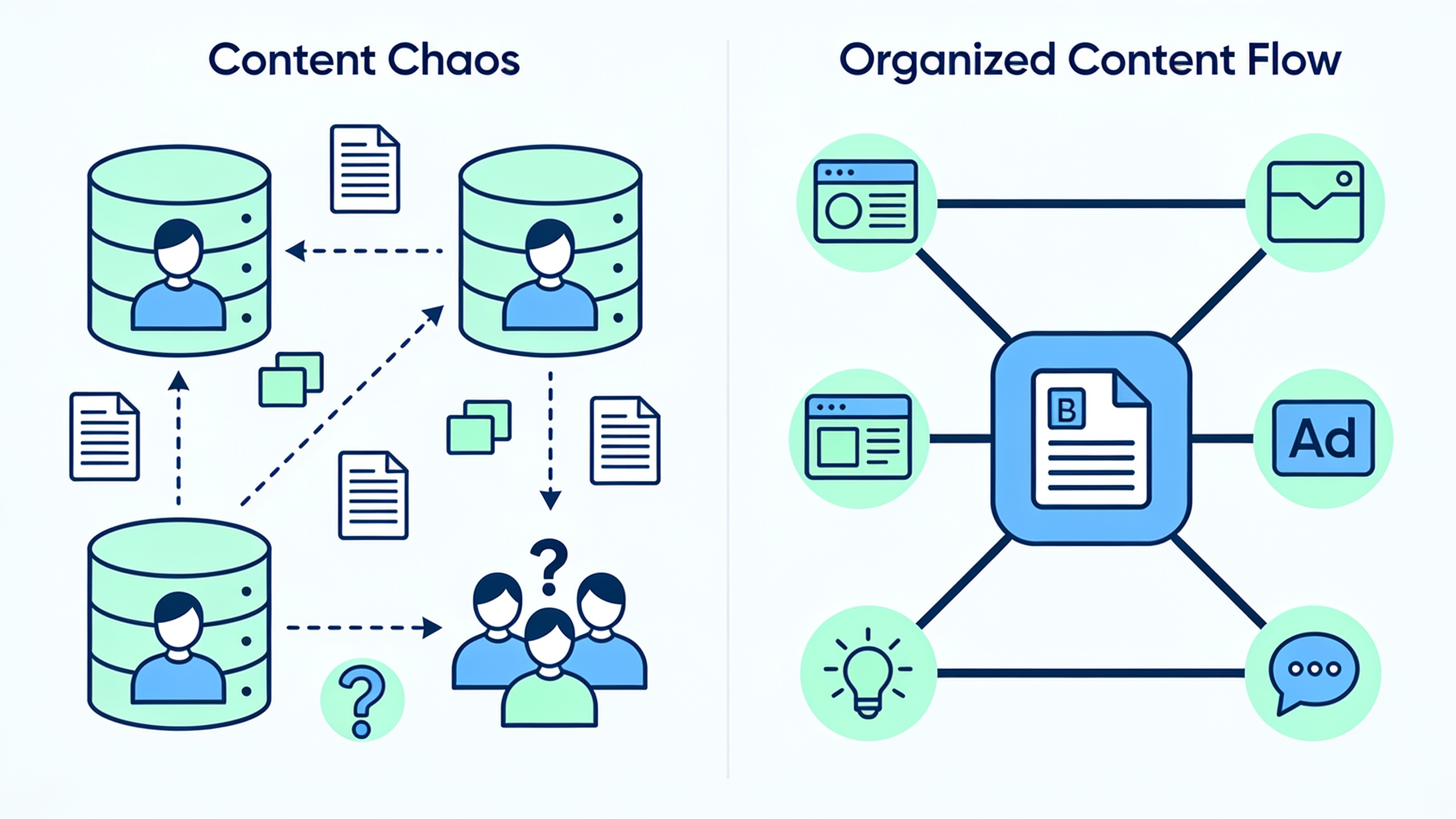
This case study is about one retailer that got fed up with that and rebuilt its content process so it stopped starting from a blank page every single time. Instead, they took their best-performing articles and systematically fed that language into product pages, ads, and social.
Quick note on the setup: to keep the company's finances private, I'm calling them Coastal Home Goods and describing the workflow and the general direction of results rather than pretending I've audited their books. The point here isn't one company's exact dollar figures anyway. It's the system underneath, which pretty much any content team can copy.
Table of Contents
- What Is Content Repurposing, and Why Does It Matter for Ecommerce Brands?
- Content Repurposing Case Study: Meet the Retailer
- The Content Cost Problem Before Repurposing
- How the Repurposing System Worked, Step by Step
- Content Repurposing Case Study Results: What Changed
- How to Reduce Content Production Costs With a Repurposing System
- Common Mistakes That Undermine Content Repurposing
- FAQ
What Is Content Repurposing, and Why Does It Matter for Ecommerce Brands?
Content repurposing means taking a piece of content you already have (usually a blog post or guide that's already working) and reshaping it into new assets for other channels, instead of writing every single asset from scratch. For ecommerce specifically, that looks like turning one strong article into product copy, ad headlines, email snippets, and captions, rather than briefing a separate writer for each.
Why does this matter more for retailers than, say, a B2B software company? One word: catalog. A retailer with 2,000 SKUs across a dozen categories doesn't just need blog posts. It needs unique, on-brand copy for every product page, every seasonal collection, every promo email, and every ad variation somebody's testing. Write all of that independently and your content spend basically scales in lockstep with your catalog and your campaign complexity. That's brutal.
Repurposing breaks that link. One good source article can feed dozens of downstream pieces. If you want the tactical version of this, we went deep on it in Content Repurposing: How to Turn One Blog Post Into 10 Pieces of Content, which is basically the playbook Coastal eventually adapted for their own catalog.
Content Repurposing Case Study: Meet the Retailer
Coastal Home Goods is a direct-to-consumer shop selling coastal-themed furniture and home decor, low thousands of SKUs, with a small in-house marketing team propped up by a rotating cast of freelancers. Before they fixed things, they ran blog content, product copy, paid ads, and social captions as four totally separate operations. Different person or contractor on each, almost no shared brief, no shared calendar. Four islands.
Here's what kills me about it. Their blog was actually good. They had buying guides ranking organically, stuff like "How to Style a Coastal Living Room" and "Best Outdoor Furniture Materials for Salt Air Climates," pulling in real traffic. But none of that research, none of the language that had already proven it worked, was making it into the pages that actually needed to convert. The product and ad teams were sitting there reinventing phrasing that search had already validated. All that free market research, just evaporating every month.
The Content Cost Problem Before Repurposing
Before repurposing, Coastal Home Goods was funding four disconnected content lines: blog articles, product descriptions, paid ad copy, and social captions, each one briefed, written, and approved as if the other three didn't exist. And that siloed setup is exactly why content costs climb faster than revenue at so many growing retailers.
Where the Money Was Going
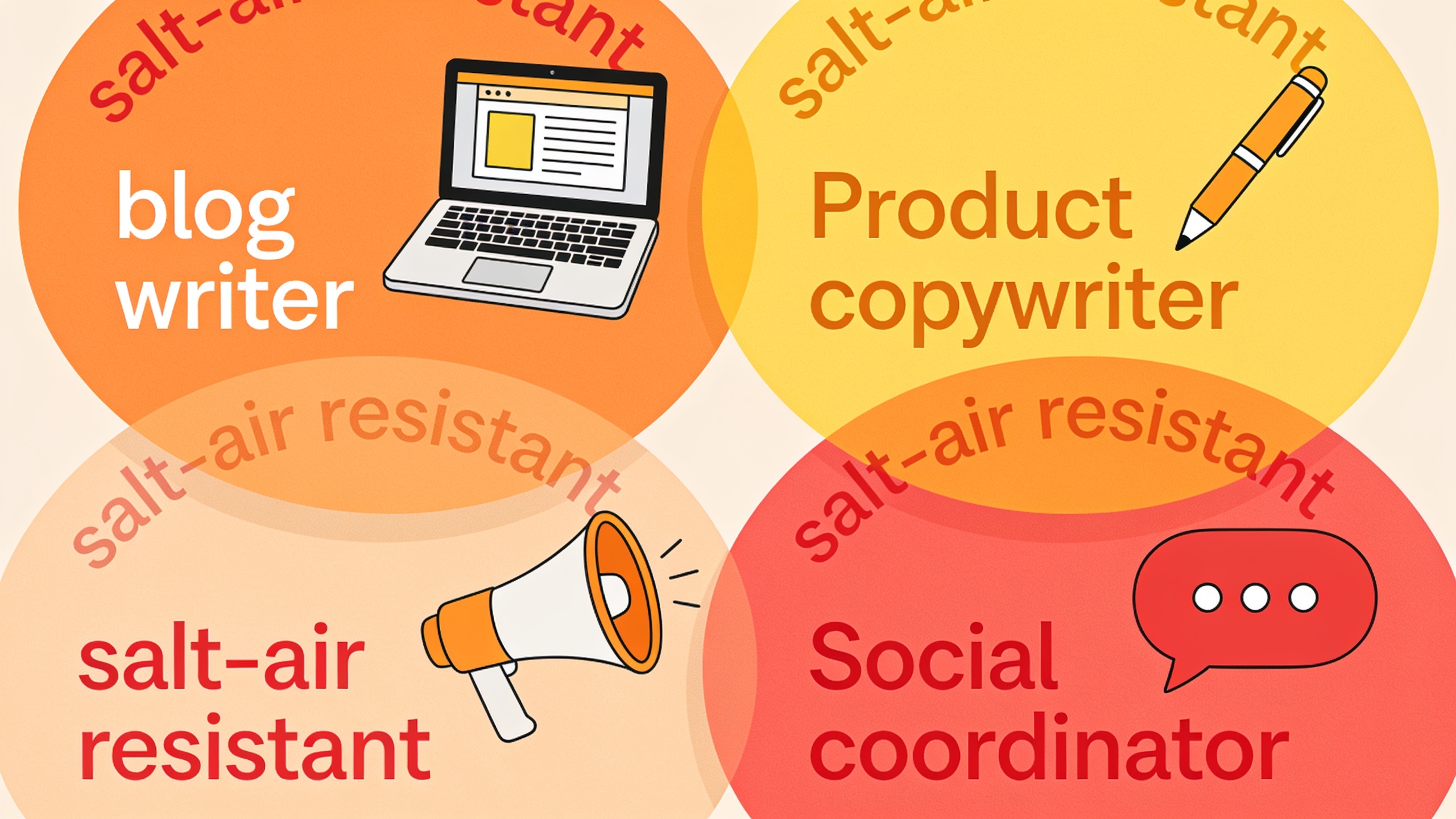
Their spend broke into four buckets, each with its own freelancer pool, its own brief template, its own revision cycle:
| Content Type | Who Produced It | Approx. Monthly Volume | Cost Driver |
|---|---|---|---|
| Blog articles | Freelance writers | 8-10 articles | Research time, SEO briefs |
| Product descriptions | In-house copywriter + agency | 40-60 new/updated | Manual research per SKU |
| Paid ad copy | Ad agency | 15-20 variations | Testing cycles, agency fees |
| Social captions | Social media coordinator | 30+ captions | Daily posting cadence |
Because each line had its own owner, the same handful of product benefits ("sustainably sourced teak," "weather-resistant for salt air," "assembles in under 15 minutes") got independently researched and rewritten by up to four different people every month. Think about that for a second. They weren't paying for four content types. They were paying to research the same facts four separate times.
The Bottleneck: No Shared System for What Was Already Working
But the duplicated writing wasn't even the worst of it. The deeper problem was that there was no mechanism to notice which blog articles were resonating with buyers and push that proven language downstream. The winners (measured by organic traffic, time on page, assisted conversions) just sat there in the blog silo while the product and ad teams kept guessing at messaging from zero. Coastal was throwing out its best research every month and then paying to redo it. Painful when you say it out loud.
How the Repurposing System Worked, Step by Step
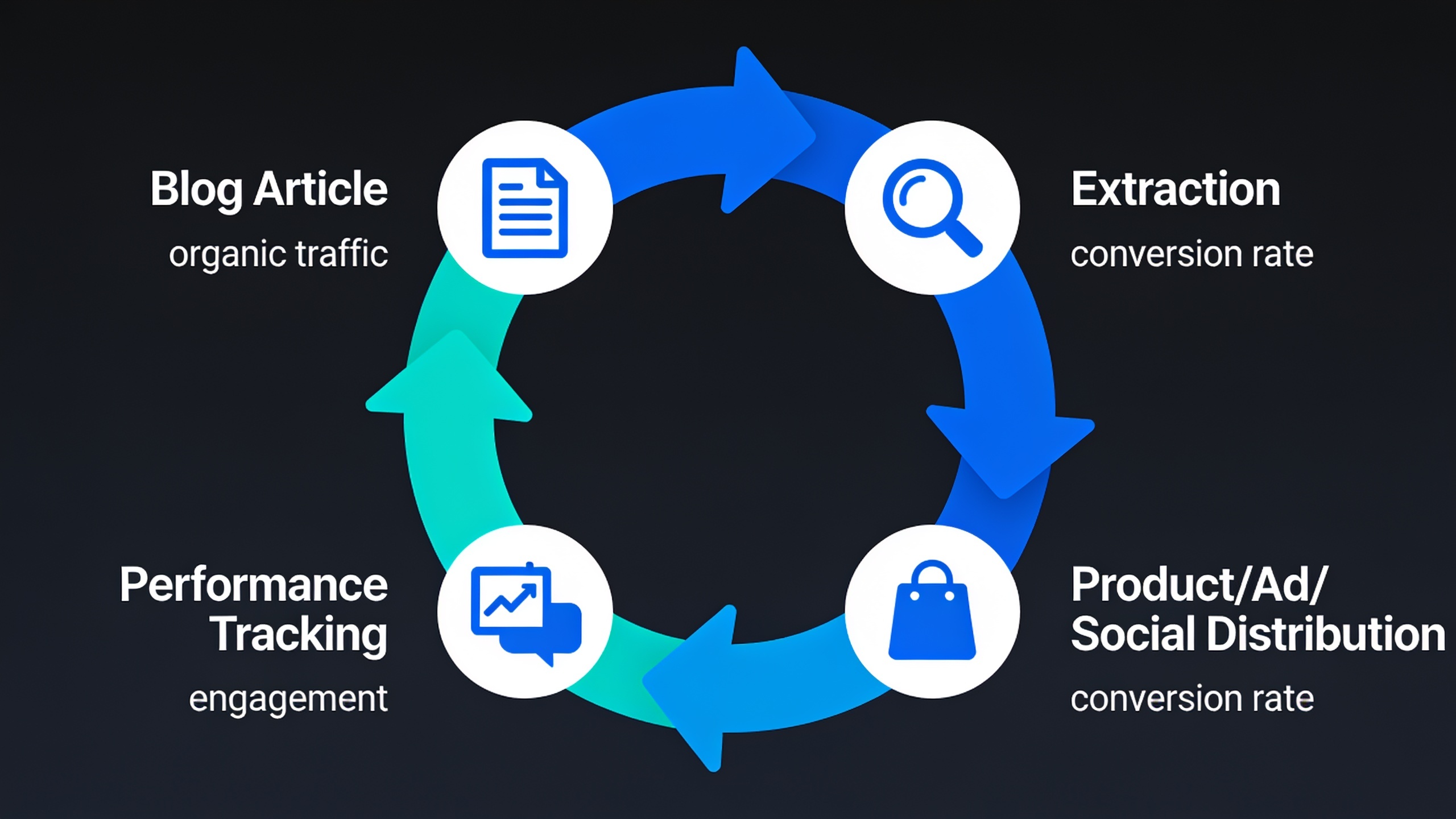
The fix was a documented workflow that treated every high-performing blog article as raw material to be mined, not a finished deliverable that gets published and forgotten. Four stages: audit, extraction, distribution, and feedback.
Step 1: Audit Top-Performing Content
They started by pulling blog analytics to figure out which existing articles were already earning organic traffic, decent engagement, and (where they could track it) assisted conversions. No treating every post as equally precious. They ranked articles by performance and grabbed the top 15-20% as source material. Same logic runs through the automated workflow in SaaS SEO Case Study: How a Startup Doubled Trial Signups With Automated Content, where figuring out which content was already pulling qualified traffic decided where the rest of the effort went.
Step 2: Extract Reusable Language and Angles
For each winner, they pulled out three kinds of reusable material.
First, the product benefit language that readers had already responded to, like the specific way an article phrased salt-air durability that kept people on the page. Second, the objection-handling stuff, those FAQ-style answers buyers were obviously searching for based on on-page behavior and query data. And third, the emotional hooks and lifestyle framing from the intros and conclusions, which (funny enough) tended to make great scroll-stopping ad headlines.
They turned this into a simple template so anyone could do it, not just whoever wrote the article. Under 20 minutes per piece.
Step 3: Distribute Into Downstream Formats
Then the extracted material got routed into three destinations instead of being rewritten by hand every time:
Want content like this running on autopilot for your own site? Try RobinRank free — AI-written, SEO-optimized articles generated and published automatically, no credit card required.
- Product descriptions: article-validated benefit language got adapted into copy for related SKUs, replacing the fully manual per-product research the copywriter used to grind through.
- Paid ad copy: those emotional hooks and objection-handling lines became raw material for headlines and body copy, so the ad agency got a tested starting point instead of a blank brief.
- Social captions: shorter excerpts and stats got reformatted into captions, which cut down the coordinator's daily writing time.
Step 4: Feed Performance Data Back Into the Loop
Last piece. They tracked which repurposed product descriptions and ad variations actually performed, then fed that back into blog planning. So over time, blog topics got chosen with downstream reuse in mind, not just raw search volume. That's the part most teams skip, and it's the part that makes the whole thing compound.
Content Repurposing Case Study Results: What Changed
The most direct result was that far fewer assets had to be researched and written completely from scratch each month, because a growing chunk of product, ad, and social copy was now adapted rather than originated. And since each type used to have its own separate research phase, killing the redundant research is where most of the savings came from. Not from making less content.
Directionally, Coastal reported real, sustained drops in freelance and agency spend on product descriptions and ad copy within the first two full quarters of running the system. They also saw the gap between an article publishing and its language showing up in product pages and ads shrink dramatically, from weeks down to days.
| Metric | Before Repurposing | After Repurposing |
|---|---|---|
| Content workflows | 4 siloed teams, no shared brief | 1 shared source-content workflow feeding 3 downstream formats |
| Research done per benefit claim | Repeated separately per content type | Done once at the blog stage, reused downstream |
| Time from blog publish to product/ad copy | Weeks | Days |
| Freelance/agency spend on product & ad copy | Full-scope briefs each cycle | Reduced scope, adaptation-based briefs |
I want to be honest about what these numbers are. They're directional, self-reported patterns, not audited figures, and your mileage will vary based on catalog size, team structure, and how well your existing blog content actually lines up with what you sell. But the core mechanism (reuse validated research instead of re-researching it) is the part that travels well beyond this one company.
How to Reduce Content Production Costs With a Repurposing System
The fastest way to cut content production costs is to quit treating blog content, product copy, ad copy, and captions as four separate projects and start treating the blog as the research layer that feeds everything else. That one structural change is what let Coastal slash duplicated research without slashing content volume.
If you want to try this on your own catalog, a few practical starting points. Audit before you extract, meaning don't repurpose everything, just the articles that already have organic traction worth building on. Build a shared extraction template so anyone can pull reusable language without hunting down the original writer. Route the material deliberately into product descriptions, ads, and captions rather than crossing your fingers that teams stumble onto it. And track downstream performance so you can feed that signal back into what gets written next.
This is also where AI-assisted platforms can collapse a lot of the manual auditing and extraction. RobinRank, for instance, is built to automatically write, optimize, and publish SEO-focused articles, which means the "source content" layer of a repurposing system can get produced and kept current with a lot less writer time. That frees the team up to focus on the adaptation work, turning proven articles into product and ad copy, instead of starting every piece from a cold blank page.
Common Mistakes That Undermine Content Repurposing
Repurposing usually goes wrong when people copy-paste blog language straight into product pages or ads without adjusting the tone, length, or intent for the new format. A paragraph explaining "why teak resists salt air corrosion" reads nothing like a five-word bullet on a product page, and dropping it in verbatim tends to hurt conversion, not help it.
Second one: repurposing weak content just because it's sitting there. If an article never pulled meaningful traffic or engagement, its language hasn't been validated by anything. Repurposing it just spreads an unproven message across more channels. That's why the audit step matters so much. It filters out the stuff that isn't worth scaling.
And third, skipping the feedback loop entirely. Teams that repurpose once and never check which downstream assets actually performed are leaving all the compounding value on the table. The whole point is that each cycle should make the next one sharper, not just faster.
FAQ
So what actually counts as content repurposing in ecommerce?
It's taking an existing piece of content that's already performing (usually a blog article) and adapting it into other formats like product descriptions, ad copy, and social captions, instead of writing each of those from scratch as its own project.
Realistically, how much can this actually save me?
Depends a lot on how siloed your teams were to begin with and how much duplicated research was floating around between product, ad, and blog content. Retailers with really disconnected workflows, like Coastal before the reboot, tend to see the biggest directional savings, because they're wiping out redundant work. Repurposing isn't some fixed-percentage discount you can bank on. It's about how much waste you had.
Which content should I repurpose first?
Start with the top 15-20% of your blog articles ranked by organic traffic, engagement, or assisted conversions. Repurposing unproven, low-performing content just scales a message nobody's validated, which doesn't reduce your risk or your cost.
Won't reusing the same language across pages hurt my SEO?
Not if you're doing it right. Repurposing is about adapting ideas and phrasing for each format and platform, not pasting identical text across a bunch of public pages. Product descriptions, ads, and captions serve totally different audiences and formats than a blog article does, so the extraction step should focus on reusing validated ideas and phrasing, not lifting whole paragraphs word for word.
Can AI handle this, or do I need a full content team?
AI-assisted platforms can genuinely cut down the grunt work of auditing your top content and drafting the source articles that feed the system, which is a big deal for small teams or solo founders without a dedicated content department. That said, the adaptation step (tailoring extracted language to product pages, ad formats, and social) still benefits from a human eye to keep tone and accuracy on brand.
Repurposing isn't a shortcut that quietly lowers your content quality. It's a way of making sure the research and language your team already proved out through organic performance doesn't get thrown in the trash every time somebody needs a new asset. For retailers juggling big catalogs, constant promos, and lean teams, the real savings come less from making less content and more from breaking the habit of researching the same product benefits over and over, across teams that never should've been working blind in the first place.
Ready to stop writing content by hand? Start your free RobinRank trial and get a full month of SEO-optimized articles published on autopilot.