Domain Authority vs Domain Rating: What Really Matters
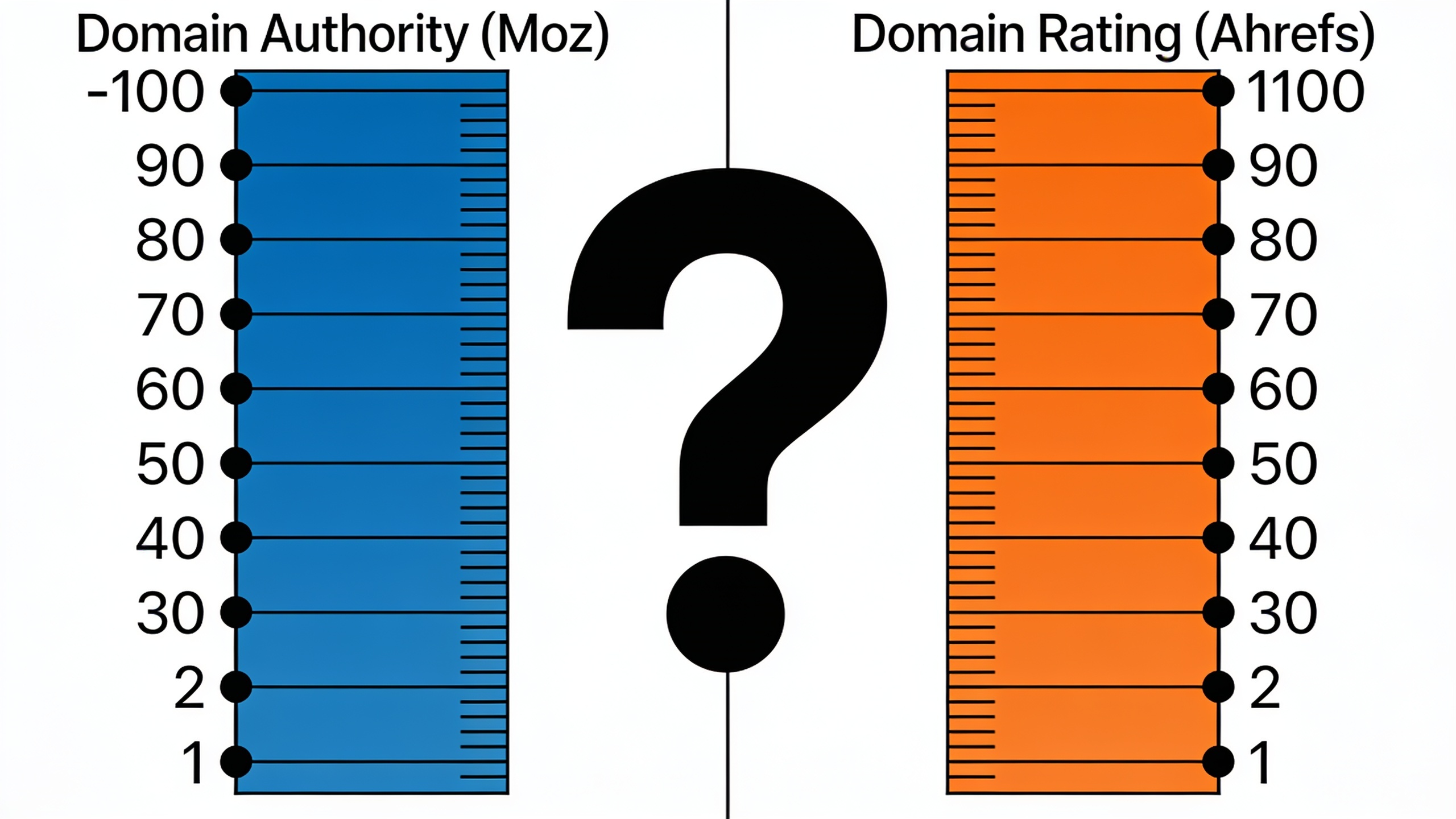
Both are trying to answer the same question, really. "How strong is this site's link profile compared to everyone else?" But they use different data, different formulas, and different scales. So the exact same website might show a DA of 45 in Moz and a DR of 62 in Ahrefs, and both numbers are technically "right" inside their own little universes while telling you almost nothing about what Google actually thinks. Below I'll walk through what each one measures, why people still bother with them, and what actually moves the needle on rankings.
Table of Contents
- What Is Domain Authority? (Moz's Metric Explained)
- What Is Domain Rating? (Ahrefs' Metric Explained)
- Domain Authority vs Domain Rating: Key Differences
- Are Domain Authority and Domain Rating Google Ranking Factors?
- Why Do SEO Metrics Explained by Different Tools Rarely Match?
- What Actually Matters More Than DA or DR?
- How to Use DA and DR Correctly in Your Link Building Strategy
- Frequently Asked Questions
What Is Domain Authority? (Moz's Metric Explained)
Domain Authority is a proprietary Moz score, 1 to 100, that predicts how well a domain is likely to rank compared to other domains, based mostly on the quantity and quality of links pointing at it. It's not measuring traffic. It's not measuring how good your content is. It's not measuring your technical SEO. It's a backlink-driven scoring model, full stop.
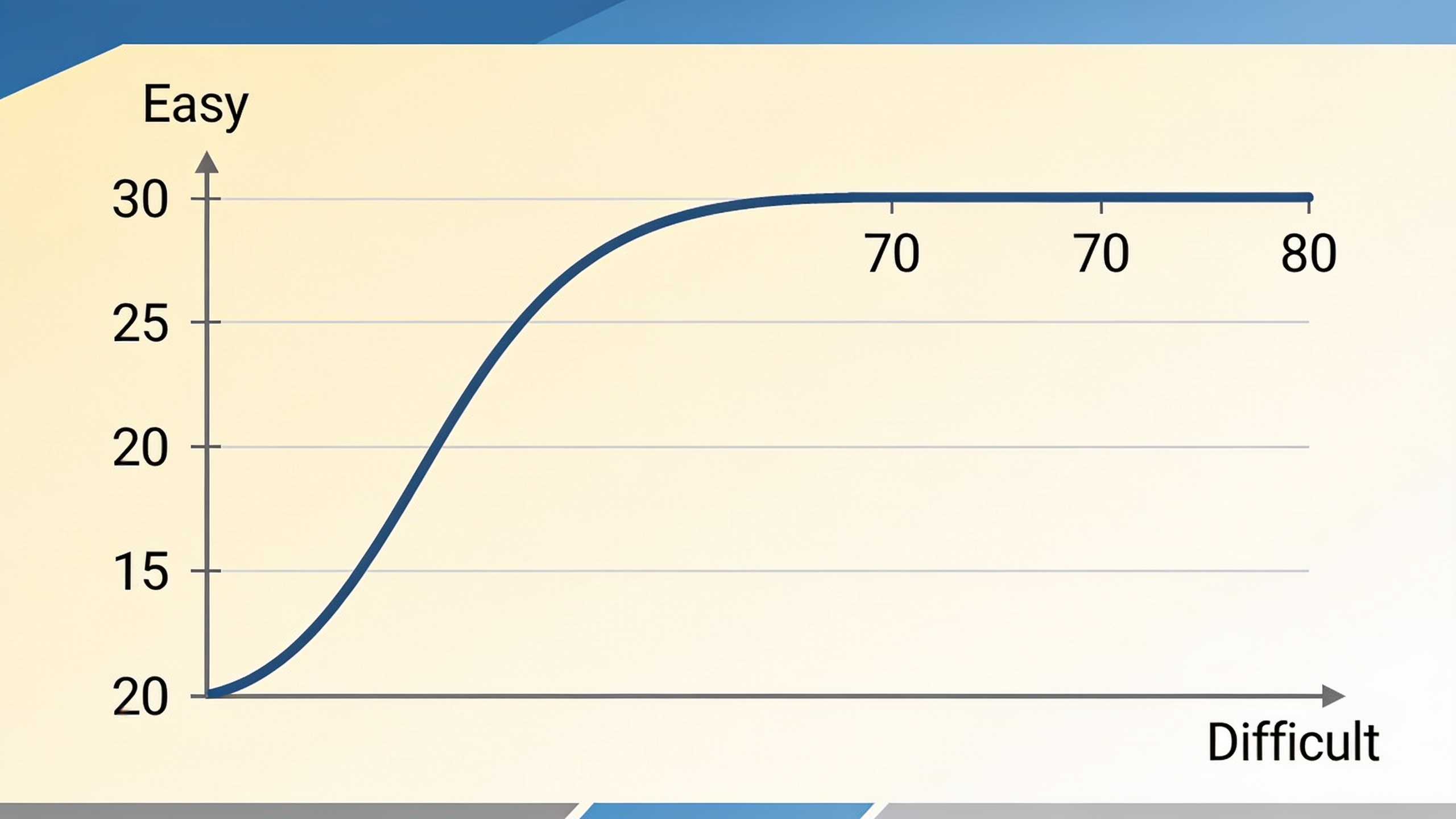
Moz builds DA with a machine-learning model trained on Google's search results, factoring in things like how many linking root domains you've got, your total inbound links, and the overall strength of Moz's own link index (they call it Link Explorer). And here's a detail people constantly miss: the scale is logarithmic, not linear. Going from a DA of 20 to 30 is way easier than crawling from 70 to 80. Same numeric jump, wildly different amount of link authority behind it.
One more thing that trips everybody up. DA is scored relative to every other site Moz has indexed. So your score can move even if you did absolutely nothing, because your competitors are out there gaining and losing links too. People see their DA wobble, panic, and start hunting for a problem on their own site that doesn't exist.
What Is Domain Rating? (Ahrefs' Metric Explained)
Domain Rating is Ahrefs' answer to DA, also scored 0 to 100, estimating the overall backlink strength of a domain based on the size and quality of its link profile as measured inside Ahrefs' crawl index. Just like DA, it says nothing directly about your content, your on-page work, or your actual rankings.
Ahrefs figures out DR by looking at how many unique domains link to a site, weighting those links by their own strength, then stacking the result against every other domain in the Ahrefs database. Non-linear scale again, so the gap between a DR of 10 and 20 is nothing like the effort it takes to climb from 80 to 90.
And because DR comes purely from Ahrefs' crawl data while DA comes purely from Moz's, the two companies are looking at different (overlapping, but different) pictures of the web's link graph. Neither one catches 100% of the links out there. Neither one is the index Google actually runs on internally. That's the big reason the two scores for the same site so rarely line up.
This is exactly where newer SEOs get tangled. They assume the numbers are interchangeable, or that one is just a fancier version of the other. They're not. They're two separate guesses built on two separate piles of data.
Domain Authority vs Domain Rating: Key Differences
The core difference between DA and DR is who's behind each one and which link index feeds it: Moz for DA, Ahrefs for DR. But there are a handful of practical distinctions worth knowing before you lean on either to judge a site.
| Feature | Domain Authority (Moz) | Domain Rating (Ahrefs) |
|---|---|---|
| Created by | Moz | Ahrefs |
| Scale | 1–100 (logarithmic) | 0–100 (logarithmic) |
| Data source | Moz's Link Explorer index | Ahrefs' own web crawler index |
| Primary input | Quantity and quality of linking root domains | Quantity and quality of linking domains |
| Comparative basis | Relative to all sites in Moz's index | Relative to all sites in Ahrefs' index |
| Official Google metric? | No | No |
| Best used for | Comparing your site's link profile trend over time within Moz's tools | Comparing your site's link profile trend over time within Ahrefs' tools |
| Common misuse | Treated as a direct ranking factor or content quality signal | Treated as a direct ranking factor or traffic signal |
See how both land on "No" for the official Google ranking factor row? That's not an accident, and it's honestly the most useful thing in the whole table. These metrics are fine for internal benchmarking, like tracking your own DA or DR over a few months or sizing yourself up against a couple of direct competitors inside the same tool. But holding a Moz DA up against an Ahrefs DR is apples and oranges. The math doesn't match, the indexes don't match, so the comparison is meaningless.
Are Domain Authority and Domain Rating Google Ranking Factors?
No. Google's ranking algorithm does not use Domain Authority or Domain Rating. Both are third-party inventions from SEO tool companies built to approximate link authority, and Google has never said it uses either one internally. Google folks, including Search Advocate John Mueller, have flat-out said Domain Authority isn't a metric they use in search ranking.
Why does this matter so much? Because DA and DR get treated as a proxy for "how well will this page rank," and that's just not what they are. Google's actual systems weigh hundreds of signals, content relevance, page experience, technical performance, that these authority scores don't touch. If you want to see one category of signals Google has confirmed it looks at directly, the rundown in Core Web Vitals Explained: A Simple Checklist for Marketers covers the page-experience stuff that sits right alongside content and links.
None of this makes DA and DR useless. They were never meant to be ranking factors in the first place. They're directional indicators of link authority that correlate loosely with ranking ability across big data sets. The mistake most people make is treating a rough directional signal like a precise prediction, then chasing the number itself instead of the link quality it's supposed to stand in for.
Why Do SEO Metrics Explained by Different Tools Rarely Match?
Different vendors' authority scores rarely match because every tool builds its number from its own crawl index, its own formula, and its own comparative data set, none of which is Google's index or Google's algorithm. That's true for DA and DR, and it's true for every third-party authority score out there, including Semrush's version and Moz's own separate "Page Authority" metric.
One site can perfectly reasonably show a DA of 35 in Moz, a DR of 50 in Ahrefs, and yet another score in a third tool. All three can be accurate representations of that site's link profile within their own index. None of them is "wrong." They're just measuring against different reference points.
Which is exactly why leaning on one external score to judge a link opportunity, a guest post target, or a competitor's strength can lead you astray. It's also why manual review still matters. A number can't tell you whether a site has real content, real traffic, or a real audience behind it. That's the whole logic behind requiring human eyes on every site before it gets listed for backlink exchanges, on top of a minimum Domain Rating threshold, rather than trusting the DR number to vouch for quality all by itself.
Want content like this running on autopilot for your own site? Try RobinRank free — AI-written, SEO-optimized articles generated and published automatically, no credit card required.
What Actually Matters More Than DA or DR?
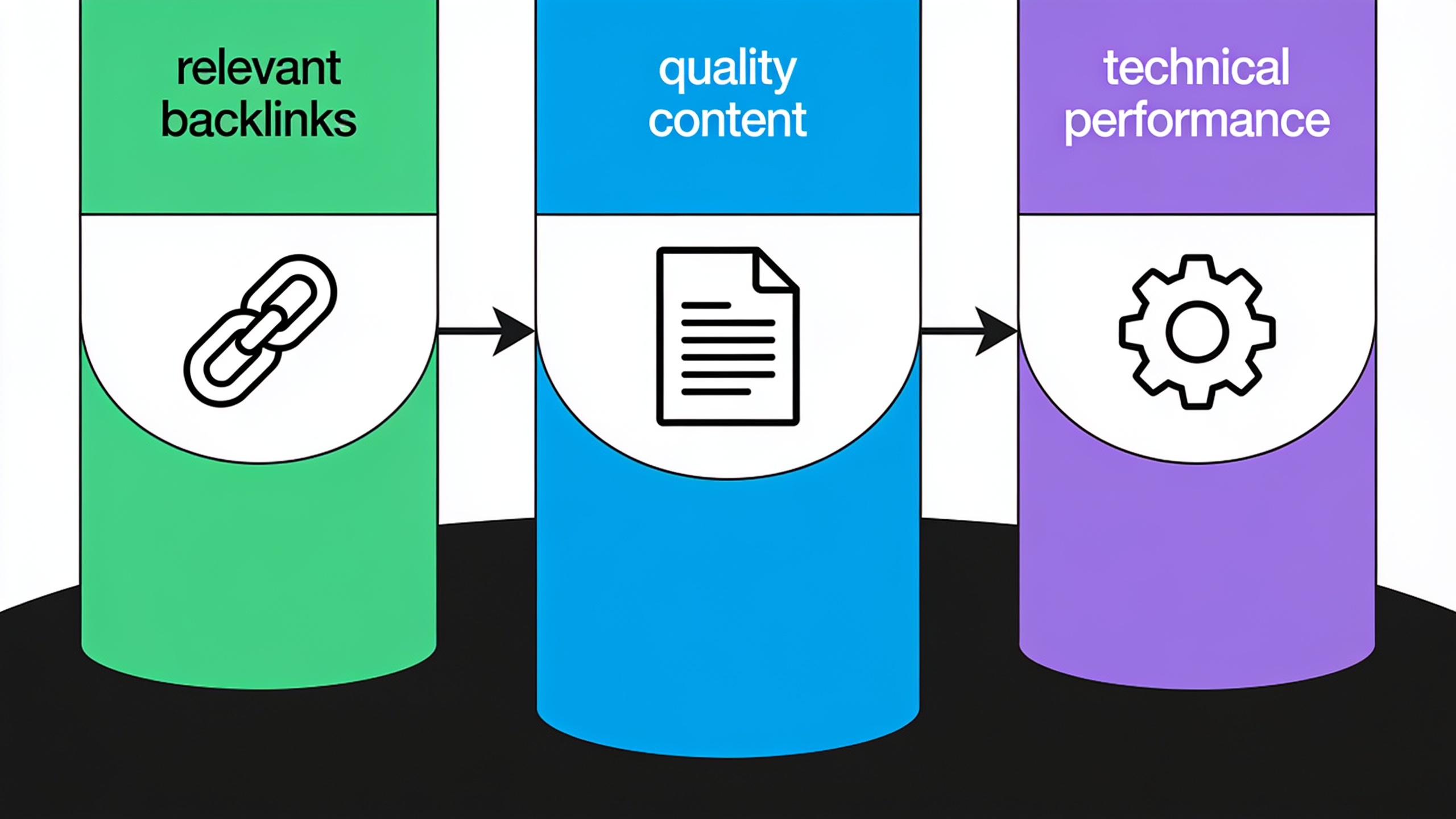
What actually drives rankings and durable organic growth is a mix of relevant, high-quality backlinks, strong on-page content that matches search intent, and solid technical performance. Not the authority score. DA and DR are lagging indicators of link building you already did, not crystal balls for future success.
Relevance Beats Raw Score, Every Time
A link from a topically relevant site with a DR of 25 is often worth more to your rankings than one from some random unrelated site sitting at DR 70. Google weighs relevance and context, not just the linking domain's overall number. And honestly, chasing the biggest possible DA or DR by grabbing links indiscriminately, including from junk sites, can waste your time and sometimes drag in spam signals that hurt you worse than a low score ever would.
Real Traffic, Real People
A site with a middling DA or DR that actually sends you referral traffic and represents a genuine audience is usually a better partner than one engineered purely to inflate its authority score. This is a big reason manually reviewed link networks care about real content and real ownership over raw metrics. A listed site should be an ownable domain with genuine content, not a thin page slapped together only to swap links.
Technical Health and Page Experience
Link authority doesn't count for much if the page it points to takes forever to load, flunks mobile usability, or just feels bad to use. Google has confirmed page experience signals, Core Web Vitals included, factor into ranking. That's why pairing your link building with the technical checklist in Core Web Vitals Explained: A Simple Checklist for Marketers tends to hold up better over time than white-knuckling your way to a higher DA or DR.
Content Quality and Consistency
Publishing content that actually answers search intent, over and over, backed by a real editorial and optimization process, beats a strategy built around juicing a third-party score. Teams deciding whether to produce that content in-house or with AI-assisted tooling often compare platforms head to head. The breakdown in RobinRank vs SurferSEO: Which AI SEO Platform Actually Fits Your Team digs into how automated content production and optimization differ in practice, which matters a lot more to long-term growth than any single authority number.
How to Use DA and DR Correctly in Your Link Building Strategy
DA and DR work best as directional, comparative tools inside a single vendor's ecosystem. Not as absolute proof of quality, and definitely not as a cross-tool benchmark. Use them that way and they can genuinely earn their keep.
Track Your Own Trend, Not the Snapshot
Watching your own DA or DR move over several months, using the same tool the whole time, gives you a rough read on whether your link profile is growing or shrinking. A single snapshot means way less than the trend line, because the comparative index keeps shifting as your competitors gain and lose links too.
Treat It as One Filter, Not the Filter
When you're sizing up a backlink partner, a minimum DR or DA threshold can help you weed out the obviously thin, spam-heavy stuff. But it should never be your only filter. Real ownership, genuine content, relevant niche fit, hands-on quality checks, all of that matters just as much. Which is why some backlink exchange networks pair a minimum Domain Rating requirement (say, DR 5 or higher via Ahrefs) with an actual manual review of every site before it's approved, instead of waving sites through on the number alone.
Stop Comparing Scores Across Tools
Never put a Moz DA next to an Ahrefs DR for the same site and assume the bigger or smaller number means anything. Different indexes, different formulas, the comparison itself is broken. If you need to compare across sites, use the same metric from the same vendor. That's it.
Watch Out for Borrowed Authority
Some sites juice their apparent authority by publishing on a subdomain of a huge platform and riding that parent domain's score, even though the real content lives on a tiny, far less authoritative corner of the site. It's a well-known gaming move in the whole domain authority vs domain rating conversation, and it's part of why some link-exchange networks explicitly reject borrowed parent-platform DR instead of taking it at face value.
Lead With Relevance and Reciprocity
In a real link exchange, where one owner drops a link in return for a link back on a relevant page, the conversation naturally lands on topical fit and page context, not who's got the shinier authority number. That kind of direct, verified swap between actual site owners tends to produce more durable, contextually relevant links than metric-driven outreach at scale ever will.
Frequently Asked Questions
Is Domain Authority the same thing as Domain Rating?
Nope. DA is Moz's proprietary metric, DR is Ahrefs'. Both run on roughly a 0–100 or 1–100 scale and both estimate backlink strength, but they're calculated from different link indexes with different formulas, so the two scores for the same site usually won't match.
Does Google actually use DA or DR to rank sites?
No. Google has publicly said Domain Authority isn't part of its ranking systems, and DR is likewise a third-party metric with no confirmed role in the algorithm. Both are built by SEO software companies to approximate link authority, not to recreate what Google does internally.
My DA (or DR) suddenly dropped and I didn't lose any links. What gives?
Because both scores are calculated relative to every other site in that tool's index, your number can move even if your own backlink profile didn't change at all. Other sites gained or lost links, the comparative scale shifted, and your score rode along with it. This relative scoring thing is one of the most misunderstood parts of both metrics.
What DA or DR should I look for in a backlink partner?
There's no universal "good" number, since the right threshold depends on your niche and goals. A lot of link-building programs set a low floor (a Domain Rating of 5 or higher, for instance) mostly to weed out unregistered or throwaway domains, then lean on manual review of content quality, niche relevance, and real ownership to decide whether a site is actually worth linking with.
Should I try to raise my DA or DR directly?
Not directly, no. Focus on earning relevant, high-quality backlinks and producing strong content, and the score follows as a byproduct. Chasing the number itself usually pushes people toward low-value link tactics that inflate a score without improving actual visibility or traffic.
Both DA and DR give you a useful, if imperfect, snapshot of a site's link profile. But neither is a Google ranking factor, and neither should be the deciding metric in your link-building or content strategy. The stuff that holds up over the long haul is the boring, unsexy stuff: relevant links between real site owners, solid technical performance, and content that genuinely answers what people are actually searching for.
Ready to stop writing content by hand? Start your free RobinRank trial and get a full month of SEO-optimized articles published on autopilot.