Evergreen Content Strategy vs. Trending Content: Which Should You Publish First?
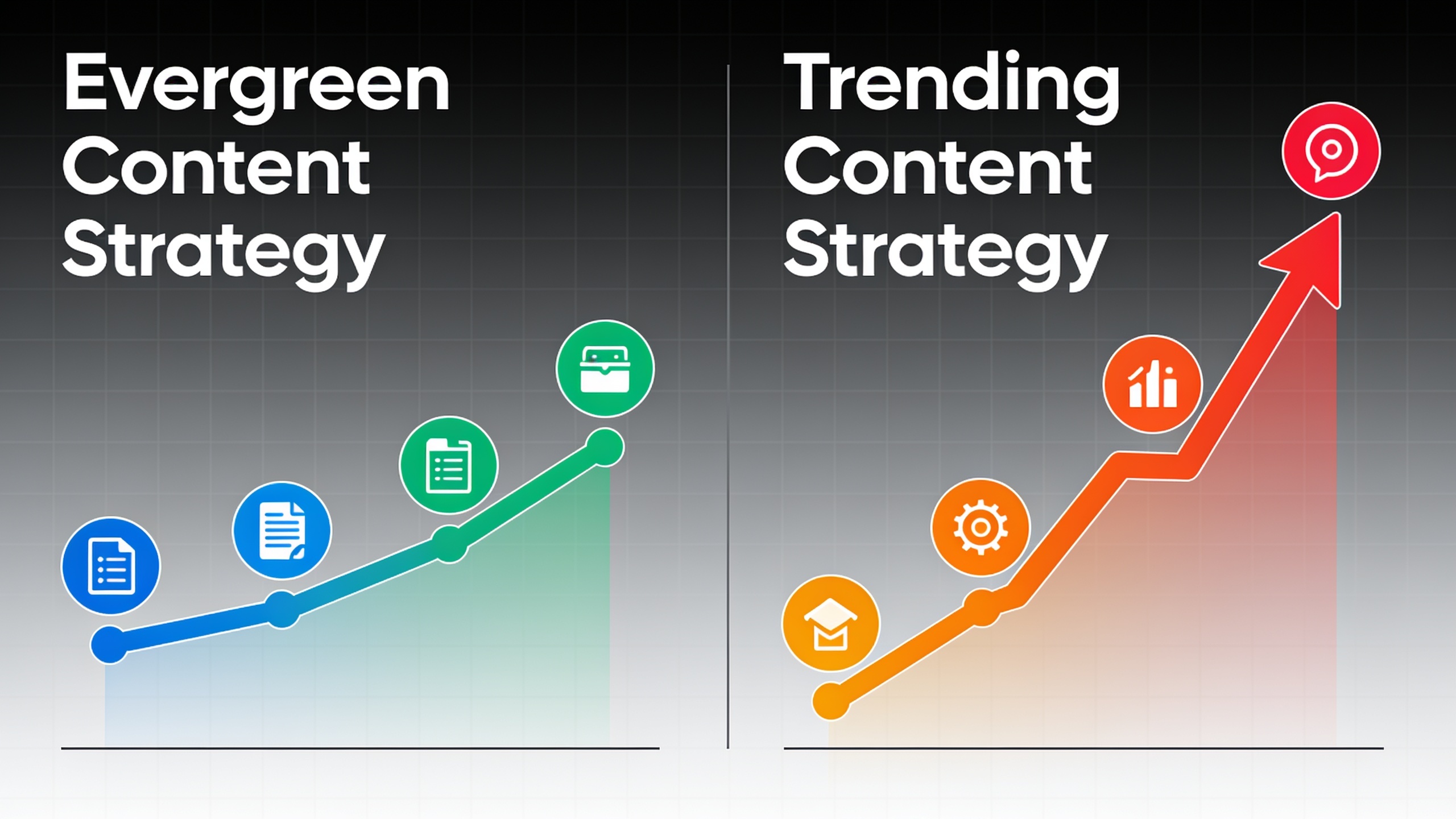
Here's the short version. An evergreen content strategy is all about publishing stuff that keeps earning traffic for months or years. Trending content chases the spike, the news, the viral moment, whatever's blowing up at this exact second. And no, one isn't automatically better than the other. The right call depends on your traffic goals, how much your team can actually handle, and how long you've got before organic search starts pulling its weight. Below I'll walk through where these two approaches actually differ, what the data says about how each performs, and how to run both without wasting a bunch of effort.
Table of Contents
- What Is an Evergreen Content Strategy?
- Trending Content vs Evergreen: What's the Real Difference?
- Does Evergreen Content Really Outperform Trending Content Over Time?
- When Should You Publish Trending Content First?
- How Do You Build a Content Plan That Balances Both?
- How Much Does an Evergreen Content Strategy Cost to Maintain?
- Common Mistakes When Choosing Between Evergreen and Trending Content
- FAQ
What Is an Evergreen Content Strategy?
An evergreen content strategy is a publishing approach built around articles and guides that stay accurate and useful no matter when someone reads them. The whole point is content that keeps ranking and pulling traffic long after the publish date. A news piece or a seasonal listicle has a shelf life. An evergreen article answers a question people will still be asking next year, and the year after that.
The thing that makes evergreen topics work is that they map to searches with steady, boring, predictable demand. No spikes. Think "how to write a resume" or "what is compound interest" or "how does SEO work." These get searched roughly the same amount every single month. So an article that ranks well for them just keeps collecting visits on autopilot, no promotional push required.
What Counts as Evergreen (With Actual Examples)
The obvious ones are how-to guides and tutorials, the step-by-step stuff for a process that doesn't change much, like "how to set up email forwarding." Then you've got glossary and definition pages, your classic "what is X" content that nails down a foundational concept in your industry. Comparison and buying guides fit here too, as long as you update them now and then when products shift around. And don't sleep on checklists, frameworks, and FAQ-style hubs, the reusable stuff readers bookmark and keep coming back to.
The common thread with all of these? None of them need a specific date, event, or news cycle to make sense. That's the whole line between an evergreen strategy and just reacting to whatever's happening.
Trending Content vs Evergreen: What's the Real Difference?
The core difference comes down to the shape of the traffic. Trending content gives you a sharp, short spike tied to a specific moment. Evergreen gives you a slow, long curve that can run for years. Trending content is built around timely stuff, a product launch, an algorithm update, a viral story, a seasonal shopping window, and it's written to grab search and social interest while everyone's actually paying attention.
And it works because search interest for a hot topic can go way, way above normal for a short window. Being one of the first credible sources to cover something can earn you a wild amount of traffic, shares, and backlinks in a really compressed timeframe. The catch is brutal, though. Once interest cools off, that traffic basically vanishes. It's not that your article got worse, it's that the search demand itself dried up.
Here's how the two stack up across the stuff that actually matters when you're planning a calendar:

| Factor | Evergreen Content | Trending Content |
|---|---|---|
| Traffic pattern | Slow build, long plateau | Sharp spike, fast decline |
| Time to peak traffic | Weeks to months (SEO ramp-up) | Hours to days |
| Traffic lifespan | Months to years with maintenance | Days to a few weeks |
| Backlink potential | Steady, accumulates over time | Can be high initially if picked up by media/social |
| Content maintenance | Requires periodic updates/refreshes | Usually written once, rarely revisited |
| Competitive difficulty | Often high (established competitors already rank) | Lower short-term (fewer competitors have covered it yet) |
| Best for | Long-term organic growth, authority building | Brand visibility, social shares, newsjacking |
| Risk if timing is off | Low — topic stays relevant | High — article becomes irrelevant fast if published late |
Neither one is inherently more valuable. They just do different jobs. Evergreen is the foundation of durable traffic. Trending is a tool for grabbing attention while it's actually there to grab.
Does Evergreen Content Really Outperform Trending Content Over Time?
Yeah, evergreen content usually wins on cumulative, long-term traffic, because it keeps earning search visits for as long as it ranks while trending traffic just stops the second public interest wanders off. There's a well-known internal analysis HubSpot ran on its own blog, and it found that around three-quarters of its total monthly page views came from posts published in previous months rather than anything new they'd put out that same month. Think about that. Most of their traffic, month after month, was carried by older content even while the team kept cranking out fresh stuff.
The logic is pretty simple once you sit with it. Search demand for evergreen topics stays roughly constant. If a query gets searched a predictable number of times per month, and your article holds a top spot, you scoop up a comparable slice of that traffic every month. Over a year that compounds into a total that most single trending posts couldn't touch in their entire lifespan.
Why Trending Content Dies So Fast
Trending content decays quickly for a structural reason, not because you did anything wrong. The search demand itself disappears. It's not just that your ranking slips. If you pull up Google Trends for any breaking topic, you can literally watch interest spike and then fall back toward baseline within days or weeks depending on the story. And once that happens? No amount of on-page optimization saves you. There's nobody left searching for it.
This is also why trending articles almost never pick up meaningful backlinks after the initial news cycle. Other sites link to your coverage while it's relevant to their own timely pieces. Old news, no incentive to link. Evergreen content keeps attracting citations for as long as it stays a useful reference, which is exactly why ongoing backlinks matter so much more for evergreen assets than for trend pieces.
When Should You Publish Trending Content First?
You should prioritize trending content when the topic has a tight window of relevance and being early is basically your only edge. Breaking industry news, algorithm updates, product launches, seasonal shopping events, that kind of thing. In these cases, publishing a beautifully optimized evergreen guide two months later means you miss the traffic completely. Nobody's searching for it once the news cycle rolls on.
How to Tell a Topic Is Worth Sprinting For
A few signals I look for. First, is the query volume event-driven? If search interest is clearly tied to some specific announcement or launch, speed beats depth, full stop. Second, have competitors even covered it yet? A short window with low competition means even a smaller site can rank temporarily and grab a nice burst of visibility (plus maybe some backlinks). Third, does it feed a bigger evergreen asset? Trending pieces make great funnels, pointing readers toward a related evergreen guide and converting some of that short-term rush into long-term subscribers or leads. And finally, if social and PR value matter more than SEO longevity, trending content is the right pick even when the SEO payoff barely lasts.
The mistake here is chasing every trending topic like it's gold. It's not. If a topic has thin, unpredictable search volume and your team can't realistically publish inside the window that matters, those same hours are almost always better spent building out an evergreen piece with a more predictable payoff.
How Do You Build a Content Plan That Balances Both?
The most sustainable setup is to make evergreen content the bulk of your calendar and treat trending content as a smaller, opportunistic layer on top. A lot of teams handle this with a rough split, throwing most of their monthly capacity at evergreen guides and resource pages while keeping a smaller slice open for timely pieces they can crank out fast. But please, treat that as a starting point, not gospel. Adjust it based on your own traffic data and what your team can actually pull off.
Want content like this running on autopilot for your own site? Try RobinRank free — AI-written, SEO-optimized articles generated and published automatically, no credit card required.
A Framework That Actually Works for Splitting Your Calendar
Start by mapping your evergreen backbone before you touch anything trend-related. Nail down the 10 to 20 foundational topics your audience searches for over and over. Those become your pillar pages, the guides you'll keep updating for years.
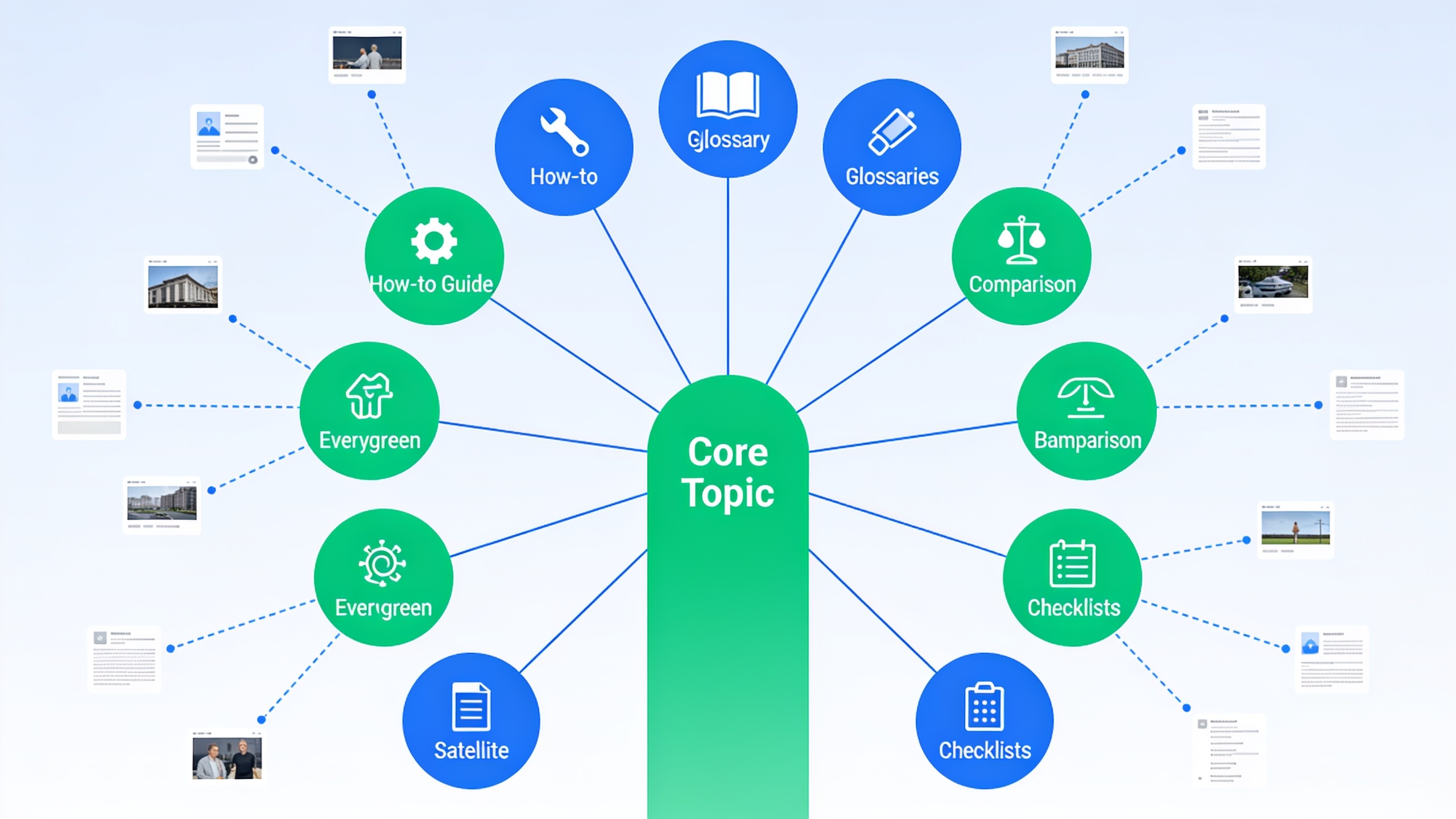
Then reserve capacity for trends, not fixed slots. Scheduling trending posts weeks in advance kind of defeats the whole purpose, so instead keep a chunk of your team's bandwidth flexible enough to turn something around within 24 to 48 hours of a relevant event.
When you do publish something timely, link it back to a related evergreen hub on your site. That way the short-term traffic spike feeds your longer-term pages instead of just dead-ending and leaving.
Oh, and set a recurring review for your evergreen library, quarterly or twice a year, to refresh stats, examples, and any references that have gone stale. Even "timeless" content rots if nobody ever touches it. Last thing: segment your analytics so you can actually see how much organic traffic comes from evergreen versus trending. That's the only way to know if your current split matches your goals or if you're kidding yourself.
Tools That Make This Less Painful
Running a dual-track calendar by hand is a slog, especially if you're a small team without a dedicated content department. This is where AI writing tools have quietly worked their way into a lot of workflows, mostly for drafting evergreen guides at scale while an actual human strategist decides which trending opportunities are worth the sprint. If you're trying to figure out which AI writer fits into that kind of setup, the breakdown in RobinRank vs Koala.sh: Which AI Writer Fits Your Workflow? walks through how two different tools handle content generation, which matters a lot when you're trying to keep an evergreen backbone updated without your team burning out on manual drafting.
How Much Does an Evergreen Content Strategy Cost to Maintain?
An evergreen content strategy costs more in ongoing maintenance than trending content, but way less in total effort per unit of long-term traffic, because one well-maintained evergreen page can keep paying off for years instead of getting tossed and replaced. The real costs aren't just the initial writing. You're looking at periodic refreshes, technical SEO upkeep, and steady link building to keep the page competitive as new content floods into the space.
Link building deserves a special mention here. Evergreen pages compete for rankings over a much longer horizon than trending posts, and backlinks are one of the strongest signals search engines use to decide which pages keep ranking. Getting those links usually means either cold outreach (slow, painful, terrible response rates) or a more direct exchange model where site owners negotiate placements with each other. RobinRank's backlink exchange network runs on that second model. Site owners with a minimum Domain Rating of 5 (measured via Ahrefs) browse a directory of manually reviewed sites, request a placement, and offer a reciprocal link back, and the platform actually verifies the link is live on the page instead of just promised. Every site gets reviewed by hand before it's listed, usually within one business day, specifically to keep out private blog networks, link farms, and thin doorway pages. After a 7-day free trial (no card required) once you're approved, it's $19 per month, cancel anytime, with weekly automated checks confirming your placed links haven't quietly vanished.
That kind of ongoing verification honestly matters more for evergreen content than for trending posts. An evergreen page that loses its backlinks six months after publishing can slowly slide down the rankings and you might not even notice until it's too late, which kind of defeats the entire reason you invested in "timeless" content in the first place.
Common Mistakes When Choosing Between Evergreen and Trending Content
The biggest mistake I see is teams treating evergreen and trending content as interchangeable, running the same production process, timeline, and promotion strategy for both. They're not the same, and they need genuinely different approaches. A trending piece that ships three weeks late is basically worthless. An evergreen piece rushed out without proper research or updates just becomes another thin page getting steamrolled by more thorough competitors.
The second big one is leaning way too hard on AI-generated drafts for evergreen content without adding any original insight, data, or differentiated structure. That leaves you with a page that's indistinguishable from the dozens of other AI-written articles already covering the same "timeless" topic. And because evergreen pages have to fight for the same search queries for years, originality and depth matter more here than they ever would in a quick trending post. If you're using AI tools to produce evergreen content at scale, it's genuinely worth reading Is Your AI Content Actually Original, or Just Quietly Getting Buried?, which digs into why AI-assisted content flops when it isn't clearly different from everything search engines have already indexed.
A few other traps worth naming. Publishing trending content with no promotion plan is a killer, since the window's short and any delay in distribution wastes the whole opportunity. Never updating evergreen content is another, treating a page as "done" the moment it goes live is one of the fastest ways to watch it bleed rankings to fresher competitors. Then there's ignoring internal linking between the two types, where trending posts that don't point to evergreen hubs waste a perfectly good chance to turn a spike into lasting engagement. And finally, measuring both formats with the same KPIs, like judging a trending post by 12-month organic traffic or an evergreen post by week-one page views. That just sets you up to be disappointed by content doing exactly what it was designed to do.
FAQ
Is evergreen content always better for SEO than trending content?
Not always, it depends what you're after. Evergreen usually produces more cumulative organic traffic over time because it keeps ranking for steady demand. But trending content can absolutely beat it in the short term when there's a real spike tied to a specific event and being early matters more than being thorough.
How often should evergreen content be updated?
No universal rule, but a lot of teams review their evergreen library quarterly or twice a year to refresh stats, examples, and anything that's gone stale. The right cadence really depends on how fast your industry moves. A "what is SEO" guide needs way less attention than a guide about some fast-moving product category.
Can trending content become evergreen later?
Sometimes, yeah. If a trending topic grows into an ongoing, recurring theme instead of a one-off event, you can expand it into a broader evergreen resource. The trick is spotting when a "trend" has genuinely become a lasting category of search demand, rather than assuming every trending post has that kind of potential. Most don't.
What percentage of a content calendar should be evergreen vs trending?
There's no fixed industry standard, but most content teams tilt the majority toward evergreen topics because they give more predictable long-term ROI, while keeping a smaller, flexible slice open for timely pieces they can turn around quickly when something pops.
Do trending articles need backlinks the same way evergreen articles do?
Backlinks matter for both, but the timing is completely different. Trending content needs to earn links fast while the topic's still hot, since interest (and other sites' willingness to link to you) fades quick. Evergreen content benefits from a steady, ongoing link-building effort over months or years, because it's competing for rankings over a much longer stretch.
---
Choosing between an evergreen strategy and trending content was never really an either-or thing. It's a question of sequencing and allocation. Evergreen guides give you that compounding traffic base that keeps your site growing even during the weeks you're not publishing anything, while trending pieces let you grab attention during moments that just won't wait around for a perfectly polished, SEO-optimized article. The teams that squeeze the most out of both tend to build their calendar around evergreen pillars first, then layer trend-driven stuff on top when the opportunity shows up. And they judge each format by what it's actually built to do, not what they wish it did.
Ready to stop writing content by hand? Start your free RobinRank trial and get a full month of SEO-optimized articles published on autopilot.