RobinRank vs Koala.sh: Which AI Writer Fits Your Workflow?
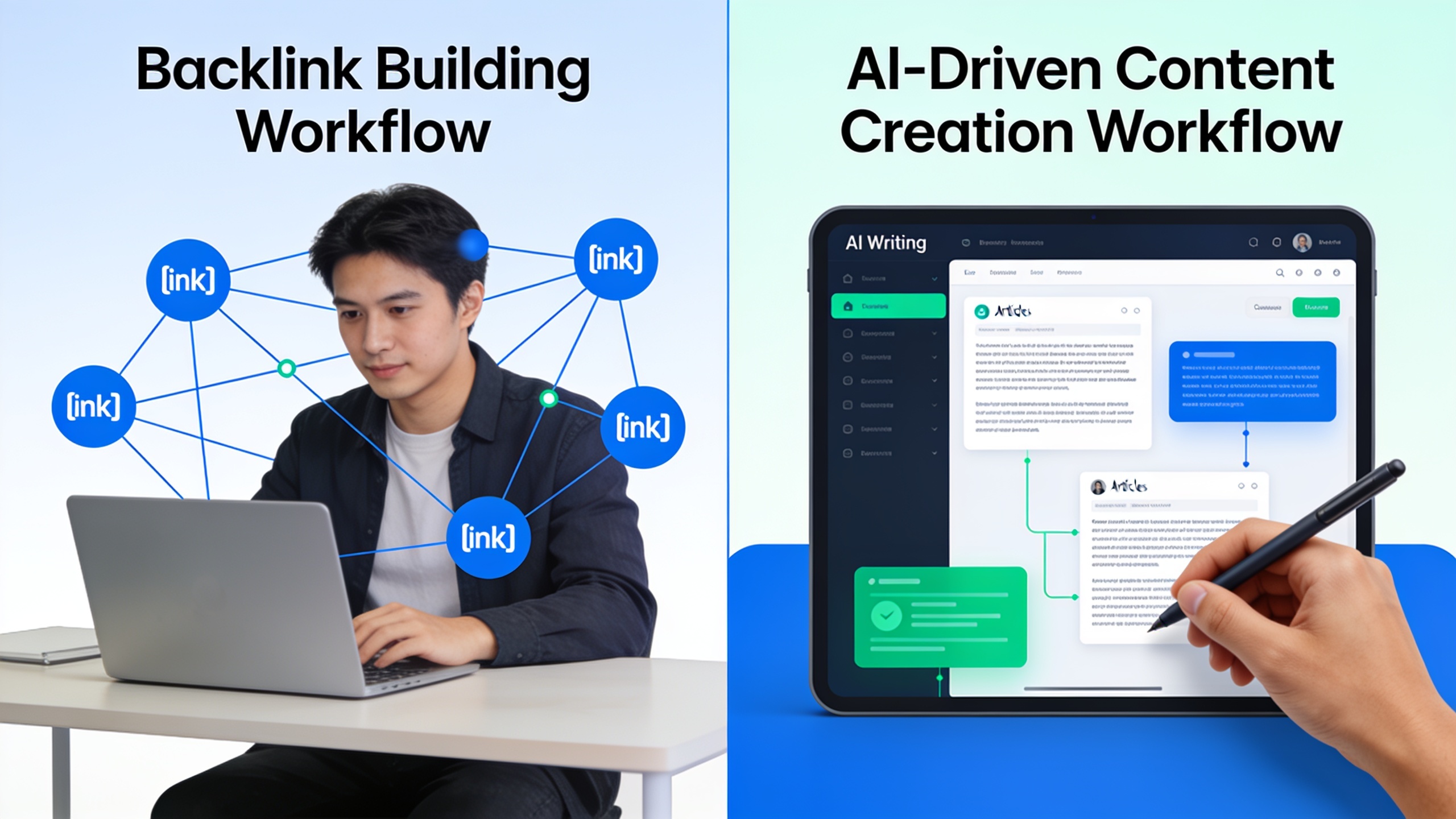
So that's what this comparison is really about. I'm going to walk through what each platform actually says it does, based on their own documentation, and where the info just... isn't there. Because here's my one rule going in: I'm not going to make up features or pricing for either tool just to fill a table. If something's unverified, I'll say so. No marketing fluff, no borrowed claims from other comparison posts that may already be stale.
Table of Contents
- RobinRank vs Koala.sh: The Quick Answer
- What Is RobinRank, and What Does It Actually Automate?
- What Is Koala.sh, and How Does It Approach AI Writing?
- RobinRank vs Koala.sh: Editorial Control and Workflow Fit
- How Much Does RobinRank Cost Compared to Koala.sh?
- Publishing Automation: Who Actually Gets Content (and Links) Live?
- RobinRank vs Koala.sh: Who Should Use Which Tool?
- Frequently Asked Questions
RobinRank vs Koala.sh: The Quick Answer
These two tools fix different parts of the same machine, so "which is better" really depends on what's broken in your setup right now. Going off RobinRank's own published content, its core documented product is a manually reviewed backlink exchange network where site owners request and grant placements to each other, and every live link gets verified by an actual crawl. Koala.sh, meanwhile, is widely known as an AI writing tool for cranking out SEO articles. But I'll be upfront: I couldn't find independently verifiable source material about its current features or pricing for this comparison. That's a gap I'd rather name than paper over.
And that distinction matters more than it looks at first glance. A tool that writes and publishes articles solves a content-production problem. A tool that helps you swap backlinks solves a link-authority problem. Plenty of SEO programs need both. Which is part of why RobinRank pitches itself as an AI-powered SEO platform that writes, optimizes, and publishes articles on top of running its verified link exchange, even though the detailed public docs I found lean heavily toward the exchange side of things.
Here's the side-by-side, and I've stuck strictly to what's actually confirmed for each:
| Dimension | RobinRank | Koala.sh |
|---|---|---|
| Core documented feature | Verified backlink exchange network (request, grant, crawl-verify) | Marketed publicly as an AI article-writing tool; specifics not verified for this comparison |
| Site vetting | Manual review, minimum Domain Rating (Ahrefs) of 5+, typically reviewed within one business day | Not stated in source material reviewed |
| Editorial control | Human negotiation on every placement; you approve anchor text and page before it's live | Not stated in source material reviewed |
| Link/content verification | Live href crawled and confirmed; Pro-tier ongoing weekly checks with alerts if a link disappears | Not stated in source material reviewed |
| Pricing | Free 7-day trial after site approval (no card required), then $19/month, cancel anytime | Not stated in source material reviewed — confirm directly on koala.sh |
| Response/publish stats | 65% of placement requests get a reply within 7 days; 30% result in a link published on a live, crawlable page | Not stated |
| Best documented use case | Ongoing, sustainable link building without cold outreach | Generating written drafts at volume (based on general market positioning) |
Every "not stated" in the Koala.sh column is deliberate. I'd rather leave a blank than guess at a pricing tier or feature that might be flat-out wrong by the time you read this. Check koala.sh directly before you make a call on anything price- or feature-specific.
What Is RobinRank, and What Does It Actually Automate?
RobinRank is an AI-powered SEO platform built on two connected layers: automated article writing and publishing for your own site, plus a manually reviewed backlink exchange network that hooks you up directly with other site owners. The exchange is the piece that's documented in real detail, so that's where I'll spend most of this section.
How the Backlink Exchange Actually Works
The exchange runs like a structured marketplace of actual humans, not a link farm. Per RobinRank's own copy, members browse a "Discover" directory filtered by niche and Domain Rating, send a request spelling out the exact page and anchor text they want, and offer a reciprocal link back when it makes sense. The owner on the other end can accept, decline, or negotiate. RobinRank calls it a "give-and-get network, not a cold-email list," which, yeah, tracks.
Once both people agree, RobinRank crawls the destination page to confirm the href is actually live before it counts the placement as verified. On the paid tier, it keeps re-checking that link every week and pings you if it vanishes. And that last bit solves a genuinely annoying problem in traditional link building, where a link you paid or traded for can quietly disappear months later and nobody notices until an audit.
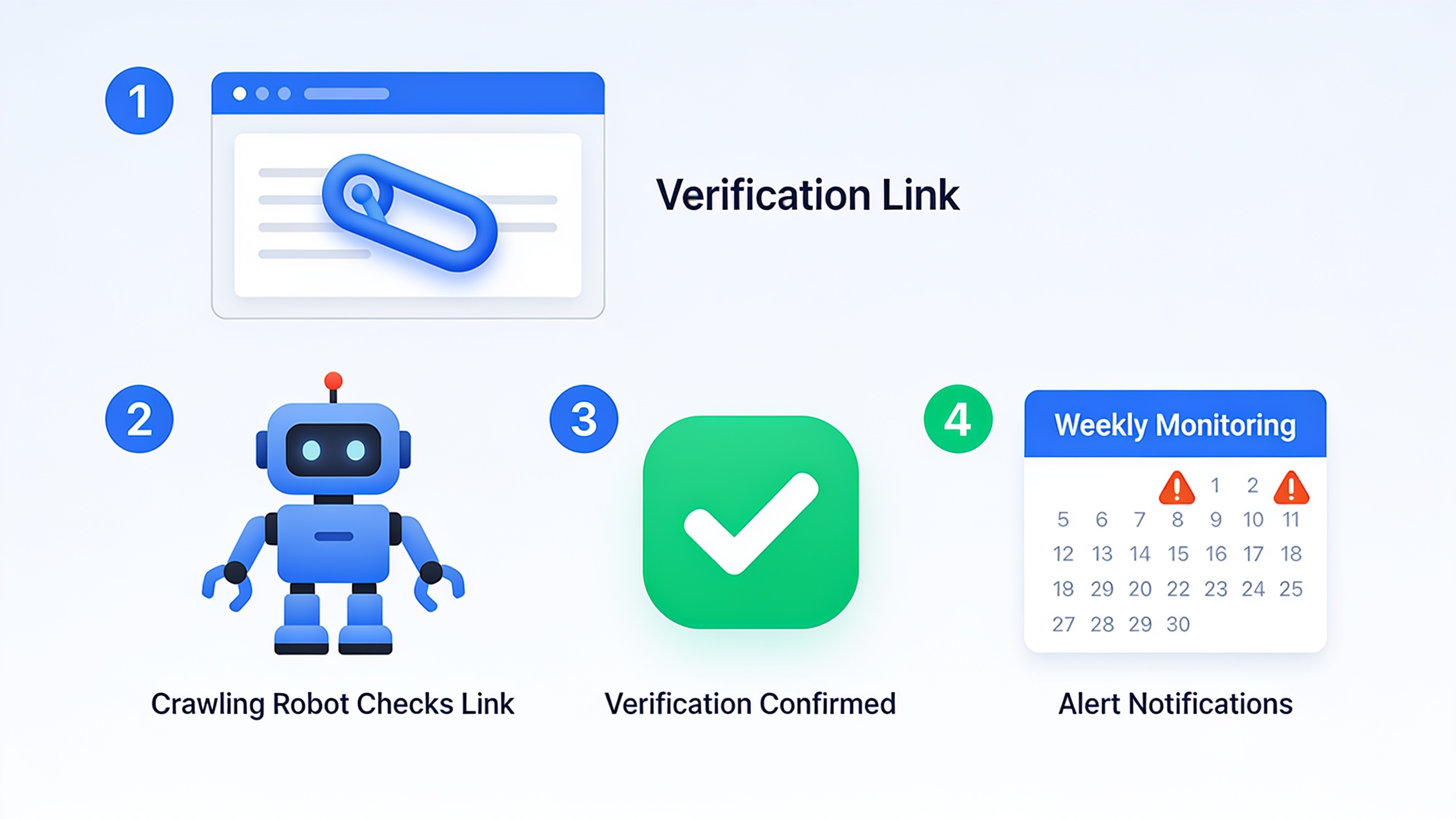
RobinRank also puts two real engagement numbers out there: 65% of requests get a reply within seven days, and 30% of requests end with a link that's actually published on a live, crawlable page. That second figure is worth sitting with for a second. It tells me "got a reply" and "got a published link" are tracked as two separate outcomes, not mushed together into some feel-good success rate. I respect that.
The Vetting Part (This Is the Good Stuff)
Every site that wants into the Discover directory goes through manual human review first, usually done within one business day according to the site. RobinRank enforces a minimum Domain Rating of 5 (measured via Ahrefs) and openly filters out private blog networks, link farms, adult and spam niches, and those "thin doorway" pages that exist only to trade links. It also says it rejects "borrowed parent-platform DR," which is aimed at sites that fake their authority by publishing on a subdomain of some big unrelated domain. Sneaky move, and good that they screen for it.
If you're sizing RobinRank up against other AI-driven SEO platforms, especially the ones built more around content briefs and on-page optimization scoring, the RobinRank vs SurferSEO comparison digs into exactly where content-at-scale tools split off from link-building-first tools like this one.
What Is Koala.sh, and How Does It Approach AI Writing?
Koala.sh is generally known in the AI content world as a tool for generating written articles, positioned toward marketers who want SEO-style content produced fast. Since I didn't have source material from Koala.sh's own site to verify against, I'm keeping this section at the category level. I'm not going to assert specific features, pricing, or integrations I can't confirm are current.
The Bulk-Content Pitch
At a category level, tools like Koala.sh usually sell themselves on producing draft articles at volume. That's the standard pitch behind most "AI writer" products aimed at content marketers and small teams that can't swing a full in-house editorial crew. Whether all those drafts actually rank, though? That depends on a bunch of stuff happening outside the writing step. Internal linking, technical SEO, your backlink profile, how much a human edits before hitting publish. No writing tool alone can guarantee any of that, no matter whose model is behind the draft.
Want content like this running on autopilot for your own site? Try RobinRank free — AI-written, SEO-optimized articles generated and published automatically, no credit card required.
A Quick Note on What I Couldn't Verify
Let me be straight about the limits here. Specific Koala.sh pricing tiers, publishing integrations, editorial-control features, performance stats. None of that was in the material I reviewed. If Koala.sh is the tool you're actually leaning toward, go confirm current plans, feature limits, and publishing destinations right on koala.sh. Don't take secondhand claims for it, including from other comparison posts that might be running on old info. AI content tools shuffle their pricing and features constantly, so this is just a smart habit generally.
RobinRank vs Koala.sh: Editorial Control and Workflow Fit
Editorial control is where these two diverge the hardest, at least based on documented behavior. RobinRank's exchange runs on human negotiation at every step. You request a specific page and anchor, the other owner accepts, declines, or counters, and nothing goes live until you both agree and RobinRank confirms the crawl. So control over the anchor text, the destination page, the reciprocal terms, all of it stays with you and the other owner. Not some algorithm making placement calls on its own.
For content generation in general, whether you're using an AI writer, a freelancer, or some mix of both, editorial control really comes down to two things: how much review happens before you publish, and who's on the hook if something's wrong. If you're trying to figure out whether AI drafts need the same level of oversight as freelance-written stuff (and what that oversight actually costs you in time and cash), AI Writer vs Freelance Writer: A Real Cost Comparison is a solid companion read. It walks through where automated drafts save you real time versus where human review is just non-negotiable. Accuracy, brand voice, legal liability, especially on anything going out under a real business's name.
For agencies running multiple client accounts, this whole control question multiplies. Every unverified draft or unverified backlink is a small liability, and it scales right along with your client count. RobinRank's setup (human-in-the-loop requests, crawl-verified placements, weekly monitoring) is basically built to kill the "wait, did that link ever actually stay live?" uncertainty that agencies usually can't track by hand across a few dozen client sites.
How Much Does RobinRank Cost Compared to Koala.sh?
RobinRank keeps its pricing refreshingly simple, right there on its own site. New members get free access for 7 days once their site clears manual review, no credit card needed to start. After the trial, it's $19 per month, cancel whenever. That one price covers access to the Discover directory, the request-and-negotiation system, live-link verification, and, based on how the site describes its "Pro" monitoring, the ongoing weekly checks that alert you when a verified link drops off.
Koala.sh's current pricing wasn't part of what I had to work with, so I'm not going to throw out dollar figures, plan tiers, or word limits I can't stand behind. AI content tools change their pricing all the time as model costs and usage economics shift, so the only reliable move is to pull up koala.sh's pricing page yourself when you're actually evaluating. Any number I quoted here might already be stale by the time you're reading it. Not worth it.
Here's what I can say with confidence, though. RobinRank's $19/month is explicitly built around access to the link-exchange network, not around some per-article or per-word content cost. So if what you really need is bulk article drafting rather than link building, RobinRank's pricing model (as documented) might not map onto that at all. Which is exactly why figuring out what each tool actually automates beats comparing sticker prices side by side in a vacuum.
Publishing Automation: Who Actually Gets Content (and Links) Live?
"Publishing automation" means two totally different things depending on which layer of your SEO stack you're automating. Getting your own content live on your own site, or getting backlink placements live on somebody else's. RobinRank's documented automation sits squarely in that second bucket. It automates the discovery, the negotiation groundwork, and the verification of backlink placements between real site owners, including AI-assisted outreach drafting so the initial ask is easier to fire off.
And once a placement's agreed on, RobinRank doesn't just trust the other owner that a link exists. It crawls the destination page, confirms the href is genuinely there before counting it, then keeps re-checking on a recurring basis for subscribers. That "verified now, and still verified later" structure is a direct shot at one of link building's most famous failure modes: placements that go live for a minute, get logged as a win, then quietly vanish a few weeks later with nobody the wiser.
Since I had zero source material on Koala.sh's publishing workflow, I can't responsibly tell you whether it automates direct publishing to a CMS, which platforms it plugs into, or how draft-to-live turnaround plays out in practice. If that specific workflow is your deciding factor, test it yourself or ask Koala.sh for current docs. Don't run on assumptions.
RobinRank vs Koala.sh: Who Should Use Which Tool?
The right pick here really hangs on which bottleneck you're trying to clear: content volume, link authority, or both. Plus how much hands-on editorial control you actually want to keep at each step.
If You're a Startup Founder
Founders wearing eight hats usually need to buy back time, not just crank out more output. RobinRank's model (free trial after approval, then a flat $19/month, no cold outreach required to start earning backlinks) knocks out a very specific, very documented time sink: manually hunting down and emailing dozens of site owners begging for a placement. But if your real chokepoint is producing the written content itself, that's a different need, and it's more Koala.sh's territory. Just confirm its current plan and output limits before you commit any budget.
If You Run a Marketing Agency
Agencies juggling a bunch of client domains get the most mileage from anything verifiable and repeatable across accounts. RobinRank's crawl-based verification and weekly monitoring hand you a defensible way to show a client that a placement isn't just promised, it's actually live and staying live. That's a real reporting edge over exchanges or purchases where "yeah, the link's up" is taken on faith. And you should hold any AI writing tool, Koala.sh included, to that same bar: can the output be verified, and does it survive the same editorial review you'd give a freelancer's draft?

If You're an SEO Building Links at Scale
For SEO folks whose actual job is authority-building rather than content production, RobinRank's manual-review-plus-crawl-verification combo goes straight at the two biggest trust problems in exchange-based link building. Low-quality or fake sites sneaking into the pool, and placements that don't stay live. The DR 5+ minimum and the explicit rejection of PBNs, farms, and borrowed-DR sites are meant to keep the Discover directory actually usable for pros who can't afford to burn review time on garbage inventory.
Frequently Asked Questions
So is RobinRank an AI writing tool or a backlink tool, really?
Going by RobinRank's own published content, the most thoroughly documented feature is its manually reviewed backlink exchange network, where members request and grant verified link placements with other real site owners. It also describes itself more broadly as an AI-powered SEO platform that writes, optimizes, and publishes articles, but the detailed mechanics available for review center on the link exchange, not the writing workflow.
Does Koala.sh offer backl
Ready to stop writing content by hand? Start your free RobinRank trial and get a full month of SEO-optimized articles published on autopilot.