Featured Snippets 101: How to Win Position Zero
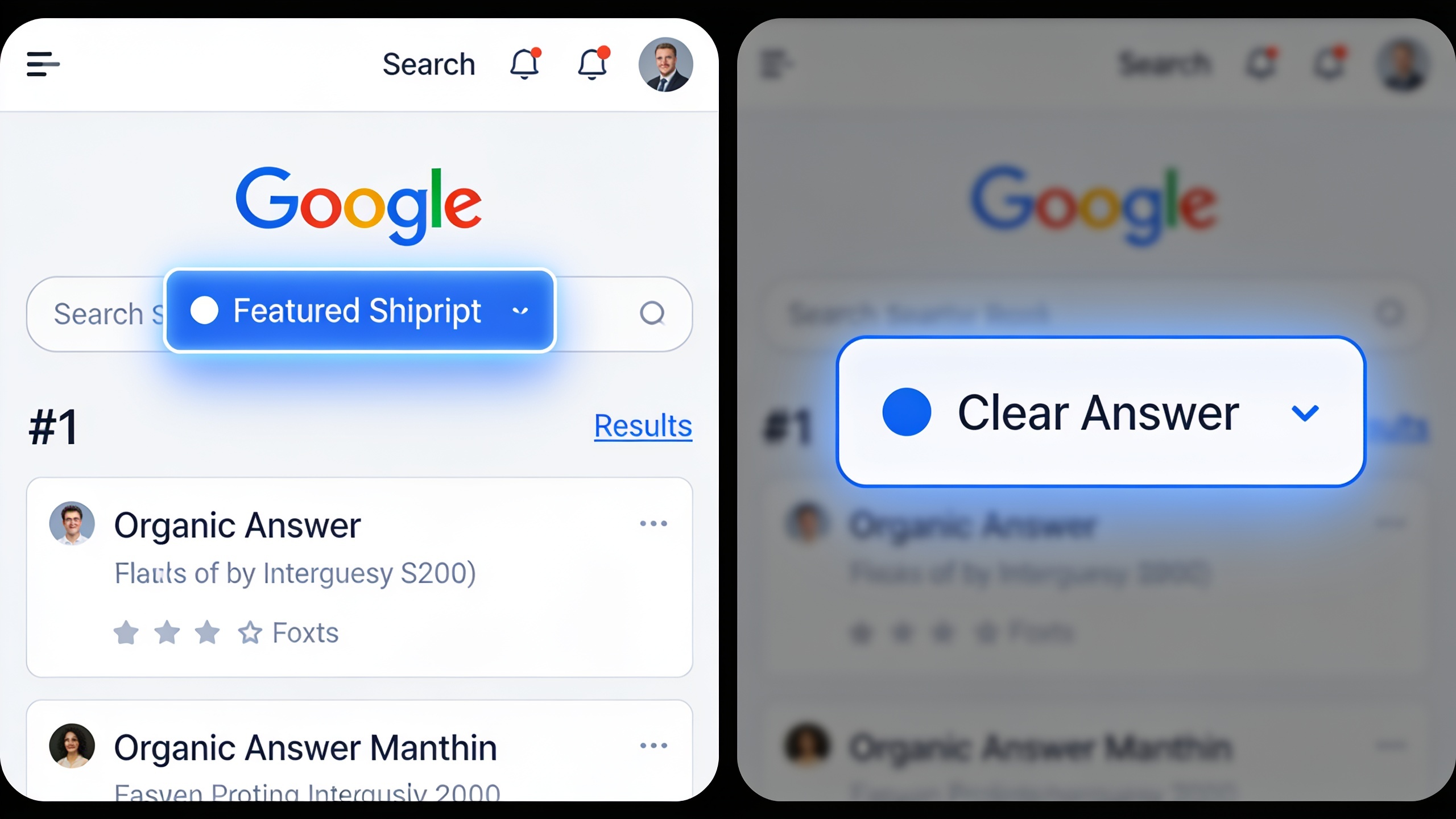
So let's get into what these things actually are, how Google decides who gets one, which formats win, and the specific ways you can format your content to have a real shot.
Table of Contents
- What Are Featured Snippets?
- How Do Featured Snippets Actually Work?
- Why Featured Snippets Matter for Your SEO Strategy
- The Main Types of Featured Snippets
- How to Format Content to Win Featured Snippets
- How to Find Featured Snippet Opportunities
- Common Mistakes That Cost You Position Zero
- Frequently Asked Questions
What Are Featured Snippets?
A featured snippet is a short chunk of text, a list, a table, or an embedded element that Google slaps at the top of the results page to answer your question directly. The whole point, from Google's side, is to cut down the number of clicks it takes you to find an answer. And it pulls that content from a page that's already ranking on page one.
Here's what makes it different from a paid ad or a knowledge panel (which comes from Google's own Knowledge Graph): a featured snippet gets yanked algorithmically from a normal, existing web page. Yours, maybe. A blog post, a product page, a help doc, doesn't matter. If it ranks well and answers the question clearly enough for Google's systems to grab it, it's technically eligible. Google's been open about the fact that these get generated automatically and shift around as content on the web changes. That's why people describe snippet "ownership" as volatile rather than something you lock down for good.
One structural thing worth knowing, and it's a big one. Since January 2020, Google's Search Liaison team confirmed that if your page wins the snippet, it no longer shows up a second time further down page one. Before that, a page could grab the snippet AND keep its regular ranking spot below it. Basically two listings for the price of one. Not anymore. Now winning the snippet folds everything into a single placement, which honestly changes the whole calculus around whether you should chase position zero or just fight for the plain old #1 slot.
How Do Featured Snippets Actually Work?
Google's algorithm scans the pages already ranking near the top for a query, then pulls out whatever passage, list, or table it thinks best answers what the searcher actually wanted. That's the whole mechanism. People sometimes call the practice of optimizing for this position zero SEO, basically structuring your content so Google can lift and display it as the answer box without much effort.
A few things about the mechanics that trip people up.
Snippets come from page-one rankings, full stop. Google's said this over and over: your page generally needs to be sitting in the top 10 organic results for that query to even be in the running. There's no separate "snippet index" you can sneak into.
And the extraction is passage-based, which surprises a lot of people. Google isn't necessarily grabbing your meta description or your intro paragraph. It'll pull any well-structured passage from anywhere on the page, even something buried deep in the article, as long as it nails the query.
The part I find most interesting is that formatting can beat raw authority. Because the algorithm is hunting for a clean, self-contained answer, a page with tight formatting and strong topical relevance can sometimes out-snippet a page with a slightly higher domain authority but messier structure. Not always. But it happens.
Oh, and snippets are query-specific and they wobble. The same page might own the snippet for one phrasing of a question and lose it the second you tweak the wording. Ownership shifts week to week as Google keeps re-crunching the results. So don't get too attached.
Once this clicks, position zero SEO stops feeling mysterious. You're not really trying to "rank higher" in the old-school sense. You're trying to make your answer the single easiest one for Google's extraction algorithm to grab cleanly.
Why Featured Snippets Matter for Your SEO Strategy
Snippets matter because they own the most valuable real estate on the whole results page. They sit above the first organic result and, for certain query types, even above the ads. When a snippet shows up, it's the first thing a searcher reads, and that shapes whether they click through at all or just nod and move on because they figure their question's answered.
There are basically three reasons my team actually prioritizes these.
First, you get visibility without a #1 ranking. A page anywhere in the top 8 to 10 can, in theory, grab the snippet. Which means a smaller or newer site has a genuine shot at top-of-page visibility long before it could ever outrank the big established players for the standard #1 spot. That's not nothing.
Second, brand exposure right at the moment someone's searching. Even when nobody clicks, seeing your name and domain attached to the answer plants a seed. That's gold for top-of-funnel informational queries, where people are still researching and nowhere near ready to buy.
Third, and this one's getting more important by the month, voice and AI-assistant relevance. The same structured, extractable answers that win snippets are exactly what voice assistants and AI answer engines reach for when they're stitching together a response. Content written to answer a question plainly and early is just inherently more quotable, whether the "reader" is a human skimming Google or a large language model summarizing its sources.
That last point keeps growing as more discovery shifts to AI assistants. Writing content that answers questions clearly and up front isn't just a snippet trick anymore. It's becoming a general discoverability habit, and honestly one you'd want even if snippets vanished tomorrow.
The Main Types of Featured Snippets
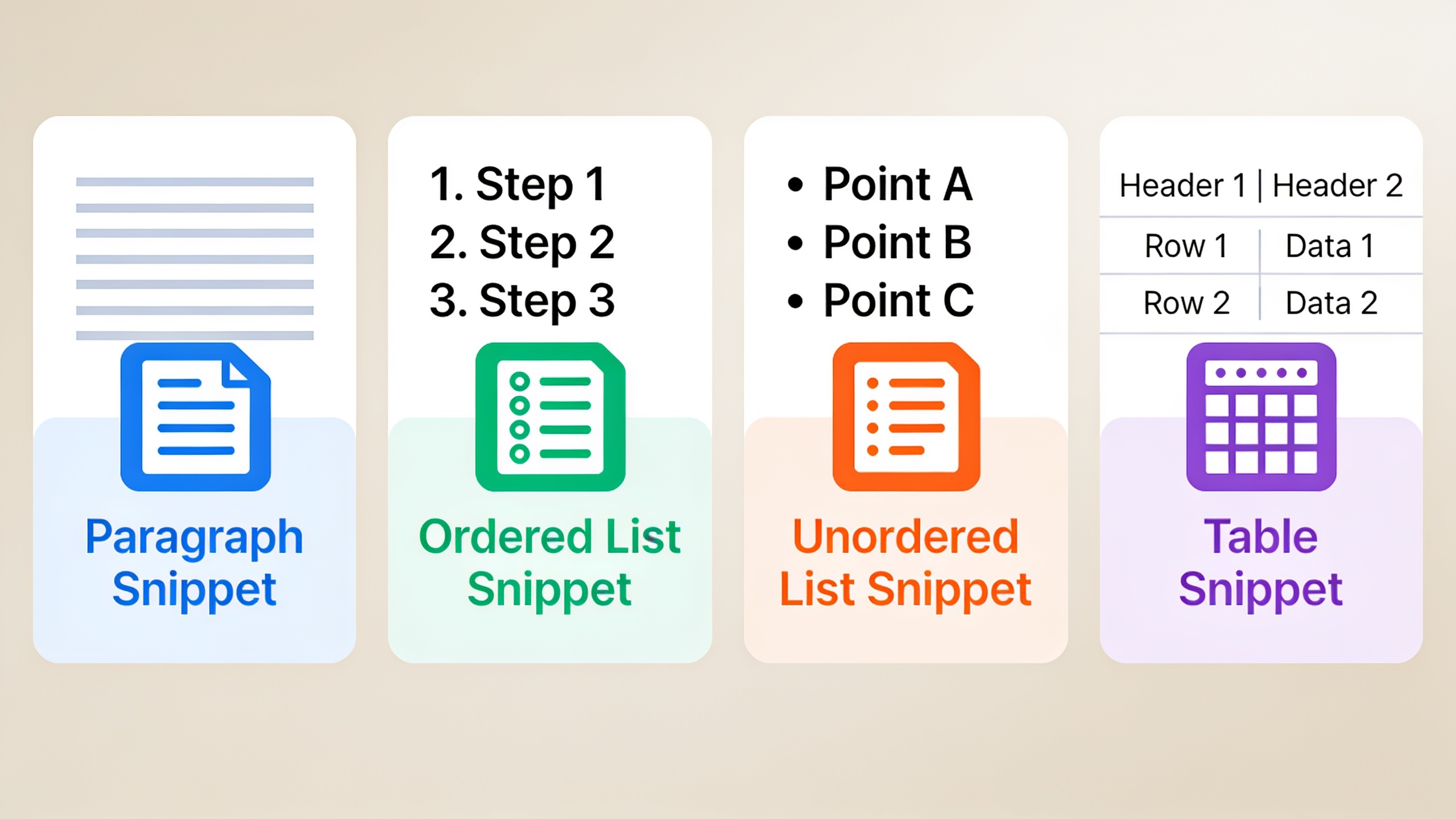
There are four snippet formats you'll run into: paragraph, list, table, and video. Each one rewards a different way of structuring your answer, so figuring out which format Google tends to show for a given query is step one in reverse-engineering how to write for it.
| Snippet Type | Best For | How to Structure Your Content |
|---|---|---|
| Paragraph | Definitions, "what is," "why does" queries | Answer in 1-3 sentences (roughly 40-60 words) immediately under a matching H2/H3 |
| Ordered list | "How to," step-by-step processes | Use numbered `
|
| Unordered list | "Best," "types of," comparison-style queries | Use bulleted `
|
| Table | Pricing, specs, comparisons, data-heavy answers | Use a real HTML/Markdown table with a header row; keep columns short and scannable |
| Video | "How to" tutorials, demonstrations | Add a transcript and timestamped chapter markers so Google can match a segment to the query |
Before you write a single word of your answer, go search the query yourself and see which format's currently sitting in the snippet. If Google's already showing a table for your keyword, writing a gorgeous paragraph is a waste of your afternoon. Match the expected format first, then focus on out-clarifying whoever's holding it.
How to Format Content to Win Featured Snippets
The most reliable way to win a snippet is to answer the target question directly in the first 40 to 60 words after the relevant heading, then follow up with the detail, examples, and nuance. Google's extraction algorithm loves concise, self-contained answers, so if you bury your answer under three paragraphs of warmup, you've made your own life harder.
Answer the Question in the First Sentence or Two
Whatever question your H2 or H3 asks, answer it right underneath. Before the context, before the caveats, before the examples. Here's a test I use: if someone read only your first two sentences under that heading, would they walk away with a correct, complete answer? If not, restructure it. This is genuinely the single highest-leverage habit in all of position zero SEO. Everything else is downstream of it.
Mirror the Question in Your Heading
Want content like this running on autopilot for your own site? Try RobinRank free — AI-written, SEO-optimized articles generated and published automatically, no credit card required.
Snippets are overwhelmingly triggered by question-based queries. "What is," "how to," "why does," "how much does," and so on. So using the actual phrasing of the question as an H2 or H3 makes Google's job of matching your section to the query dead simple. Skip the vague "Pricing Considerations" heading and go with "How Much Does X Cost?" instead, then hit them with a specific figure or range in the very next sentence.
Structure Lists and Steps for Extraction
For "how to" and process queries, use real ordered list markup. Don't describe your steps in prose form and hope Google figures it out. Start each item with an action verb and keep it under maybe 15 to 20 words where you can, because Google tends to favor lists it can display without truncating. Same logic for unordered lists on "best," "types of," or "examples of" queries. Keep every bullet parallel in structure and length.
Add Tables for Comparative or Numeric Data
When you're comparing options, prices, specs, or timelines, a Markdown or HTML table is often the fastest path to a table snippet. Keep your header rows short and unambiguous. And avoid merged cells or absurdly wide tables that won't render cleanly in the snippet preview. Nobody wins a snippet with a table that breaks.
Plan the Structure Before You Write
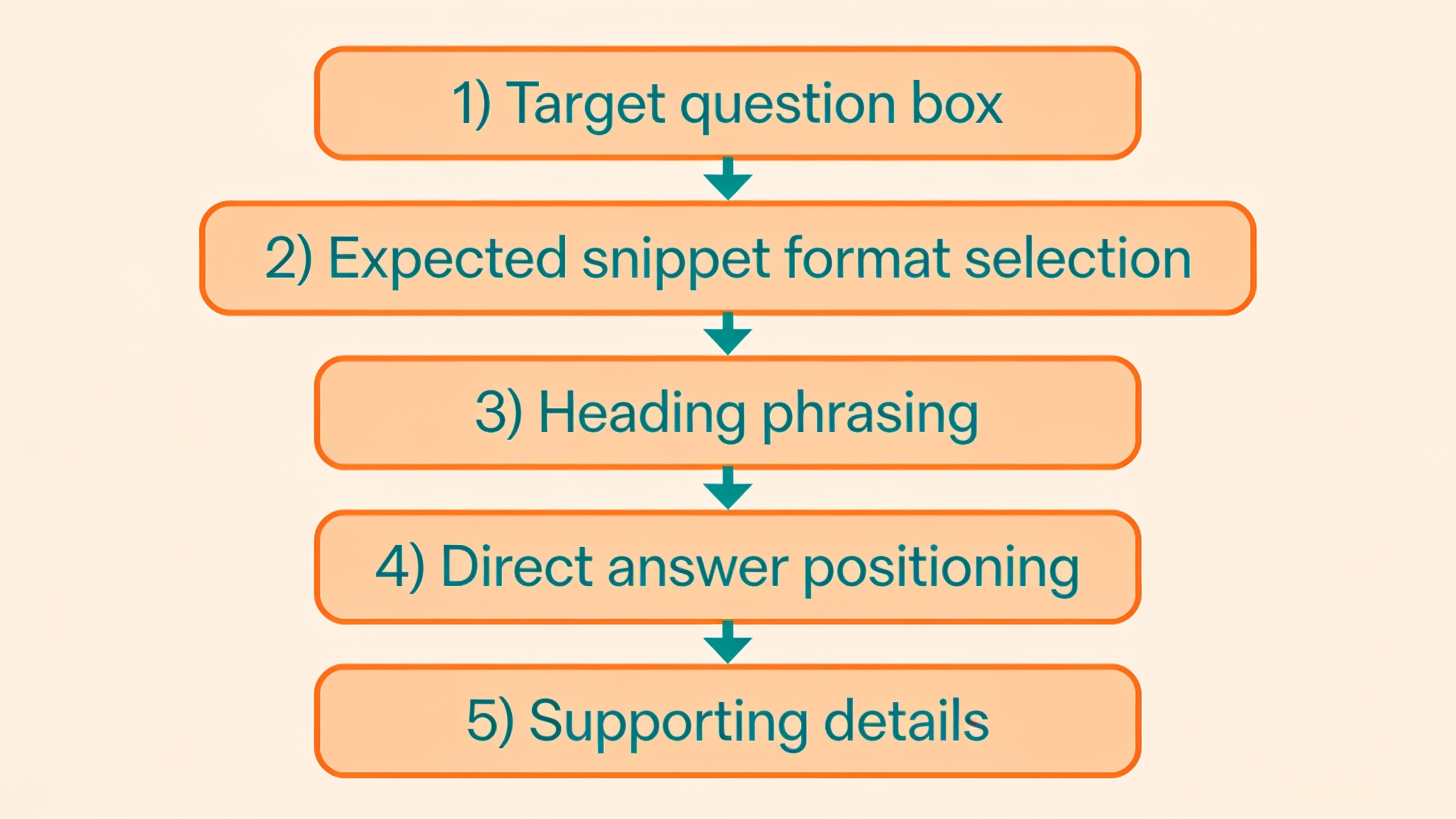
Because snippet-winning formatting hinges so heavily on nailing the heading, the direct answer, and the supporting structure from the jump, it really pays to map all this out before you type a sentence. This is exactly the kind of prep covered in 15 SEO content briefs every writer needs before hitting publish. Building a brief that spells out the target question, the expected snippet format, and the exact heading phrasing before you draft will save you from a full rewrite later. Ask me how I know. On the RobinRank platform, this structural discipline is baked right into the drafting process. Articles come out with SEO-optimized headings, and every draft stays fully editable before it goes live, so you can tune the direct-answer positioning to target a specific snippet format before you publish.
How to Find Featured Snippet Opportunities
The fastest way to find snippet opportunities is to hunt for question-based, informational queries where you already rank on page one but don't hold the snippet yet. Those are your best bets, because Google's already decided your page is relevant enough for the top results. From there, you check what the current holder's doing, spot their gaps, and rebuild your section to answer more directly and more completely.
So where do you actually dig?
Start with your existing rankings. Any query where your page sits in positions 2 through 10 while a competitor holds the snippet is a direct opportunity. You're already close enough to get extracted. You just need cleaner formatting.
Then mine those "People Also Ask" boxes. Those expandable questions on the results page come from real, related searches, and they overlap a ton with snippet-eligible phrasing. Each one is basically a ready-made H3 handed to you for free.
You should also go after long-tail, question-phrased keywords. Something specific like "how much does featured snippet optimization cost for a small business blog" tends to have way less competition and one clear intended answer, which makes it much easier to win outright. This runs right alongside long-tail strategy in general, and as I get into over in long-tail keywords: the overlooked path to faster organic growth, longer and more specific phrases usually convert better and face far less competition. That's exactly the profile that tends to hand fast snippet wins to smaller or newer sites.
And finally, audit your competitors' snippets for weak spots. If somebody's snippet answer is outdated, half-baked, or annoyingly vague, that's a flashing sign that you can take the spot with something clearer, more current, and better formatted.
Common Mistakes That Cost You Position Zero
The most common reason a page whiffs on a snippet is that the answer is technically on the page but buried under fluff, scattered across a few paragraphs, or phrased so vaguely that Google's algorithm can't grab it cleanly. Fixing formatting is almost always more useful than piling on more words.
The one I see most often is answering too late. If your actual answer doesn't show up until the third or fourth sentence under a heading, you've made extraction harder than it needs to be. Move it up. Right up to the top.
Mismatched format is another killer. Writing a narrative paragraph when Google's already displaying a list or a table for that query is just wasted effort. Match the existing format first, then compete on clarity.
Then there's vague, hedged phrasing. Answers stuffed with qualifiers like "it depends" and "in some cases" and "generally speaking," with no clear statement anywhere in sight, are miserable for algorithms to extract. And for readers, honestly. Give the direct answer first. Add your nuance right after.
Watch out for the heading-question mismatch too. If your H2 says "Pricing Overview" instead of "How Much Does X Cost?", you're forcing Google to infer the connection instead of just handing it over. Why make it guess?
And don't ignore snippet volatility. Winning a snippet once doesn't make it yours forever. Competitors refresh their content, Google re-evaluates the results, and snippets change hands without so much as a warning. So treat your high-value snippet pages as living content that needs a periodic refresh, not something you build once and forget.
Frequently Asked Questions
Do featured snippets always boost your click-through rate?
Nope, not always. Because a snippet often fully answers a simple question right there on the results page, some people get what they need and never click. That's the "no-click search" thing you've probably heard about. Whether a snippet helps or hurts your traffic really comes down to the query type. Complex, comparison, or "how to" questions that need more depth than a snippet can fit still tend to drive solid clicks, while dead-simple factual queries often don't.
Can I win a snippet without ranking on page one first?
Generally, no. Google's made it clear that snippets get pulled from pages already ranking in the top organic results for that query. So your first job is always earning that page-one ranking through solid on-page SEO and real topical relevance. Once you're there, formatting becomes the tiebreaker for whether you actually grab the snippet.
How long does it take to win a snippet after I optimize the content?
There's no set timeline, sorry. It depends on how fast Google recrawls and re-evaluates the page, how cutthroat the query is, and how convincingly your reworked answer beats whoever's holding it now. I've seen pages flip a snippet within days of a re-index. Others drag on for weeks, especially on competitive or slow-moving queries.
If I lose a snippet, does that mean I lost my ranking too?
Not necessarily. Since that January 2020 change confirmed by Google's Search Liaison team, a page holding the snippet no longer duplicates in the regular results below it. So if you lose the snippet, your page usually just drops back to its normal organic spot rather than vanishing off page one entirely, assuming your underlying ranking factors haven't shifted.
Is it worth optimizing every single page for snippets?
No, and please don't. It's most worth your energy on informational, question-based queries where a snippet's already showing up for that search. Transactional or heavily branded queries rarely trigger snippets at all, so pouring formatting effort into those usually gets you way less return than working on clearly informational, question-phrased searches.
Winning position zero isn't one clever trick. It's the compound result of ranking well enough to even be eligible, answering the exact question someone typed, and formatting that answer so cleanly that Google's algorithm can lift it without second-guessing. Start with your existing page-one content, find the snippets competitors are holding that you could realistically steal, and rebuild the answer at the top of the section before you add depth underneath. Do that consistently across your best question-based content, and position zero stops being a lucky break and starts being something you can just... make happen. Repeatedly.
Ready to stop writing content by hand? Start your free RobinRank trial and get a full month of SEO-optimized articles published on autopilot.