Google's New AI Search Features: What Marketers Need to Know
So this is a plain-English rundown of what's actually different, how clicks are shifting because of it, and what you should genuinely be doing about it right now. Not the tired "AI changes everything" hot takes. Just the mechanics, and the practical stuff that belongs on your content calendar, your technical SEO checklist, and your link plan.
Table of Contents
- What Are Google's New AI Search Features?
- How Are Google AI Search Features Changing Click Behavior?
- The Latest AI Search Updates Marketers Should Track This Quarter
- AI Overviews vs. Traditional Search Results: A Side-by-Side Look
- How Should Marketers Adjust Content Strategy for Google AI Search Features?
- Building Authority Signals That AI Search Rewards
- How RobinRank Helps Marketers Adapt to AI Search Updates
- FAQ
What Are Google's New AI Search Features?
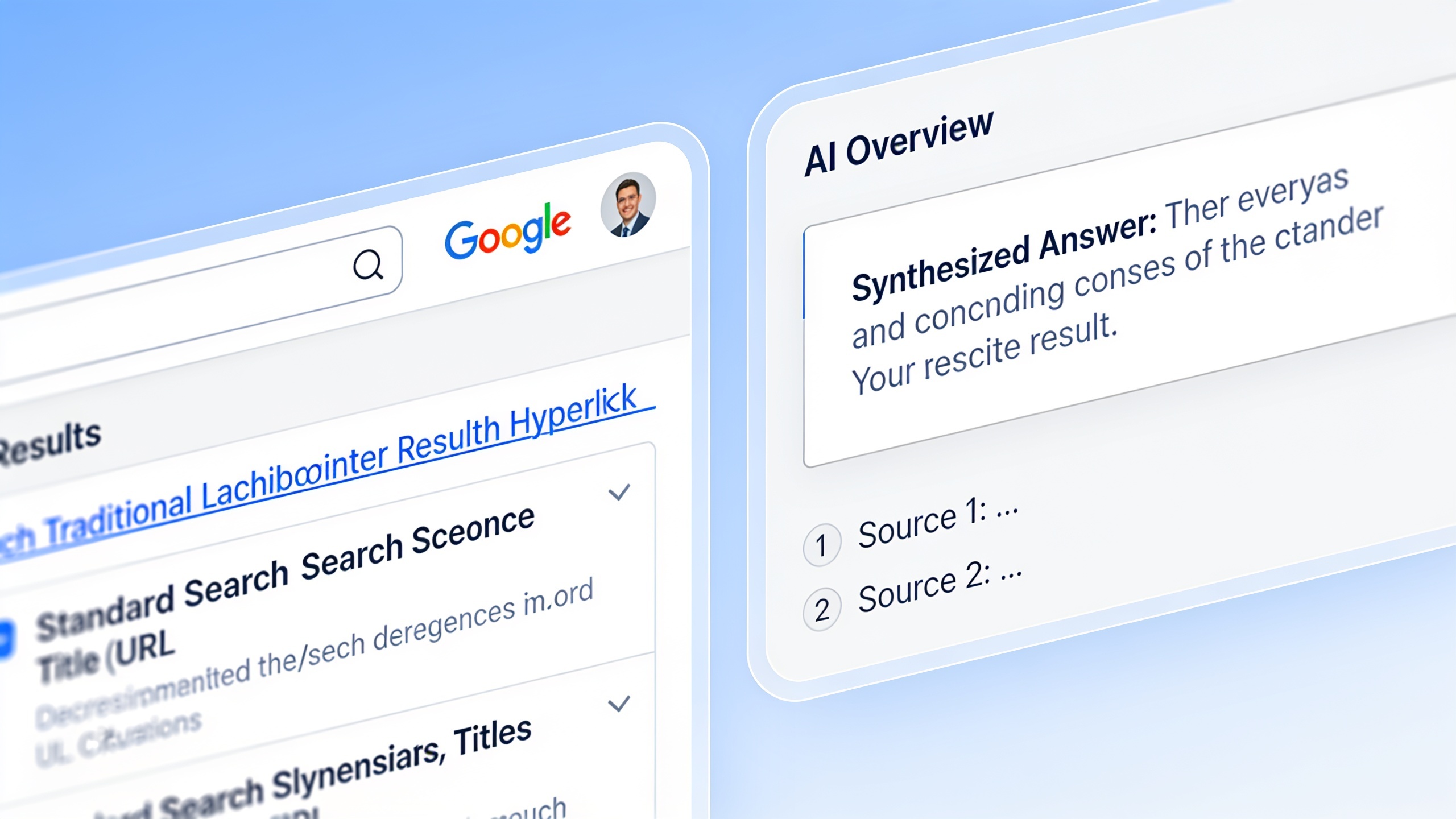
Google's AI search features are a set of tools built into Search that use generative AI to summarize, synthesize, and sometimes just flat-out answer your question right there on the results page, instead of only handing you a list of links to go dig through. The one you've definitely seen is AI Overviews, that AI-written summary block sitting above the regular organic results for a ton of queries. It stitches together info from a bunch of different sites into one tidy answer.
AI Overviews came out of what Google originally called the Search Generative Experience, or SGE, which they tested as an opt-in thing inside Search Labs back in 2023 before pushing a version of it out to more people under the AI Overviews name. Running alongside it is AI Mode, a more conversational setup that lets you fire off follow-up questions in a chat-style thread instead of starting a brand new search every time. And then there's the multimodal stuff: Circle to Search, which lets Android users literally draw a circle around anything on their screen (text, a photo, a product) to search it on the spot, plus a bunch of Google Lens upgrades that use AI to make sense of images and visual queries.
Add it all up and you can see where Google's heading. It's turning into an "answer engine." Search used to be basically a directory that pointed you somewhere else. Now big chunks of it act more like a research assistant that just tries to solve your problem then and there. And that's exactly why you can't wave these off as cosmetic tweaks to the UI. They change the whole point of ranking well.
How Are Google AI Search Features Changing Click Behavior?
The short version: these features answer more of the question right on the results page, so people have less reason to click through to anyone's site for simple informational stuff. In SEO circles this gets lumped under "zero-click" search, where somebody gets what they came for and never visits a single source.
But it's not the same story across every kind of query, and that's the part people miss. Transactional searches ("buy running shoes size 10," "book a flight to Denver") still send people off to retailer or booking sites, because an AI summary can't exactly check you out and charge your card. It's the broad informational queries, the definitions, the comparisons, the "how does X actually work" questions, that AI Overviews and AI Mode are most likely to fully or mostly handle on their own. Which, if you think about it, is precisely the ground that most top-of-funnel blog content was built to win.
Here's a wrinkle that doesn't get talked about enough, though. When people do click out of an AI summary, they're clicking a source the AI already decided was trustworthy enough to cite. So getting cited inside an AI Overview starts to work almost like a second ranking system stacked on top of the old blue-link one. And it doesn't just reward big popular domains. It rewards sites that come across as clear, well-organized, and genuinely authoritative on the specific subtopic being summarized.
The upshot for marketers? Your position in the classic ten blue links isn't the only scoreboard anymore. You can rank on page one and still lose the click because an AI Overview above you answered everything. Or you can pick up visibility and brand exposure by getting cited inside the summary even when nobody clicks. Both of those are real outcomes now, and you've got to track and value them differently than you did three or four years ago.
The Latest AI Search Updates Marketers Should Track This Quarter
The updates worth watching this quarter are three: AI Overviews keep expanding into new countries and languages, AI Mode is still being tested and rolled out as its own standalone thing, and Google keeps wiring its Gemini models deeper into how these summaries get built. Google's been pretty open that AI Overviews run on a customized version of the Gemini family, and they're constantly tinkering with which queries trigger an Overview versus a plain old results page.
And that constant tinkering is the whole point. Google adjusts the triggering logic, the formatting, and how it picks sources on a rolling basis. There's no single launch to react to and then forget about. So treat "AI search updates" as an ongoing thing you monitor, kind of like you already watch for algorithm shifts. Honestly it slots right into what most teams already do for ranking volatility. If your process for keeping an eye on Google Core Update news and what marketers should watch for already covers SERP monitoring and traffic-anomaly alerts, just add AI Overview appearance rates for your target keywords to that same list.
For a working routine this quarter, I'd check a few things regularly. Whether your target queries now trigger an AI Overview, an AI Mode response, or nothing at all (and re-check now and then, because this stuff moves). Whether your own pages are showing up as cited sources inside Overviews for terms you already rank for. And it helps a lot to segment your organic traffic by intent, informational versus transactional versus navigational, so you can spot where click-through is softening even when your ranking hasn't budged. Oh, and keep half an eye on AI Mode creeping past its experimental footprint, because a fully conversational search would shake up how multi-step research queries get handled all over again.
None of this calls for panic or ripping your content down to the studs. It just needs a steady, recurring review, because these updates arrive as a slow drip, not one dramatic before-and-after.
AI Overviews vs. Traditional Search Results: A Side-by-Side Look
AI Overviews and traditional organic results are chasing the same thing, helping someone find an answer, but they play by different rules on format, source visibility, and what even counts as a "win." Traditional results are a ranked list you pick from. AI Overviews are a synthesized answer with citations, where just being in the answer matters more than hitting a specific numbered spot.
| Dimension | Traditional Organic Results | AI Overviews / AI Mode |
|---|---|---|
| Format | Ranked list of page titles, URLs, and meta descriptions | Synthesized narrative answer with inline source citations |
| User action | User compares snippets and clicks a link | User reads the summary; may or may not click a citation |
| What "ranking #1" means | Highest-visibility placement, generally most clicks | Not directly applicable — inclusion as a cited source matters more than position |
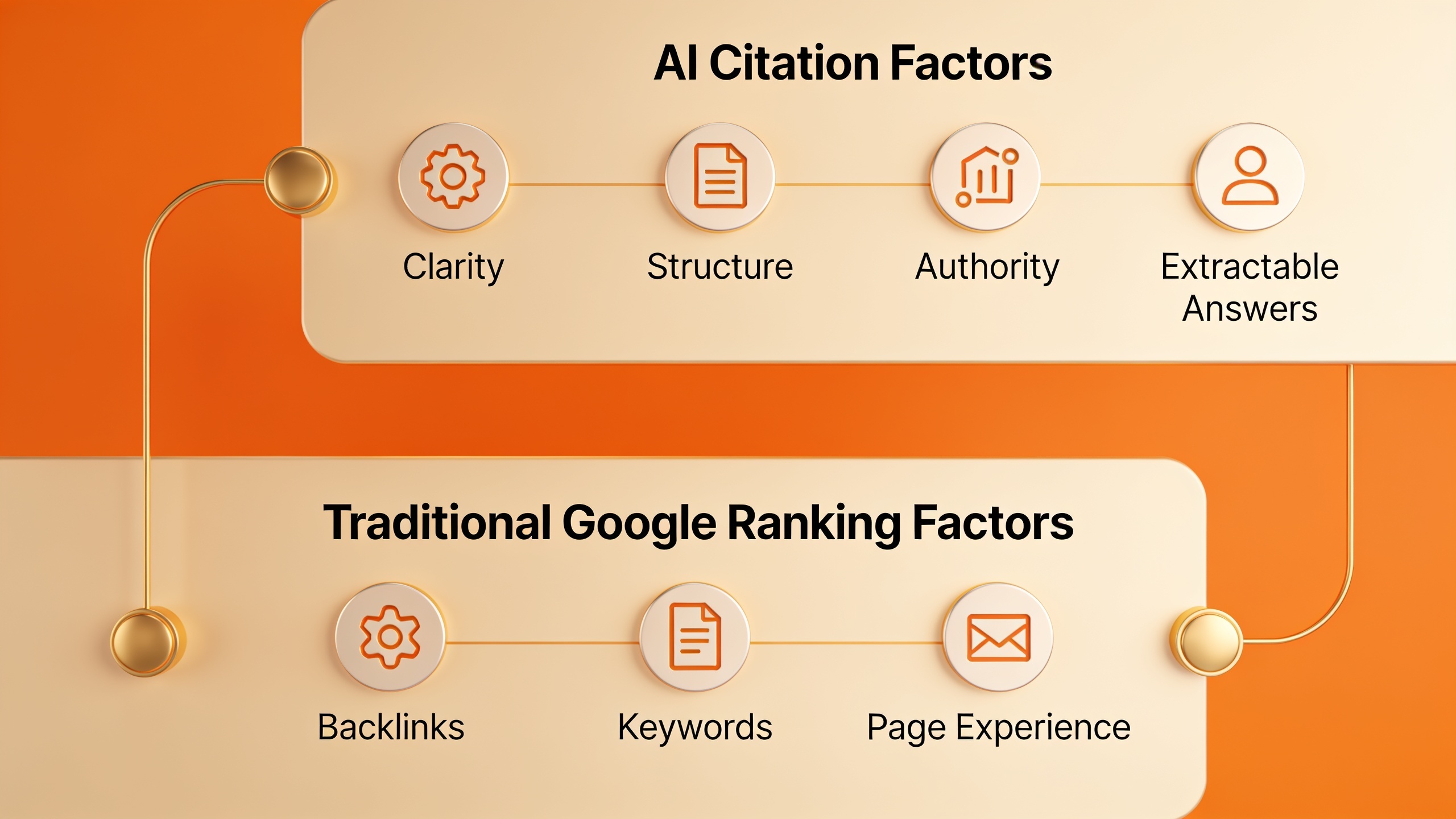
| Content style rewarded | Keyword relevance, backlink authority, page experience | Clear, extractable answers; well-structured facts; unambiguous entities |
| Click-through likelihood | Relatively higher for informational queries | Lower for queries the summary fully answers; higher for queries needing depth or a transaction |
| Brand exposure without a click | Minimal (title and snippet only) | Possible — brand name/domain can appear as a cited source even without a click |
| Best-suited content types | Long-form guides, comparison pages, product pages | Definitions, direct answers, step-by-step facts, statistics |
What that table really tells you is to stop judging success purely by your rank tracker and start watching whether you get cited in AI answers alongside your traditional rankings. A page that gets cited a lot but rarely clicked isn't a flop. It might be quietly doing brand-awareness work that a click-through report will never show you.
Want content like this running on autopilot for your own site? Try RobinRank free — AI-written, SEO-optimized articles generated and published automatically, no credit card required.
How Should Marketers Adjust Content Strategy for Google AI Search Features?
You adapt by making your pages more directly answerable, by structuring content so a single section can stand alone as a full answer, and by widening your goals beyond raw click volume. AI Overviews and AI Mode build their responses by pulling clear statements out of source pages, so content that buries the actual answer under a long windup is way less likely to get cited than content that just says the thing plainly, near the top of the section.
A few things I'd actually change this quarter, in order of how much they matter:
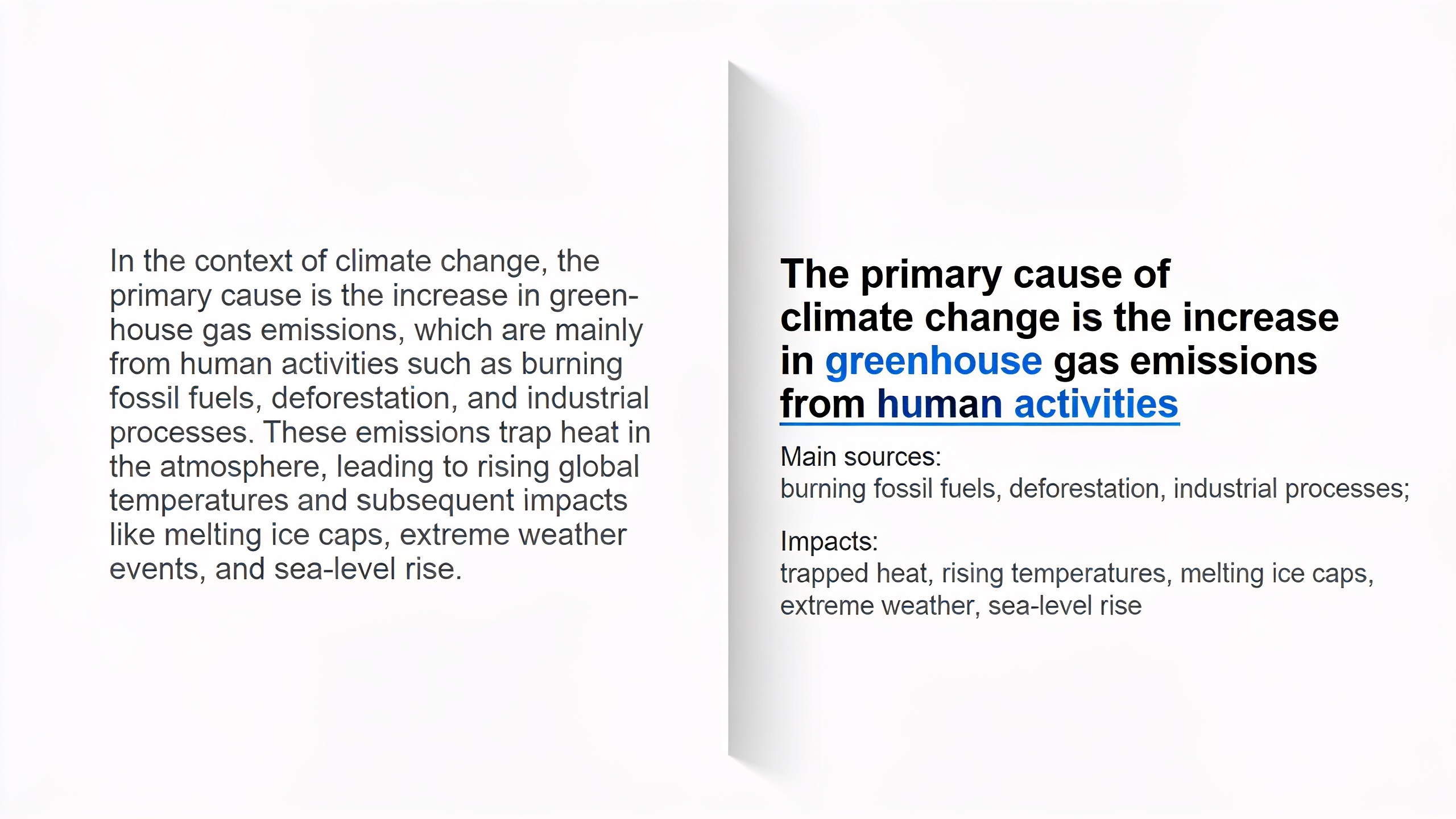
Lead with the answer, then go deep. Write your sections so the first sentence or two fully answers the implied question, and then you bring in the detail, examples, and nuance. That's how AI systems tend to grab quotable snippets, and it happens to serve real humans who are scanning for a fast answer too. Win-win.
Define your terms out loud. If you mention a product, a technical term, a concept, explain it in plain language the first time it shows up instead of assuming people read the earlier paragraphs. AI summarizers love yanking a section out of context, so a section that only makes sense when the whole article is attached is a section that's a pain to cite correctly.
Widen your KPIs. Keep click-through rate and sessions, sure, but start watching impressions, brand mentions inside AI answers where your tools can surface them, and assisted conversions from people who bumped into your brand in a summary before searching your name directly later.
Chase queries the Overview can't fully eat. Transactional, comparison-heavy, and super-specific long-tail queries hold onto their click value better than broad definitional ones. Shifting some of your editorial weight toward those protects your traffic while AI triggering keeps shifting around under you.
And treat clean, liftable formatting as a ranking factor, not a nice-to-have. Tables, numbered steps, clearly labeled FAQs, short definitional paragraphs... all of that is easier for both people and machines to grab and cite than a wall of dense prose.
If you want the nuts and bolts, the full technical and formatting playbook lives in how to optimize content for Google AI Overviews, which walks through the on-page mechanics that make a page easier to cite.
Building Authority Signals That AI Search Rewards
AI search leans hard toward content and domains that already carry strong, verifiable authority, and that makes sense when you think about what's happening under the hood. An AI summarizing an answer is basically making a snap judgment about which sources it trusts enough to name. So the old fundamentals of off-page SEO, especially earning legit backlinks from real, relevant sites, matter just as much now as they did before AI Overviews existed. Arguably more, since citation selection adds a whole new layer where your domain's trust gets sized up.
The catch, and this is the part that frustrates a lot of teams, is that old-school link building is a slog. Cold outreach, paid placements, guest post pitches that vanish into the void... it's slow, pricey, and honestly the site owners you're pitching mostly ignore it now. A saner approach is a direct exchange model, where site owners in related niches just trade placements with each other instead of one side begging the other. RobinRank's backlink exchange network works this way: members browse a directory of manually reviewed sites (everything's filtered to a minimum Domain Rating of 5 or higher on Ahrefs), request a placement on a relevant page, offer a link back, and then the platform actually crawls the live page to confirm the link went up. It doesn't just take somebody's word for it.
That last bit matters more than it looks like at first. A backlink that got "agreed to" but never published, or went up and then quietly got yanked later, does exactly nothing for your domain authority. RobinRank tracks it at each stage, first the reply from the site owner, then confirmation once the href is genuinely crawlable on a live page, so you're not sitting there guessing whether the placement is real. For anyone trying to strengthen the signals that both traditional rankings and AI citations reward, treating links as an ongoing relationship-based exchange rather than a one-off sprint fits neatly into the same quarterly rhythm you're already using to watch AI updates and core algorithm changes.
How RobinRank Helps Marketers Adapt to AI Search Updates
RobinRank is built to take two of the most time-eating parts of adapting to AI search off your plate: cranking out well-structured, publish-ready content, and building the kind of verified backlinks that actually prop up your domain authority. On the content side, it's an AI-powered platform that writes, optimizes, and publishes articles automatically for businesses that just don't have the hours to run a full in-house content team, which matters when AI Overviews keep rewarding more frequent formatting and structural tweaks.
On the link side, RobinRank runs a manually reviewed exchange network, not a link marketplace and definitely not some automated PBN scheme. Every site that joins the Discover directory gets checked by a human, for a minimum Domain Rating of 5 or higher on Ahrefs, real ownership of the domain, genuine content (not thin pages thrown together purely to swap links), and no spam signals, usually within one business day of joining. So instead of firing cold emails into the void, members request a placement straight from a real site owner, offer a reciprocal link where it makes sense, and RobinRank crawls the page to verify the href actually went live. On the Pro tier that verification keeps running, with alerts if a previously live link disappears down the road.
It's free to try for seven days once your submitted site passes review, no card up front, and the paid plan after that is $19 a month with cancel-anytime. For teams juggling the content-format churn and the authority-building grind that AI search now demands at the same time, having both halves, the publishing and the link acquisition, run through one platform cuts down a lot of the operational headache of doing each separately.
FAQ
Do Google's AI Overviews actually cut into my website traffic?
They can, yeah, especially for queries the summary fully resolves right on the page, like simple definitional or factual questions where the user's need is met without ever visiting a source. It's a lot less brutal for transactional, comparison, and very specific long-tail queries, where people still click through for detail the AI can't fully give them.
What is AI Mode in Google Search?
AI Mode is the more conversational search experience Google's been developing that lets you ask follow-up questions in a continuous thread instead of starting fresh each time. It behaves more like a chat-based research assistant than a traditional results page.
How do I check whether my content's getting cited in AI Overviews?
There's no single magic dashboard for this across all tools yet, sadly. But you can manually search your target queries to see if an Overview shows up and whether your domain lands among the cited sources. It also helps to watch for shifts in branded search volume or referral patterns that hint at exposure happening without a click.
Is AI search going to kill traditional SEO eventually?
Nothing I can see right now suggests that. Traditional organic rankings still sit right alongside AI Overviews and AI Mode, and transactional or highly specific queries still send people to standard links. The truer way to put it is that SEO just picked up an extra layer to optimize for, citation-worthiness inside AI answers, rather than getting replaced wholesale.
How often does Google change how AI Overviews trigger and behave?
Constantly, more or less. Google tweaks the triggering logic, formatting, and source-selection on a rolling basis rather than through occasional big launches, which is exactly why it's smarter to treat AI search monitoring as a recurring quarterly habit than a one-and-done project.
The big lesson from this quarter's rollout isn't that organic search is dying. It's that the definition of a "win" is quietly splitting into two related but separate goals: earning the click, and earning the citation. If you build content that answers questions clearly, structure your pages so sections can stand on their own, and keep investing in the verified authority signals that both algorithms and AI systems trust, you'll be in decent shape no matter which way Google shoves the results page next.
Ready to stop writing content by hand? Start your free RobinRank trial and get a full month of SEO-optimized articles published on autopilot.