How to Optimize Content for Google AI Overviews: An AI Overviews Optimization Guide
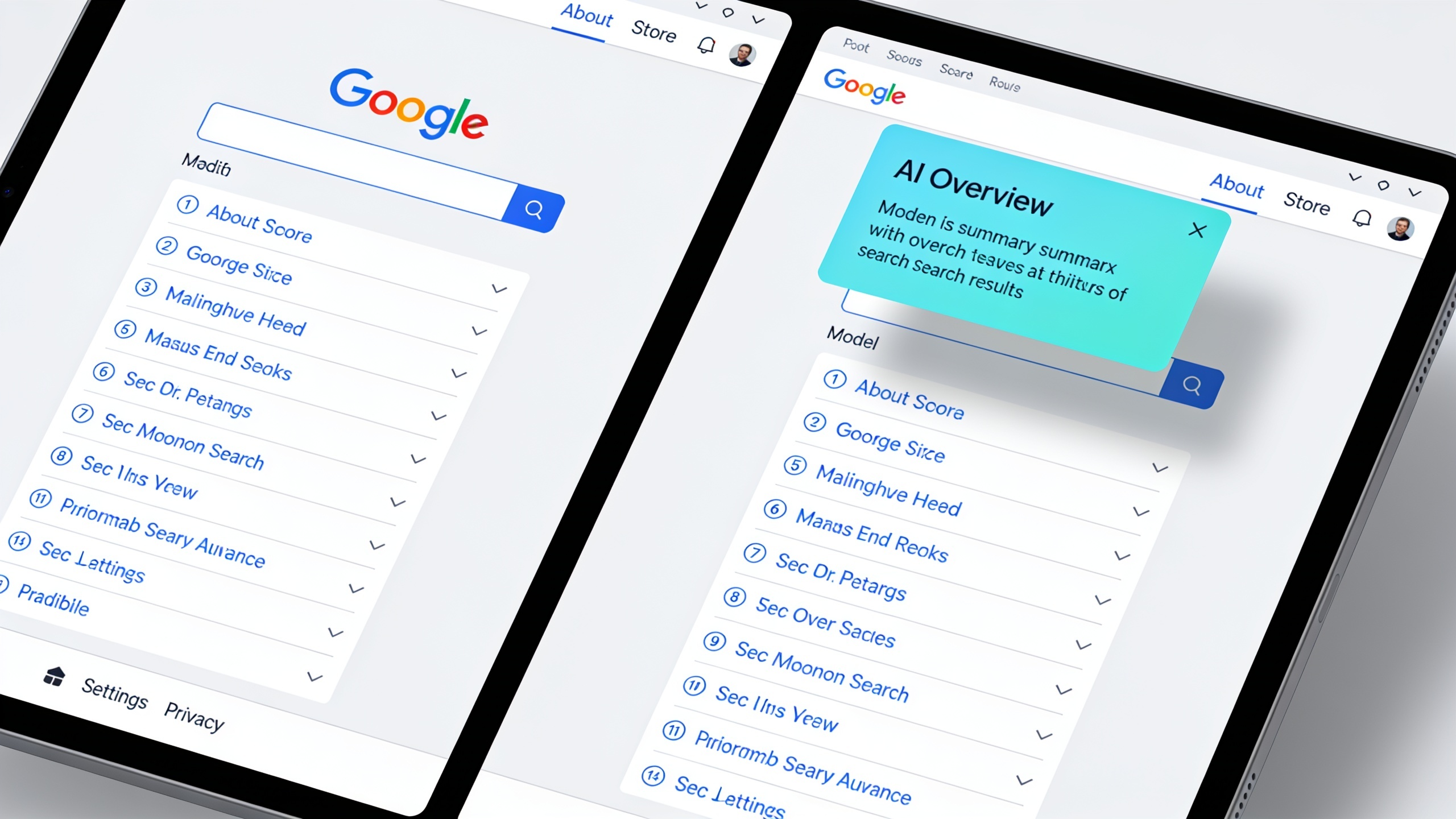
That's what AI overviews optimization is really about: writing and structuring your content so Google's generative systems can actually pull from it, trust it, and cite it. Instead of watching a competitor get the credit for research you did.
And this matters because AI Overviews don't play by the old rules. They started life as the Search Generative Experience (SGE), then rolled out broadly across the US after Google I/O in May 2024. Unlike a traditional ranking algorithm, they summarize and stitch together information from multiple pages on the fly. So the tired old approach of "crank out 1,500 words and pray for a featured snippet" doesn't cut it anymore. The businesses that figure out how these systems grab and attribute information? They've got a real shot at being the cited source. Everyone else is basically donating their research for free.
So let's get into how AI Overviews actually source content, what structural stuff moves the needle, and how to tell if any of it's working.
Table of Contents
- What Are Google AI Overviews and How Do They Work?
- How Much Traffic Do AI Overviews Actually Affect?
- How Does Google Choose Sources for AI Overviews?
- Content Structure Changes That Improve AI Overviews Optimization
- On-Page and Technical Signals That Support Generative Search Results
- Content Formats and Topics AI Overviews Favor
- How to Measure Whether Your Content Is Being Pulled Into AI Overviews
- Common Mistakes That Keep Content Out of AI Overviews
- FAQ
- Final Thoughts
What Are Google AI Overviews and How Do They Work?
Google AI Overviews are AI-generated summaries that show up above the regular search results for certain queries, pulling together info from a handful of web pages into one answer with linked citations. They run on Google's Gemini models, and they're aimed at questions Google thinks are too messy for a single snippet. Comparisons, multi-step how-tos, anything that benefits from combining a few different sources.
Here's where it differs from the old featured snippet. A snippet grabs one paragraph from one page and calls it a day. An AI Overview can blend facts from three, five, sometimes more sources into a single synthesized answer, then list those sources as expandable links underneath. It's part of a bigger trend people call generative search results, where an AI model writes the primary answer instead of just ranking and displaying pages that already exist. Perplexity, Bing Copilot, Google's own AI Mode. They all live under this umbrella, and honestly, most of the optimization principles carry over between them.
What this means for you as a content creator is kind of brutal: ranking #1 in traditional organic results no longer guarantees you're the page Google's model decides to quote. A page sitting at #4 or #5 with cleaner structure and clearer facts can absolutely beat out a higher-ranking but sloppily organized competitor inside the Overview itself. The playing field shifted.
How Much Traffic Do AI Overviews Actually Affect?
AI Overviews mess with click behavior because more and more questions get answered right there on the results page, so people just don't click through the way they used to. A bunch of industry analyses since the 2024 rollout have flagged lower click-through rates on informational queries when an Overview shows up, especially those top-of-funnel "what is" and "how does" searches. Google, for its part, keeps insisting it sees AI Overviews as expanding the types of questions people ask rather than stealing clicks from the web. Make of that what you will.
But I don't think organic traffic is dying. It's redistributing. Queries that are transactional, local, or tied to an actual buying decision (pricing pages, product comparisons, "near me" stuff) still tend to drive clicks, because people want to verify details, weigh options, or actually do something a summary can't do for them. It's the purely definitional, explain-it-to-me searches that get "answered and closed" without anyone clicking.
Which is exactly why you can't treat AI overviews optimization as a replacement for your content strategy. It's a piece of it. If you run a local business and you're wondering how any of this hits location-based searches, the Local SEO Playbook: A Step-by-Step Guide for Small Businesses walks through keeping local-intent queries converting even as AI summaries eat up more of the informational layer.
How Does Google Choose Sources for AI Overviews?
Google's AI Overview system mostly pulls sources from pages that already rank well organically, and then it leans toward the ones with clear, well-structured, fact-dense content the underlying model can extract cleanly. In plain terms: you still need solid traditional SEO as your entry ticket. Technical health, topical relevance, backlinks, the whole E-E-A-T package (Experience, Expertise, Authoritativeness, Trustworthiness). Structure and clarity are what decide whether you actually get picked once you're in the pool.
Google's described AI Overviews as drawing on the same core ranking systems it uses for regular search. Meaning a page with zero organic visibility is basically never going to show up as a citation. This is where a lot of the generic "AI SEO" advice out there gets it wrong. It treats AI Overviews like some separate discipline when really it's just another layer on top of fundamentals that already have to be strong.
Within that qualified pool, the model seems to favor content that:
- States facts and definitions in self-contained sentences instead of burying them in long, meandering paragraphs
- Uses headings that match how real people actually phrase their questions
- Backs things up with specific numbers, dates, and named examples rather than hand-wavy claims
- Comes from a domain or author with real topical authority
None of this should surprise anyone who's paid attention to how language models process text. They extract information more reliably from content that's already organized the way an answer would be organized. That's basically the whole insight behind AI overviews optimization in one sentence.
Content Structure Changes That Improve AI Overviews Optimization
The single highest-leverage move you can make is writing "answer-first," where every section opens with a direct, complete answer to the implied question before you add any supporting detail. This mirrors exactly how the model wants to consume your content. It's hunting for a clean, quotable statement it can lift with almost no rewriting.
Answer-First Paragraphs
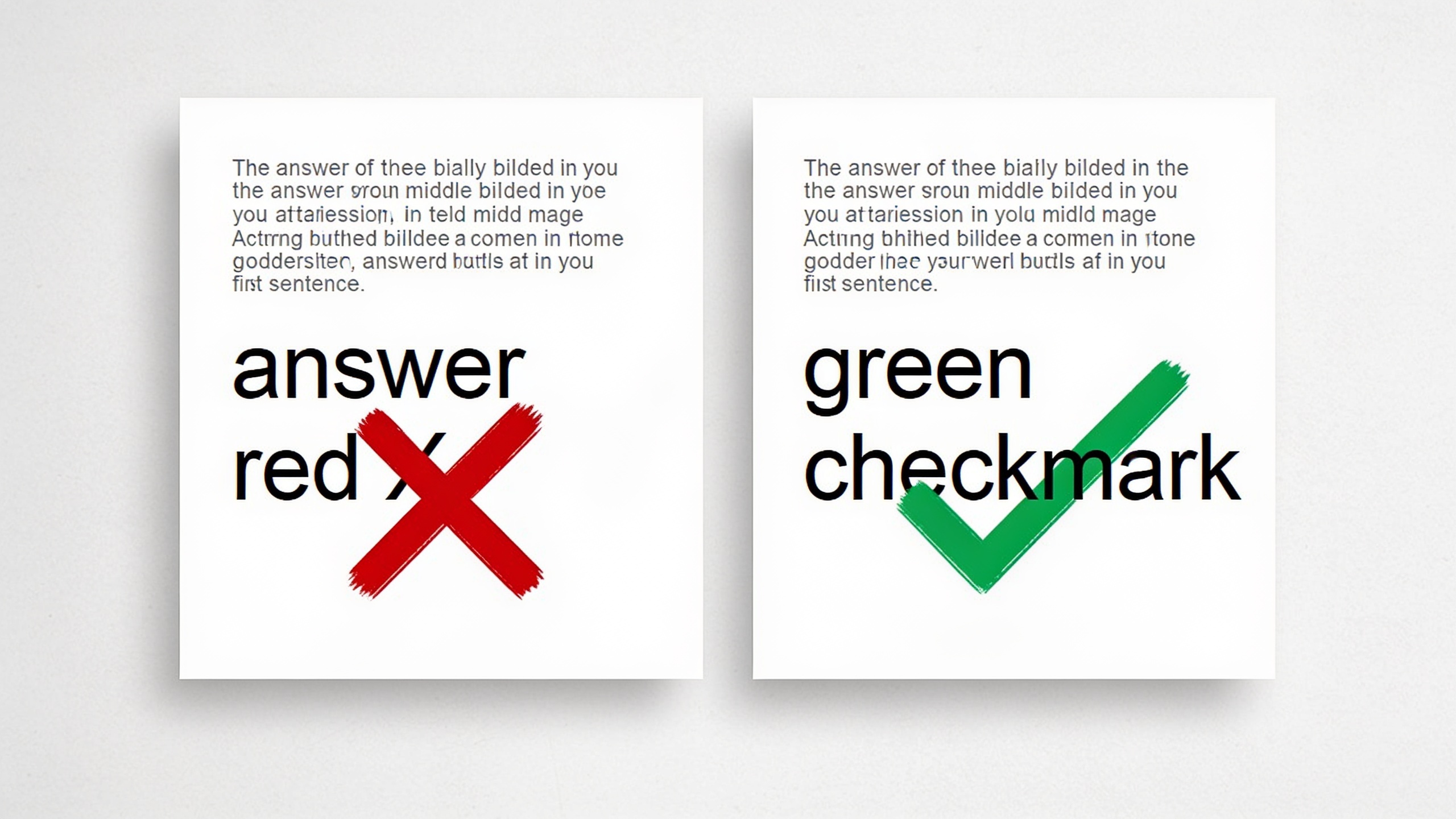
Don't build up to your conclusion. State it in the first sentence or two, then explain the why and how afterward. So instead of opening a shipping section with the founding story of your logistics department, just say: "Standard shipping costs $6.99 for orders under $50 and is free above that." A model can grab that sentence and run with it. It's far less likely to correctly extract a fact buried in sentence six of some rambling narrative paragraph.
Explicit Definitions
Define your key terms the moment they show up, even when it feels almost too obvious. Something like "AI overviews optimization is the practice of structuring content so generative search results can extract and cite it" hands the model a clean, reusable definition on a plate. Vague or implied definitions force it to guess, and when it guesses, it's more likely to reach for a competitor who just spelled the thing out plainly.
Self-Contained Sections
Every H2 or H3 should make sense on its own, with no dependency on paragraphs way up the page for context. This one's important because Overviews often extract at the paragraph or section level, not the whole page. If your "how much does X cost" explanation only makes sense after someone's read three paragraphs before it, the model's got no clean unit to cite. So it wanders over to a competitor whose pricing explanation stands on its own two feet.
Question-Matched Headings
Phrase a good chunk of your headings as actual questions people type or say into Google. "How much does X cost?", "Is X better than Y?", "How long does X take?" This isn't keyword stuffing. It's lining up your document structure with the query structure the model is trying to satisfy. And teams that made this shift as part of a broader automated content approach have seen it help their regular rankings too. The SaaS SEO Case Study on doubling trial signups with automated content shows structuring articles around real user questions driving measurable growth even before AI Overviews were much of a factor.
On-Page and Technical Signals That Support Generative Search Results
Clean HTML, structured data, and crawlability all make it easier for Google to parse and trust your content for generative search results, though none of them alone will conjure up a citation. Think of the technical stuff as removing friction, not adding magic. The model has to be able to reach, read, and verify your content before it'll even consider quoting you.
Structured Data and Schema Markup
Schema markup (FAQ, HowTo, Article, and Organization in particular) helps search engines understand what role each piece of content is playing on a page. Now, Google hasn't come out and said schema directly bumps up your AI Overview citation odds, so I won't pretend it has. But it's still a solid best practice for helping any automated system, generative or old-school, figure out what your content is actually about.
Fast, Clean, Crawlable Pages
Pages that load like molasses, block crawlers, or hide everything behind heavy JavaScript make life hard for every Google system, generative or not. Basic hygiene still matters: decent Core Web Vitals, clean semantic HTML with real `
` and `` tags instead of styled ``s pretending to be headings, and no crawl-blocking scripts. Boring, foundational, non-negotiable.Want content like this running on autopilot for your own site? Try RobinRank free — AI-written, SEO-optimized articles generated and published automatically, no credit card required.
Author and Entity Signals
Clear author bylines, an about page, consistent naming of your brand and your experts across the web. All of this builds the "who's actually saying this" layer of E-E-A-T that Google harps on constantly in its quality guidelines. Content tied to a named, verifiable human tends to carry more trust than anonymous pages, and that matters more as these systems try to judge whether a source is reliable, not just relevant.
Comparison Table: Traditional SEO vs. AI Overviews Optimization
Factor Traditional Organic SEO Focus AI Overviews Optimization Focus Primary goal Rank in top positions for a keyword Get extracted and cited inside the generated summary Content structure Long-form, narrative-friendly Answer-first, self-contained sections Heading style Keyword-optimized phrases Direct questions matching user intent Success metric Rankings, organic clicks Citation appearances, brand mentions in AI answers Data usage Supports argument, can be general Specific numbers, named examples, sourced stats Technical baseline Crawlability, speed, schema Same baseline, plus clean semantic HTML for extraction Authority signal Backlinks, domain authority Backlinks plus clear author/entity attribution
Content Formats and Topics AI Overviews Favor
AI Overviews show up most reliably on informational, comparative, or procedural queries. Your "what is," "how to," "best," and "vs." searches. Not so much on transactional or purely navigational ones. So if your content library is thin on this explanatory stuff, you don't have much that's even eligible for a citation, no matter how polished your product and pricing pages are.
Comparison and "Versus" Content
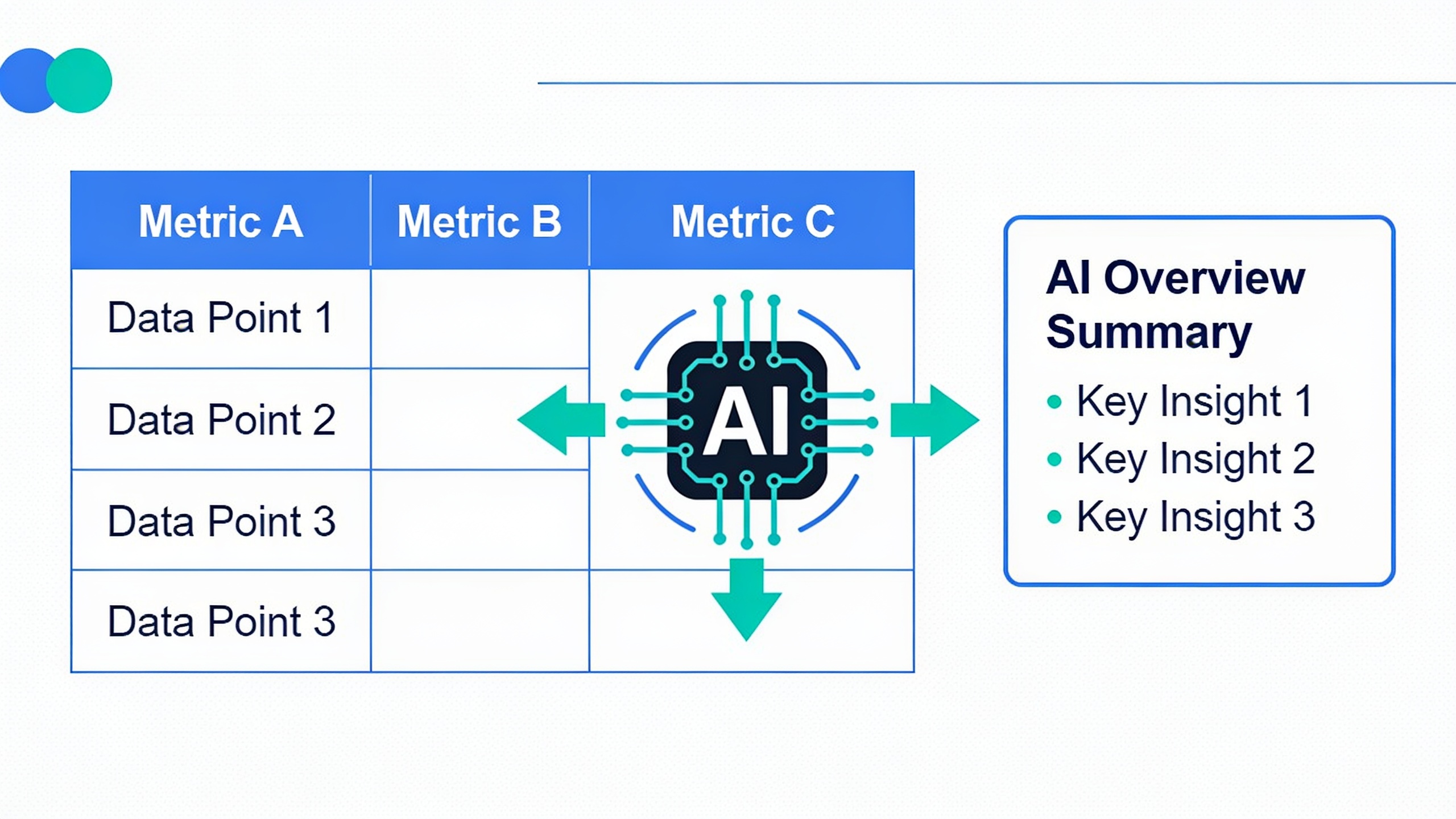
Comparison content is a natural fit for summarization because the model has to synthesize a bunch of attributes (price, features, pros and cons) into one digestible answer. Which is precisely what a good comparison table already does. Build these out as actual markdown or HTML tables instead of prose and you're basically handing the model a pre-organized dataset it can quote almost word for word.
Step-by-Step and How-To Content
Numbered, sequential instructions are easy pickings because each step is already its own discrete, self-contained unit. Vague narrative how-tos that never break into clear steps? Much harder to summarize accurately, which just means the model grabs from a competitor's cleaner numbered guide instead. Number your steps. It's not hard.
Original Data and Case Studies
Content built on original research, proprietary data, or a documented case study has a real citation edge, because it's exactly the kind of thing a model can't fabricate or paraphrase out of its training data. It has to attribute it to you, specifically. That's a big part of why case-study content punches above its weight for both rankings and citations: it contains facts that exist nowhere else on earth. Worth studying how that plays out in the real world through something like the SaaS SEO case study on automated content and trial signups, which documents specific, attributable results instead of the usual generic advice.
How to Measure Whether Your Content Is Being Pulled Into AI Overviews
You can gauge AI Overview visibility by watching Google Search Console's Performance report for impression and click weirdness on queries you already know trigger Overviews, plus manually spot-checking your target queries in live search. Fair warning: as of right now, Search Console doesn't give you a dedicated "AI Overview citations" filter. So measurement is part manual, part educated guessing.
Here's how I'd actually go about it:
- Build a query watchlist. Pick 20 to 50 high-value queries in your niche and check them on a regular schedule. Does an Overview appear? Is your domain among the cited sources?
- Watch for impression-without-click patterns. In Search Console, a query that suddenly racks up high impressions but a sinking click-through rate can mean an Overview's now soaking up clicks that used to hit your page. Even if you're the one being cited.
- Track branded search lift. If your content's being quoted in Overviews without a click, you might still see a downstream bump in branded searches or direct traffic, because people remember the brand name they saw attributed even if they didn't click through right then.
- Use rank trackers that flag Overview presence. A handful of third-party SEO tools have added AI Overview detection to their SERP tracking, showing which of your keywords currently trigger a generative summary and whether you got cited.
Since this whole measurement layer is still half-baked across the industry, treat what you find as directional, not gospel. Weigh it alongside your existing traffic and conversion numbers rather than treating it as some standalone KPI.Common Mistakes That Keep Content Out of AI Overviews
Most content doesn't get cited because it's structured for human skimming instead of machine extraction, not because it's bad. The fixes are usually structural. This isn't about writing more.
Mistake 1: Burying the answer. Long intros, anecdotes, brand storytelling before you actually answer the question. It all makes it hard for a model to isolate a clean, quotable fact. Move the answer to the first sentence of each section and stop making everyone work for it.
Mistake 2: Vague quantities. "Significantly cheaper" or "much faster" gives a model absolutely nothing to grab. Specific numbers ("40% faster," "$29 per month") are way more citable, and honestly, way more useful to your human readers too.
Mistake 3: Inconsistent terminology. Calling the same feature a "toolkit" in one paragraph and a "dashboard" in the next makes it harder for the model to build a coherent picture of what your brand even offers. Pick a word. Stick with it.
Mistake 4: No table where one clearly belongs. If your topic genuinely involves comparing options, tiers, or before-and-after states and you just wrote it all out as prose, you're leaving an easy extraction opportunity on the floor. Tables are some of the most citation-friendly formats there are.
Mistake 5: Ignoring the fundamentals. No amount of clever formatting saves a page that isn't crawlable, reasonably fast, and relevant enough to rank organically in the first place. Overviews draw largely from pages already sitting in Google's core index. If you're not in the pool, none of this matters.
How RobinRank Fits Into an AI Overviews Optimization Strategy
Getting cited consistently in AI Overviews takes two things working at once: content structured the way generative systems like it, and a domain with enough authority to be taken seriously as a source. RobinRank is built around both halves. It's an AI-powered platform that writes, optimizes, and publishes articles for businesses, and it also runs a backlink exchange network where site owners request and grant real placements on each other's pages.
On the backlink side, RobinRank requires a minimum Domain Rating of 5 (via Ahrefs) and manually reviews every site before it's allowed into the Discover marketplace, kicking out PBNs, link farms, and thin doorway pages. Placements happen through direct conversations between actual site owners, not cold outreach, and RobinRank crawls the live page to confirm the link genuinely went up. Pro-tier accounts even get ongoing automated checks to make sure it hasn't quietly vanished later. Since Overview eligibility still leans heavily on a page's underlying organic authority, this kind of verified, manually reviewed link-building is a sensible complement to the on-page structural work. Not a substitute for it.
FAQ
Does getting cited in an AI Overview actually help my SEO if nobody clicks?
It can, just indirectly. A citation puts your brand name and domain in front of people even without a click, which may feed branded search growth and direct traffic over time. That said, Google hasn't published any data putting a number on this specific effect, so I'd hold off on treating it as a sure thing.
Can a small business realistically compete for citations against the big players?
Yeah, especially on narrow, local, or highly specific queries where your original data, firsthand experience, or local detail beats a big competitor's generic content. For those tighter queries, structural clarity often matters more than raw domain size.
Do I have to ditch featured snippet optimization to chase AI Overviews?
No, and please don't. The same underlying tactics (clear definitions, direct answers, numbered steps, well-organized tables) improve your odds for both. Both formats reward extractable, self-contained content, so you're basically doing one job that pays off twice.
How long before I see results from these changes?
There's no official timeline from Google, and it swings with query volatility and how fast Google recrawls and reprocesses your updated pages. Most practitioners treat it like any other content update. Think several weeks to a few months of monitoring, not days.
Will AI Overviews eventually wipe out traditional organic listings?
Doesn't look like it, at least not based on how things are rolling out now. Overviews currently show up alongside regular organic results for a subset of query types, and Google's said it sees them as an addition to search rather than a replacement. Though the exact mix of affected queries keeps shifting, so ask me again in a year.
Final Thoughts
Here's what I keep coming back to: AI overviews optimization isn't some separate discipline bolted onto SEO. It's just what good SEO looks like now that the reader on the other end is sometimes a machine instead of a human skimming a results page. And the funny thing is, all the habits that help (answer-first writing, explicit definitions, self-contained sections, specific numbers, clean structured data) also make your content genuinely better for actual humans. That overlap is the whole point. Build a long-term strategy around it instead of chasing it like some tactic that'll be dead by next quarter.
Ready to stop writing content by hand? Start your free RobinRank trial and get a full month of SEO-optimized articles published on autopilot.
Want content like this running on autopilot for your own site? Try RobinRank free — AI-written, SEO-optimized articles generated and published automatically, no credit card required.
Author and Entity Signals
Clear author bylines, an about page, consistent naming of your brand and your experts across the web. All of this builds the "who's actually saying this" layer of E-E-A-T that Google harps on constantly in its quality guidelines. Content tied to a named, verifiable human tends to carry more trust than anonymous pages, and that matters more as these systems try to judge whether a source is reliable, not just relevant.
Comparison Table: Traditional SEO vs. AI Overviews Optimization
| Factor | Traditional Organic SEO Focus | AI Overviews Optimization Focus |
|---|---|---|
| Primary goal | Rank in top positions for a keyword | Get extracted and cited inside the generated summary |
| Content structure | Long-form, narrative-friendly | Answer-first, self-contained sections |
| Heading style | Keyword-optimized phrases | Direct questions matching user intent |
| Success metric | Rankings, organic clicks | Citation appearances, brand mentions in AI answers |
| Data usage | Supports argument, can be general | Specific numbers, named examples, sourced stats |
| Technical baseline | Crawlability, speed, schema | Same baseline, plus clean semantic HTML for extraction |
| Authority signal | Backlinks, domain authority | Backlinks plus clear author/entity attribution |
Content Formats and Topics AI Overviews Favor
AI Overviews show up most reliably on informational, comparative, or procedural queries. Your "what is," "how to," "best," and "vs." searches. Not so much on transactional or purely navigational ones. So if your content library is thin on this explanatory stuff, you don't have much that's even eligible for a citation, no matter how polished your product and pricing pages are.
Comparison and "Versus" Content
Comparison content is a natural fit for summarization because the model has to synthesize a bunch of attributes (price, features, pros and cons) into one digestible answer. Which is precisely what a good comparison table already does. Build these out as actual markdown or HTML tables instead of prose and you're basically handing the model a pre-organized dataset it can quote almost word for word.
Step-by-Step and How-To Content
Numbered, sequential instructions are easy pickings because each step is already its own discrete, self-contained unit. Vague narrative how-tos that never break into clear steps? Much harder to summarize accurately, which just means the model grabs from a competitor's cleaner numbered guide instead. Number your steps. It's not hard.
Original Data and Case Studies
Content built on original research, proprietary data, or a documented case study has a real citation edge, because it's exactly the kind of thing a model can't fabricate or paraphrase out of its training data. It has to attribute it to you, specifically. That's a big part of why case-study content punches above its weight for both rankings and citations: it contains facts that exist nowhere else on earth. Worth studying how that plays out in the real world through something like the SaaS SEO case study on automated content and trial signups, which documents specific, attributable results instead of the usual generic advice.
How to Measure Whether Your Content Is Being Pulled Into AI Overviews
You can gauge AI Overview visibility by watching Google Search Console's Performance report for impression and click weirdness on queries you already know trigger Overviews, plus manually spot-checking your target queries in live search. Fair warning: as of right now, Search Console doesn't give you a dedicated "AI Overview citations" filter. So measurement is part manual, part educated guessing.
Here's how I'd actually go about it:
- Build a query watchlist. Pick 20 to 50 high-value queries in your niche and check them on a regular schedule. Does an Overview appear? Is your domain among the cited sources?
- Watch for impression-without-click patterns. In Search Console, a query that suddenly racks up high impressions but a sinking click-through rate can mean an Overview's now soaking up clicks that used to hit your page. Even if you're the one being cited.
- Track branded search lift. If your content's being quoted in Overviews without a click, you might still see a downstream bump in branded searches or direct traffic, because people remember the brand name they saw attributed even if they didn't click through right then.
- Use rank trackers that flag Overview presence. A handful of third-party SEO tools have added AI Overview detection to their SERP tracking, showing which of your keywords currently trigger a generative summary and whether you got cited.
Since this whole measurement layer is still half-baked across the industry, treat what you find as directional, not gospel. Weigh it alongside your existing traffic and conversion numbers rather than treating it as some standalone KPI.
Common Mistakes That Keep Content Out of AI Overviews
Most content doesn't get cited because it's structured for human skimming instead of machine extraction, not because it's bad. The fixes are usually structural. This isn't about writing more.
Mistake 1: Burying the answer. Long intros, anecdotes, brand storytelling before you actually answer the question. It all makes it hard for a model to isolate a clean, quotable fact. Move the answer to the first sentence of each section and stop making everyone work for it.
Mistake 2: Vague quantities. "Significantly cheaper" or "much faster" gives a model absolutely nothing to grab. Specific numbers ("40% faster," "$29 per month") are way more citable, and honestly, way more useful to your human readers too.
Mistake 3: Inconsistent terminology. Calling the same feature a "toolkit" in one paragraph and a "dashboard" in the next makes it harder for the model to build a coherent picture of what your brand even offers. Pick a word. Stick with it.
Mistake 4: No table where one clearly belongs. If your topic genuinely involves comparing options, tiers, or before-and-after states and you just wrote it all out as prose, you're leaving an easy extraction opportunity on the floor. Tables are some of the most citation-friendly formats there are.
Mistake 5: Ignoring the fundamentals. No amount of clever formatting saves a page that isn't crawlable, reasonably fast, and relevant enough to rank organically in the first place. Overviews draw largely from pages already sitting in Google's core index. If you're not in the pool, none of this matters.
How RobinRank Fits Into an AI Overviews Optimization Strategy
Getting cited consistently in AI Overviews takes two things working at once: content structured the way generative systems like it, and a domain with enough authority to be taken seriously as a source. RobinRank is built around both halves. It's an AI-powered platform that writes, optimizes, and publishes articles for businesses, and it also runs a backlink exchange network where site owners request and grant real placements on each other's pages.
On the backlink side, RobinRank requires a minimum Domain Rating of 5 (via Ahrefs) and manually reviews every site before it's allowed into the Discover marketplace, kicking out PBNs, link farms, and thin doorway pages. Placements happen through direct conversations between actual site owners, not cold outreach, and RobinRank crawls the live page to confirm the link genuinely went up. Pro-tier accounts even get ongoing automated checks to make sure it hasn't quietly vanished later. Since Overview eligibility still leans heavily on a page's underlying organic authority, this kind of verified, manually reviewed link-building is a sensible complement to the on-page structural work. Not a substitute for it.
FAQ
Does getting cited in an AI Overview actually help my SEO if nobody clicks?
It can, just indirectly. A citation puts your brand name and domain in front of people even without a click, which may feed branded search growth and direct traffic over time. That said, Google hasn't published any data putting a number on this specific effect, so I'd hold off on treating it as a sure thing.
Can a small business realistically compete for citations against the big players?
Yeah, especially on narrow, local, or highly specific queries where your original data, firsthand experience, or local detail beats a big competitor's generic content. For those tighter queries, structural clarity often matters more than raw domain size.
Do I have to ditch featured snippet optimization to chase AI Overviews?
No, and please don't. The same underlying tactics (clear definitions, direct answers, numbered steps, well-organized tables) improve your odds for both. Both formats reward extractable, self-contained content, so you're basically doing one job that pays off twice.
How long before I see results from these changes?
There's no official timeline from Google, and it swings with query volatility and how fast Google recrawls and reprocesses your updated pages. Most practitioners treat it like any other content update. Think several weeks to a few months of monitoring, not days.
Will AI Overviews eventually wipe out traditional organic listings?
Doesn't look like it, at least not based on how things are rolling out now. Overviews currently show up alongside regular organic results for a subset of query types, and Google's said it sees them as an addition to search rather than a replacement. Though the exact mix of affected queries keeps shifting, so ask me again in a year.
Final Thoughts
Here's what I keep coming back to: AI overviews optimization isn't some separate discipline bolted onto SEO. It's just what good SEO looks like now that the reader on the other end is sometimes a machine instead of a human skimming a results page. And the funny thing is, all the habits that help (answer-first writing, explicit definitions, self-contained sections, specific numbers, clean structured data) also make your content genuinely better for actual humans. That overlap is the whole point. Build a long-term strategy around it instead of chasing it like some tactic that'll be dead by next quarter.
Ready to stop writing content by hand? Start your free RobinRank trial and get a full month of SEO-optimized articles published on autopilot.