How AI Overviews Are Reshaping Search Results
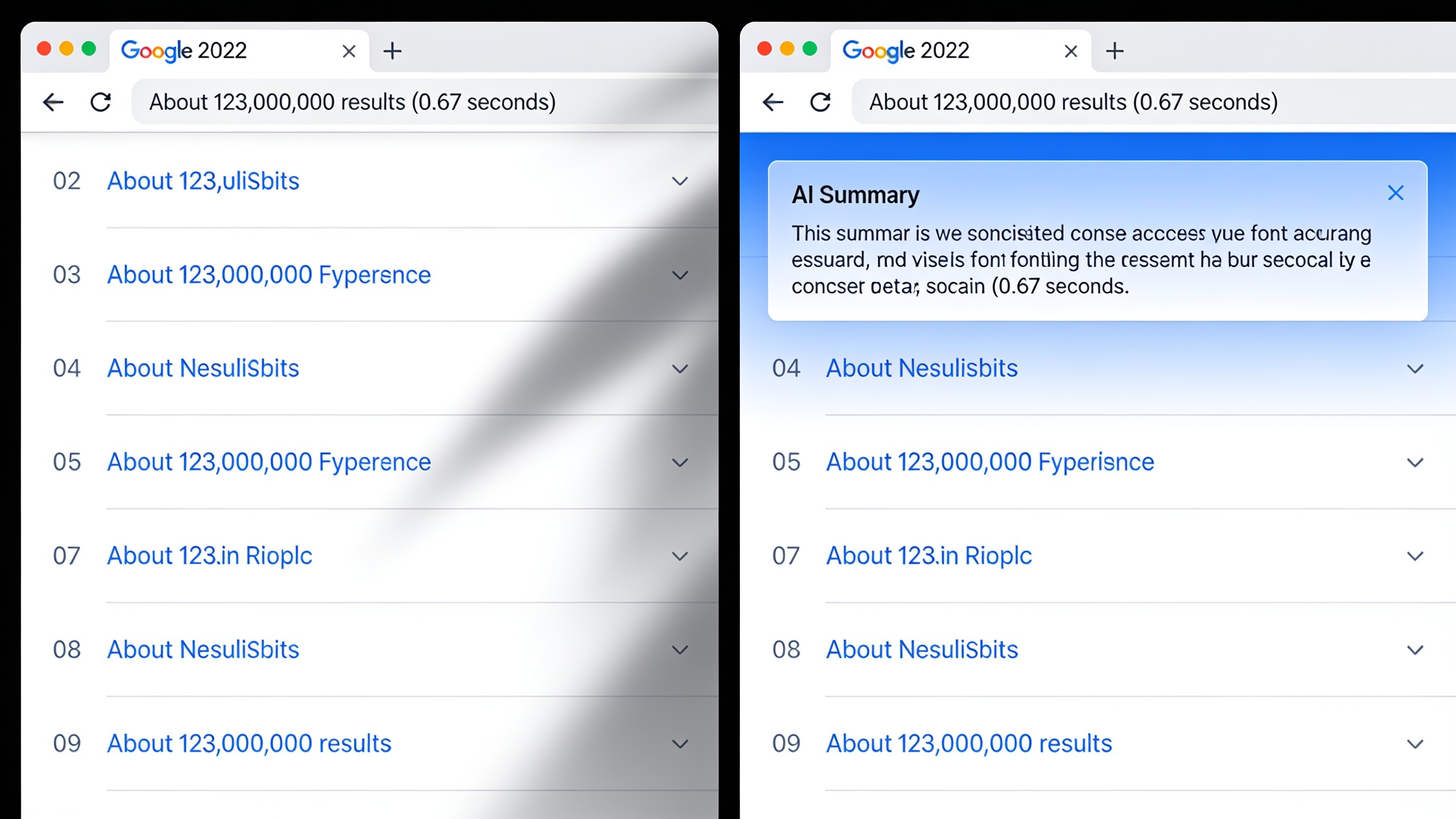
If you're an SEO, a content marketer, or you run a small business that lives and dies by organic traffic, this isn't some cosmetic tweak you can shrug off. It's a genuine structural shift in how search engines hand out information. So let's get into what these AI overviews actually are, what we know so far about how they're gutting (or not gutting) click-through rates, and what you can realistically do to stay visible now that they're clearly not going anywhere.
Table of Contents
- What Are AI Overviews in Search?
- How AI Overviews Search Results Are Changing Click-Through Behavior
- Why Google Introduced AI-Generated Search Results
- AI Overviews vs. Traditional Search Results: A Side-by-Side Comparison
- What Should Publishers Do to Adapt?
- How to Optimize Content for AI Overviews Search
- The Role of Structured Data and Authority Signals
- Frequently Asked Questions
What Are AI Overviews in Search?
AI Overviews are those AI-generated summaries that show up at or near the top of a Google results page, pulling from a bunch of different sites and blending them into one conversational answer instead of just handing you a list of links. Google rolled the feature out broadly in the US in May 2024 at Google I/O. It grew out of the thing they'd been testing before called the Search Generative Experience, or SGE, if you'd been following along.
Here's what makes it different from a plain old featured snippet. A snippet grabs one chunk from one page. An overview usually draws on several sources at once, mashes them into a paragraph-style answer, and cites a few of the underlying pages with those tiny linked icons. And it sits above everything else, so you can get your answer without scrolling. Without clicking a single thing, honestly.
Google's kept pushing on this through 2024 and into 2025, expanding it to more countries and more kinds of queries, and they've also added a chattier "AI Mode" that lets you ask follow-up questions like you're texting the search engine. Put it all together and you get Google inching away from "search and click" toward "search and read." The answer just lands on the page.
How AI Overviews Search Results Are Changing Click-Through Behavior
AI overviews are linked to fewer clicks heading out to actual websites, at least for a lot of informational searches, because people are getting their answer right there instead of visiting anyone's site. That doesn't mean clicks vanished. It means the queries most likely to trigger an overview (the simple factual, definitional, "how does X work" stuff) are exactly the ones where you'll watch your click-through quietly slide.
The research is starting to catch up to the vibes. Pew Research Center, in a 2025 analysis of Google search behavior, found that when an AI-generated overview showed up, people were less likely to click on any link at all, including the links inside the summary itself, compared to searches without one. They were also more likely to just end the session and go visit nothing. Which, if you talk to publishers, is exactly what a lot of them have been muttering about: impressions in Search Console holding steady or even climbing, while clicks on the same queries keep dropping.
Google, predictably, disagrees that this is broadly bad for publisher traffic. Their argument is that the clicks they do send are better quality, because the user already has some context before they land on your page. And honestly? Both things can be true at the same time. Fewer total clicks on certain query types, but maybe more qualified people on the ones that make it through. The real lesson for marketers is that CTR just isn't the reliable visibility thermometer it used to be. Your page can get cited and read inside an overview and never show up as a single session in your analytics.
Which Query Types Are Affected Most
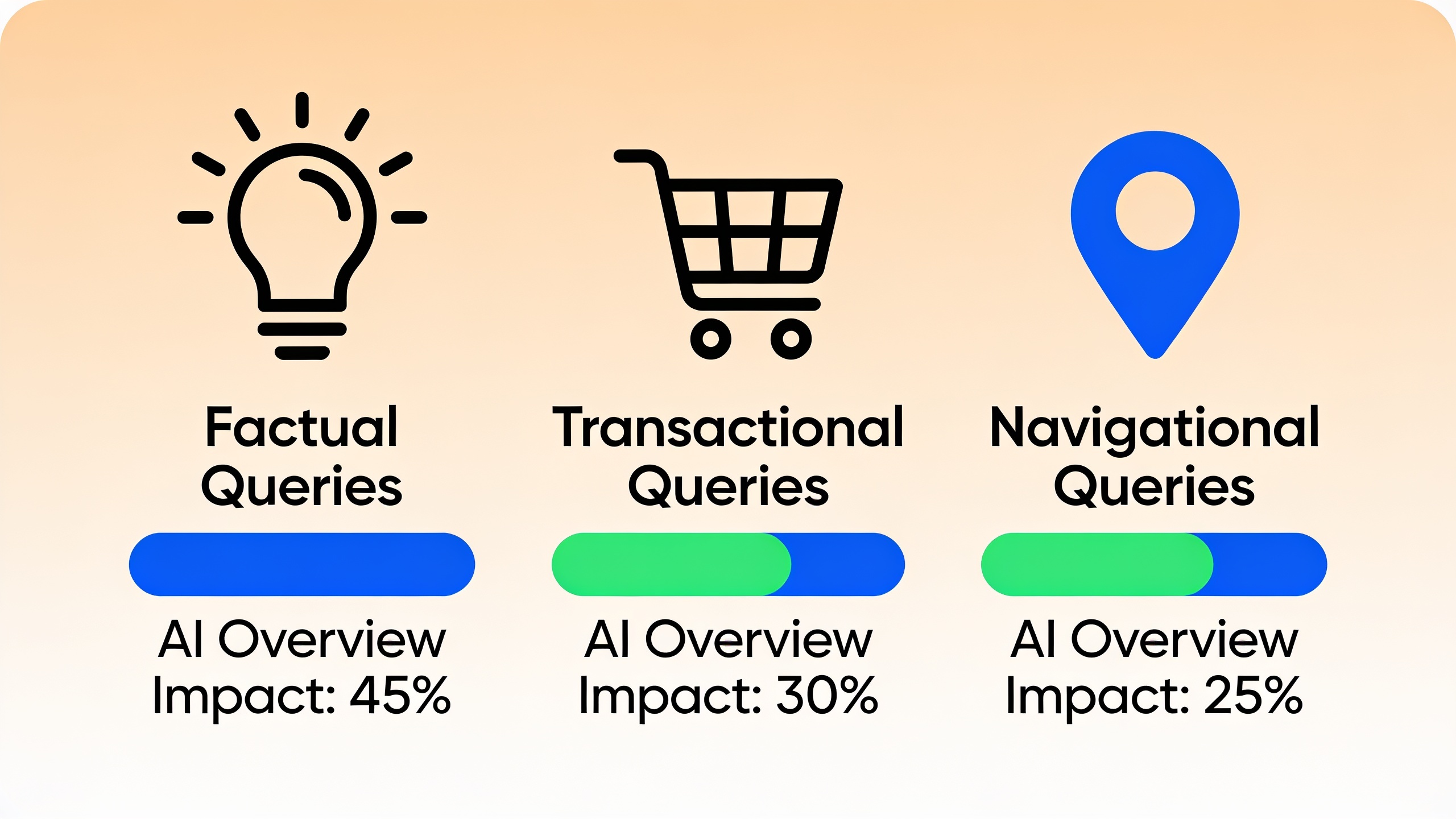
Not every search is in the blast radius. Short, factual, definitional queries (the "what is," "how does," "when did" stuff) are prime overview bait because there's a clean answer to extract. But commercial, local, and transactional searches, anything where someone's about to buy or navigate somewhere specific, those are much harder to fully answer with a summary. People still click through to product pages, local listings, and comparison content there like they always did.
Why Google Introduced AI-Generated Search Results
Google built AI-generated results to keep up with how people actually want to interact with information now: ask a question, get a synthesized answer, the way you would with ChatGPT or Gemini. The competition for search behavior isn't just other search engines anymore. It's AI chat interfaces. So Google's framed Overviews and AI Mode as a way to keep you inside its own backyard while still giving you that direct-answer experience you've gotten used to elsewhere.
Why does this matter for strategy? Because it tells you the direction of travel. This isn't a pilot program they'll quietly kill after enough people complain. Google keeps expanding it across markets and languages instead of pulling back, which means you should plan for AI summaries as a permanent fixture of the results page. Not a phase.
And the thing nobody loves hearing: the competition for visibility got wider. You're not just fighting other websites for the top organic slot anymore. You're fighting to be one of the handful of sources an AI decides to cite. Increasingly you're also fighting to be seen as trustworthy by assistants like ChatGPT, Claude, Perplexity, and Gemini when they answer people directly, completely outside Google's results page.
AI Overviews vs. Traditional Search Results: A Side-by-Side Comparison
The gap between a classic ten-blue-links page and an AI overview goes way past looks. It changes how much say you have over how your content shows up, and how a user decides whether you're even worth a click.
| Aspect | Traditional Search Results | AI Overviews / AI-Generated Search Results |
|---|---|---|
| Format | List of ranked links with title, URL, and meta description | Synthesized paragraph or bullet summary, often above organic results |
| Sources shown | One link per result, user chooses which to click | Multiple sources blended into one answer, cited via small icons |
| User control over wording | Publisher's own title/meta tag is shown as written | Google's AI rewrites and condenses the source content in its own words |
| Click likelihood on simple queries | Higher, since the user must click to get the answer | Lower, since the answer may already be visible |
| Best-suited query types | Navigational, transactional, local, complex research | Factual, definitional, comparative, "how/why/what is" |
| Publisher visibility metric | Click-through rate closely tracks visibility | Impressions and citation appearance matter even without a click |
| Ranking signals involved | Traditional relevance, backlinks, on-page SEO | Traditional SEO signals plus clarity, structure, and extractability for AI summarization |
Look at that table and you can see why SEO can't just sit still. A page that crushed it in the old model, earned that coveted top blue link, can still bleed visible traffic if an overview answers the question before anyone scrolls down to find it.
What Should Publishers Do to Adapt?
Want content like this running on autopilot for your own site? Try RobinRank free — AI-written, SEO-optimized articles generated and published automatically, no credit card required.
Publishers should stop obsessing over ranking for a single click and start focusing on becoming the source an AI trusts enough to cite, while also making sure their pages actually convert the smaller (but usually higher-intent) trickle of traffic that still lands. Which means you've got to measure success in more than one way now, because CTR on its own just doesn't tell the story anymore.
So what actually moves the needle? A few things. Watch impressions and average position in Search Console right alongside CTR, because clicks dropping while impressions stay flat or rise is a pretty loud signal that overviews are eating your clicks rather than your page losing relevance. Lean into content that still earns clicks even with an overview sitting on top of it: comparison pieces, original research, pricing breakdowns, anything that involves a decision instead of a plain fact. And shore up the technical basics, because AI systems tend to reward pages that are easy to parse. A site with sluggish load times, broken schema, or crawl errors is way less likely to get picked as a citation source. Running a proper technical SEO audit is a good starting point, since it flags the crawlability and speed problems that quietly cap how much of your site AI crawlers and bots can even reach.
If you've got an international footprint, revisit how you structure content across markets too, because Overviews and AI Mode are rolling out unevenly by country and language. Figuring out how to structure content for search around the world keeps you from being perfectly tuned for the US version of AI Overviews while going invisible in markets where the rollout, language support, or user habits look totally different.
This is also where steady, well-structured publishing volume earns its keep. RobinRank, for one, is built around a workflow that analyzes your niche and competitors, writes SEO-optimized articles with real internal and external links plus auto-generated schema markup, and publishes them straight to a connected CMS on a schedule. That kind of consistent output just gives AI systems more indexed, citable pages to pull from over time. It also runs a backlink exchange network, where publishing an article with a contextual link to another member earns Domain-Rating-weighted credits that later fund an inbound link back to you, which reinforces exactly the cross-site mentions both traditional search and AI answer engines lean on when they build a response.
How to Optimize Content for AI Overviews Search
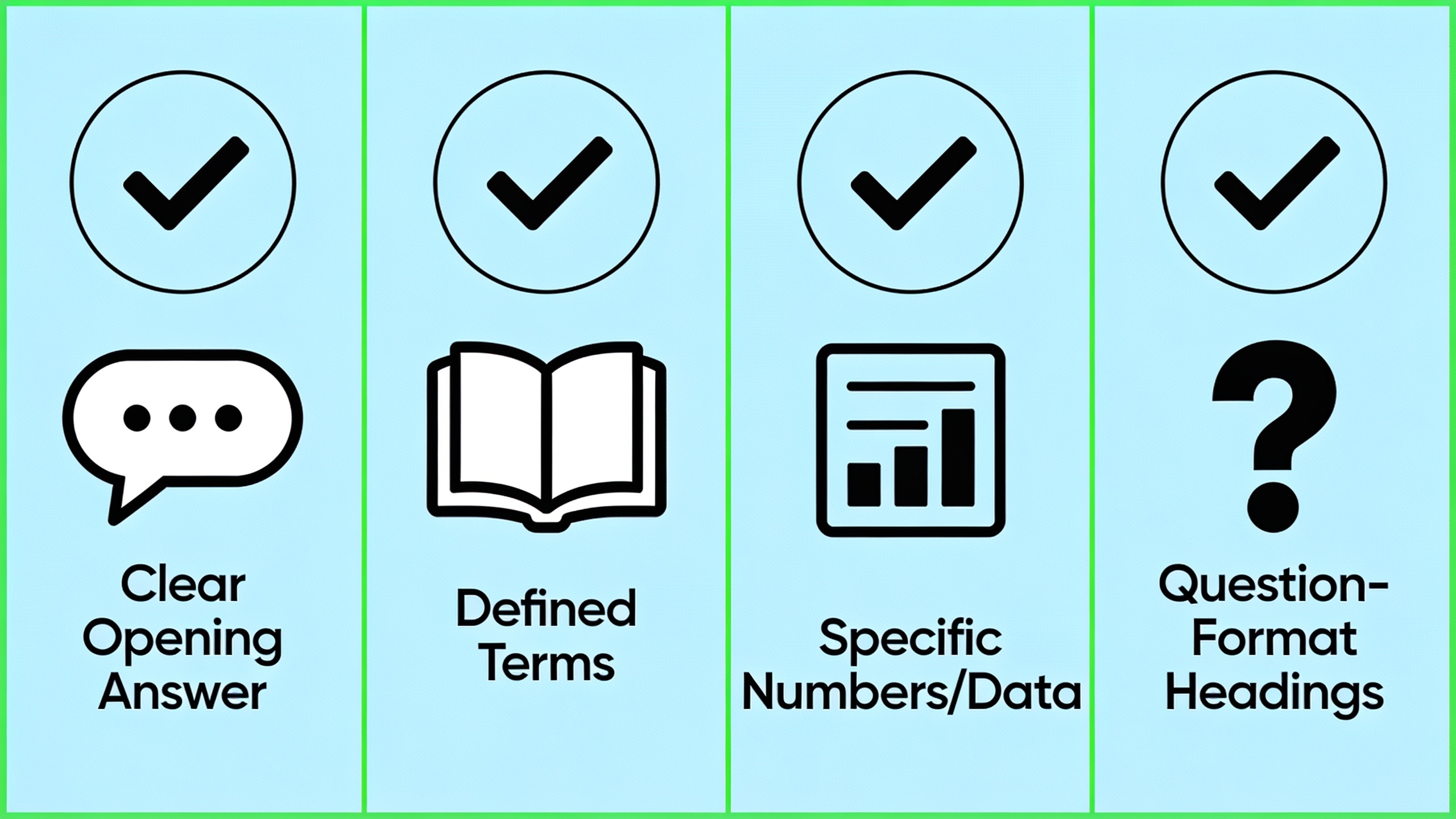
Optimizing for AI overviews means answering the question clearly and completely near the top of the page, then backing that answer up with specific, checkable detail an AI can lift with confidence. These summarization systems tend to favor content that states a direct answer in plain language first, then adds the nuance, because that shape is easy to extract without mangling the meaning.
In practice that boils down to a handful of habits. Open your sections with a straight one- or two-sentence answer to whatever question the heading implies. Define your key terms outright instead of assuming everybody already knows them. Use actual numbers, named studies, and dates instead of squishy phrases like "many experts believe." And phrase headings as real questions ("How much does X cost?" "What is Y?") since that mirrors how people actually type queries and how AI parses pages for the answer text.
One more thing that helps: keep each section able to stand on its own. AI often yanks a paragraph or two out of context to build a summary, so a section that only makes sense if you've read the three paragraphs above it is a worse citation candidate than one that works alone. Original data, first-party examples, clearly sourced stats, that's the stuff an AI can't just grab off a competitor's page. And that uniqueness is a big part of whether you get cited at all versus quietly summarized into oblivion.
The Role of Structured Data and Authority Signals
Structured data and independent authority signals matter for AI-generated results because they hand both search engines and AI systems clearer, machine-readable proof of what your page is about and whether it can be trusted. Schema markup (Article, FAQ, Product, whatever fits) won't guarantee you a citation, but it cuts down the ambiguity about what your content is actually saying, which makes clean extraction a whole lot easier.
Authority signals do the heavy lifting next to that. AI assistants tend to lean on indexed pages, recognized entities, and independently verifiable sources when they build an answer, rather than trusting some lone self-published claim floating out there on its own. That's a big reason backlinks from genuine, relevant sites still count in an AI-driven landscape. They're basically third-party confirmation that your claims hold up elsewhere on the web, not just because you said so.
And that's the whole logic behind treating link building and content publishing as one connected thing instead of two separate to-do lists. A tool like RobinRank wires them together on purpose: it auto-generates JSON-LD schema for every article it publishes, drops real internal and external links into the content, and runs its verified backlink exchange so outbound links to other community sites get checked for being live before any credit changes hands. That keeps the resulting link profile rooted in actually-published, verifiable pages instead of the usual junk directory placements.
Frequently Asked Questions
So is SEO just dead now?
No. AI Overviews change which queries drive clicks and how you measure visibility, but the underlying signals search engines use (relevance, structure, authority, technical crawlability) are the same ones that decide whether your page gets cited inside an AI summary anyway. SEO shifts in emphasis. It doesn't disappear.
Will every single search eventually show an AI overview?
Probably not. Overviews show up most on factual, definitional, and comparative queries where a synthesized answer is genuinely helpful. Highly transactional, local, and navigational searches have historically been much less likely to trigger a full summary, since people running those searches want to do something, not read an explanation.
How do I even know if AI Overviews are hurting my traffic?
Compare CTR trends against impressions and average position in Search Console for the same queries over time. If impressions are flat or growing while clicks slide on informational queries, that's exactly the fingerprint of AI Overviews (or other AI results) soaking up clicks that used to come to you.
Does getting cited in an AI Overview count as a backlink?
Not really, no. A citation inside an overview is usually a small linked icon, not a standard hyperlink your SEO tools count, and it doesn't necessarily carry the same link equity as an editorial backlink from another site. It can still get your brand in front of people and pull the occasional click, but don't treat it as a stand-in for real backlinks in your link-building plan.
Should I just write shorter content to fit inside the summaries?
Nope. The goal was never brevity, it's clarity. A page can be long and thorough and still open each section with a direct, extractable answer. AI systems tend to pull short, well-defined passages out of longer, well-structured pages. They don't just reward short pages across the board.
Search is clearly heading toward a world where answers get delivered, not just linked to, and that rewards publishers who treat clarity, structure, and verifiable authority as the actual point instead of an afterthought. The sites that keep showing up, whether as a clicked link or a cited source inside a summary, are going to be the ones that made it dead easy for both people and machines to understand exactly what they know and why anyone should believe them.
Ready to stop writing content by hand? Start your free RobinRank trial and get a full month of SEO-optimized articles published on autopilot.