How Many Backlinks to Rank on Page One? The Real Answer

So let me be straight with you: there's no fixed number. None. The amount of backlinks you need depends entirely on how competitive your keyword is, how strong the pages already sitting on page one are, and whether your links are actually better than theirs. That's it.
But "it depends" is a useless answer to walk away with, so I'm going to break down what actually matters. How many links you realistically need across different competition levels, why quality beats quantity almost every single time, how this shifts depending on your niche, and what to do instead of obsessively counting links. I'll also touch on how RobinRank handles link building differently, through verified, human-to-human exchanges instead of the usual spray-and-pray outreach or sketchy paid placements.
Table of Contents
- How Many Backlinks Do You Need to Rank on Page One?
- Backlinks Needed for SEO: Quality vs. Quantity
- Backlink Benchmarks by Competition Level
- Do Backlink Needs Change by Niche or Industry?
- What Actually Makes a Backlink "Count"
- How to Build Backlinks Without the Cold Outreach Grind
- Common Mistakes When Chasing Backlink Numbers
- FAQ: How Many Backlinks to Rank
How Many Backlinks Do You Need to Rank on Page One?
There's no universal number of backlinks that guarantees page one. The real target is "enough relevant, trustworthy links to outweigh what the current top results already have," which could mean zero extra links on a sleepy long-tail query, or dozens of high-authority links on a cutthroat commercial term.
Here's why. Google treats backlinks as one signal among many, alongside content relevance, whether you match search intent, page experience, and topical authority. Ranking isn't absolute, it's relative. So the "how many backlinks" question only makes sense once you compare your page against the specific pages already ranking for your exact keyword. A local service page going up against three thin, outdated competitors might rank with a couple of decent links, or honestly none at all, just on the strength of good on-page content. Meanwhile a national SaaS keyword competing against brands with years of accumulated link equity? That's a completely different mountain to climb.
Tools like Ahrefs and Semrush have found again and again that there's a correlation between how many unique referring domains point to a page and where it ranks, especially for competitive, high-volume keywords. But correlation isn't causation, and this is where people trip up. Plenty of pages rank beautifully with barely any backlinks because they nail search intent better than anything else out there. And plenty of pages with hundreds of links still can't crack page one because the content itself is weak or stale. So treat backlink count as a competitive benchmark to study. Not a number to chase blindly.
Backlinks Needed for SEO: Quality vs. Quantity
One link from a relevant, trusted, on-topic site will usually beat ten links from low-authority or unrelated domains. This is the single most important shift in thinking for anyone trying to guess how many backlinks they need. The real question isn't "how many links," it's "how much authority, relevance, and trust do I need," and count is just one variable buried inside that.
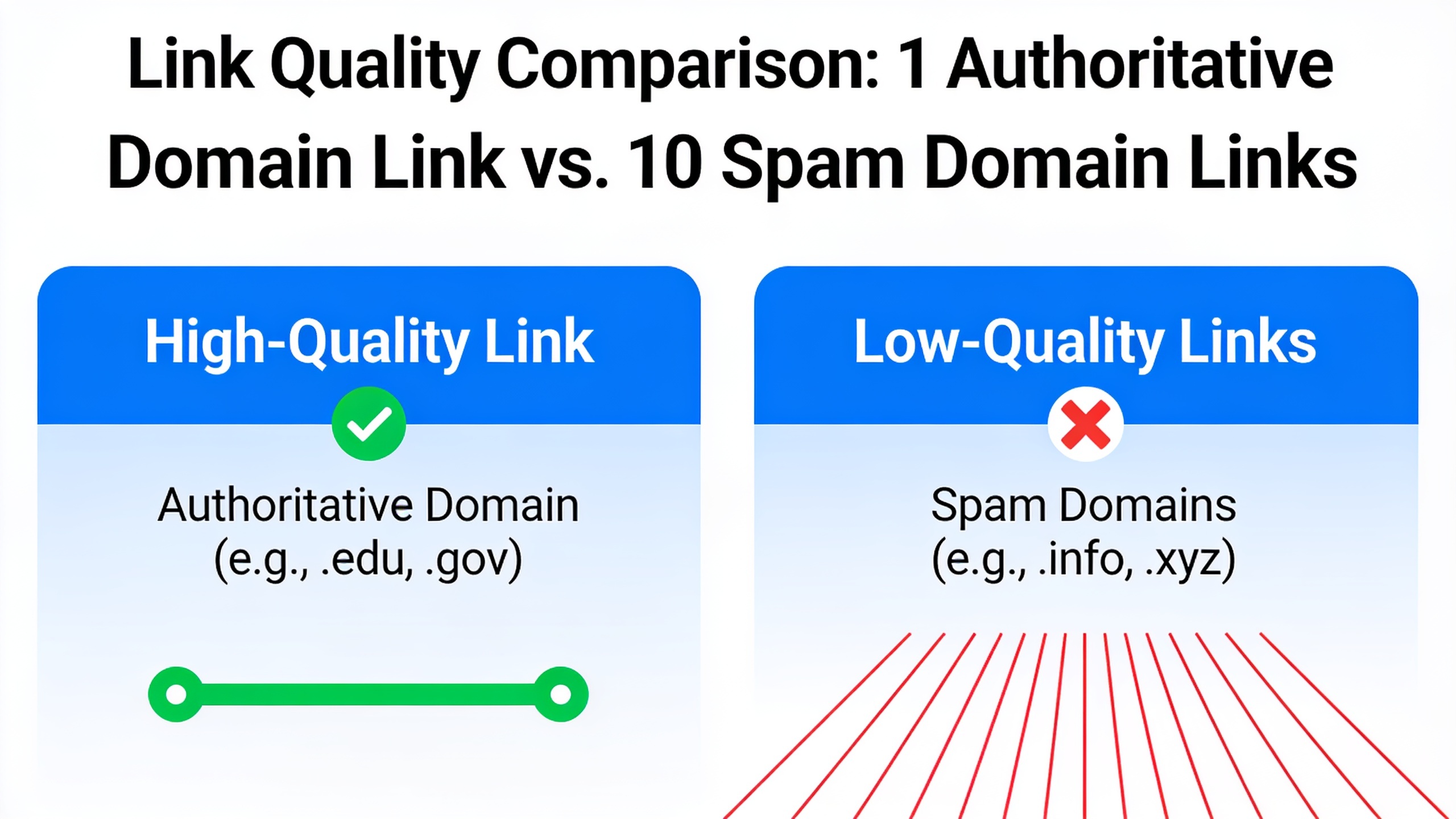
When people talk about link quality, it really comes down to four things. First, the authority of the linking domain, which tools approximate with metrics like Ahrefs' Domain Rating or Semrush's Authority Score. Second, topical relevance, because a link from a site in your niche (or one next door to it) carries more contextual weight than a random link from an unrelated industry. Third, placement, since a link sitting naturally inside body content on a page people actually read beats one shoved into a footer or sidebar nobody looks at. And fourth, trust and safety signals. Links from sites with real ownership, real content, and no spam history are viewed way more kindly than links from link farms, PBNs, or those thin doorway pages built solely to swap links.
This is exactly why two sites targeting the same keyword can have wildly different link counts and still rank neck and neck. Sometimes the one with fewer links wins. A page with 15 backlinks from respected, relevant sites in its niche can absolutely outrank a page sitting on 80 links from unrelated junk domains. So if you're mapping out a link plan, do quality first. Figure out who's already linking to the top-ranking pages for your keyword, size up how relevant and authoritative those domains are, and use that as your floor instead of trying to out-count everyone link for link.
Backlink Benchmarks by Competition Level
Competition level, not industry, is the single biggest driver of how many backlinks you actually need, because it reflects how strong the existing page-one results already are. Low-competition, long-tail, or informational stuff often needs very few extra links, sometimes none if your on-page game is strong. Highly competitive commercial or national keywords usually demand a bigger, higher-authority profile built over months or even years.
The table below lays out the general patterns SEO folks tend to see when digging through the link profiles of ranking pages across different tiers. These are directional ranges based on common practice, not a guaranteed formula. Always, always benchmark against your own SERP.
| Competition Level | Example Query Type | Typical Referring Domain Range Seen on Page One | Link Quality Emphasis |
|---|---|---|---|
| Low | Long-tail, local, informational ("how to clean a cast iron pan") | Often single digits, sometimes near zero beyond internal links | Content depth and intent match matter more than link volume |
| Medium | Niche commercial, mid-volume ("best hiking backpacks for beginners") | Roughly 10–30 referring domains | Relevance and niche authority start to matter significantly |
| High | Competitive commercial, broad B2B/B2C ("project management software") | Often 50+ referring domains, frequently from high-DR sites | High-authority, topically relevant links become close to essential |
| Very High | National finance, insurance, YMYL topics | Can run into the hundreds of referring domains from established, trusted domains | Trust signals, brand mentions, and editorial-quality links dominate |
A couple of honest caveats. These ranges describe patterns across a lot of SERPs, not a checklist to grind through. A page can beat these ranges with weaker content, or completely flop despite hitting the numbers if the links are junk or off-topic. Before you set a target, run your actual keyword through a backlink tool and study the referring domains of the top five pages. That real snapshot beats any generic table, including this one.
Do Backlink Needs Change by Niche or Industry?
Yes, and meaningfully so, because different industries have different baseline link availability, editorial norms, and competitive heat. A tightly regulated, high-trust space like finance or health tends to demand more links from clearly authoritative sources, while niche hobbyist or local-service categories can often rank with far fewer, more targeted ones.
E-commerce and product pages are the tricky ones here. They struggle to earn organic backlinks because let's be honest, nobody links to a product listing the way they'd link to a guide or a study. Product pages just aren't naturally "linkable." So for product-heavy sites, your link strategy has to lean on strong on-page fundamentals too, structured data, clear product info, internal links flowing down from higher-authority category or guide pages. If you're building product-page SEO from scratch, the Ecommerce SEO Checklist: 20 Steps to Rank Product Pages Higher walks through the technical groundwork that makes every backlink you do earn pull more weight.
B2B SaaS and software, on the other hand, are relatively link-rich. Comparison content, "best tools for X" roundups, integration partnerships, they all spin off natural linking opportunities. But the competition for the head terms is brutal, often needing dozens of relevant referring domains before you're in the game.
Local service businesses (plumbers, dentists, salons) usually get away with far fewer total backlinks than national brands, simply because their competitive pool is smaller and geographic. A handful of links from local directories, the chamber of commerce, community sites, and a bit of local press can be enough to push a well-optimized page onto page one for a local search.
And then you've got content-heavy niches like travel, finance, and health, which reward sites that pair strong editorial backlinks with genuinely useful, well-structured content. That includes your visuals. In visually driven niches, images and product photography can become their own source of organic visibility and referral traffic, so it's worth pairing your link strategy with the fundamentals in 5 Image SEO Tips That Actually Move the Needle. Image search and rich results can genuinely supplement your link-driven gains.
Want content like this running on autopilot for your own site? Try RobinRank free — AI-written, SEO-optimized articles generated and published automatically, no credit card required.
The practical takeaway? Don't borrow a benchmark from a different niche. A "50 backlinks" target that fits a competitive SaaS keyword is overkill for a local service page and nowhere near enough for a national YMYL topic like a mortgage comparison page.
What Actually Makes a Backlink "Count"
A backlink actually counts toward your rankings when it's a live, crawlable link from a real, trusted page that search engines can find and connect to your target URL. Not every link you land clears that bar, and a fair few paid or spammy ones do more damage than good.
Before you chalk up any single link as real progress, run it through a few checks. Is it live and verifiable? Links get removed, de-indexed, or slapped with nofollow/noindex tags that kill their SEO value. Auditing whether your placements are still actually live is basic housekeeping that people skip constantly. Is the linking domain real and safe? Domains built purely to spit out outbound links (link farms, PBNs) carry heavy spam risk, whereas a site with real content and a genuine footprint is a far safer, more durable source. Is the anchor and placement natural? A relevant link inside the body of a related article carries more signal than one stuffed into a sitewide footer.
And here's one people miss: is the domain metric even meaningful? Domain Rating is useful for quick triage, sure, but it can be juiced artificially. DR "borrowed" from a giant parent platform (think a subdomain on some massive site) can wildly overstate how authoritative the specific page linking to you really is. Worth checking whether that DR reflects the actual linking domain's own muscle or just a shared platform score.
This is exactly where a lot of link-building offers fall apart. Marketplaces and brokers selling placements in bulk often can't promise the link stays live, that the site is genuinely owned and maintained, or that the DR they're waving around is honest and not borrowed. Judge any link-building approach against these questions, not just the price per link.
How to Build Backlinks Without the Cold Outreach Grind
The most sustainable way to build the backlinks you need without torching weeks on cold outreach is to connect directly with real site owners in your niche and swap relevant, verified placements, instead of blasting mass emails or trusting anonymous paid marketplaces.
Traditional link building basically boils down to three flavors: firing off hundreds of cold emails and praying for a 2% response rate, buying links from marketplaces of mystery quality, or spending months nurturing relationships one guest post at a time. All three can work. But they're slow, exhausting, or straight-up risky if the sites turn out to be garbage.
RobinRank does it differently by running as a manually reviewed direct link exchange network. No cold outreach. Instead, site owners browse a directory called Discover, filter it by niche and Domain Rating, find a relevant site, and request a placement directly from the person who owns it, offering a reciprocal link back where it makes sense. Every listing is an actual site owner, not a broker or a marketplace or a link farm, and every site gets reviewed by hand before it's let into Discover, usually within one business day. That hand-review exists specifically to keep out PBNs, farms, and throwaway domains.
Once a placement goes live, RobinRank crawls the page, confirms the href is correct, and keeps checking the link weekly. Which directly solves that nagging "is this link still live and real" problem that haunts so much of link building. It also pulls Domain Rating from Ahrefs and flatly rejects DR that's been borrowed from a bigger parent platform, so the authority signals you're weighing stay honest.
For teams trying to work out how many backlinks they need and then actually go get them, this flips the math. Instead of sending 200 outreach emails to scrape together 5 usable links, you're negotiating directly with owners who are also hunting for relevant reciprocal placements. A lot of the wasted effort just evaporates. RobinRank runs a 14-day free trial of its Pro plan with no credit card required, and after that Pro is $19 per month. That includes the ability to start link requests and messages, list unlimited websites in the network, browse and filter Discover by niche and DR, automatic placement verification, and a site profile with link guidelines.
Common Mistakes When Chasing Backlink Numbers
The biggest mistake in backlink strategy is treating a raw number as the goal instead of a diagnostic. Chasing "100 backlinks" without asking whether those links are relevant, live, or trustworthy almost always loses to a smaller pile of well-placed, relevant ones.
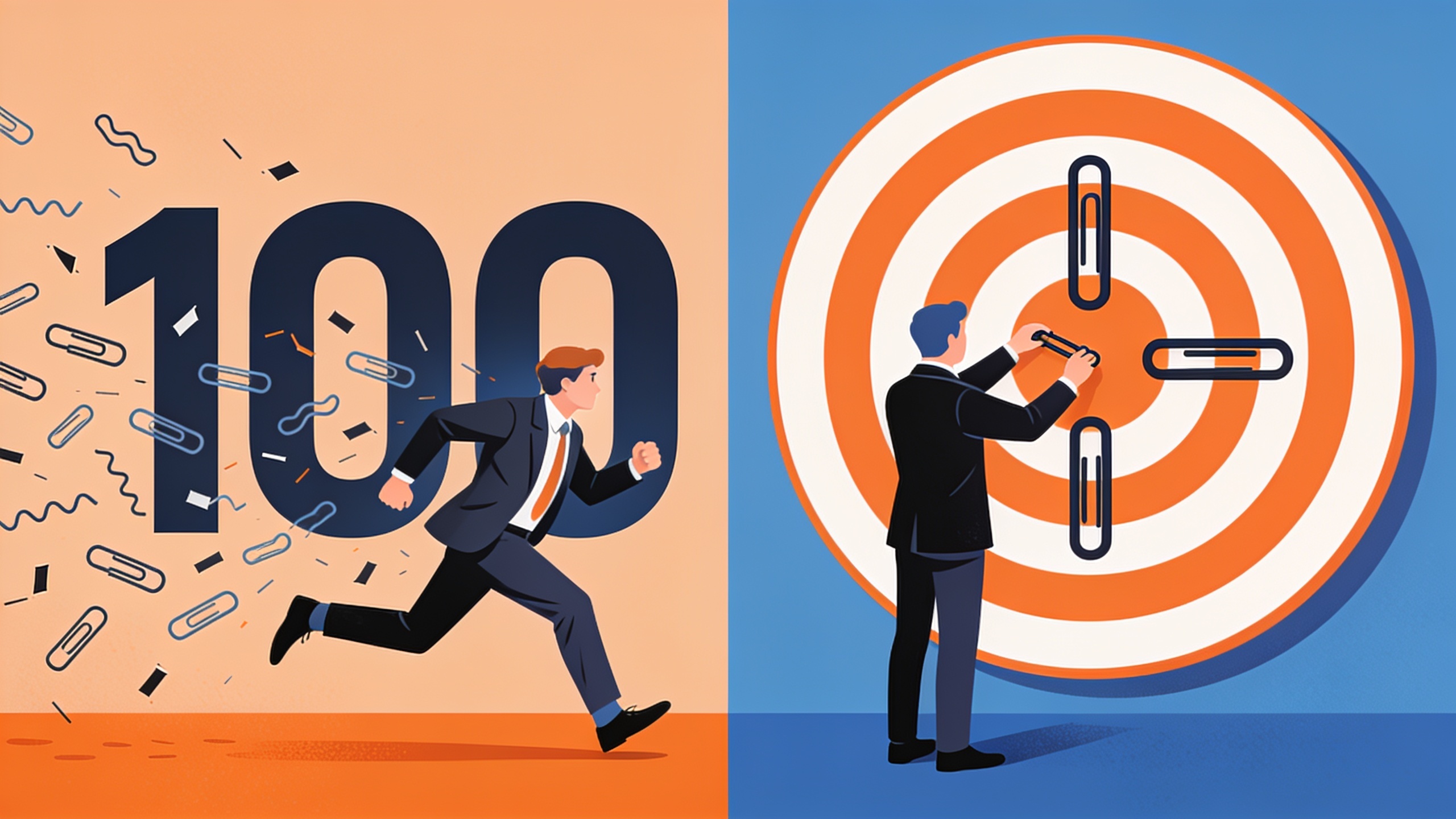
A few specific traps I see people fall into. They ignore the actual competitive set, slapping a generic "you need X backlinks" rule onto a keyword without ever checking what page one actually has. Pull up the top five pages and look at their referring domains before you set any target. They prioritize volume over relevance, when ten links from real sites in your niche with real traffic will do more than fifty links from unrelated low-authority domains. Sometimes that fifty-link binge actively trips spam-risk flags instead of helping you.
Then there's buying links from unknown marketplaces, which carries genuine risk. The site could be a PBN, the link could vanish the second your payment clears, and the DR they showed you might have nothing to do with the actual linking page's authority.
People also neglect their on-page fundamentals while they're off chasing links. Backlinks amplify a page that's already well-optimized for its query. They rarely rescue thin content, poor structure, or a page that misses search intent. Content quality, internal linking, and technical SEO have to be in place first. Full stop.
And two more. They don't verify links stay live, forgetting that pages get redesigned, content gets deleted, and a link you counted six months ago that's since disappeared contributes exactly nothing now. Periodic audits matter. Finally, they copy benchmarks across niches, which I already ranted about, but it's worth repeating: what a competitive SaaS keyword needs and what a local service page needs are entirely different scales.
FAQ: How Many Backlinks to Rank
Is there a minimum number of backlinks I need to rank on page one?
Nope, no fixed minimum. Some low-competition, long-tail queries rank with very few or even zero additional backlinks if the content nails search intent, while competitive commercial keywords might need dozens of relevant, high-authority links. Always benchmark against the specific keyword's current top pages, not a generic number someone quoted you.
Do more backlinks always mean higher rankings?
Not really. More links can help, but only when they come from relevant, trustworthy domains and sit there naturally. A page with fewer, higher-quality links frequently outranks one loaded up with low-authority or irrelevant junk.
How long before new backlinks actually affect my rankings?
Search engines need time to discover, crawl, and evaluate new links, so the impact usually shows up gradually rather than overnight. It varies by site and competition level. Honestly, it's far more useful to track ranking trends over weeks and months than to expect a jump the day after you land one link.
Are backlinks still important for SEO in 2024 and beyond?
Yeah, they still matter. Backlinks remain one of several signals search engines lean on to judge a page's authority and trustworthiness, sitting alongside content quality, relevance, and user experience. They're not the whole game, but link building is still a core part of most competitive SEO strategies, especially for commercial keywords.
What's a safer alternative to buying backlinks from marketplaces?
Swapping relevant, verified placements directly with real site owners, rather than buying links anonymously from unverified marketplaces, cuts the risk of ending up with spammy, unowned, or short-lived domains. Networks that hand-review sites before allowing placements, and that keep verifying links stay live afterward, deal with two of the biggest risks in traditional link buying.
Bringing It Together
"How many backlinks to rank" is never going to have one clean universal answer, because ranking is a moving target set by whoever's currently parked on page one for your keyword. The far more useful question is this: how does my link profile stack up against theirs in relevance, authority, and trust, and what's the smallest number of quality links that closes the gap? Benchmark against your real competitors. Prioritize relevance and legitimacy over raw count. And keep checking that the links you've already earned are still live and pulling their weight. Get those fundamentals right and the right number of backlinks tends to reveal itself.
Ready to stop writing content by hand? Start your free RobinRank trial and get a full month of SEO-optimized articles published on autopilot.