How to Write SEO Content That Ranks in AI Search Engines
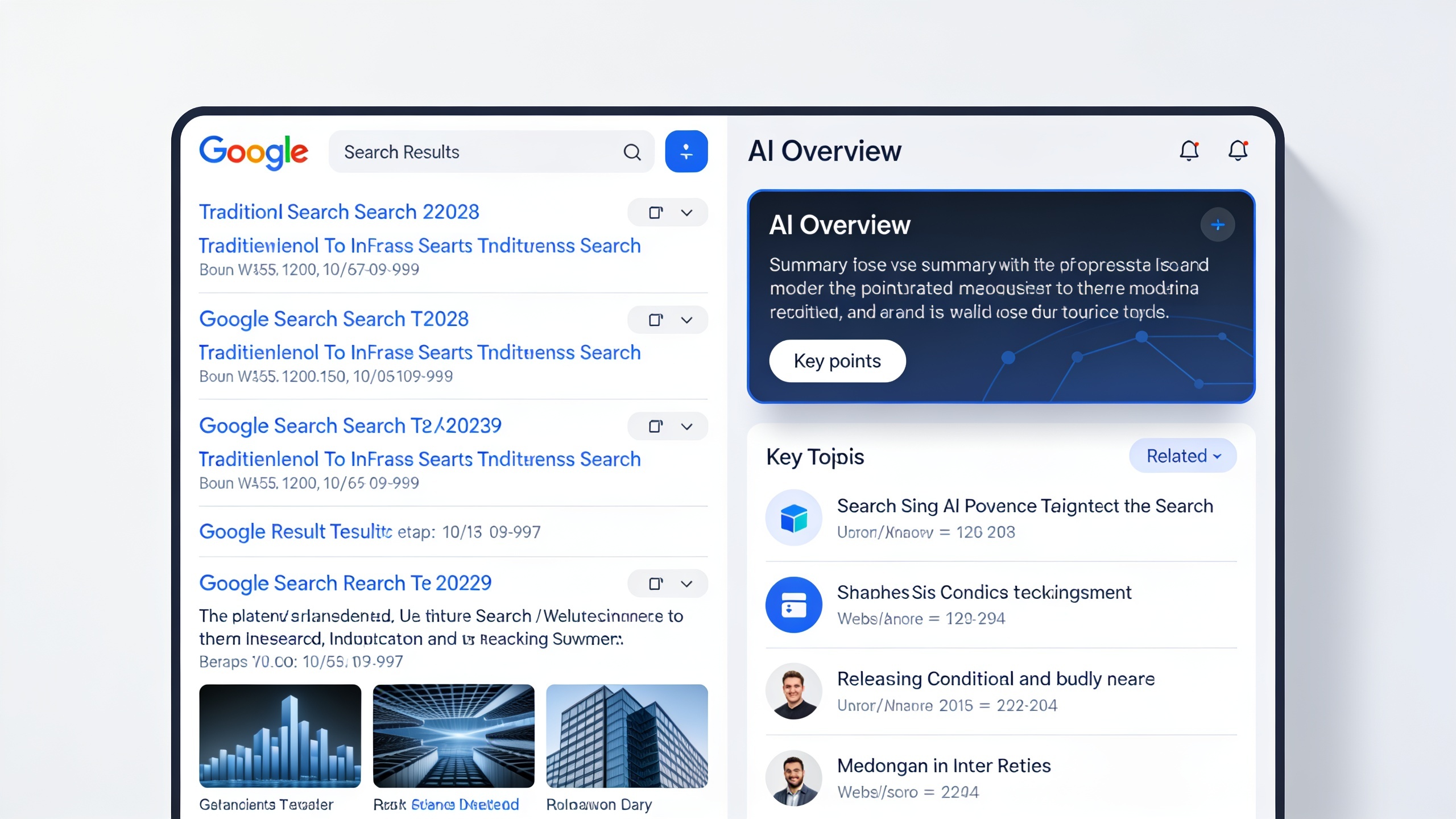
And that quietly changes what "ranking" even means anymore.
According to a 2024 BrightEdge analysis of Google's AI Overviews rollout, the pages most likely to get pulled into an AI summary were the ones already ranking in the top 10 organic results. But here's the wrinkle: the stuff that got quoted word-for-word tended to be structured very differently from your typical SEO copy. So you've got a strange dual goal now. Write for a machine to comprehend first, and a human to be persuaded second, without wrecking either one.
This guide walks through how to actually pull that off. What these engines are looking for, how to structure content so it gets extracted and cited, and the technical and authority stuff that props all of it up across Google's AI Overviews, ChatGPT search, Perplexity, and Gemini.
Table of Contents
- What Is AI Search Engine SEO?
- How Do AI Search Engines Choose What to Cite?
- Structuring Content for AI Extraction
- Writing Style That AI Models Prefer to Quote
- Technical Foundations That Support AI Visibility
- Building Authority and Citations Across the Web
- Measuring Whether You Actually Rank in AI Search
- Common Mistakes That Keep Content Out of AI Answers
- FAQ
What Is AI Search Engine SEO?
AI search engine SEO is the mix of content and technical practices that help generative systems (Google's AI Overviews, ChatGPT search, Perplexity, Microsoft Copilot, Gemini) find, understand, and quote your content when they're answering someone's question. It sits on top of the old SEO fundamentals you already know, crawlability, relevance, authority, but adds one new job: making your content dead easy for a language model to lift out as a clean, self-contained answer.
Old-school SEO optimizes for algorithms that match keywords and links to a query, then hand back a ranked list. AI search works differently. The "ranking" now happens inside a retrieval system you never see, and the "presentation" is a generated paragraph that blends several sources into one. So your content isn't just fighting to land on a results page. It's fighting to be one of the two or three sources the model decides to paraphrase.
Two behaviors basically define this whole game. First, these systems love content that answers the question right away, in the first sentence or two of a section. People call it "answer-first" writing, and yeah, it's as literal as it sounds. Second, they lean toward pages with obvious structural signals, headings, lists, tables, defined terms, anything that lets them grab a single fact without reading the entire page. Both of those are learnable. That's the good news. This isn't some black box you have to pray at.
How Do AI Search Engines Choose What to Cite?
AI search engines pick citations by blending the usual retrieval signals (relevance, authority, freshness) with a second question: how cleanly can this passage be lifted and reworded without breaking? In practice that means the pages getting cited most are already ranking decently in organic search, and they happen to contain tight, fact-heavy chunks of text.
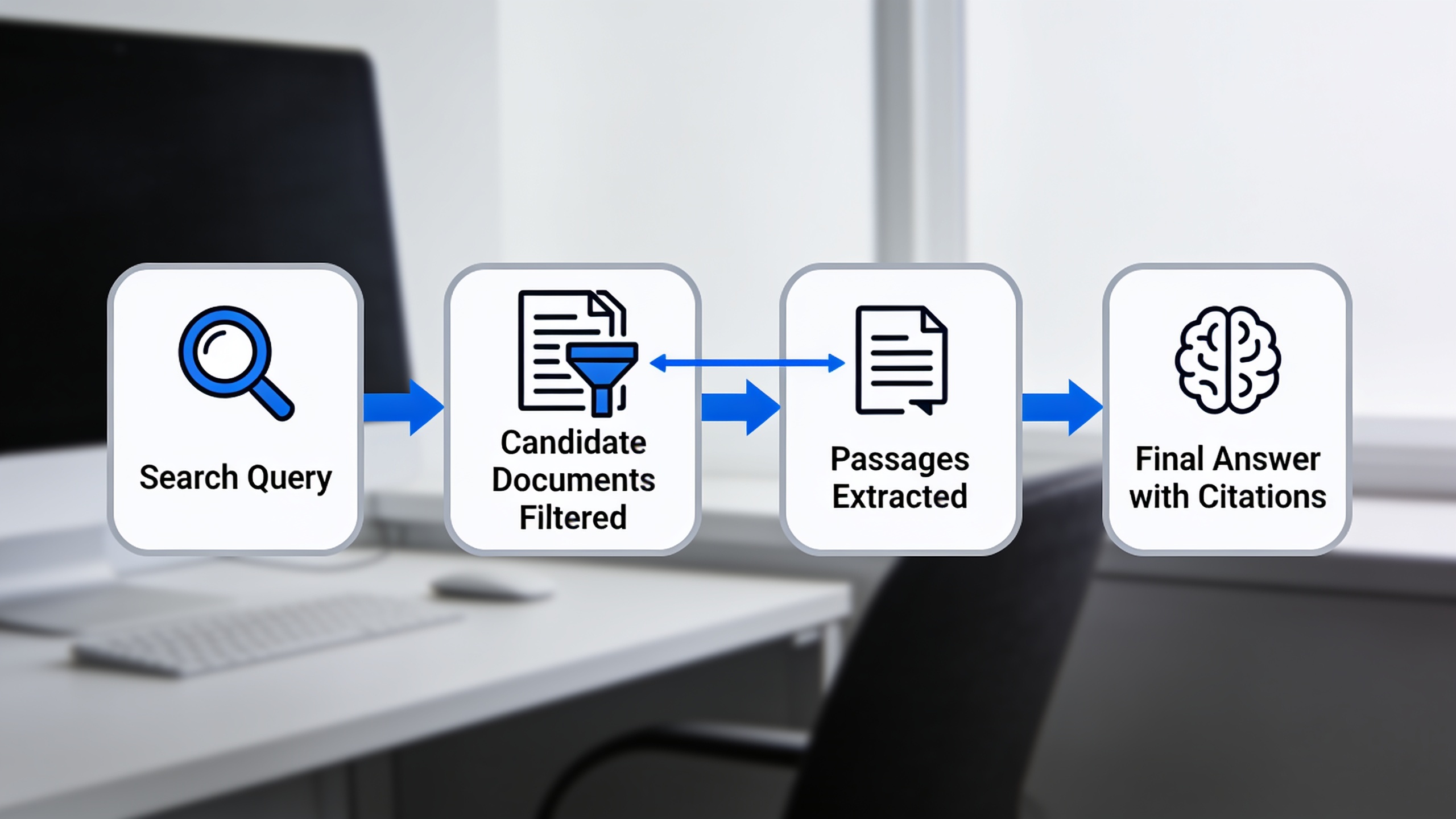
The engine under most of these products is called retrieval-augmented generation, or RAG. It grabs a shortlist of candidate documents using search-style methods, then feeds the relevant passages into a language model that writes the final answer. Which is exactly why Google has said out loud that AI Overviews pull from the same index and mostly the same ranking systems as regular Search. Translation: your classic SEO fundamentals, backlinks, page experience, topical relevance, still carry enormous weight.
What changes is that second stage. Once your page is in the candidate pool, the model gravitates toward passages that state a full claim in a sentence or two instead of building to a point across five paragraphs, that define any jargon the first time it shows up so the passage survives on its own, that use real numbers and named sources instead of mush like "many experts believe," and that live under a heading phrased close to how an actual person would ask the question.
Which is also why FAQ sections, glossaries, and comparison tables get quoted way more than their share. They're already shaped the way the model wants the answer to look. You've basically done its homework for it.
Structuring Content for AI Extraction
The single most useful thing you can do to rank in AI search is organize your article so every section works as a complete, quotable answer on its own. Models extract passages, not whole pages. So structure isn't a design preference here. It's the actual mechanism.
Lead With the Answer, Then Add Depth
Every H2 or H3 should open with a one or two sentence direct answer to whatever the heading implies. Save the nuance, the caveats, the "well, it depends," the examples, all of that goes in the sentences after. It's the inverted pyramid thing journalists have used forever, and it just so happens to be exactly what featured snippets and AI Overviews are built to grab.
Say you've got a section called "How Long Should SEO Content Be?" Don't open with a little history lesson on how content length has evolved over the years. Open with: "There's no universal ideal word count for SEO content; length should match search intent, with informational guides typically running 1,500–3,000 words and transactional pages often performing well under 500 words." Then go explain yourself. The answer comes first. Always.
Use Headings That Match Real Queries
Write at least some of your H2s and H3s as questions people actually type or say out loud. Stuff like "How much does AI search engine SEO cost to implement?" or "What's the difference between AI Overviews and traditional snippets?" Question headings bump up the odds a model matches your section straight to a user's query. Especially with voice and conversational search, where people naturally phrase things as full questions anyway.
Tables and Lists for Comparative Information
When you're comparing options, or steps, or attributes, a table beats a dense paragraph every time for a model trying to parse it. Here's a rough way to think about which format fits which kind of content.
| Content Type | Best Format for AI Extraction | Why It Works |
|---|---|---|
| Definitions | Single bolded sentence starting with "X is..." | Matches how models phrase direct-answer citations |
| Step-by-step process | Numbered list, 5–9 steps | Easy to extract as a sequence without losing order |
| Comparing tools or options | Markdown table with 3–5 columns | Allows side-by-side extraction of specific attributes |
| Statistics and data points | Inline sentence with named source and year | Reduces hallucination risk, increases citation confidence |
| Nuanced opinion or strategy | Short paragraph, answer-first structure | Preserves reasoning that a list would flatten |
Keep Sections Self-Contained
Kill the "as mentioned above" and "see the previous section" crutches. Because these systems often yank an isolated chunk of your page rather than the whole thing, a section that leans on earlier context can get quoted in a way that's confusing or flat-out wrong. Or the model just skips it and grabs a competitor's more self-sufficient paragraph instead. Either way, you lose.
Writing Style That AI Models Prefer to Quote
AI models tend to favor writing that's precise, fact-anchored, and stripped of filler, because that style is the least likely to get mangled when the content gets paraphrased. Vague, markety language is hard to compress into an accurate summary, so it gets passed over.
What that looks like in practice:
Define terms the first time you use them. Mention "retrieval-augmented generation" and explain it in the same breath instead of assuming everyone's up to speed. This one habit does more for portability than almost anything else, since the paragraph can get ripped out of context and still make sense.
Use specific numbers, not intensifiers. "Conversion rates improved by 34%" beats "conversion rates improved significantly" every single time. Specificity reads as credible to both humans and retrieval systems, and it's a lot harder for a model to misquote a hard figure than a squishy claim.
Name your sources right in the sentence. "According to HubSpot's 2024 State of Marketing report" gives an AI system something verifiable to hang onto. "Studies show" gives it nothing. A lot of these products are specifically tuned to prefer content that itself sources things well, so good citations become a trust signal that compounds on you.
And write in complete, standalone claims. If a sentence needs the one before it to make any sense, it's risky to quote. Quick test: read a single sentence out loud with no context. If it's confusing, rewrite it.
This is honestly where the whole human-versus-machine writing debate gets interesting. Plenty of teams now use AI drafting tools to nail this structure consistently at scale, then bring in human editors for the nuance and brand voice. If you're trying to figure out how to split that work, AI vs Human Writers: What Actually Ranks Better in SEO? digs into the real ranking differences. The short version? Structure and editorial quality matter way more than who tapped the keys.
Want content like this running on autopilot for your own site? Try RobinRank free — AI-written, SEO-optimized articles generated and published automatically, no credit card required.
Technical Foundations That Support AI Visibility
AI search engine SEO still rests on the same technical foundation as regular SEO: a crawlable site, fast pages, clean structured data. Models can't cite what they can't reach or parse, so this stuff isn't optional garnish. It's the floor.
Structured Data and Schema Markup
Schema.org markup, especially Article, FAQPage, HowTo, and Organization schema, helps search engines and AI crawlers figure out what your page is about and how it's laid out before they even read the prose. Now, Google has said structured data isn't a direct ranking factor for AI Overviews. Fine. But it's still a strong disambiguation signal that cuts the odds of your page getting misclassified or skipped during retrieval. Cheap insurance, basically.
Crawlability for AI Bots
There's a whole crowd of AI-specific crawlers indexing the web now beyond Googlebot: OpenAI's GPTBot, Anthropic's ClaudeBot, Perplexity's PerplexityBot, and Google-Extended, which governs Gemini and AI Overviews training access. If your robots.txt is blocking these, and a lot of sites did exactly that back in 2023 out of panic about AI scraping, you've quietly opted yourself out of visibility in those products entirely. Auditing your robots.txt for accidental blocks is one of the fastest, highest-leverage fixes on this whole list. Go check yours after you finish reading. Seriously.
Page Experience and Core Web Vitals
Core Web Vitals, Google's metrics for loading, interactivity, and visual stability, still feed into whether your page even makes the candidate pool AI Overviews draw from, since Google has confirmed those Overviews mostly reuse the standard Search ranking pipeline. A slow, janky page is less likely to rank organically to begin with, which caps your shot at getting cited no matter how sharp the writing is.
Choosing the Right Tooling
Because AI search optimization pulls in two directions at once, content structure and technical execution, a lot of teams weigh specialized platforms instead of duct-taping a stack together by hand. If you're shopping around, RobinRank vs Surfer SEO: Which Tool Fits Your Workflow? breaks down how an end-to-end automation platform differs from a content-scoring tool that still leaves the writing and publishing to you. That gap matters a lot if you're optimizing for AI search at scale without a full in-house content team.
Building Authority and Citations Across the Web
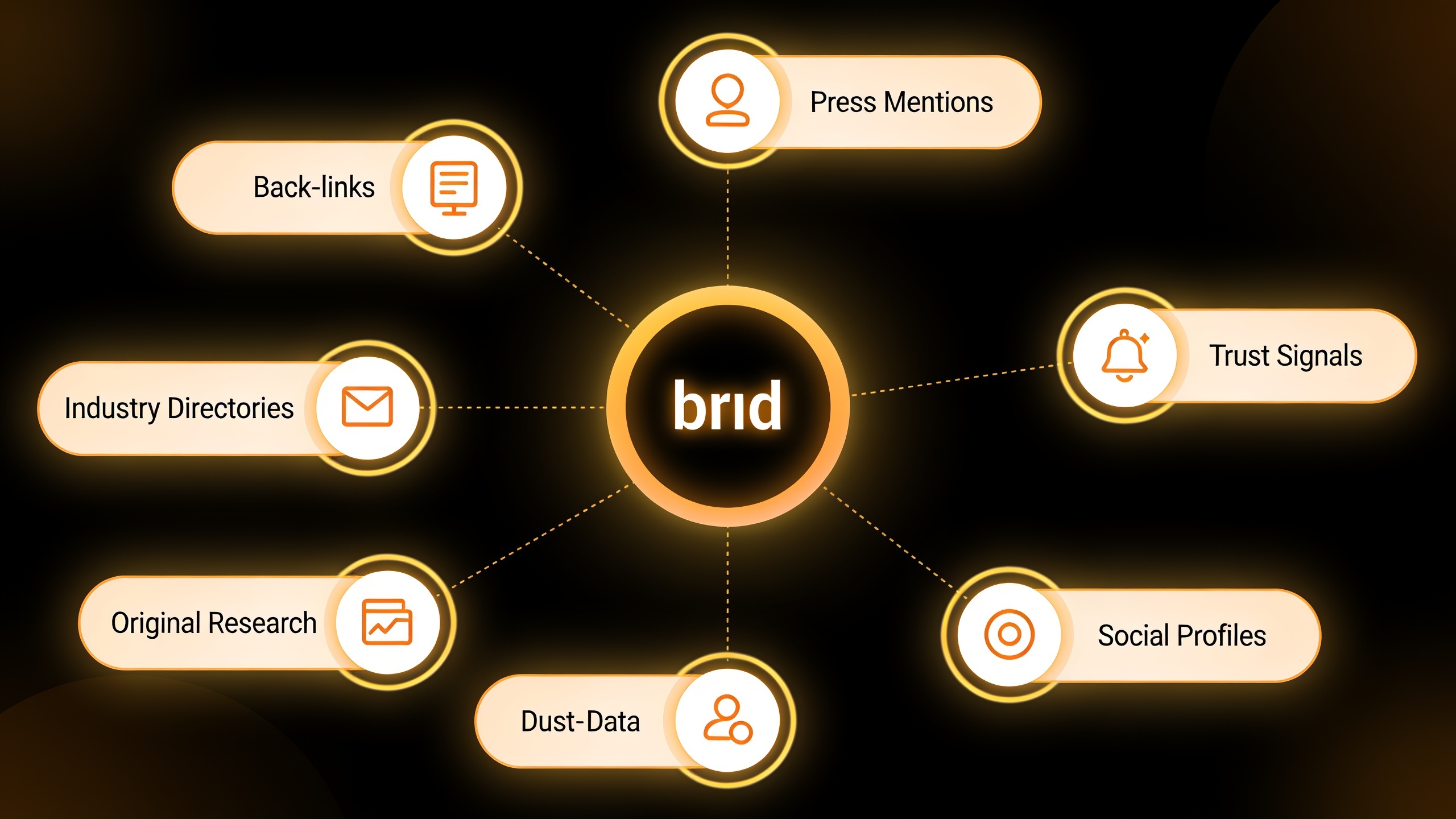
AI search engines care about how often and how consistently a brand, author, or claim gets backed up across independent sources, not just how well any one page is written. People call this topical authority or entity trust, and it works a bit like backlinks always have, except the "vote" now has to be verifiable somewhere else on the web, not just linked.
Two things really drive it.
First, backlinks and mentions still matter. Google has said over and over that off-page signals including backlinks feed the same ranking systems powering AI Overviews. A site with a healthy, relevant backlink profile is both more likely to rank organically and more likely to get treated as trustworthy when a model is choosing between several similar pages. Which is why link-building, including structured backlink exchange networks between relevant, non-competing sites, is still a core pillar of AI-era SEO and not some dusty legacy tactic.
Second, consistent entity signals build trust over time. When your company, product, or author byline shows up the same way across your own site, industry directories, press mentions, and social profiles, AI systems can confidently work out who you are and what you're actually an authority on. This matters even more for YMYL-adjacent topics like finance, health, and legal, where models are deliberately more cautious about which sources they'll touch.
Original data might be the most underused authority lever out there. Publish a proprietary stat, a survey result, a real case study, and suddenly you've created something a model can't find anywhere else. That makes your page the only possible citation for that specific fact, instead of one of forty interchangeable pages all rehashing the same generic advice. Nobody can steal a number that came from your own research.
Measuring Whether You Actually Rank in AI Search
You can measure AI search visibility by manually checking whether your brand or content gets cited in AI Overviews and chat answers for your target queries, and by watching referral traffic from AI platforms in your analytics. Unlike old-school rank tracking, there's no single tidy dashboard for this yet, so for now you're stitching a few methods together.
Manual query testing is annoyingly effective. Run your top 20–30 target queries through Google (watching for AI Overviews), ChatGPT search, and Perplexity on a regular schedule, and log whether your domain shows up as a citation. It's tedious, no way around that. But it's the most direct way to confirm what's actually happening instead of guessing.
Referral traffic segmentation in Google Analytics 4 can isolate sources like chatgpt.com, perplexity.ai, and gemini.google.com. More and more SEO platforms are breaking these out automatically now, since "AI referral traffic" is becoming its own reporting category right alongside organic and paid.
Emerging AI-visibility tools, a fast-growing little corner sometimes called "AI SEO" or "answer engine optimization" (AEO), try to automate all that query-testing at scale. They'll surface which competitors get cited for a given topic cluster and how often you show up next to them.
The real mindset shift is this: ranking in AI search isn't binary the way a SERP position is. A page might get cited in full, paraphrased in part, or used as background context with no link at all. Those are all different flavors of success, and they need different tracking. It's messier than a numbered position, and you kind of just have to make peace with that.
Common Mistakes That Keep Content Out of AI Answers
Most content doesn't get cited in AI search because it's low quality. It doesn't get cited because it's structured in ways that make extraction hard or risky for a model. Here are the usual suspects, and they're all fixable.
Burying the answer under a long intro is the big one. If a reader (or a model) has to scroll past three paragraphs of throat-clearing before hitting the actual answer, that section is less likely to get picked, even if the answer's great once you finally reach it.
Then there's the superlative problem. "The best," "the ultimate," "the only guide you'll ever need," with nothing to back it up, reads like an ad, not information. Models trained to prefer neutral, trustworthy sourcing tend to quietly demote copy that sounds like marketing.
Ignoring formatting entirely is another killer. A 3,000-word wall of text with no headings, no lists, no tables forces a retrieval system to guess where the useful passage starts and stops. So it grabs a competitor's cleaner section instead.
Thin, generic content on competitive topics is a losing bet too. If your page says basically what twenty other pages say, there's zero reason for a model to single you out. Original examples, real data, and an actual point of view are what break the tie.
And blocking AI crawlers by accident, which I already ranted about above, still catches people. A legacy robots.txt rule meant to block scrapers can quietly wall off GPTBot, ClaudeBot, or PerplexityBot and remove you from those ecosystems completely. Doesn't matter how good the content is if the bot never sees it.
FAQ
Does traditional SEO still matter if I'm optimizing for AI search?
Yep. Google has confirmed AI Overviews mostly draw from the same index and ranking systems as standard Search, so the fundamentals, backlinks, page experience, keyword relevance, Core Web Vitals, are all still necessary. AI search engine SEO layers on top of them. It doesn't replace them.
How is ranking in AI search different from ranking in a traditional SERP?
Traditional SERPs hand back a ranked list of links. AI search generates one synthesized answer citing a small number of sources. So you're competing to be one of a handful picked for extraction and paraphrasing, not for a numbered spot. That's exactly why answer-first structure and self-contained passages matter more than they used to.
Can AI-generated content rank in AI search engines?
Yes, quality and structure matter way more than who or what wrote it. Search engines have said they don't penalize content just for being AI-assisted; they penalize unhelpful, low-quality content no matter how it was made. Well-structured, fact-checked, AI-assisted content absolutely gets cited in AI Overviews and chat results.
How long does it take to see results from AI search optimization?
No fixed timeline, sorry. But since AI Overviews lean heavily on already-ranking pages, improvements usually track the same curve as traditional organic growth, often 3 to 6 months for competitive topics, plus a little extra lag while AI systems refresh their retrieval indexes and cached answers.
Do I need separate content for Google AI Overviews versus ChatGPT search?
Generally, no. The core moves, answer-first structure, clear definitions, specific data, self-contained sections, boost your citation odds across all the major AI search products. They all run on similar retrieval-and-generate architectures, even though the models underneath differ.
Here's what it comes down to. AI search engine SEO isn't some separate discipline bolted onto the old one. It's traditional SEO held to a higher bar for clarity, structure, and verifiable authority. The sites that keep showing up in AI Overviews, ChatGPT, and Perplexity answers are, almost without exception, the ones that were already investing in real expertise, clean technical work, and content built for humans first. Sharpen how you structure that content for machine extraction, and you put yourself in a spot to be the answer instead of just a link sitting underneath it.
Ready to stop writing content by hand? Start your free RobinRank trial and get a full month of SEO-optimized articles published on autopilot.