Koala.sh vs RobinRank: Which AI Writer Actually Moves Your Rankings?
Quick honesty check first: I'm writing this from RobinRank's side of the fence. That said, I've tried to keep it specific and fair rather than turning it into a sales pitch. You'll be able to tell the difference.
Table of Contents
- What Are Koala.sh and RobinRank?
- Feature-by-Feature, Side by Side
- How Each One Handles SEO
- The Backlink Question
- Does the Writing Actually Read Well?
- What's This Going to Cost Me?
- So Which One Do You Pick?
- Questions People Actually Ask
What Are Koala.sh and RobinRank?
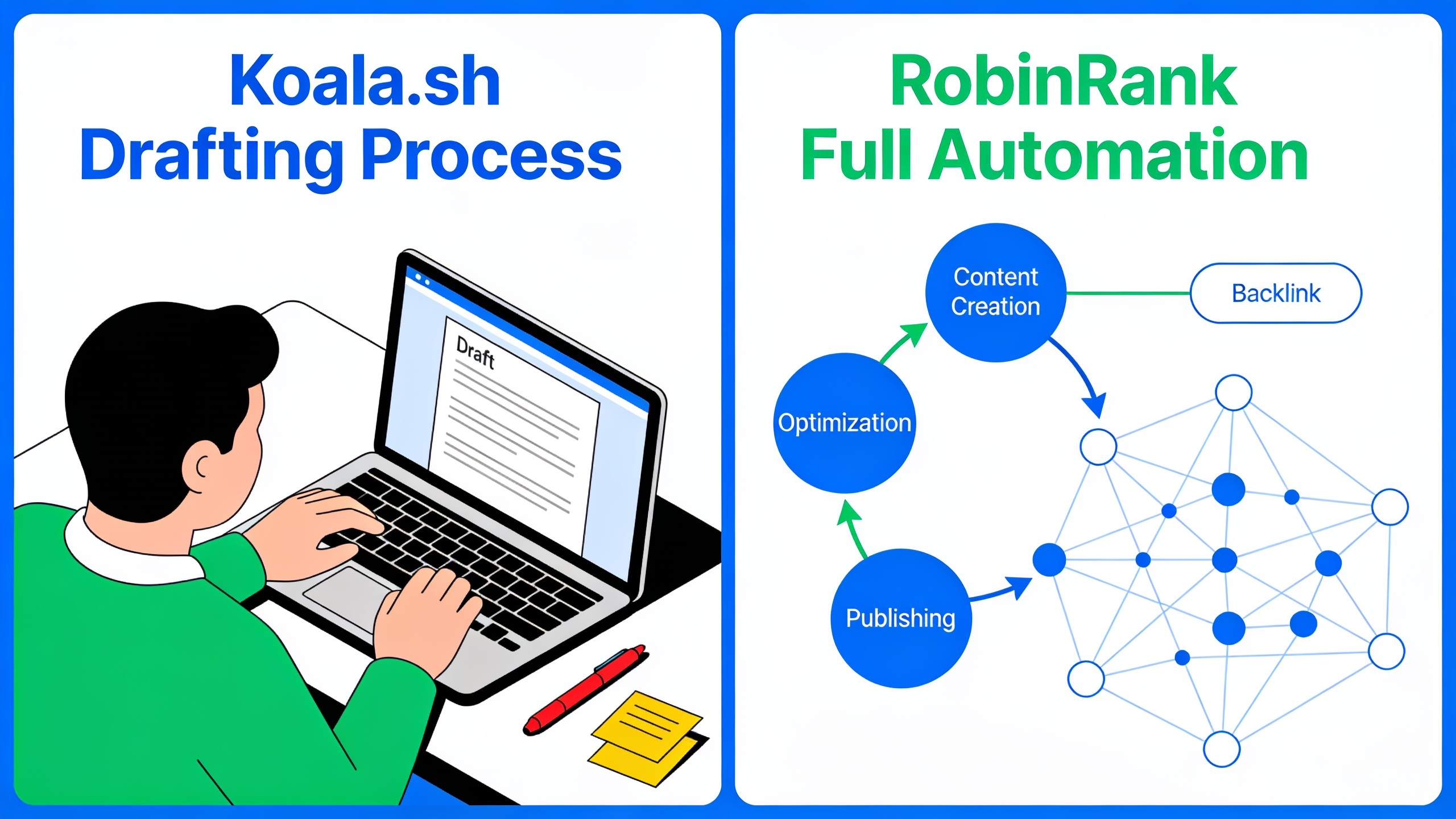
Koala.sh is an AI writing tool built to crank out long-form blog posts fast using large language models, with some SEO stuff baked in like keyword research and on-page scoring. RobinRank goes further. It writes, optimizes, and automatically publishes articles straight to your CMS, and it plugs your site into a natural backlink exchange network to build authority over time.
The real difference is scope. Koala.sh is a writing tool, plain and simple. You type in a topic, tweak a few settings, and out comes a draft that you then polish and post yourself. RobinRank is trying to be your whole organic growth setup: keyword targeting, drafting, on-page optimization, publishing directly to WordPress or Webflow, and hunting down backlinks through its network. And honestly, when people are shopping around and comparing AI writers, this scope thing matters way more than a feature checklist makes it look. It decides how much grunt work is still sitting on your plate after the AI clocks out.
Both tools chase roughly the same crowd. Solo bloggers, SEO agencies, scrappy startup marketing teams, small business owners who can't exactly afford a full content department. But the second you get past that first draft, the two workflows split hard.
Feature-by-Feature, Side by Side
The cleanest way to see the gap is to look at what each one actually does for you versus what it dumps back in your lap. Here's the breakdown.
| Feature | Koala.sh | RobinRank |
|---|---|---|
| AI article generation | Yes, long-form blog posts | Yes, long-form and structured SEO articles |
| Built-in keyword research | Basic keyword suggestions | Integrated keyword and SERP-intent analysis |
| On-page SEO scoring | Yes, real-time score | Yes, automated optimization against ranking factors |
| Auto-publishing to CMS | Limited (manual export common) | Direct auto-publish to WordPress, Webflow, and more |
| Backlink building | Not included | Built-in natural backlink exchange network |
| Internal linking automation | Manual | Automated internal link suggestions |
| Bulk content generation | Yes | Yes |
| Content refresh / updates | Manual re-run | Ongoing optimization support |
| Best suited for | Fast drafts, casual bloggers | Full SEO content pipelines, agencies, growing businesses |
You can see the split right there. Koala.sh is a solid drafting engine. RobinRank is closer to a whole SEO department shoved into software. If you've already got a dedicated SEO person, an editor, and some kind of link-building routine going, Koala.sh's output slots in fine as a first draft and you're good. But if you're a founder or a two-person marketing team without any of that? The distance between "the AI wrote a draft" and "the AI wrote, optimized, published, and started building authority" is basically the entire decision.
How Each One Handles SEO
Koala.sh handles SEO by scoring your draft against target keywords and suggesting tweaks to headings, keyword density, and readability. RobinRank bakes SEO into the writing itself, so the article is already structured around search intent before a human even opens the tab. That's a genuine architectural difference, not just a bullet point in a comparison chart.
Keywords and Search Intent
With Koala.sh's SEO mode, you drop in a target keyword and it weaves that keyword through the content, then spits out an SEO score. Feels a lot like Surfer SEO or Clearscope. You get a number to chase, which is nice. But figuring out whether that number actually lines up with what searchers want? That still leans on your own SEO chops.
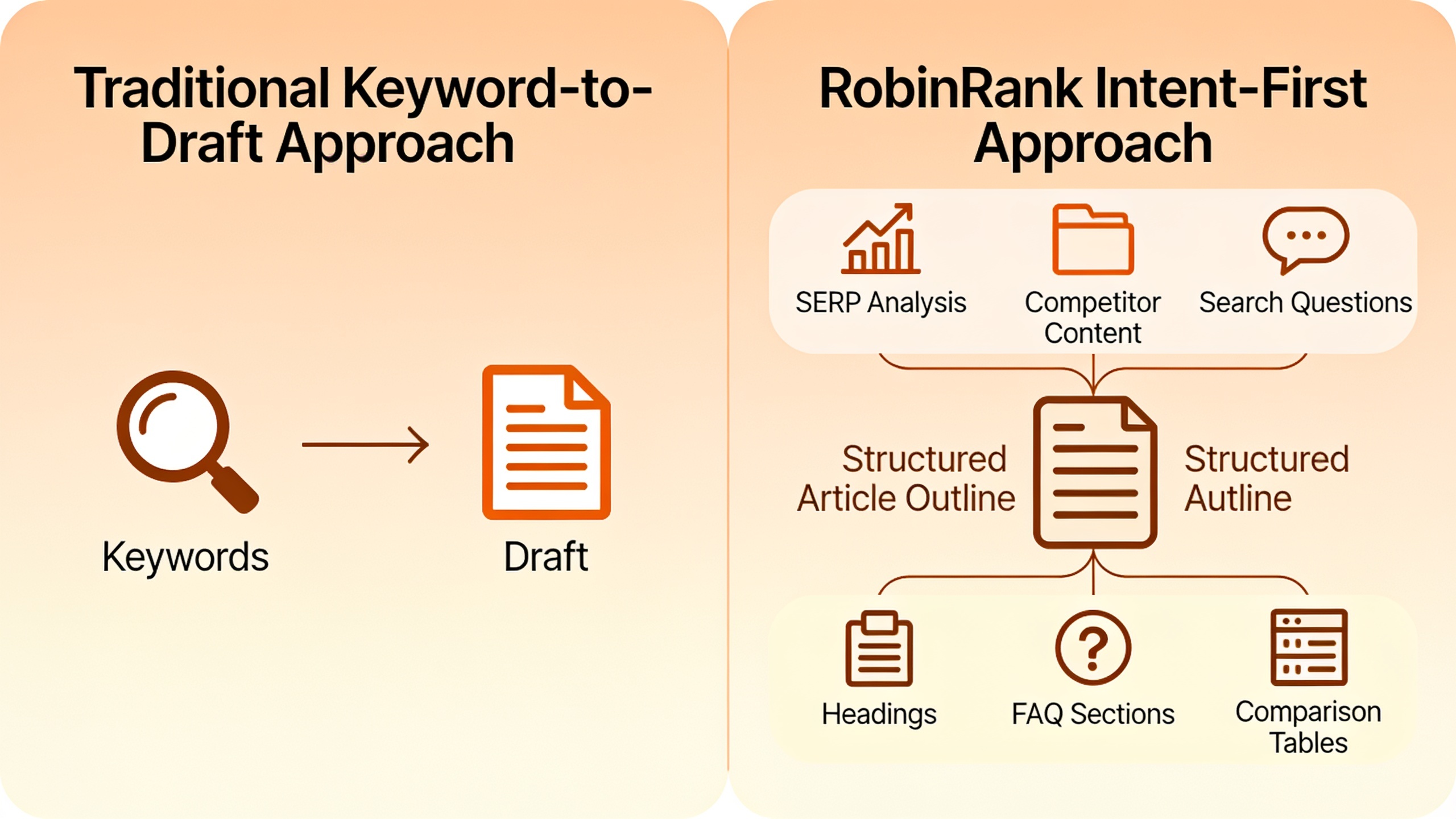
RobinRank takes a different route. It looks at intent signals first. Is the query informational or transactional, what subtopics are already ranking on page one, what questions do people keep asking around this thing. Then it drafts. So the structure (headings, FAQ blocks, comparison bits) gets built to match what's already winning, instead of getting bolted on afterward. If you want to see how this plays out when you stack a scoring tool against a generation-plus-optimization tool, RobinRank vs Surfer SEO: Which Tool Fits Your Workflow? gets into the same tension.
The Technical On-Page Stuff
Both tools cover the basics. Title tags, meta descriptions, header hierarchy, getting your keyword into the first paragraph. Koala.sh shows you all of this in its editor so you can adjust based on the score. RobinRank just handles most of those calls during generation and keeps checking them after you publish. Which, when you're pushing out a lot of articles, matters a ton because who has time to audit every single post by hand?
There's a reason both tools push comprehensive topic coverage instead of just stuffing one keyword everywhere. Ahrefs ran a study in 2023 on content and rankings, and pages that thoroughly cover a topic's related subtopics tend to rank for a significantly higher number of keyword variations than narrow, single-focus pages. So the coverage matters. The difference is that RobinRank's intent analysis automates that coverage check, which means less cleanup for you.
Internal Linking
Internal linking (linking between pages on your own site to spread authority around and help Google understand how your site fits together) is something RobinRank does for you, suggesting and dropping in relevant links while it writes. Koala.sh leaves this to you. Totally fine for a handful of posts. But once you're publishing dozens a month, it turns into a real bottleneck.
The Backlink Question
Here's the big one. RobinRank has a backlink feature Koala.sh flat-out doesn't: a natural backlink exchange network that connects participating sites so they earn relevant, contextual links as part of the deal. Koala.sh does zero link building. It's a content tool, full stop.
Backlinks (other websites linking to yours) are still one of the heaviest ranking signals out there. Google's own docs and a pile of industry studies, including Backlinko's ranking factor analysis, keep finding the same correlation between the number and quality of referring domains and better rankings. The problem for small players is that building links manually (outreach, guest posts, keeping up relationships) eats time and usually means either hiring a specialist or forking over an agency retainer. Neither of which is cheap.
How the Exchange Actually Works
RobinRank's network connects sites inside the platform so content on one site can naturally link to relevant content on another. That gives you contextual backlinks without the soul-crushing cold outreach grind. And because the links live inside topically relevant content (not link farms, not sketchy directories), it's built to look like the organic linking Google actually wants to see, rather than something obviously gamed.
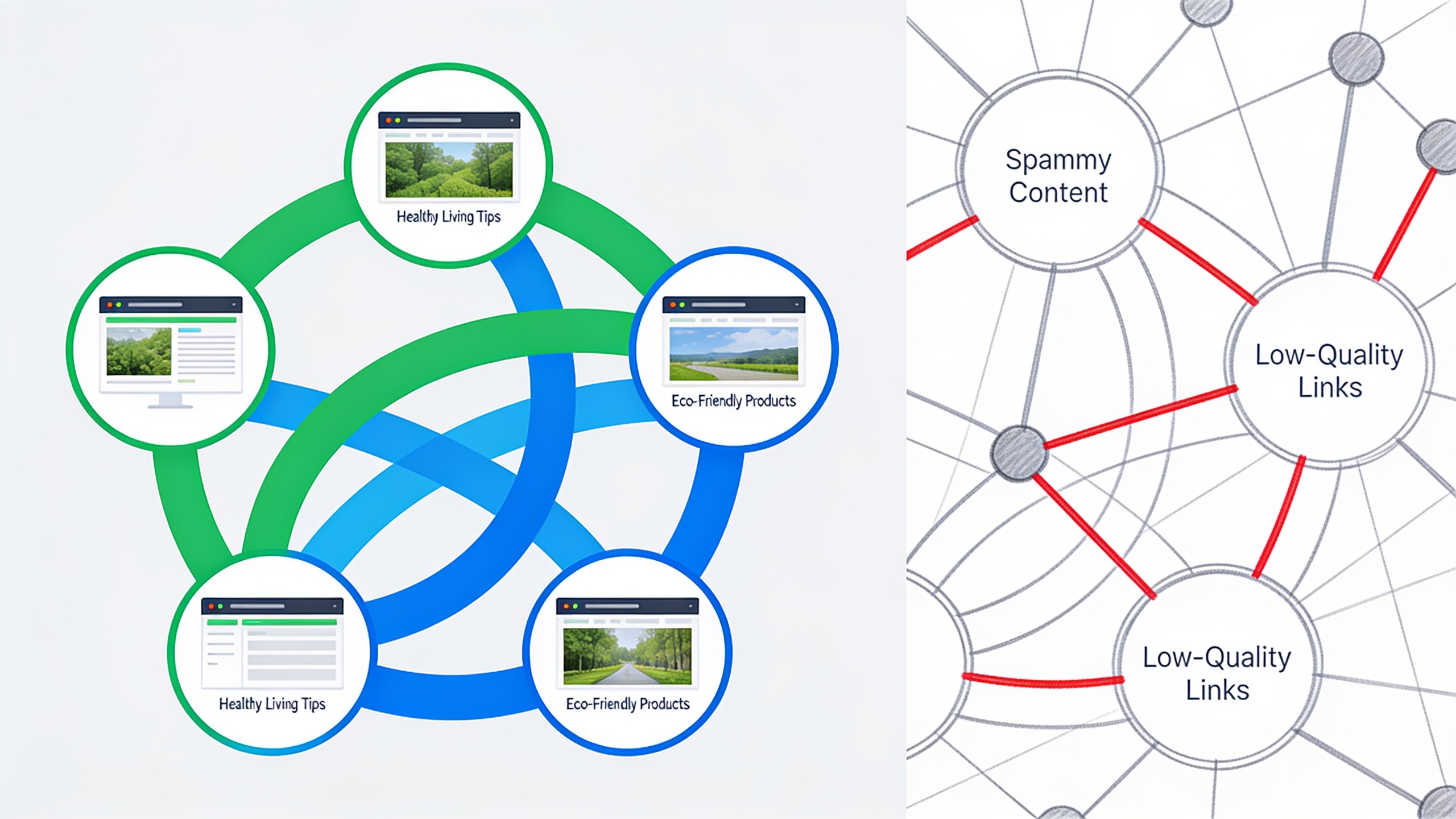
This is huge for smaller sites specifically. New or low-authority domains have a chicken-and-egg problem. Nobody wants to link to you or trade guest posts because you're an unknown, but you can't become known without links. A built-in network kills that cold-start problem by hooking you up with sites that are already active and publishing.
Want content like this running on autopilot for your own site? Try RobinRank free — AI-written, SEO-optimized articles generated and published automatically, no credit card required.
Where Koala.sh Just Doesn't Go
Koala.sh offers nothing on the off-page or backlink side. If you want links pointing to whatever you wrote in Koala.sh, that's on you, either through manual outreach, an agency, or some completely separate tool. I don't think that's a flaw exactly. It's just not what Koala.sh is trying to be. It markets itself as a writing assistant, not an SEO platform, so fair enough.
If you've already sorted out link building somewhere else, this gap won't bother you. But for the solo founder or tiny team trying to shrink their tool stack and stop paying for six different subscriptions, the missing backlink piece means Koala.sh only handles one part of the ranking puzzle. And arguably the easier part. Off-page SEO shows up again as a dividing line in RobinRank vs Content at Scale: Full Feature Breakdown, where the full-pipeline platforms pull away from the pure content generators.
Does the Writing Actually Read Well?
Content quality depends a lot on what you're using it for, but the pattern is pretty consistent: Koala.sh gives you fast, readable drafts that are great for quick publishing or heavy editing, while RobinRank hands you more structurally complete articles that need less work before they go live.
Style and Flow
Both run on large language models, so at the sentence level they're honestly pretty close. Both write clean, coherent paragraphs. Where they part ways is planning. Koala.sh tends to write kind of linearly off your prompt and settings, which is fine for straightforward topics but can go shallow on the complicated, competitive ones unless you steer the outline yourself.
RobinRank plans the outline based on competitive analysis before it starts writing, which usually means more thorough articles with cleaner topic segmentation. Separate sections for separate subtopics, comparison tables where they make sense, FAQ blocks that actually mirror real searches. That planning step is a big reason its output needs less rearranging after the fact.
Made-Up Facts (The Hallucination Problem)
Look, every AI writer built on a large language model can hallucinate. That's the term for when the model confidently makes up plausible-sounding nonsense. Neither Koala.sh nor RobinRank fully solves this, and human review is still smart for anything you publish, especially stats, dates, or claims that could get you in legal or reputational hot water.
That said, RobinRank's process pulls in more structured research during drafting (search intent, competitive content patterns) which can cut down on the vague or unsupported claims you'd get from a bare prompt-to-output flow. Can, not will. Either way, fact-check your statistics and named sources before you hit publish. Non-negotiable if you're in something regulated like finance or healthcare.
How Much Editing You're Actually Signing Up For
This is where busy marketers feel the difference. Koala.sh drafts usually need a pass for internal links, meta descriptions, and sometimes a restructure to hit search intent better. RobinRank's auto-publish flow is designed to shrink that editing load by handling those pieces during generation instead of leaving them for a separate round.
If you're doing one or two articles a month, meh, the editing gap barely registers. But scale that to 10, 20, or more articles monthly and the saved time starts to seriously move your cost-per-article. That's before you even look at the subscription prices.
What's This Going to Cost Me?
Pricing for these tools swings based on word volume, what features are bundled, and whether publishing and backlinks come along for the ride. So the "cheaper" option on paper isn't always cheaper once you factor in the extra tools or labor you'll need to patch the holes. Koala.sh's tiers are built around word counts and generation credits, which makes it an affordable on-ramp for solo bloggers and freelancers who mostly just need help writing.
RobinRank costs more because it does more. Since it bundles SEO optimization, auto-publishing, and the backlink exchange, the pitch isn't "replace your writer," it's more like "replace a small content team or an agency retainer." When you're comparing AI writer costs, do yourself a favor and calculate the fully loaded number: the subscription plus whatever you'd otherwise pay an editor, an SEO consultant, and a link-building service to squeeze the same result out of a drafting-only tool.
For anyone already paying for separate SEO software, a writer, and outreach, folding all of that into one platform can actually drop your total spend even when the sticker price looks scarier at first glance. Same math worth running when you stack RobinRank against Surfer SEO's workflow-based pricing, which I mentioned earlier.
So Which One Do You Pick?
It comes down to how much of the pipeline you want automated versus how much you're willing to handle yourself or through other people and tools. If you've already got an SEO strategist, an editor, and a link-building process humming along, Koala.sh is a capable drafting assistant that'll speed up the writing without blowing up your workflow.
But if you're a startup founder, a small business owner, or a lean marketing team with no dedicated SEO or link-building muscle, RobinRank's mix of writing, on-page optimization, auto-publishing, and backlink access covers a much bigger slice of the growth problem without you having to hire people or stack up subscriptions. Agencies juggling multiple client sites will probably like how the auto-publish and network features cut down the operational headache of running content across a bunch of accounts at once.
Neither tool lets you fully check out, by the way. Reviewing what gets published for accuracy, brand voice, and shaky claims is just good practice, no matter which one you use. But the amount of manual labor it takes to get from "AI draft" to "published, optimized, linkable article" is genuinely different between the two, and that gap is the whole ballgame here.
Questions People Actually Ask
Is Koala.sh any good for SEO?
It's got on-page scoring and keyword-based generation, so it can help you produce content that's aligned with a target keyword. But there's no backlink building and no real auto-publishing, so getting the full SEO result usually means pairing it with other tools or handling off-page and internal linking yourself.
Does RobinRank build backlinks on its own?
Kind of, yeah. It connects sites through a natural backlink exchange network so participating sites earn contextual, relevant links just by using the platform, no manual outreach campaigns required. That's the big thing separating it from pure writing tools like Koala.sh, which don't touch backlinks at all.
Can AI-written content actually rank on Google?
Yep. As long as it's well-structured, genuinely answers search intent, and hits a quality bar, AI content ranks fine. Google's own guidance cares about whether content is helpful and original, not whether a robot helped write it. The real question is whether it actually serves the reader, not how it got made.
How's RobinRank different from Jasper or Copy.ai?
Most general-purpose AI writers like Jasper and Copy.ai spread themselves across tons of formats (ads, emails, social posts) without any real SEO publishing or backlink infrastructure. RobinRank is narrower but goes deeper on organic search specifically, tying article generation, SEO optimization, direct CMS publishing, and backlink access into one flow.
Do I still need an editor if I'm using an AI SEO writer?
Most SEO folks would say yes, at least a light human pass before publishing, even with the fancy optimization tools. You're checking facts, brand voice, and anything with legal or reputational teeth. Automation shaves off a lot of editing time, but it doesn't make that final human look pointless.
Bottom line, both Koala.sh and RobinRank speed up how fast you make content, but they're solving different-sized problems. If your bottleneck is just "we need drafts faster," Koala.sh nails that. If your bottleneck is the whole organic growth machine, keyword targeting through publishing all the way to earning links, then a platform built around that full scope like RobinRank handles a lot more of the work that actually drives rankings over time.
Ready to stop writing content by hand? Start your free RobinRank trial and get a full month of SEO-optimized articles published on autopilot.