Niche Edits SEO Explained: Pros, Cons, and Hidden Risks
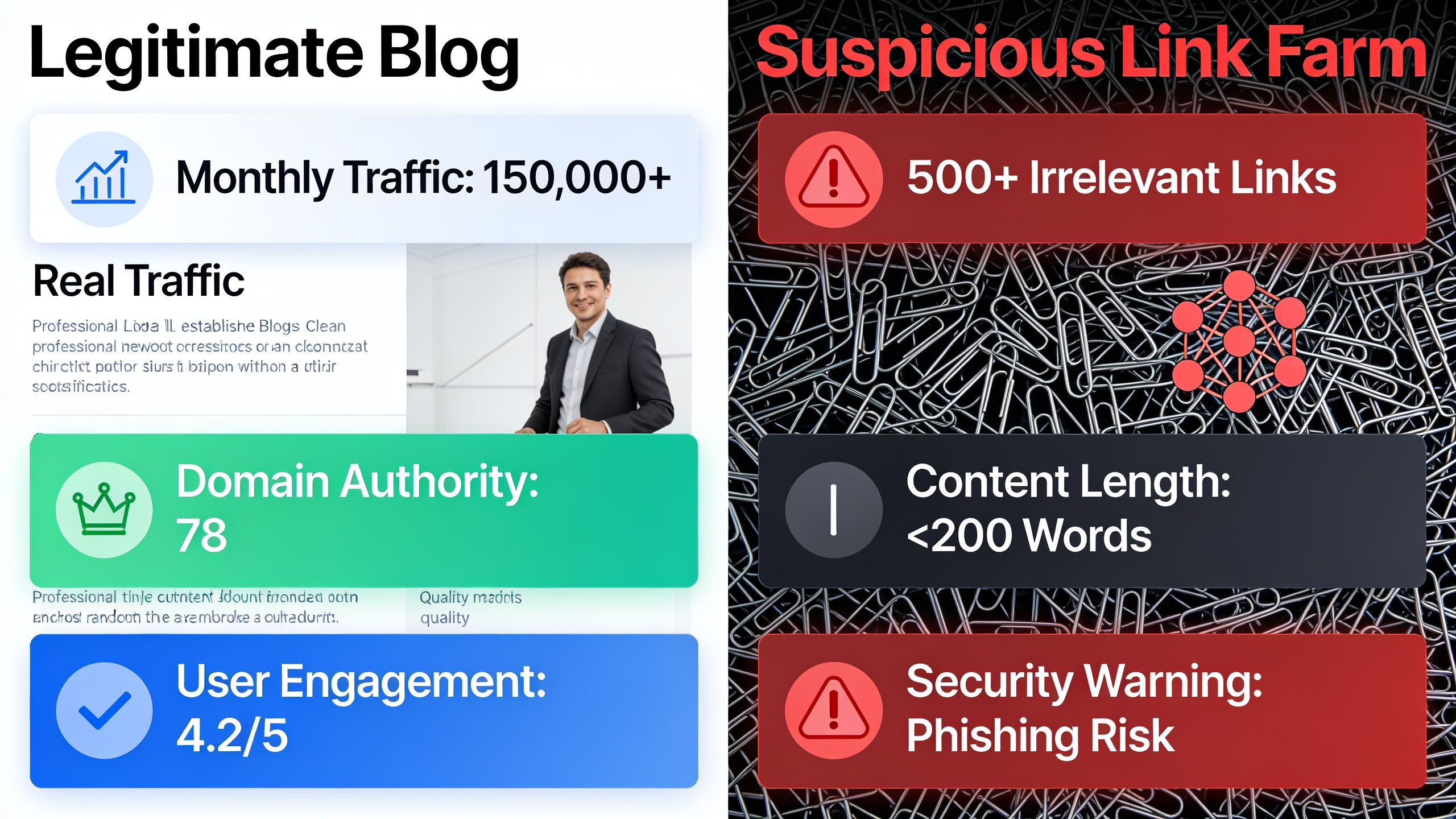
So what actually is a niche edit? It's when you pay (or negotiate) to get your link dropped into an article that already exists on someone else's site, instead of writing a brand-new guest post. That's it. Do it well and you can nudge a page up the rankings in a few weeks. Do it badly and you've stapled your domain to a pile of paid, off-topic, spammy links that some future algorithm update will eventually sniff out.
I'll walk you through how these things actually work, when they're genuinely worth the money, where they blow up in people's faces, and how to check out a site before you hand over a cent.
Table of Contents
- What Is a Niche Edit in SEO?
- How Do Niche Edits Actually Work?
- What Are the Pros of Niche Edits SEO?
- What Are the Cons and Hidden Risks of Niche Edit Link Building?
- Niche Edits vs. Guest Posts vs. Link Exchanges
- How to Vet a Site Before Buying a Niche Edit Placement
- How Much Do Niche Edits Cost?
- A Safer Alternative to Paid Niche Edits
- FAQ
What Is a Niche Edit in SEO?
A niche edit is a link-building move where you pay a website owner to slip a link into a piece of content they've already published, rather than building a whole new page for it. You'll also hear it called a "curated link" or a "link insertion." The idea is that the article's already live and indexed, sometimes for years, and the owner just tweaks a paragraph to work in a new sentence or resource mention that carries your link.
Why bother? Because the page already has some authority, some history with Google, and occasionally even real organic traffic. A guest post, by contrast, starts at zero. You (or the host) write a fresh article that has no track record and has to earn its own ranking signals before the link inside it counts for much of anything.
Niche edits get arranged a few ways: cold outreach, link brokers, marketplaces, or quiet private deals between publishers and buyers. And money almost always changes hands, even when it's wearing a costume like "content update fee" or "collaboration."
How Do Niche Edits Actually Work?
The mechanics are pretty predictable: find a relevant page that's already ranking, agree on a fee (or a trade), and get the owner to insert your link into the existing text. Start to finish, it usually takes a few days to a couple weeks, mostly depending on how fast the publisher answers their email.
In practice it goes something like this. First you go prospecting, hunting for pages that already rank for keywords near your target topic, usually with a backlink or content-gap tool so you're chasing pages that already have some juice. Then comes outreach or a marketplace listing, where you either email the owner directly, work through a broker, or pick a slot off a marketplace that sorts everything by Domain Rating (DR) or Domain Authority (DA). Next you negotiate the price, the anchor text, and where exactly the link goes. Some publishers let you hand over the exact wording; others insist on writing the sentence themselves so it reads naturally. Then they do the actual insertion, editing the live page and republishing it.
And then, the step everyone forgets: verification. You check the link went live, that it's dofollow if that's what you paid for, and that it stays there.
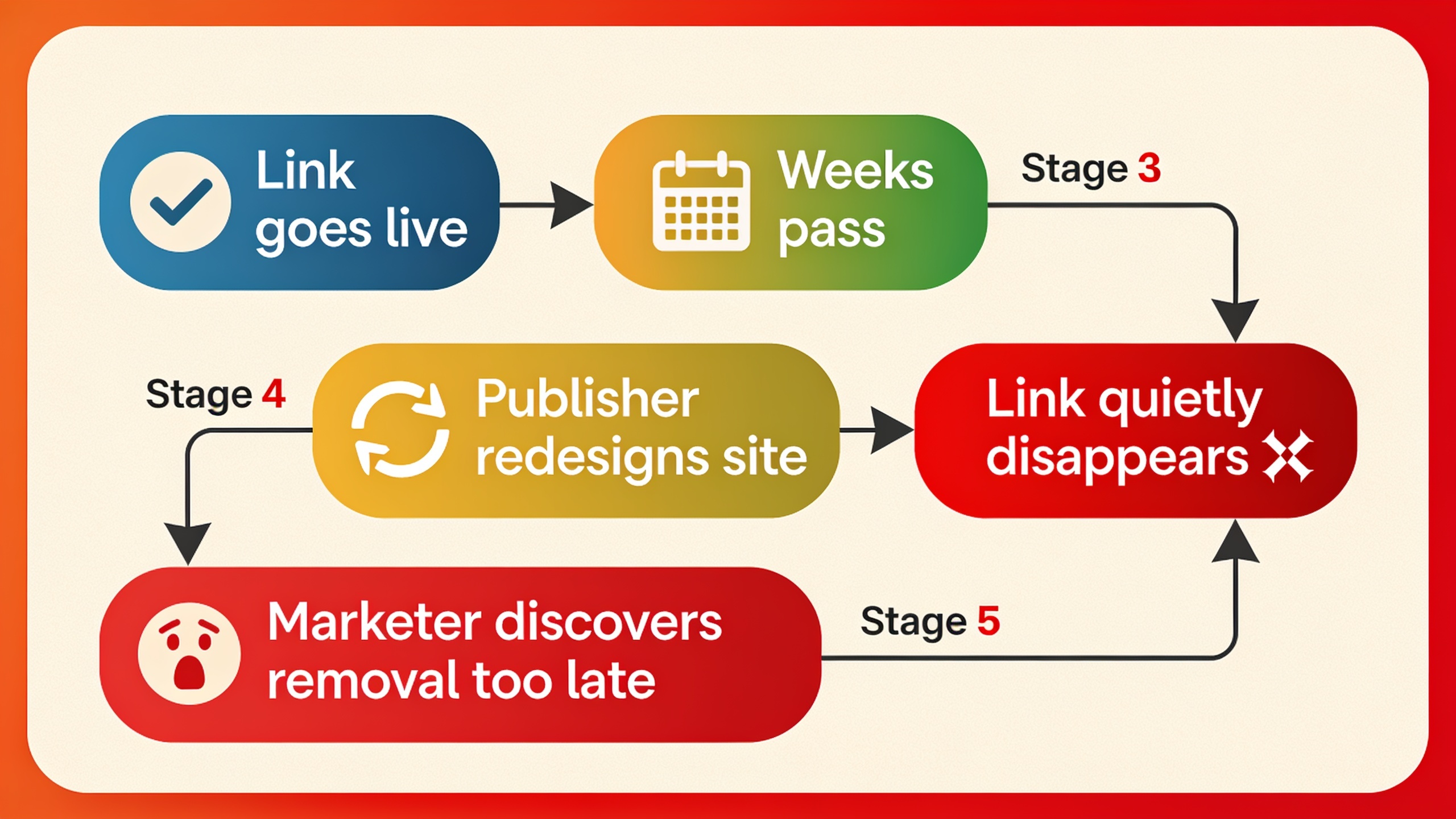
That last part is where so many buyers get burned. Niche edits have a nasty habit of quietly vanishing weeks or months after payment, especially on marketplaces where the publisher never talks to you and has zero reason to keep your link around once they've cashed the check.
What Are the Pros of Niche Edits SEO?
The single biggest draw is speed. You're borrowing the authority of a page that's already indexed instead of waiting around for a fresh post to get crawled, indexed, and trusted. If you're trying to move a ranking against a deadline, a product launch, a seasonal push, some competitive keyword you desperately want, that speed can matter way more than the theoretical purity of where the link came from.
There's also the established-authority angle. A three-year-old article already sitting on page one for a handful of terms has trust signals that a day-old guest post simply hasn't had time to build. A link from that page can pass value a lot faster.
Contextual relevance is doable too, if you're careful. When a niche edit lands inside a paragraph that's already talking about a related subtopic, it reads like a useful addition instead of a bolted-on ad. Readers reward that. So do algorithms.
Cost is another one. You're not paying someone to write a whole new article, so per-link, niche edits can come in cheaper than a full guest post (assuming the publisher's fee actually reflects the lighter workload, which, let's be honest, isn't a given).
And they scale. Brokers and marketplaces make it possible to grab dozens of these in a short window, which is catnip for agencies juggling link campaigns across a bunch of clients.
But none of this is guaranteed. Every one of those upsides depends entirely on how good the host site is and how professional the person doing the edit is. Which is exactly where things get ugly.
What Are the Cons and Hidden Risks of Niche Edit Link Building?
The core problem is simple: a niche edit is, by definition, a paid link inserted mainly to move rankings. That's a thing Google's own link spam guidance flat-out discourages, no matter how naturally the sentence around it reads. Google's Search Central documentation on link schemes calls buying or selling links that pass PageRank a violation, and niche edits live right in that gray zone because cash is almost always changing hands specifically to lock in the placement.
Policy risk aside, here's the stuff that actually bites buyers over and over.
The link can just... disappear. The page belongs to someone else, the deal was usually a one-time payment, and there's rarely any contract saying the link stays live. Publishers republish, redesign, tidy up old posts, and a paid link buried in there two years ago is an easy thing to sweep out with the rest.
Footprints are detectable. When the same anchor text pattern, the same publisher network, or the same weirdly identical paragraph structure keeps popping up across a bunch of unrelated sites, that's a footprint. Competitors auditing your backlinks can spot it. So, potentially, can Google's spam detection.
Quality is all over the map. That shiny "DR 40" site on a marketplace might be a rebuilt expired domain crammed with junk content purely to sell links, not a real publication with a real audience. Domain Rating measures link equity, not editorial trust. A big number does not mean the site is safe to be seen with.
Bad context kills the value entirely. A link to a SaaS tool jammed awkwardly into a recipe blog gives you basically no topical relevance and looks manipulative to anyone who actually reads the thing.
And when you buy through an anonymous broker instead of an actual conversation, you have no leverage. Link gets removed? Anchor text gets changed? Site gets deindexed? Tough luck, there's nobody to call.
There's a budget problem too. Agencies running high-volume niche edit campaigns love to spread money thin across a ton of mediocre placements instead of putting it behind a handful of genuinely strong, relevant sites. Bigger backlink count, sure. Rankings that don't budge, also sure.
This is really the heart of the whole niche edit risk conversation. The tactic isn't broken by nature. It's the ecosystem around it, the anonymous marketplaces, the disposable expired-domain networks, the one-and-done transactions, that makes it so easy to end up with a backlink profile that looks manipulated even when a few of your individual placements were perfectly reasonable.
Niche Edits vs. Guest Posts vs. Link Exchanges
Niche edits, guest posts, and link exchanges are three different ways to grab backlinks, and each one trades speed, cost, and risk differently. There's no universal winner. It comes down to how much control you want over the placement, how much time you've got, and whether you're okay with a straight paid transaction versus a reciprocal relationship.
| Factor | Niche Edits | Guest Posts | Verified Link Exchanges |
|---|---|---|---|
| How the link is placed | Inserted into an existing, already-published article | Published inside a brand-new article you (or the host) write | Placed on an existing or new page after both site owners agree |
| Typical cost | Paid fee per placement, often set by marketplace or broker | Paid fee, or free if content is genuinely valuable to the host | Often free or reciprocal — you place a link in return |
| Speed to go live | Fast — days to a few weeks | Slower — requires drafting, editing, and approval | Depends on negotiation, but no content production needed |
| Relationship with site owner | Frequently anonymous or broker-mediated | Sometimes direct, sometimes agency-mediated | Direct conversation between real site owners |
| Risk of link removal | Higher, especially via anonymous marketplaces | Moderate — depends on host's content upkeep | Lower when both sides have an ongoing incentive to keep it live |
| Contextual relevance | Depends entirely on placement quality | Usually high, since content is built around the topic | Depends on niche match between the two sites |
Want content like this running on autopilot for your own site? Try RobinRank free — AI-written, SEO-optimized articles generated and published automatically, no credit card required.
If you want to zoom out and compare paid tactics against totally different acquisition channels, Digital PR vs Link Building: Which Wins in 2025? pits earned media coverage against the more traditional stuff like niche edits and outreach.
How to Vet a Site Before Buying a Niche Edit Placement
Vetting a site means checking real traffic, editorial history, topical relevance, and outbound link patterns. Not just squinting at a Domain Rating number on a listing. Since almost all the risk in niche edits lives in the quality of the host site, this due-diligence step is genuinely the highest-leverage thing you can do before spending a dollar.
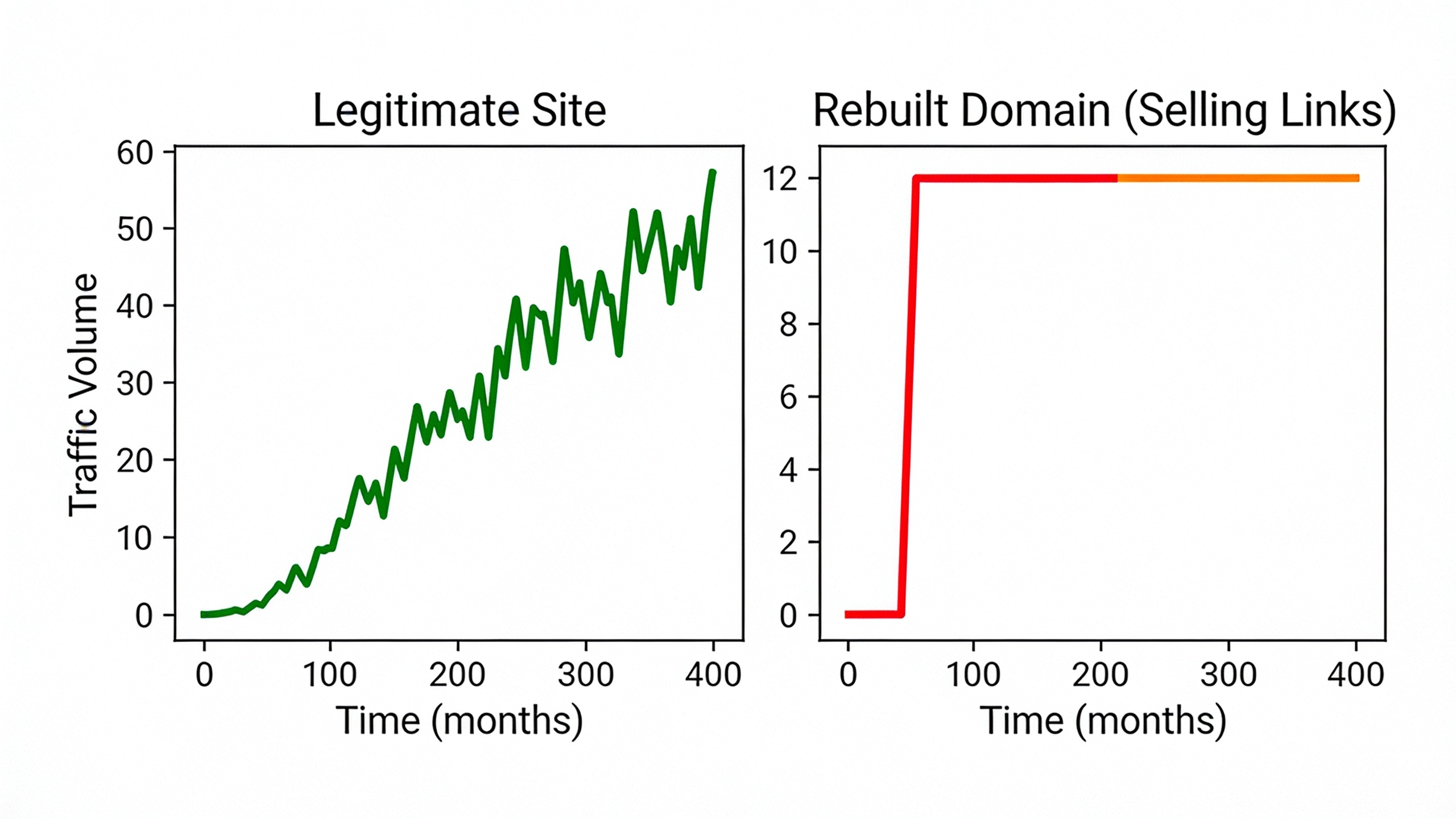
Start with organic traffic trends, not DR. Pull up a traffic estimation tool and see whether the site has a real, steady history or whether it spiked recently and then flatlined. That flatline-after-spike shape is a classic tell of a domain rebuilt purely to sell links.
Then actually read the content. Open five or six posts and read them like a human. Are they useful, or do they read like they were churned out to hit a word count? A site full of thin, generic filler is a red flag no matter how pretty the metrics look.
Look at the outbound links too. Crack open a few articles and count how many links they're already firing out. A page stuffed with a dozen unrelated affiliate and niche-edit links tells you the publisher sells placements aggressively and sloppily, which means your link's more likely to get buried or yanked down the road.
Confirm the topical fit while you're at it. A finance site linking into a paragraph about small-business budgeting is way more defensible than some lifestyle blog awkwardly pointing at enterprise SaaS software. And honestly, ask who runs the place. Anonymous broker deals strip out all accountability. Whenever you can, deal directly with the person behind the domain so there's an actual relationship if something needs fixing later.
Two more quick checks worth doing. Confirm the page is indexed by searching `site:domain.com` plus the article title, because a niche edit on a deindexed or penalized site is worth exactly nothing. And if you can see the site's existing backlink profile, glance at its anchor text history. A domain that's already been niche-edited dozens of times with keyword-stuffed commercial anchors is far more likely to get flagged as part of a scheme.
If all this makes you want to build authority some other way, Broken Link Building: A Step-by-Step Outreach Playbook covers an approach built on fixing dead links instead of negotiating paid placements.
How Much Do Niche Edits Cost?
Prices are all over the place, and they depend on the site's authority, traffic, and niche. Every publisher and marketplace sets their own, so there's no fixed industry rate. Because it's negotiated case by case, and because public marketplace price lists change constantly and aren't something I can verify or reproduce reliably, the honest answer is: it depends on the specific site, its metrics, its niche, and how you negotiate. There's no single number that works across the board.
What you can count on is that price roughly tracks perceived authority and traffic. Sites with stronger organic visibility and a cleaner editorial reputation charge more than newly built, thin-content domains. And weigh that cost against everything in the vetting section above, because a cheap niche edit on a low-quality, deindexed, or over-linked site is almost never a bargain. It'll either do nothing for your rankings or vanish within a few months.
A Safer Alternative to Paid Niche Edits
A lower-risk option is a verified, relationship-based link exchange, where both site owners actually agree to the placement and the link is confirmed live instead of just assumed. That shifts the whole thing away from a one-time anonymous payment and toward a relationship where both sides have a reason to keep the link in place.
RobinRank, for example, is built on exactly this model. It's a manually reviewed network where site owners request a placement, offer a reciprocal link back, and the platform verifies the live href on both ends. According to RobinRank's own site details, every listed domain gets reviewed by hand, usually within one business day, with explicit checks against PBNs, link farms, thin doorway pages, and borrowed or inflated Domain Rating metrics. You're exchanging links directly with the person who owns the site, not some faceless broker. And on the Pro tier, placements get checked automatically on a recurring basis, with an alert if a link disappears.
Does this wipe out every risk of building links? No. Nothing does. But it goes straight at the two worst problems with anonymous niche edit marketplaces: no accountability and no verification. RobinRank is free for seven days after a submitted site gets approved, no credit card needed, and the paid Pro plan runs $19 per month after that, cancelable anytime.
FAQ
Are niche edits against Google's guidelines?
They're in a gray area. The tactic itself, dropping a link into existing content, isn't automatically a violation. But Google's link spam policies flat-out prohibit buying or selling links that pass ranking credit with the intent to manipulate search results. Whether a particular niche edit crosses the line comes down to whether money changed hands specifically to get the placement, and whether the link went in mainly to move rankings rather than help readers.
Do niche edits still work in 2025?
Some SEOs swear by well-placed, relevant niche edits on genuinely authoritative sites and see real ranking movement. Others watch their links get ignored, devalued, or removed entirely, especially the ones bought through junky marketplaces. Results swing hard based on the host site's actual authority and topical relevance, not the tactic itself.
How do I know if a niche edit site is a link farm?
Watch for a recently rebuilt domain with a sudden traffic spike, dozens of unrelated outbound links crammed into existing posts, thin generic content everywhere, and no identifiable owner you can actually contact. Checking the traffic history, reading a handful of articles, and confirming the site's indexed are the fastest ways to catch these patterns before you pay.
What's the difference between a niche edit and a guest post?
A niche edit slips a link into an article that already exists and is already indexed. A guest post means writing a brand-new article specifically to house the link. Niche edits are usually faster and can borrow existing page authority, but guest posts give you more control over context, tone, and everything around the link, since you're building the whole thing from scratch.
Can a niche edit link get removed after I pay for it?
Yep. The page belongs to the publisher and the deal is usually one-and-done, so there's often no ongoing obligation to keep your link live. Publishers redesign pages, clean up old content, or just quietly remove paid links after enough time passes. Checking your placements periodically, or using a platform that automatically confirms the link's still live, is really the only reliable way to catch removals before they cost you.
The Bottom Line on Niche Edits
Niche edits aren't a magic shortcut that works no matter how you run it, and they aren't an automatic penalty either. The outcome hinges almost entirely on three things: the quality of the host site, the relevance of the placement, and how transparently the deal gets done. Treat every opportunity the way you'd treat hiring a contractor. Check references, look at the actual work, confirm who you're dealing with, and don't assume a nice price tag means a nice result. Whether you go the paid-marketplace route or lean toward verified, relationship-based exchanges, the fundamentals don't change. Relevance, real traffic, and accountability beat any single metric on a listing page, every time.
Ready to stop writing content by hand? Start your free RobinRank trial and get a full month of SEO-optimized articles published on autopilot.