The State of AI SEO Software: 2025 Industry Report
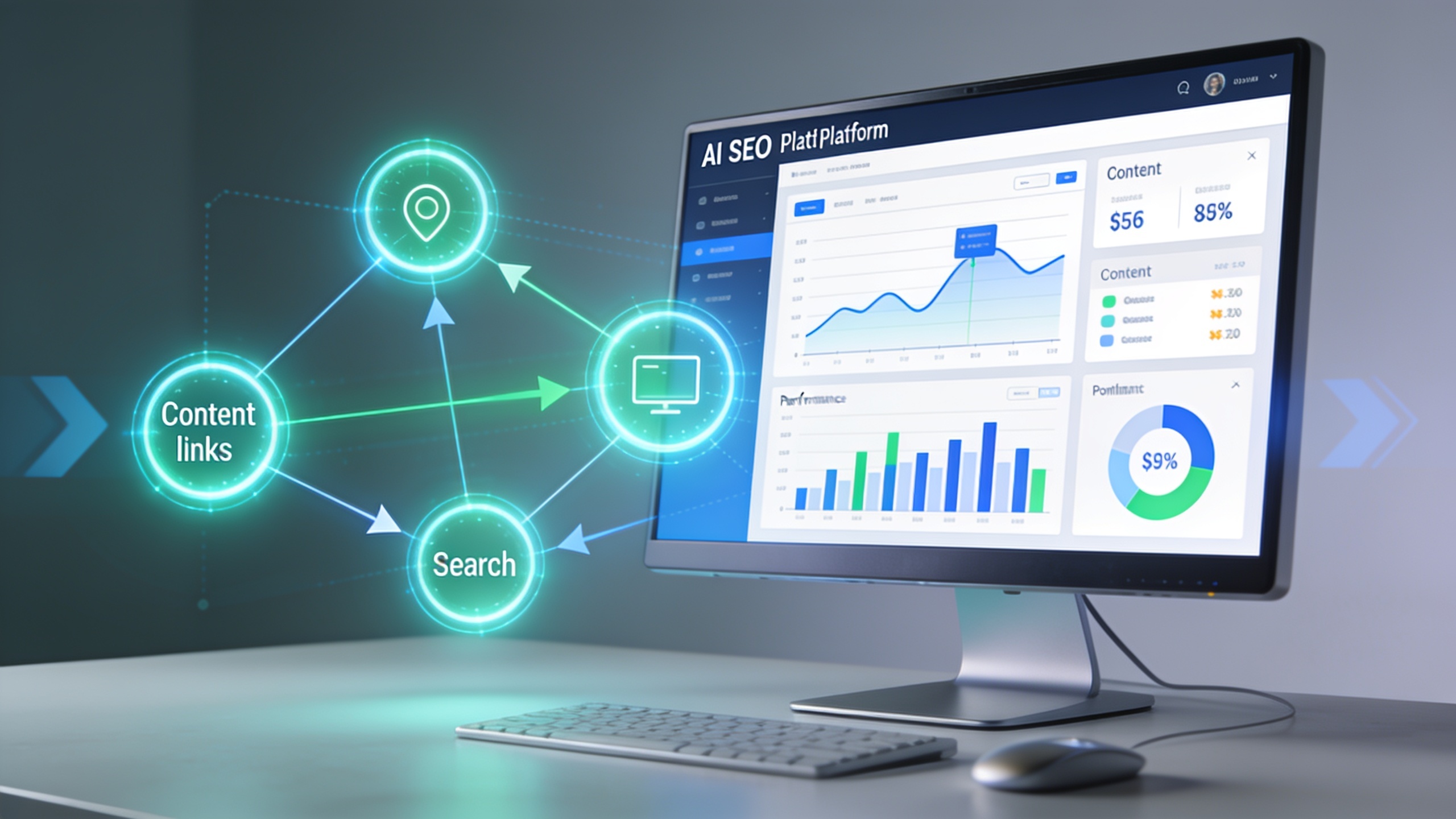
So if you've felt like the ground shifted under your feet these past twelve months, no, you're not losing it. This report is my attempt to lay out what actually changed, who's throwing money around, which platforms are pulling ahead, and what any of it means if you're the person on the hook for organic growth this year.
I pulled this together from product announcements, funding rounds, and shifts in how people are buying across the AI content and SEO software space. I tried to keep it focused on what's genuinely useful for marketers, agencies, and founders staring at their budget wondering where to spend it next.
Table of Contents
- Why AI SEO Industry News Matters More Than Ever in 2025
- The Biggest SEO Software Trends 2025 Marketers Are Reacting To
- Funding and M&A: Where the Money Is Going
- Product Updates From Major AI SEO Platforms
- How Are Marketers Actually Choosing AI SEO Software?
- The Link Building Problem AI Tools Still Haven't Solved
- What This Means for Agencies and Small Business Owners
- FAQ: AI SEO Software in 2025
Why AI SEO Industry News Matters More Than Ever in 2025
AI SEO industry news matters in 2025 because the tools we lean on for organic visibility are changing faster than the search engines themselves, and missing a platform shift can burn months of content spend before you even notice. Two years ago, "AI SEO software" mostly meant an AI writing assistant awkwardly bolted onto a keyword tool. Now? It's closer to autonomous content operations. These platforms research topics, draft the articles, handle on-page structure, push straight to your CMS, and in some cases even manage outreach or link exchanges without a human touching every single step.
Three things collided to make this happen, and they happened roughly at once.
The first was Google's AI Overviews (the thing formerly known as the Search Generative Experience), which Google started rolling out broadly at I/O in May 2024. That rewrote the math on how much click-through you actually get from traditional blue-link rankings, and suddenly everyone wanted tools that could handle both classic SERPs and those AI-generated summaries. The second was cost. Large language models got cheap and fast enough that running an entire site's content program through AI became something a small business could afford, not just an enterprise team with money to burn. And the third, honestly the most interesting one, is that the flood of AI-generated junk forced both search engines and buyers to get pickier. E-E-A-T (Experience, Expertise, Authoritativeness, Trustworthiness), backlink diversity, real topical depth. Those matter more now, not less. Counterintuitive, but that's how it played out.
The practical version of all this? The question moved from "can AI write this?" to "can this platform run my whole content and link-building operation without me babysitting it?" That's a way higher bar. And it's the thing quietly deciding which vendors make it and which don't.
The Biggest SEO Software Trends 2025 Marketers Are Reacting To
The three trends dominating SEO software in 2025 are full-funnel automation, AI-Overview-aware optimization, and link building getting treated as a real differentiator instead of a chore nobody wants to do. Every one of these is marketers reacting to something painful: click-through rates cratering on informational queries, content getting expensive to produce, and headcount getting squeezed at small and mid-sized companies.
From Point Solutions to Full-Stack Platforms
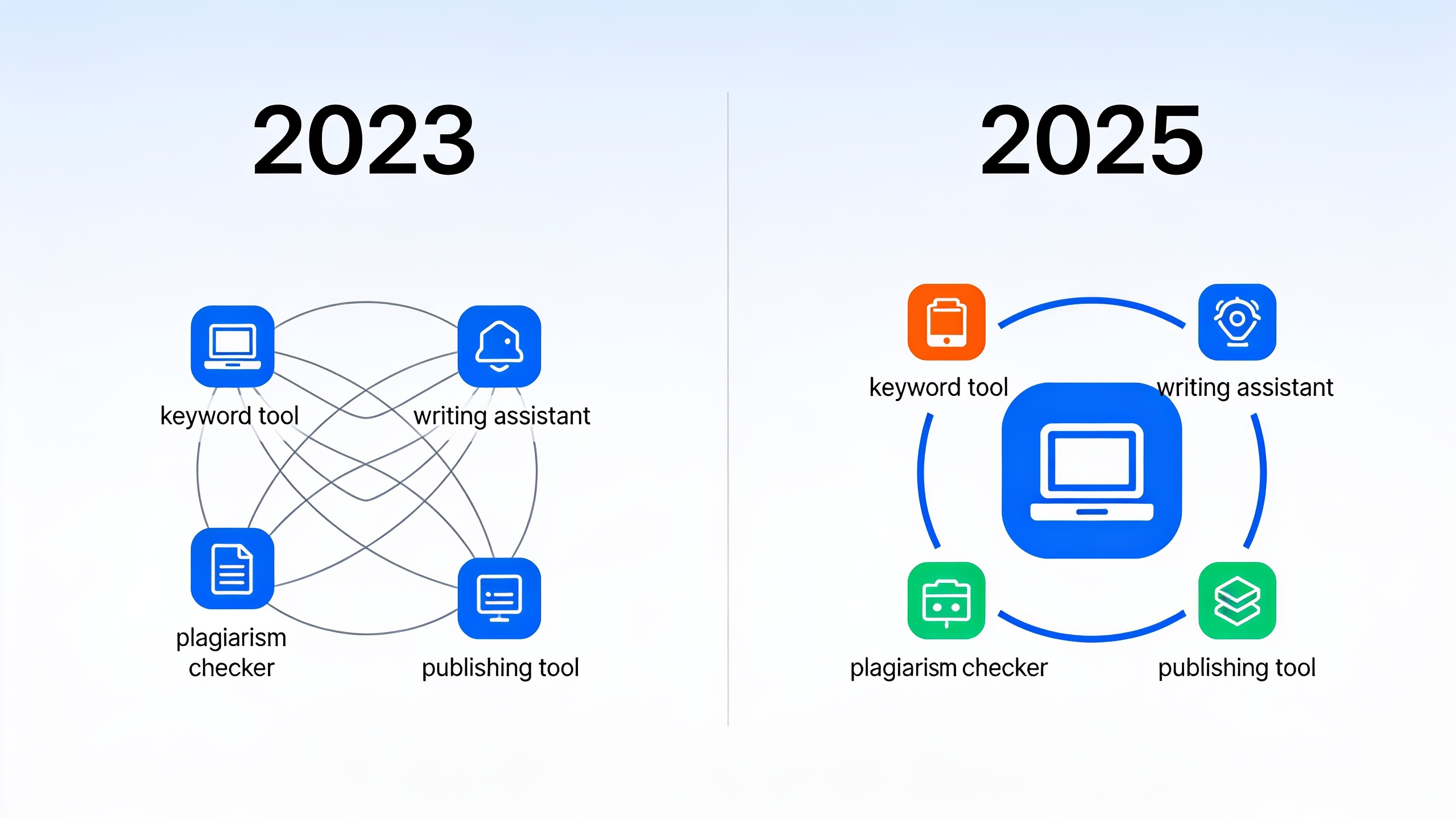
Back in 2023, most teams duct-taped together a keyword tool, a writing assistant, a plagiarism checker, and some separate publishing thing. In 2025, buyers are consolidating around platforms that do research, drafting, on-page SEO, and publishing in one shot. It reminds me a lot of what happened to email marketing a decade ago, when standalone send tools got swallowed into full marketing automation suites. The logic is boring but airtight: fewer subscriptions, fewer integrations breaking at 2am, faster trip from "topic idea" to "published and indexed."
Optimizing for AI Overviews and Answer Engines
People aren't optimizing just for the ten blue links anymore. They're optimizing for how ChatGPT, Perplexity, Gemini, and Google's AI Overviews summarize and cite their stuff, a practice folks are now calling Generative Engine Optimization (GEO). In plain terms, your content needs clear, quotable answers near the top of each section, explicit definitions of key terms, and structured data that helps the AI figure out what's actually connected to what. Tools that ignore this are starting to look dated, even if their old-school rank-tracking dashboards still look pretty.
Content Volume Without Sacrificing Quality
Search leaders keep saying there's no magic ceiling on how much AI content you can publish, as long as it's genuinely useful and not just cranked out to game rankings. Google repeated exactly this in its March 2024 core update guidance about scaled content abuse. That one distinction pushed vendors to compete on quality controls, fact-checking, originality scoring, internal linking logic, instead of just bragging about how many words per minute they can spit out. If you're trying to actually budget for this, How Much Does AI Content Marketing Cost in 2025? breaks down the pricing models across today's market.
Backlinks Are Back in the Spotlight
For a while there, some people convinced themselves AI content alone could carry rankings. 2025 has been a rude awakening. Link authority is still one of the stickier ranking factors out there, and AI content with no backlink plan behind it tends to plateau, sometimes hard. That's why a few platforms, RobinRank among them, have baked natural backlink exchange right into the content workflow instead of leaving link building as some separate, painful, manual chore.
Want the bigger picture on the ranking-factor side of all this? SEO Trends 2025: What's Actually Changing (And What to Do About It) goes deeper there.
Funding and M&A: Where the Money Is Going
Investor cash in 2025 has piled into three buckets: full-stack content automation platforms, technical SEO monitoring tools that catch AI-driven SERP volatility, and infrastructure that helps sites earn citations inside AI answers. Venture funding for AI-in-marketing has stayed surprisingly healthy even while general SaaS money cooled off from its 2021 sugar high, mostly because content operations are one of the few AI use cases where the ROI is easy to point at and measure.
The incumbents haven't exactly sat still either. Semrush, Ahrefs, HubSpot, they've all shipped AI features rather than watching from the sidelines, some built in-house, some grabbed through acquiring smaller AI-writing and optimization startups. It's the classic "buy versus build" dance you see in every maturing market. The big players with distribution scoop up scrappy teams with strong AI chops, while the venture-backed challengers scramble to build a moat, usually around proprietary training data, workflow automation, or how deeply they hook into content management systems.
For buyers, the weird effect is a market that looks crowded but is actually narrowing behind the scenes. Analysts who track enterprise software, Gartner included with its recurring Magic Quadrant and Hype Cycle commentary on martech, have pointed out for years that categories hitting rapid AI feature parity tend to consolidate within a couple product cycles. Once everyone's AI works, the fight moves from "does it have AI" to "is the AI any good." SEO software is walking that exact path right now.
Product Updates From Major AI SEO Platforms
The biggest product moves in 2025 all cluster around autonomous publishing, AI Overview optimization, and built-in link building, which tells you exactly what vendors are racing toward: fewer manual steps between "topic idea" and "ranked, linked page." Here's a rough snapshot of how the different categories of tools evolved over the past year.
| Capability | 2023-Era Tools | 2025-Era Tools |
|---|---|---|
| Content creation | Single-draft AI writing assistants | Multi-pass drafting with fact-checking and internal linking |
| Publishing | Manual copy-paste into CMS | Direct auto-publishing to WordPress, Webflow, Shopify, etc. |
| On-page optimization | Basic keyword density scoring | Semantic topic coverage and AI-Overview-readiness scoring |
| Link building | Separate outreach tools or manual link buying | Built-in natural backlink exchange networks |
| Reporting | Rank tracking dashboards | Traffic, ranking, and AI-citation visibility tracking |
| Buyer focus | Individual content creators | Full content operations for teams and agencies |
Autonomous Publishing Becomes Standard
Auto-publishing AI articles straight to a live site used to be a premium, "ooh fancy" feature. Now it's basically table stakes if you want to be taken seriously. The real fight has moved to how well a platform handles editorial quality control before it hits publish: originality checks, source citations, internal links dropped in the right spots, schema markup applied automatically instead of as some sad afterthought.
Want content like this running on autopilot for your own site? Try RobinRank free — AI-written, SEO-optimized articles generated and published automatically, no credit card required.
AI-Overview and Answer-Engine Readiness Scoring
A handful of platforms rolled out scoring systems that try to predict how likely an article is to get surfaced or cited in an AI answer, not just where it lands in regular search. These scores usually weigh things like how clean your opening answer is, whether you define your terms, how structured the formatting is, and how citation-worthy your specifics are. Which, funny enough, are the same things that make content easy for a human skimmer to grab too.
Backlink Exchange Networks Move In-Platform
Instead of treating link building like some add-on you buy separately, a few AI SEO platforms (RobinRank's in this camp) now run as networks where participating sites swap contextually relevant backlinks as a normal part of the publishing flow. This plugs a gap that's nagged the whole category for years: AI tools were great at cranking out content but historically pretty useless at helping that content earn the external authority signals search engines still care about.
Integration Depth With CMS and E-Commerce Platforms
2025 also brought much deeper native integrations with WordPress, Webflow, Shopify, and headless CMS setups, killing off a lot of the friction that used to sit between "content's ready" and "content's live and indexed." For agencies juggling a stack of client sites, that integration depth has quietly become a bigger buying factor than raw writing quality, because let's be honest, most modern language models produce drafts that read about the same.
How Are Marketers Actually Choosing AI SEO Software?
In 2025, marketers are picking AI SEO software mostly on time-to-publish, built-in quality controls, and total cost per published page, not headline writing quality, since nearly every competitive tool now spits out similarly fluent drafts. Buying committees, even at tiny businesses, are increasingly sizing these tools up the way they'd size up a hire: what does this actually take off my plate, and how much hand-holding does it still need?
The stuff that shows up over and over as a dealmaker or dealbreaker, roughly in order of how much people seem to care (based on what I've seen floating around agency Slacks and SEO forums all year):
- Editorial quality controls: fact-checking, originality, keeping your brand voice from going robotic
- Publishing automation and whether it plays nice with your CMS
- Backlink or authority-building baked into the platform
- Transparent, predictable pricing instead of usage-based surprise bills
- Reporting that actually ties content output to real traffic and ranking movement
Budget Realities for Small Teams
Small business owners and solo founders are usually the most price-sensitive buyers here, and fair enough. Content work that used to need a full-time writer plus an SEO specialist now goes up against a software subscription that costs a fraction of one salary. That said, pricing is all over the map, from flat monthly plans to credit systems that charge you per article or per word. My advice: read the fine print on what's actually included, because How Much Does AI Content Marketing Cost in 2025? lays out realistic cost ranges across platform tiers and business sizes, and the gaps between them are wider than you'd think.
Agencies Weigh Scalability Differently
Agencies running content for a bunch of clients barely care about individual article quality. They care about operational scale: can this thing handle ten client accounts without ten times the manual work? That pressure pushed agency-focused vendors to build multi-workspace management, white-label reporting, and bulk publishing controls. None of that matters to a solo blogger. All of it matters to a five-person agency team drowning in accounts.
The Link Building Problem AI Tools Still Haven't Solved
Most AI SEO software in 2025 still treats link building like an afterthought or a thing you buy elsewhere, and that remains the single biggest gap between producing AI content and having that content actually perform. Backlinks, meaning links from other sites pointing at yours, are still one of the strongest trust signals search engines use to judge authority, and no amount of beautifully optimized on-page work fully replaces them.
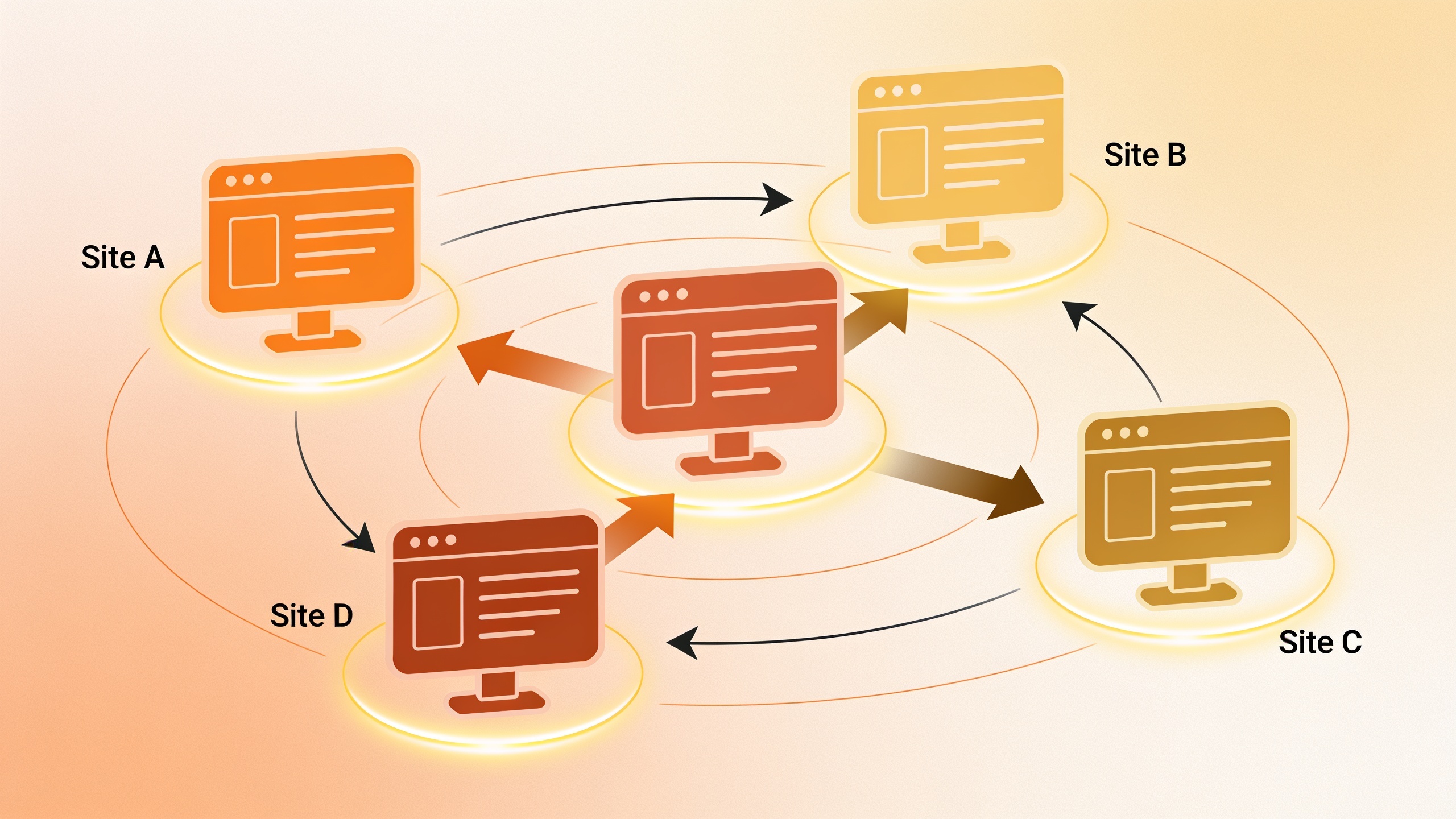
Why do so many platforms dodge it? Because the traditional playbook (cold outreach, guest posting, PR campaigns) is slow, expensive, and a nightmare to scale. It just doesn't slot into an automated workflow the way "draft an article" does. And that's exactly the hole backlink exchange networks are trying to fill. Instead of grinding through one-off outreach, sites inside a network trade contextually relevant links as a built-in, ongoing part of publishing new content. For a smaller site with no link-building budget or team, that's a realistic path to building authority that didn't really exist a couple years ago.
This matters most for startup founders and small business owners who simply can't out-spend enterprise link budgets but still need domain authority to have a prayer against established competitors. A platform that pairs content generation with a genuine link-earning mechanism is solving both halves of the ranking equation, content quality and site authority, instead of nailing one and shrugging at the other.
What This Means for Agencies and Small Business Owners
For agencies and small business owners, the upshot of where AI SEO software sits today is that you can finally run a full content and link-building program without hiring a dedicated in-house team, as long as your platform handles both content quality and authority-building, not just draft generation. The category's grown up enough that "okay, AI wrote it, now what?" isn't really an open question for the well-built platforms anymore. Publishing, optimization, even link acquisition can all live inside one workflow.
But. Be skeptical of any tool whose whole pitch is "look how fast our AI writes" without a word about quality control, indexing, or authority. A blazing-fast draft that never earns a link or gets properly indexed isn't saving you money. It's just quietly producing pages nobody reads. The approach that's actually winning in 2025 combines three things: consistent editorial quality, native publishing into whatever CMS you already run, and a real mechanism for building external authority over time.
Agencies especially should scrutinize how a platform handles multi-client scale, because managing fifty client accounts by hand wipes out most of the time savings the software promised in the first place. Small business owners should weigh total cost against realistic output. A cheap tool that needs hours of manual editing per article isn't actually cheaper than a pricier one that hands you clean, ready-to-rank content with barely any oversight. Do that math before you commit.
FAQ: AI SEO Software in 2025
Is Google still penalizing AI-generated content in 2025?
No. Google has said this repeatedly, including in its March 2024 core update guidance: AI content isn't inherently penalized. What gets penalized is content made mainly to game rankings, human or AI, especially when it's pumped out at scale with no real value or editorial oversight behind it.
What's actually the difference between traditional SEO software and AI SEO software?
Traditional SEO software (your classic keyword research and rank-tracking tools) is about analysis and reporting. It hands you data and expects a human to do something with it. AI SEO software goes further and actually generates, optimizes, and often publishes the content itself, shrinking the manual gap between insight and execution.
If I'm using an AI SEO platform, do I still need a separate link-building strategy?
Usually, yes, unless the platform explicitly includes a link-building or backlink exchange feature. Plenty of AI SEO tools only handle content creation and leave authority-building as a separate job entirely. That's exactly why it's worth checking upfront whether a platform tackles both content and links or just one.
How much does AI SEO software run for a small business?
It varies a lot depending on the platform and pricing model, anywhere from affordable monthly subscriptions up to higher-tier plans built for agencies running multiple sites. If you want an honest breakdown of realistic pricing tiers, How Much Does AI Content Marketing Cost in 2025? covers it.
How are AI Overviews changing what counts as "good SEO content"?
Your content now has to work for both traditional rankings and AI answer summaries. Practically, that means leading each section with a clear, direct answer, defining your key terms, and using specific facts and examples an AI can accurately pull and cite, instead of the vague, keyword-stuffed paragraphs people used to write purely to please an algorithm.
Where This Leaves Marketers Heading Into the Rest of 2025
The AI SEO software market is done with its experimental phase. What kicked off as a swarm of writing assistants has quietly become an infrastructure layer for organic growth, one where publishing automation, AI-Overview readiness, and built-in authority-building increasingly separate the platforms worth paying for from the ones about to get consolidated or quietly put out to pasture.
If you're an SEO pro, a content marketer, or a founder watching this space, the smartest move isn't chasing every shiny new feature announcement. It's picking a platform that treats content and link building as two halves of the same job. Because in 2025's search landscape, neither one really works on its own. Trust me, plenty of people have already learned that one the hard way.
Ready to stop writing content by hand? Start your free RobinRank trial and get a full month of SEO-optimized articles published on autopilot.