What Is Semantic SEO and Why It Matters for Modern Rankings
What I want to do here is walk through what semantic SEO actually is, how search engines learned to read meaning instead of just matching text, where entities fit in, and what a realistic strategy looks like if you don't have a big in-house content team behind you.
Table of Contents
- What Is Semantic SEO?
- How Search Engines Moved From Keywords to Meaning
- What Is Entity SEO and How Does It Relate to Semantic SEO?
- Semantic SEO vs. Traditional Keyword SEO
- How to Build a Semantic SEO Strategy
- How Does Semantic SEO Improve Rankings in the AI Search Era?
- Common Semantic SEO Mistakes to Avoid
- FAQ
What Is Semantic SEO?
Semantic SEO is an approach to search optimization that cares about the meaning, intent, and conceptual relationships in your content rather than whether you've hit a specific keyword string enough times. The word "semantic" comes from linguistics, and it just means meaning. So really, semantic SEO is the art of writing and structuring content so its meaning is obvious to both humans and machines.
In plain terms? A page targeting "how to train for a marathon" shouldn't just chant that phrase over and over. It should cover the stuff a knowledgeable person would expect to find, like tapering schedules, carb-loading, long-run pacing, injury prevention, race-day nutrition. Search engines use natural language processing to spot those related concepts, and that's how they figure out whether your page has actual depth or whether it's a thin thing padded out with one repeated phrase.
A few core ideas hold this whole thing together. There are entities, which are just distinct, identifiable things (people, places, products, organizations, concepts) that search engines recognize regardless of the exact words you use. There's context, the surrounding info that clears up what a word means in a given spot, like whether "Java" is the programming language or the island. There are relationships, meaning how concepts connect (a marathon relates to running, running relates to cardiovascular health, that relates to nutrition, and so on). And there's intent, which is the reason someone searched in the first place, whether they want information, a specific site, or to buy something.
Because it's about meaning and not string-matching, semantic SEO naturally rewards thorough, well-organized writing and quietly punishes shallow pages that only exist to grab a keyword variation. Which, honestly, is how it should be.
How Search Engines Moved From Keywords to Meaning
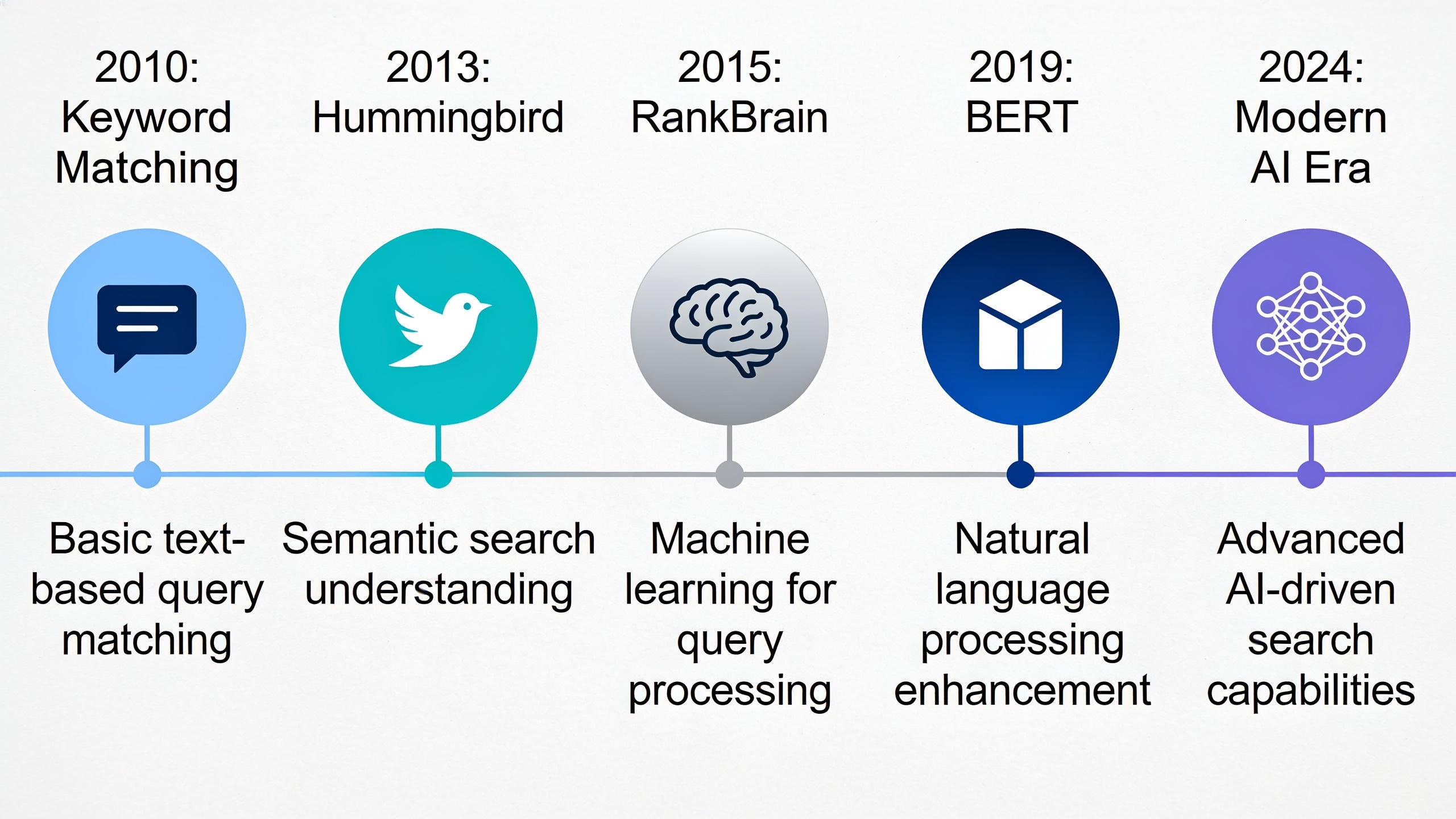
Search engines shifted from literal keyword matching to meaning-based understanding through a string of well-documented algorithm updates over the past decade. That whole evolution is basically why semantic SEO exists as a thing. It's a response to how ranking actually works now, not some theory somebody dreamed up.
Rewind to the early 2010s. Google leaned hard on matching the literal words in a query to the literal words on a page. Which, predictably, created a monster: keyword stuffing. Writers would jam a target phrase into an article a dozen unnatural times just to trip the match. Then came Hummingbird in 2013, widely reported as Google's move toward understanding queries conceptually instead of word-for-word, paying attention to the intent behind a whole phrase rather than the isolated words in it.
Two more big developments pushed that even further. First, RankBrain, a machine learning component Google confirmed it uses to make sense of ambiguous or brand-new queries by relating them to concepts it already understands. Second, BERT (Bidirectional Encoder Representations from Transformers), which Google announced in 2019 as an NLP model built to grasp the context of words in a query, including little things like prepositions and word order that completely flip a sentence's meaning.
And running alongside all of that, there's the Knowledge Graph, which Google has kept since 2012. It's a giant database of entities and the relationships between them. It's what powers knowledge panels, and it's how the engine knows that "Paris" the city and "Paris Hilton" the person are two different entities with two very different sets of facts attached.
Put it all together and ranking today depends way less on repeating a keyword and way more on showing clear, organized expertise that a language model can actually read and trust.
What Is Entity SEO and How Does It Relate to Semantic SEO?
Entity SEO is the practice of helping search engines clearly identify, disambiguate, and associate specific entities (a brand, a person, a product, a place) with the topics and facts they're tied to. It's one of the most practical corners of semantic SEO, mostly because search engines increasingly organize the web around entities rather than keywords alone.
Here's the relationship in a sentence: semantic SEO is the big-picture philosophy of optimizing for meaning, and entity SEO is the specific grunt work of making sure a search engine knows exactly who or what you are and links you to the right concepts. Say you run a business called "Robin Bakery." Entity SEO is the work of making sure Google doesn't mix you up with the bird, the fictional sidekick, or some other bakery with a similar name, and that it correctly connects you to things like "sourdough," your city, and your founder's name.
The usual tactics here aren't complicated, but they do take discipline. You use structured data (schema markup) to flat-out label your entities, so machines don't have to guess whether something's an organization, a product, an article, or an FAQ. You keep the names and descriptions of your brand, products, and people consistent across your site, your social profiles, and third-party listings. You build real topical depth so your brand becomes tightly linked to a subject area, which is the same idea behind building a topic cluster strategy that boosts rankings. And you earn mentions and citations from other credible, independent sources, which quietly confirms to search engines that you're real, notable, and genuinely connected to your topic.
That last one matters more than ever now that AI assistants like ChatGPT, Claude, Perplexity, and Gemini often lean on indexed pages, recognized entities, and independently verifiable sources when they build an answer. A brand with a fuzzy, inconsistent entity footprint is just harder for anything (traditional search or AI) to confidently point people toward.
Semantic SEO vs. Traditional Keyword SEO
Semantic SEO and traditional keyword SEO differ mainly in what they optimize for: keyword SEO chases specific search terms, while semantic SEO chases full coverage of a topic and its related concepts and entities. Here's how the two stack up across the stuff that actually matters day to day.
| Dimension | Traditional Keyword SEO | Semantic SEO |
|---|---|---|
| Primary focus | Matching exact keyword phrases | Covering topics, concepts, and entities comprehensively |
| Content structure | Often single pages targeting one phrase | Topic clusters and pillar pages covering a subject in depth |
| Risk of overuse | Keyword stuffing, unnatural repetition | Natural language variation and synonyms |
| Search engine signal used | Literal text matching | NLP understanding, entity recognition, context |
| Internal linking role | Minimal or an afterthought | Central — links reinforce topical and entity relationships |
| Structured data usage | Rarely prioritized | Often used to explicitly define entities and relationships |
| Best suited for | Narrow, low-competition queries | Establishing topical authority and long-term rankings |
| Vulnerability to algorithm updates | Higher — depends on literal matching persisting | Lower — aligned with how modern NLP models actually work |
Want content like this running on autopilot for your own site? Try RobinRank free — AI-written, SEO-optimized articles generated and published automatically, no credit card required.
None of this means keywords are dead. They still tell you what people are searching for and how to structure pages. But keyword research now should feed into a semantic content plan, not dictate your phrasing word for word. Big difference.
How to Build a Semantic SEO Strategy
Building a semantic SEO strategy means organizing your content around topics and the entities inside them, not around isolated keyword phrases, and then reinforcing those connections through structure, internal linking, and structured data. Let me get into how that actually looks.
Start With Topics, Not Just Keywords
Don't open your content plan with a spreadsheet of keywords. Start by mapping the topics your audience genuinely cares about and the smaller questions living inside each one. A pillar page on "email marketing for small businesses" should have supporting pages on segmentation, deliverability, automation workflows, subject line testing, each one its own little concept feeding back into the pillar. That's the exact logic behind building a topic cluster strategy that boosts rankings. Clusters signal depth to search engines in a way that a pile of disconnected, keyword-targeted pages never will.
Use Internal Linking to Reinforce Relationships
Internal links are honestly one of the clearest ways to tell a search engine how your content connects. When your page on "content briefs" links to one on "search intent," and both point back to a broader pillar on "content strategy," you're literally drawing the map of how your ideas relate. This is a big part of the ultimate guide to internal linking for SEO success, and it's probably the most underused tactic in the whole discipline. It costs nothing except planning time, and most people just... don't bother.
Write for Depth, Not Density
A semantically strong page answers the obvious follow-up questions instead of rephrasing the target keyword forty different ways. If someone reads about "how to choose a CRM" and you never mention pricing tiers, integrations, or data migration, you haven't covered the topic. Doesn't matter how many times you wrote "best CRM." You missed the point.
Add Structured Data to Clarify Entities
Schema markup (structured data, usually in JSON-LD) just tells search engines outright what something is: an article, a product, a person, an FAQ. No inference required. It cuts ambiguity and can help your content qualify for the fancier search features.
Keep Naming and Facts Consistent
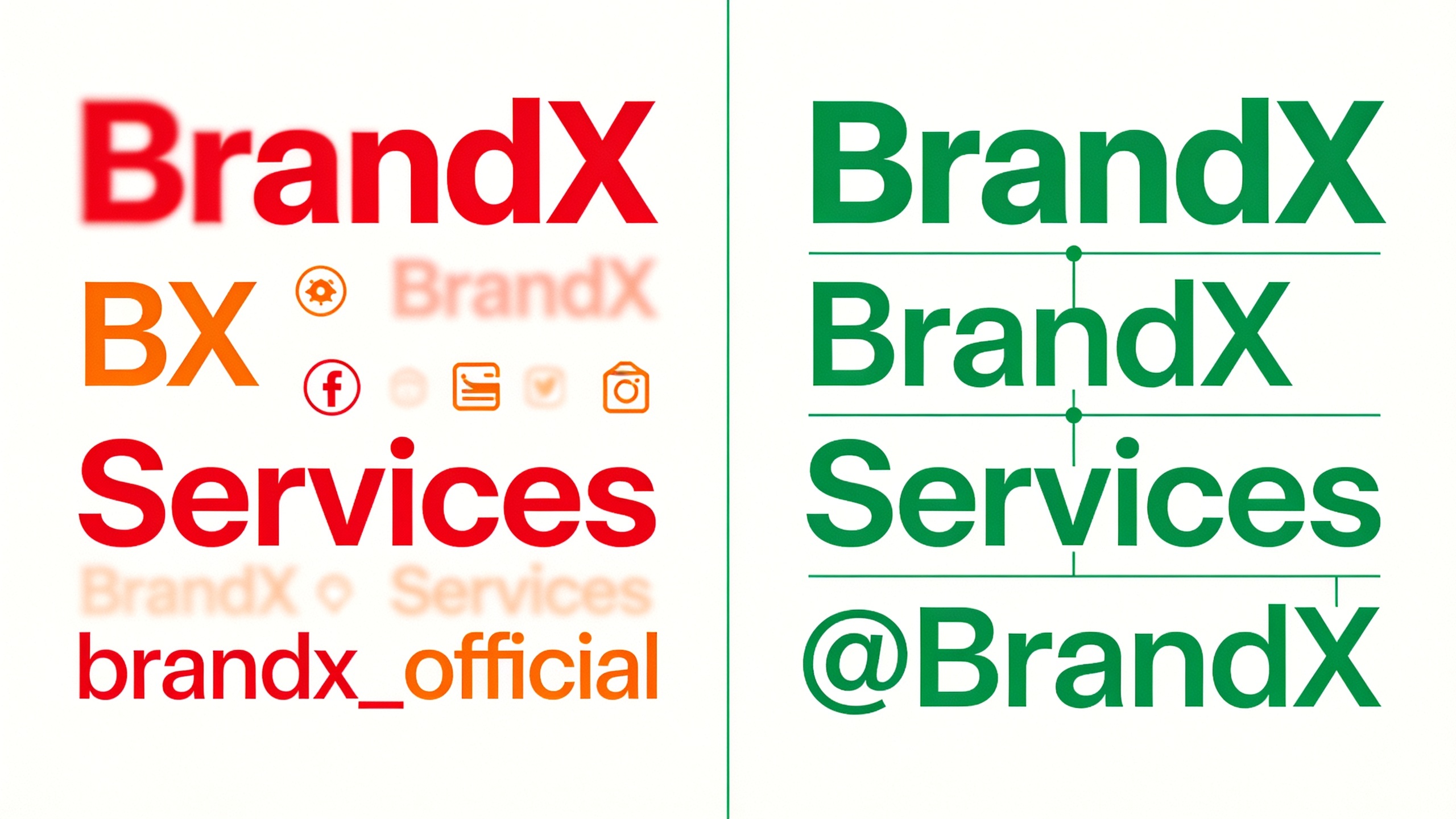
Entity SEO lives or dies on consistency. If your business name, your founders' names, or your key product terms show up differently across your site and around the web, you're making it harder for search engines to build one clean, confident picture of your brand. Pick a version and stick with it everywhere.
For businesses without a dedicated content team, this whole structured, topic-first way of working is exactly what platforms like RobinRank are built to handle. RobinRank looks at a site's niche and competitors, writes SEO-optimized articles complete with internal and external links, semantic keyword coverage, and auto-generated schema markup, then publishes them straight to a connected CMS.
How Does Semantic SEO Improve Rankings in the AI Search Era?
Semantic SEO helps rankings in the AI era because AI answer engines lean on the same underlying signals (recognized entities, clear topical relationships, well-structured indexed content) that traditional algorithms use, and often with even less patience for vague or thin content. When something like an AI Overview, or an assistant like ChatGPT, Perplexity, or Gemini, needs to build an answer, it tends to pull from pages that make it obvious what they're about, back up their claims, and connect logically to related ideas.
A few things follow from that. Ambiguous content basically gets ignored, because if a page could plausibly be about three different things, it's useless as a confident source. Sites that are structured and well-linked are simply easier to parse, so a clear cluster setup with strong internal links gives crawlers and language models a much easier path through your content. And independently verifiable mentions really matter, since AI assistants often check whether a claim or entity shows up somewhere other than your own site. That's a big reason backlinks and citations still count even as search moves toward conversational answers.
Now, a reality check. None of this guarantees you a citation in any particular AI assistant's output. Getting referenced in that context comes down to relevance, indexing, authority, and each assistant's own sourcing methods, and anyone promising you placement is selling something. What semantic SEO genuinely does is strengthen the signals underneath (clear entities, topical depth, structured relationships) that make your site a more credible candidate to get referenced, whether that's by a traditional ranking or an AI summary.
Common Semantic SEO Mistakes to Avoid
The single most common mistake is treating semantic SEO as keyword stuffing with a new coat of paint, mechanically swapping in synonyms and related terms without actually making the content deeper or clearer. That's not it. A handful of other traps show up constantly too.
There's publishing isolated pages instead of clusters, where one solid standalone article carries far less weight than a pillar backed by several linked subtopic pages that prop each other up. There's ignoring structured data, which leaves search engines guessing at entity types and relationships instead of just being told. There's inconsistent entity naming, where your product or brand gets written five different ways across pages, listings, and profiles, so nobody can build one confident profile of you. There's weak or missing internal linking, which means even well-organized content never actually communicates how its pieces connect. And there's the classic of optimizing for search engines only, where the writing gets so over-engineered for "semantic keywords" that real humans bounce off it, which then tanks your engagement signals anyway.
Dodging all of that really comes down to one principle: write what a genuine expert would write, then use structure, links, and markup to make that expertise legible to machines. That's the whole game.
FAQ
Isn't semantic SEO basically just keyword research?
Nope. Keyword research tells you what people search for and how often. Semantic SEO is about organizing and writing your content around the meaning and relationships behind those terms. Keyword research is still a useful input, but it should feed a topic-based plan, not dictate your exact wording.
Do I actually need schema markup for this to work?
It's not strictly required, but it's one of the most direct ways to kill ambiguity by flat-out labeling your entities: products, articles, organizations, FAQs. Think of it as a complement to deep, well-organized content, not a substitute for it.
How is entity SEO different from semantic SEO?
Entity SEO is a specific slice of semantic SEO focused on how search engines identify and disambiguate distinct things (brands, people, products, places) and connect them to related concepts. Semantic SEO is the wider practice of optimizing for meaning and context across everything you write. Entity clarity is just one important piece of it.
Does this mean I can stop worrying about backlinks?
No, sorry. Backlinks are still a real trust and authority signal, and they reinforce entity relationships when they come from relevant sources. Semantic SEO changes how you structure and write content. It doesn't make earning credible links from other sites any less valuable.
How long before I see results?
There's no set timeline, honestly. It depends on your site's authority, your competition, and how much content already exists on the topic. Because semantic SEO builds through clusters and internal linking rather than one-page tricks, results tend to build up gradually as you publish more supporting content and connections. Don't expect fireworks the day one article goes live.
---
Semantic SEO isn't some trend to chase for a season. It's just a reflection of how search engines and AI systems have actually come to understand language, and that understanding keeps getting sharper. Brands that build their content around clear topics, well-defined entities, and deliberate internal connections are, in the end, just speaking the same language the search systems already use to size them up.
Ready to stop writing content by hand? Start your free RobinRank trial and get a full month of SEO-optimized articles published on autopilot.